Generative AI in Banking: Challenges and Sector Transformation
CIBC is launching its own internally developed generative AI tool, the Banque de France is publishing its recommendations on risks, and the Observatory of Banking Professions reveals a progressive transformation rather than a radical disruption. Generative artificial intelligence is emerging as a major transformative lever in the banking sector, redefining customer interactions, operational processes, and risk management.
This technological shift raises as many opportunities as questions. How are financial institutions navigating between innovation and security? What are the true impacts on traditional banking professions?
Progressive Integration Rather Than a Brutal Revolution
Contrary to sometimes alarmist discourse, the study by the Observatory of Banking Professions reveals that generative AI is part of a technological continuum. This evolution extends previous advances in automation and process optimization, supported by machine learning and deep learning.
Adoption is progressive within banking institutions, with a gradual change in working methods rather than a radical transformation. This measured approach allows institutions to better manage risks while exploring the new possibilities offered by these technologies.
Banks are now developing their own internal solutions, like CIBC which launched its generative AI tool called "CIBC AI" for its employees, demonstrating a desire to control and personalize the integration of these technologies.
Transformative Opportunities for Banking Services
Generative AI offers remarkable prospects for modernizing the banking customer experience. Personalized chatbots are revolutionizing customer service by providing contextualized responses tailored to the specific needs of each user.
Key applications include:
- Automation of compliance reports: significant reduction in processing time
- Predictive risk analysis: finer detection of anomalies and trends
- Service personalization: tailored financial recommendations
- Optimization of internal processes: improved operational efficiency
This technology also helps improve risk management by analyzing vast volumes of data to identify complex patterns and anticipate fraudulent behavior. Process automation frees up time for advisors, who can focus on higher value-added tasks.
| Generative AI Application | Primary Benefit |
|---|---|
| Personalized chatbots | Improved customer experience |
| Compliance report automation | Reduced processing time |
| Predictive risk analysis | Fine detection of anomalies and trends |
| Service personalization | Tailored financial recommendations |
| Internal process optimization | Improved operational efficiency |
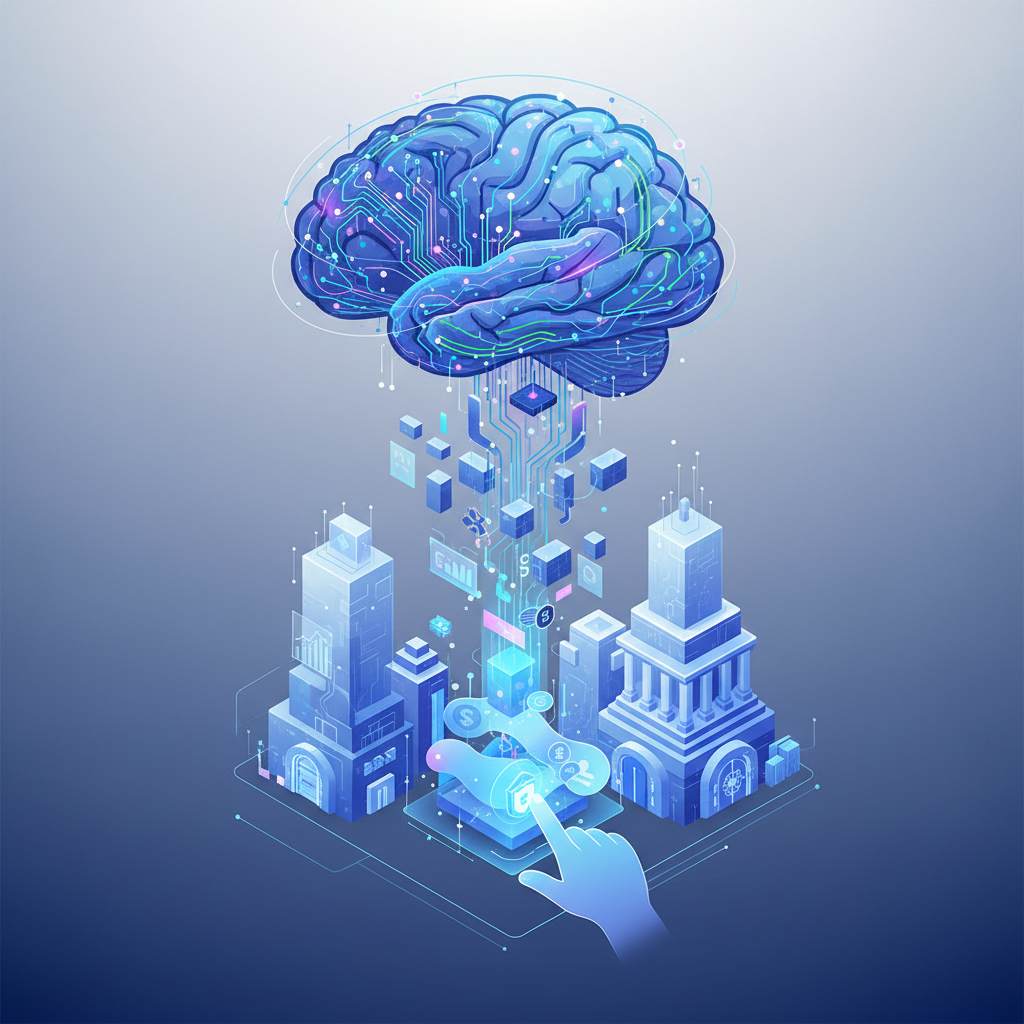
Major Security and Regulatory Challenges
The integration of generative AI into the banking sector raises significant concerns regarding data security. According to the Banque de France, this technology could exacerbate certain risks to financial stability, particularly procyclicality and market volatility risks.
Institutions must address several critical issues:
Artificial intelligence presents data management, modeling, and governance challenges that require particular attention to preserve the stability of the financial system.
Cybersecurity becomes an amplified challenge with generative AI, which can be misused to create sophisticated deepfakes or orchestrate more convincing attacks. Banks must also navigate a constantly evolving regulatory environment, with the European AI Act adopted in May 2024 imposing new transparency standards.
Impact on Banking Professions and Skills
The transformation driven by generative AI redefines the skills required in the banking sector. Professions are evolving towards a more analytical and strategic dimension, necessitating continuous training for teams.
Bank advisors see their role transform: fewer repetitive administrative tasks, more personalized support and strategic advice. This evolution requires the development of new skills in data analysis and understanding AI tools.
IT and risk departments are experiencing accelerated upskilling, needing to master both the technical aspects of AI and its business implications. Training becomes a major strategic issue for maintaining competitiveness.
Collaboration between technical and business teams is intensifying, creating new, more agile and collaborative working methods. As shown by the Mistral AI ecosystem, open source offers new perspectives for developing tailored solutions.
Adapted Governance and Risk Management Framework
Successful implementation of generative AI requires robust governance. Banks are developing specific frameworks to oversee the use of these technologies, including dedicated committees and rigorous validation processes.
Algorithm transparency is becoming a regulatory and commercial imperative. Institutions must be able to explain decisions made by their AI systems, particularly in sensitive areas such as credit granting or risk assessment.
Human oversight remains essential in this transformation. Banks are implementing supervision systems to maintain human oversight over automated decisions, thereby ensuring accountability and regulatory compliance.
Data management becomes strategic, with the need to ensure its quality, security, and compliance with privacy regulations. This structured approach highlights the importance of robust automated solutions, such as OpenClaw revolutionizing automation.
Evolution Perspectives and Strategic Recommendations
The future of generative AI in banking is moving towards deeper and more personalized integration. Institutions that invest now in these technologies are developing a sustainable competitive advantage, as highlighted by KPMG's analysis on the transformation of financial services. Additional information is available from MNP on the future of finance and generative AI.
Strategic partnerships with fintechs are multiplying, creating an ecosystem of collaborative innovation. These alliances allow traditional banks to accelerate their digital transformation while benefiting from the agility of technology startups, as detailed in an analysis of fintech and bank partnerships.
International regulatory harmonization is becoming crucial to enable coherent development of these technologies. Banks that anticipate these regulatory changes gain a head start on their competitors.
Generative artificial intelligence is fundamentally transforming the banking sector, demanding a balanced approach between innovation and prudence. Institutions that succeed in this transformation will be those that can combine technological expertise, rigorous governance, and a long-term strategic vision.