
SaaS Migration: Strategies and Pitfalls to Avoid

The global real estate sector, financial institutions, industrial groups: all are gradually migrating to the SaaS model. For traditional businesses without a dedicated technical team, this digital transformation represents both an opportunity and a major challenge. How can one transition from a legacy application landscape to cloud solutions without compromising operations? What mistakes should be avoided to ensure you don't join the 87% of projects that fail to meet their objectives?
This practical guide decodes the essential steps for a successful SaaS migration, with concrete recommendations drawn from field audits and recent case studies.
Understanding the SaaS Model and Its Benefits for Businesses
Software as a Service (SaaS) is a game-changer, replacing perpetual licenses and on-premise infrastructure with a cloud-hosted subscription model. Instead of purchasing and maintaining expensive servers, businesses access professional applications via the internet, with automatic updates and pay-as-you-go pricing. A more technical definition of SaaS is available in this CRI document.
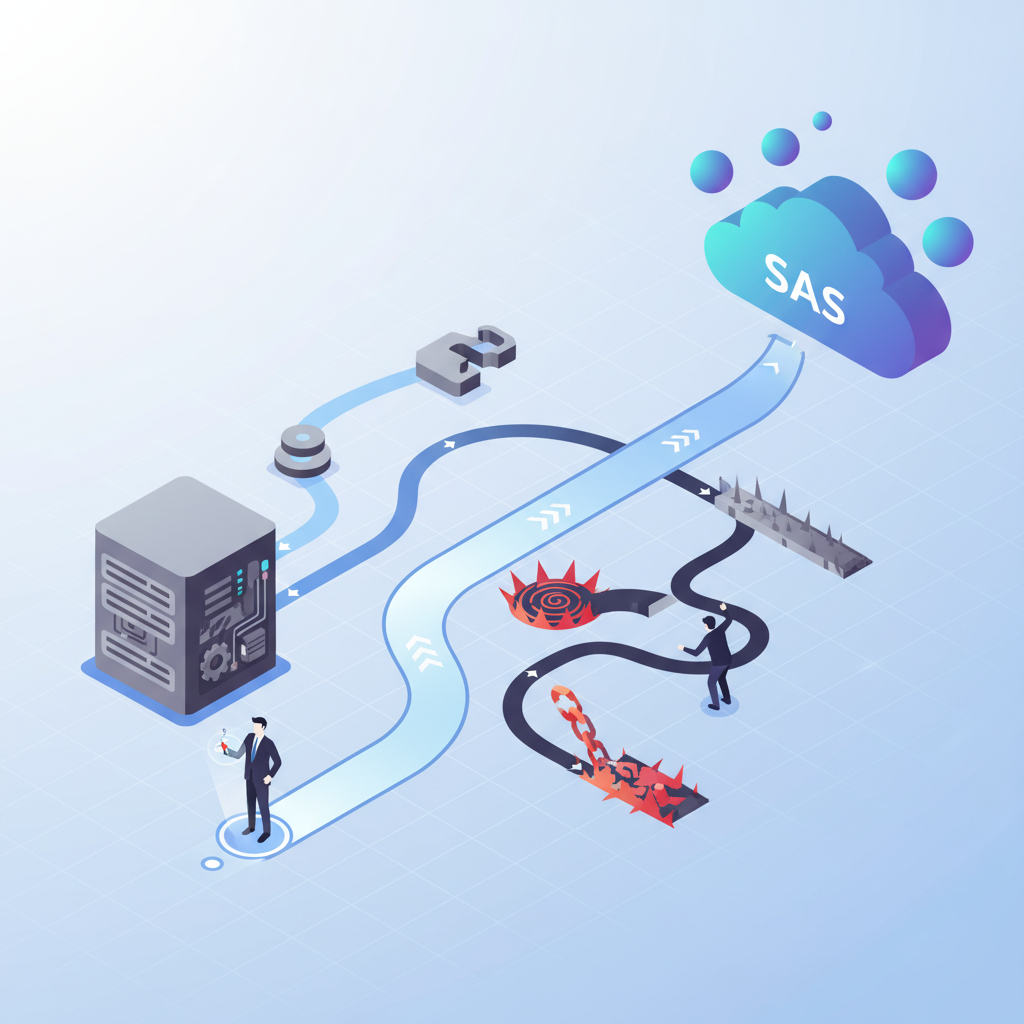
This shift fundamentally transforms IT management. Business teams no longer need advanced technical skills to deploy a CRM, ERP, or HR management platform. Maintenance, security, and functional evolutions are handled by the provider, allowing employees to focus on their core business.
Concrete Advantages of Moving to SaaS
For a traditional business, migrating to cloud SaaS generates several measurable benefits:
- Reduced upfront investments: transition from CAPEX (hardware purchase, licenses) to OPEX (monthly or annual subscription)
- Immediate scalability: adjustment of resources based on growth or peak activity
- Access to the latest innovations: automatic updates without a technical migration project
- Improved user experience: modern interfaces, accessible from any device
According to Oracle, SaaS is currently the most widely adopted segment of cloud computing, precisely because it eliminates technical complexity while ensuring access to the latest versions.
Defining Your Objectives and Measuring Expected ROI
Before any deployment, the first step is to formalize the business objectives of the migration. Why does your company want to adopt SaaS? Is it to reduce IT costs, accelerate the time-to-market for new services, improve collaboration between remote sites, or modernize the employee experience?
These objectives must be translated into Key Performance Indicators (KPIs) tracked throughout the project:
- TCO (Total Cost of Ownership): overall cost over 3 to 5 years compared to current infrastructure
- ROI: expected return on investment with a precise timeline
- User adoption rate: percentage of employees actively using the new solution
- Reduced time-to-deploy: time needed to deploy new functionalities
“A steering dashboard that tracks key indicators allows for quick validation of whether the SaaS strategy is bearing fruit or requires adjustments.”
By establishing these metrics from the outset, you have a compass for making informed decisions and communicating effectively with internal stakeholders.
Auditing Your Application Portfolio and Preparing Your Data
Data quality is crucial for the success of any SaaS migration. A multinational company discovered during an audit that 18% of its customer records were duplicated, leading to confusion and increased workload. Cleaning this data upstream saved several weeks of post-migration work.
Application Audit Steps
Start by mapping your entire application portfolio: what software is used, by which departments, and with what criticality? Identify interdependencies between applications, data flows, and existing integrations. This overview allows you to prioritize migrations based on technical complexity and business impact.
In parallel, establish data governance rules: standardized formats, validation processes, clearly defined responsibilities. These rules will ensure quality post-migration and facilitate the use of new SaaS platforms.
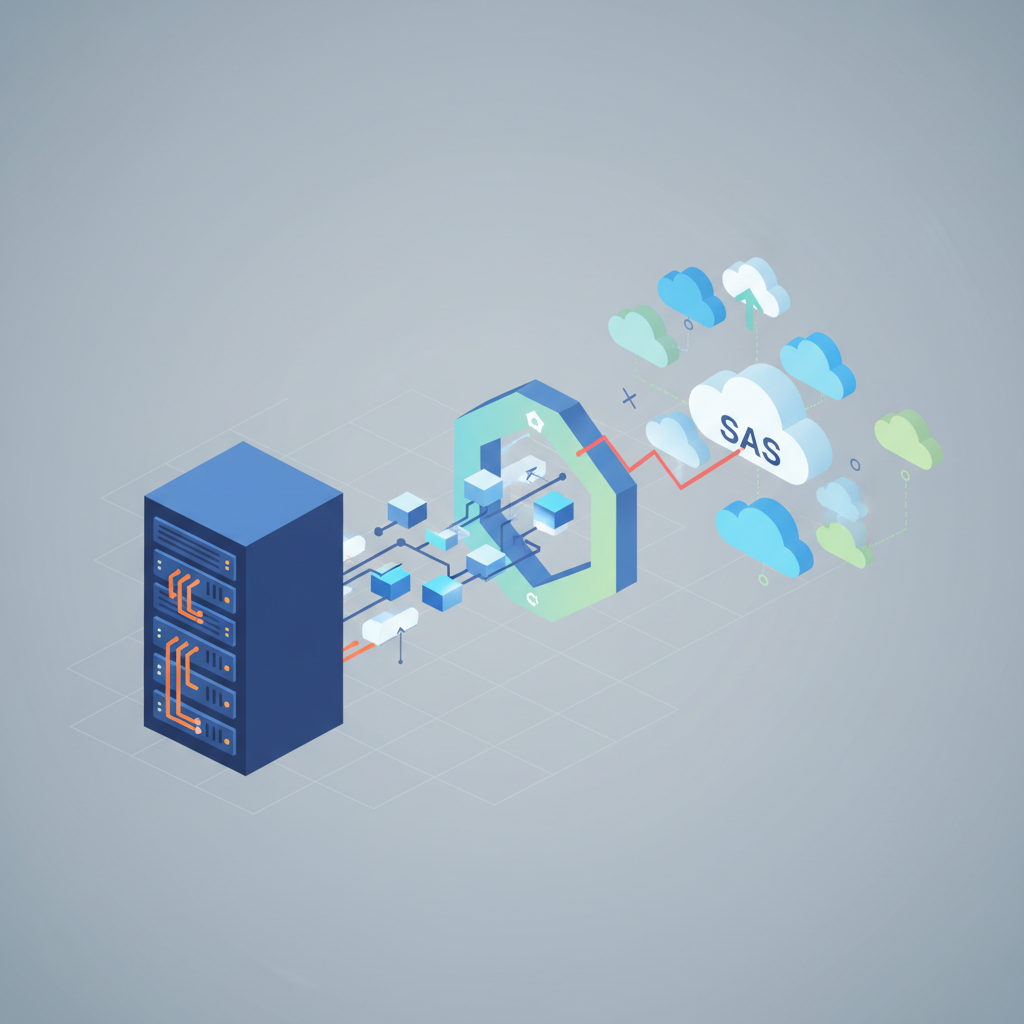
For non-tech companies, this phase may require the support of an external consultant or a specialized integrator. The initial investment in a rigorous audit avoids costly rework later on.
Choosing the Right Migration Model Based on Your Maturity
There is no universal migration strategy. The choice of model depends on the company's technological maturity, the criticality of applications, and available resources. The Cigref report identifies several complementary approaches:
| Migration Type | Description | Advantages | Constraints |
|---|---|---|---|
| Rehost | Migration without major modification of the existing application to the cloud. | Rapid transition, low initial cost. | Does not fully leverage cloud benefits. |
| Replatform | Partial modernization (database, middleware) to benefit from managed services. | Improved performance, reduced maintenance burden. | Requires technical adjustments. |
| Rearchitect | Complete redesign of the application to cloud-native architecture (microservices, containers). | Maximum scalability and agility, innovation. | Highest investment, increased complexity. |
For traditional businesses, a hybrid and progressive approach yields the best results: starting with a quick Rehost for secondary applications, then gaining maturity with Replatform and Rearchitect projects for critical systems.
Conducting a Pilot Project to Validate the Approach
Rather than switching the entire IT system in one go, prioritize an incremental migration starting with a pilot project. Choose an application with a limited scope, used by a voluntary team, and test the entire chain: integration process, security requirements, contractual clauses, user experience.
This pilot allows you to validate several critical hypotheses:
- Are performance and availability in line with contractual SLAs?
- Do integrations with existing systems work correctly?
- Do users naturally adopt the new interface?
- Are support and escalation processes operational?
By analyzing the pilot's results, you identify necessary adjustments before generalizing the migration. This layered approach (successive functional modules) drastically reduces risks and reassures internal teams.
Change Management: Key to User Adoption
Technology alone is not enough. Change management determines the success or failure of a SaaS project. Employees accustomed to their legacy tools may perceive migration as an additional constraint if the “why” is not clearly explained.
Levers for Effective Change Management
- Executive sponsors: involve general management and managers to legitimize the project and overcome resistance.
- Internal champions: identify enthusiastic relay users in each department who support their colleagues daily.
- Transparent communication: explain the concrete benefits for each job role (time savings, simplification, new functionalities) rather than technical arguments.
- Varied training: offer adapted formats (webinars, video tutorials, practical workshops) to support all user profiles.
- Continuous support: ensure responsive assistance during the first weeks of use to quickly resolve blockers.
By investing in these human levers, you transform a technical project into a true cultural transformation driven by the employees themselves. As a recent study highlights, the majority of SaaS deployment failures stem from a lack of support rather than functional limitations.
Mastering Contractual and Sovereignty Issues
The choice of SaaS provider is not limited to features. Contractual clauses, data location, and security certifications are crucial, especially for companies subject to regulatory obligations (GDPR, banking sector, healthcare).
Key Points for Vigilance in SaaS Contracts
- Data location and sovereignty: where is your data hosted? Is the provider subject to extraterritorial laws (e.g., US Cloud Act)? For sensitive data, prioritize providers certified SecNumCloud or equivalent.
- SLA (Service Level Agreement): guarantees of availability, recovery time in case of incident, contractual penalties for non-compliance.
- DPA (Data Processing Agreement): data processing agreement compliant with GDPR, specifying the responsibilities of each party and security measures.
- Reversibility: ability to retrieve your data in an exploitable format if you decide to change providers or repatriate certain applications.
- Pricing evolution: beware of unilateral increases. SaaS prices have seen significant inflation recently. Negotiating multi-year contracts with capped indexing limits this risk.
The Cigref report particularly emphasizes the need to control dependencies on providers to preserve the company's strategic autonomy.
Avoiding SaaS Sprawl and Controlling Costs
SaaS sprawl refers to the uncontrolled proliferation of SaaS applications within a company. Each department subscribes to its own tools without central coordination, creating redundancies, security vulnerabilities, and an explosion of costs.
To avoid this pitfall, implement centralized governance for SaaS applications:
- Validated catalog: list of applications approved by IT and business units, with validation criteria (security, integration, cost)
- Approval process: any new SaaS subscription must go through a validation workflow
- Financial dashboard: real-time tracking of active subscriptions, detection of underutilized licenses, consolidation of contracts
- Continuous optimization: quarterly review to identify redundancies and renegotiate contracts
This discipline transforms the shift from CAPEX to OPEX into a real financial advantage, rather than a source of budget overruns. Establishing spending thresholds per department and automating alerts facilitates management.
Single-Vendor or Multi-Cloud Strategy?
Should you concentrate your SaaS applications with a single cloud provider (AWS, Azure, Google Cloud) or diversify? The answer depends on your maturity and strategic challenges.
Examples like Netflix and Spotify, which chose AWS as their sole provider, illustrate the benefits of a concentrated strategy: in-depth team expertise, simplified governance, cost optimization through volume. A poorly managed multi-cloud strategy dilutes internal skills and multiplies governance risks.
For a traditional company in the migration phase, prioritizing a main provider while maintaining the technical ability to migrate (avoiding vendor lock-in) often represents the best balance. Multi-cloud diversification can be considered later, once cloud maturity is achieved.
This approach aligns with recommendations for fast-growing startups, who must also balance agility and cost control in their infrastructure choices. SaaS is a new standard for scalable enterprise software.
Security and Compliance: Non-Negotiable
Security in a SaaS environment relies on a shared responsibility model: the provider secures the infrastructure and platform, while the client company remains responsible for configuration, user access, and data classification.
Ensure your SaaS provider complies with recognized standards:
- Encryption: data encrypted in transit (TLS) and at rest (AES-256 or higher)
- Certifications: ISO 27001, SOC 2, SecNumCloud for sensitive data
- Identity management: SSO (Single Sign-On) integration, multi-factor authentication (MFA)
- Logging and auditing: ability to trace access and modifications to meet regulatory obligations
For regulated sectors (banking, healthcare, public sector), these requirements are particularly critical. Do not neglect training your teams in good security practices: human vulnerabilities (phishing, weak passwords) remain the primary attack vector.
Case Studies: Lessons Learned from Successful Migrations
Companies across all sectors have successfully undertaken SaaS migration. While details vary, several constants emerge:
- Real estate sector: real estate agencies migrating to PropTech/SaaS solutions have seen a significant improvement in productivity by automating repetitive tasks (ad dissemination, file tracking). The key: involve field agents from the pilot phase to adapt workflows to business realities. The PropTech/SaaS model is growing rapidly.
- Financial institutions: facing strict regulatory requirements, several banks have favored a hybrid approach, retaining core business systems on-premise while migrating peripheral applications (HR, collaboration) to SaaS. This progressive strategy allowed them to gain cloud maturity without compromising compliance.
- Industrial groups: a multinational discovered during its audit that 18% of its records were duplicated. Prior cleaning not only facilitated migration but also improved the quality of business decisions based on this data.
These examples show that meticulous preparation (audit, data cleaning, limited pilot) and human support (training, internal champions) make the difference between success and failure. As illustrated by the example of Fairphone in social entrepreneurship, a clear vision and rigorous execution can transform constraints into levers for differentiation. SaaS is a new standard for scalable enterprise software.
Continuous Measurement and Optimization
SaaS migration is not a one-time project but a continuous process of optimization. Once the first applications are migrated, establish monitoring rituals:
- Monthly KPI review: user adoption, performance, actual costs vs. budget, security incidents.
- User feedback: satisfaction surveys, identification of pain points, suggestions for improvement.
- Financial optimization: analysis of unused licenses, contract consolidation, price renegotiation.
- Technological watch: SaaS providers regularly release new features. Stay informed to take advantage of innovations without heavy migration projects.
This continuous improvement approach maximizes return on investment and adjusts strategy based on the company's evolution. Organizations that treat SaaS as a strategic lever rather than a mere technical tool reap the most lasting benefits.