Banking Apps: Biometrics and AI Enhance Security
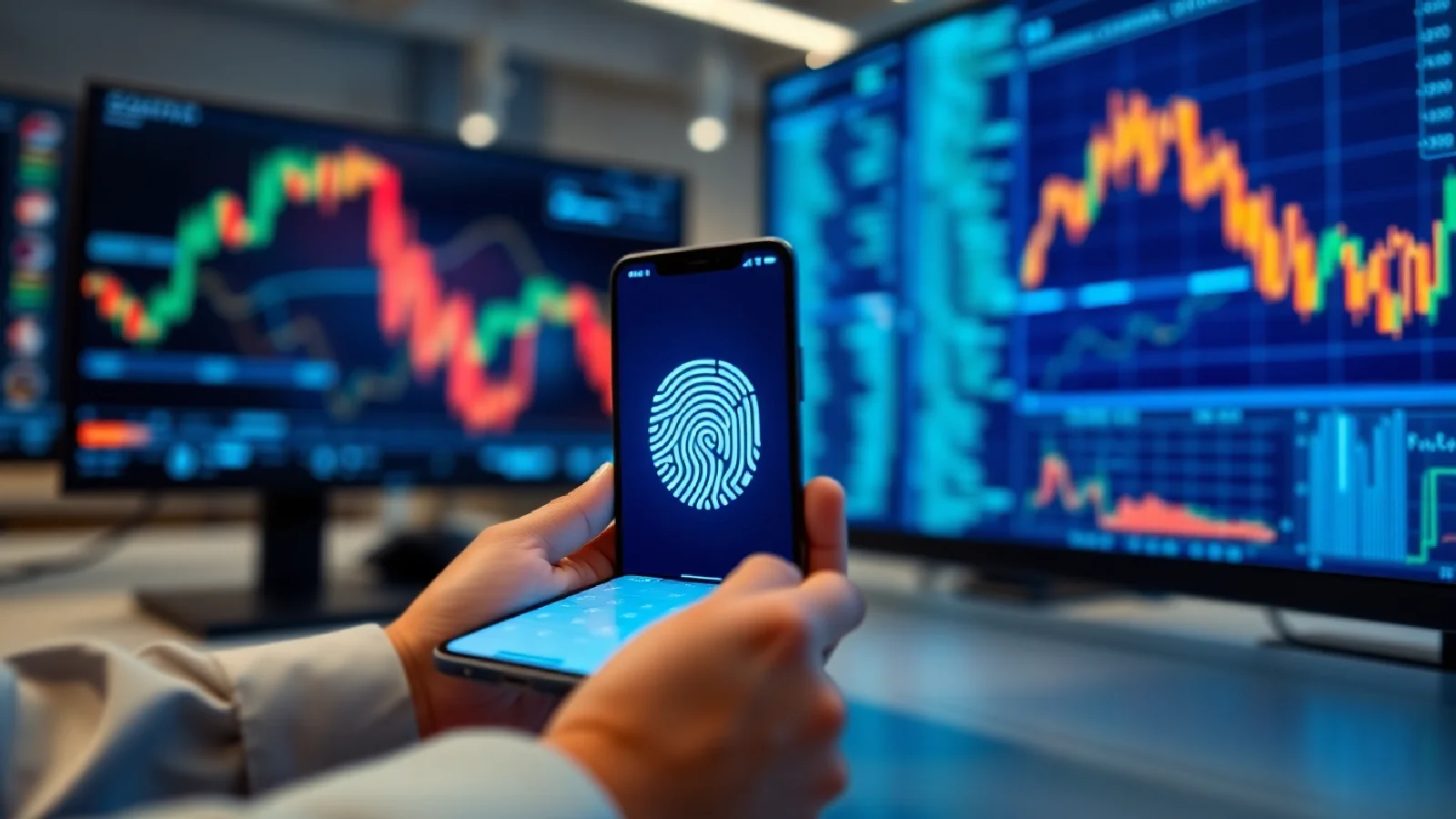
In France, the vast majority of cardholders now authenticate via their banking applications to validate payments. This massive transition to mobile platforms is accompanied by an unprecedented technological shift: multimodal biometrics and artificial intelligence are progressively replacing traditional passwords. From facial recognition with liveness detection to voice analysis via neural networks and real-time behavioral monitoring, banking institutions are deploying an arsenal of solutions to guarantee the security of millions of daily transactions.
This transformation addresses a dual imperative: protecting customers against increasingly sophisticated attacks, while offering a fluid and frictionless user experience. How do these technologies work in practice? What guarantees do they offer against emerging threats? And what regulatory framework governs their deployment?
AI-Powered Facial Recognition: Beyond the Simple Selfie
Facial recognition deployed in banking applications is nothing like the rudimentary systems of a few years ago. Banks now integrate liveness detection algorithms that prevent fraud attempts using masks, photos, or prerecorded videos. These systems analyze dozens of biometric parameters in milliseconds: micro-movements of the face, corneal reflections, skin texture, natural lighting variations.
Artificial intelligence plays a central role in this evolution. Deep neural networks are trained on billions of data points to distinguish an authentic face from a synthetic forgery attempt. Unlike the first generation of biometric systems, these solutions now tolerate lighting variations, imperfect camera angles, or changes in appearance (wearing glasses, beard, makeup).
French banking institutions have widely adopted this technology, as confirmed by solutions offered by several major players. Facial recognition allows access to bank accounts without entering a password, while ensuring a superior level of security.
Voice Biometrics: Your Voice as an Access Key
Alongside facial recognition, voice biometrics is emerging as an authentication method particularly suited to automated customer services and remote access. This technology analyzes unique voice characteristics: timbre, rhythm, intonation, frequency, modulations.
AI algorithms examine hundreds of acoustic parameters that are impossible to artificially reproduce. They also detect fraud attempts using synthetic recordings by identifying the digital artifacts characteristic of artificially generated content. This capability becomes crucial in the era of voice deepfakes, which represent a growing threat to banking security.
The combination of multiple biometric modalities offers tolerance to variable conditions while maintaining higher success rates for mobile transactions.
The multimodal approach – combining facial and voice recognition – helps overcome the limitations of each technology taken in isolation. In a noisy environment, voice recognition may be less effective; in unfavorable lighting conditions, facial recognition will be preferred. This complementarity ensures successful authentication in most situations.
Behavioral Authentication: AI That Recognizes You by How You Use Your Phone
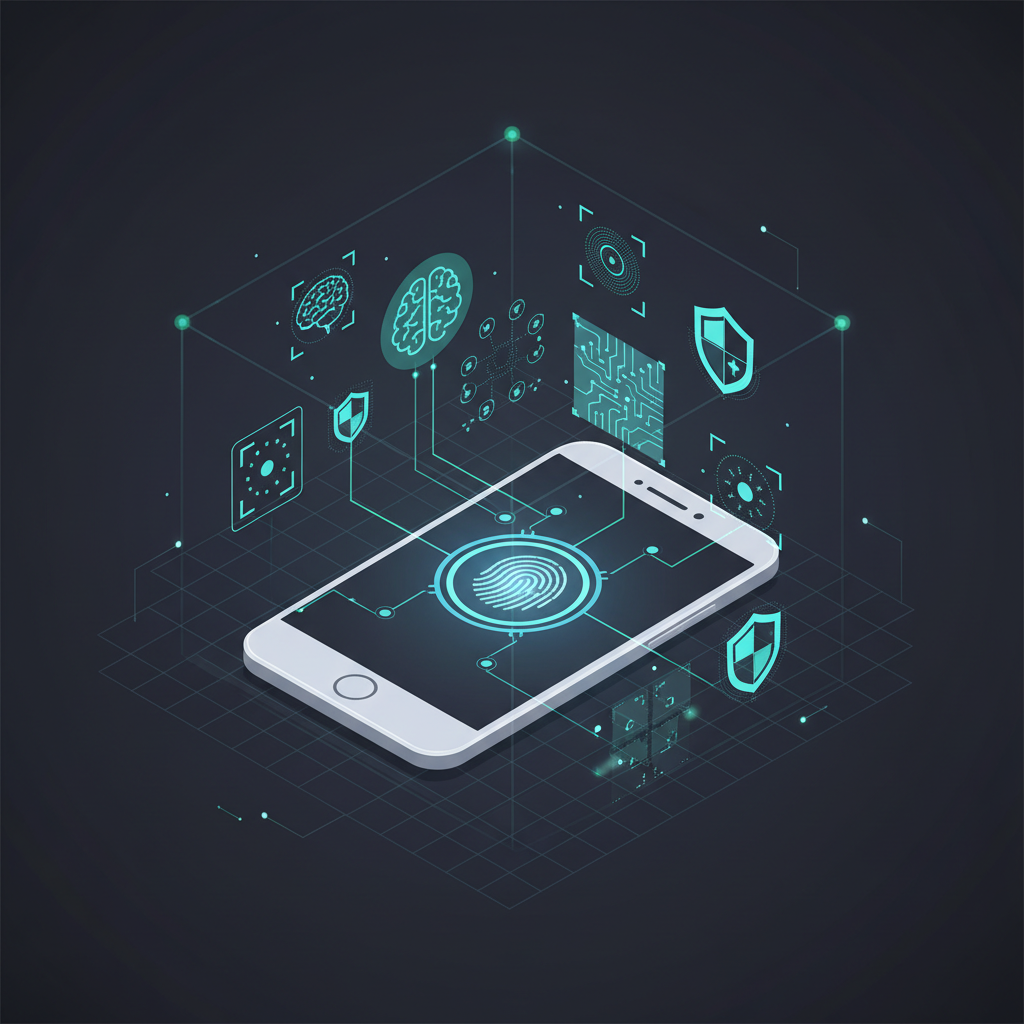
Beyond physical biometric markers, banking applications now integrate a more discreet but equally effective security layer: continuous behavioral analysis. These AI-driven systems constantly monitor how you interact with your smartphone.
Typing speed, pressure exerted on the touchscreen, phone holding angle, finger trajectory during scrolling: all these micro-behaviors form a unique digital signature. Deep learning algorithms compare these patterns with the user's usual behavioral profile.
When an anomaly is detected – for example, unusual navigation speed or an atypical input pattern – the system can automatically trigger additional authentication. This passive monitoring helps detect fraudulent account takeover, even if biometric credentials have been compromised.
AI-powered risk management systems complement this setup by evaluating each transaction according to hundreds of criteria: amount, beneficiary, geolocation, time, history of similar operations. These models, trained on billions of historical fraud data, calculate a real-time risk score and adapt the required authentication level.
FIDO2 and Passwordless Authentication
The widespread adoption of biometrics relies on robust technical standards, notably the FIDO2 (Fast Identity Online) protocol. This standard allows smartphones to store local cryptographic keys and authenticate to banking applications without ever transmitting a password over the network.
The process works according to a public-private key architecture:
- The private key remains secured in a hardware enclave of the phone (Secure Enclave on iOS, Trusted Execution Environment on Android)
- Only the public key is shared with the bank
- Biometric authentication locally unlocks the private key to sign a cryptographic transaction
This architecture ensures that interception of communications or compromise of banking servers does not allow recovery of authentication data. FIDO2 solutions thus offer enhanced protection against phishing and replay attacks.
For companies seeking to understand the challenges of digital sovereignty in the financial sector, developments around wholesale CBDCs reveal similar challenges in terms of trust infrastructure.
Regulatory Challenges: GDPR, AI Act, and Biometric Data Protection
The massive deployment of biometrics in banking applications raises complex regulatory questions. In Europe, biometric data is considered sensitive data under the GDPR, subject to strict obligations.
Banking institutions must notably:
- Obtain explicit consent from users to collect and process their biometric data
- Conduct enhanced Data Protection Impact Assessments (DPIA)
- Guarantee the principle of minimization: collect only strictly necessary data
- Ensure the portability and right to erasure of biometric data
The European AI Act, gradually entering into force from 2025, classifies facial recognition in the category of high-risk AI systems. This classification imposes additional obligations: traceability of algorithmic decisions, rigorous performance testing, human oversight, exhaustive technical documentation.
These regulatory constraints push banks to favor local biometric solutions where data is processed directly on the user's smartphone, without being transmitted or stored on central servers. This approach, technically more complex, offers better privacy guarantees.
| Biometric Data | Key Regulatory Obligations |
|---|---|
| Sensitive data | Explicit consent |
| Collection/processing | Impact assessments (DPIA) |
| Confidentiality | Minimization, portability |
Extension to Physical Touchpoints
While mobile applications are the preferred ground for innovation, biometrics are also being deployed at physical touchpoints. Next-generation ATMs are progressively integrating fingerprint, iris, and even retina scanners for sensitive operations.
In bank branches, some institutions are testing facial recognition to personalize customer reception and streamline the service journey. However, these solutions raise more intense debates in terms of social acceptability, particularly concerning surveillance in public spaces.
Voice biometrics also finds its application in call centers, where it allows customers to be authenticated from the first seconds of conversation, without asking tedious security questions. This technology has the advantage of being naturally inclusive for people with reduced mobility or visual impairments.
Towards Multi-Level Security
The future of banking security does not rely on a single technology but on a multi-layered defensive strategy. The most advanced institutions now combine:
- Multimodal biometric authentication (facial + voice + fingerprint depending on context)
- Continuous behavioral analysis to detect usage anomalies
- Transactional risk assessment by artificial intelligence
- Enhanced cryptography with FIDO2 standard and zero-trust architecture
This holistic approach allows dynamically adapting the security level to the risk level: a simple balance inquiry does not require the same authentication as an international transfer of several thousand euros.
Banks are investing massively in these technologies, aware that user trust is their most valuable asset. The increasing sophistication of threats – deepfakes, generative AI attacks, augmented social engineering – necessitates continuous innovation in security.
For financial institutions, this technological race is part of a broader digital transformation, where financing strategies are also evolving to adapt to new uses.