
Marketing Platforms 2026: Integrated AI vs. Specialization
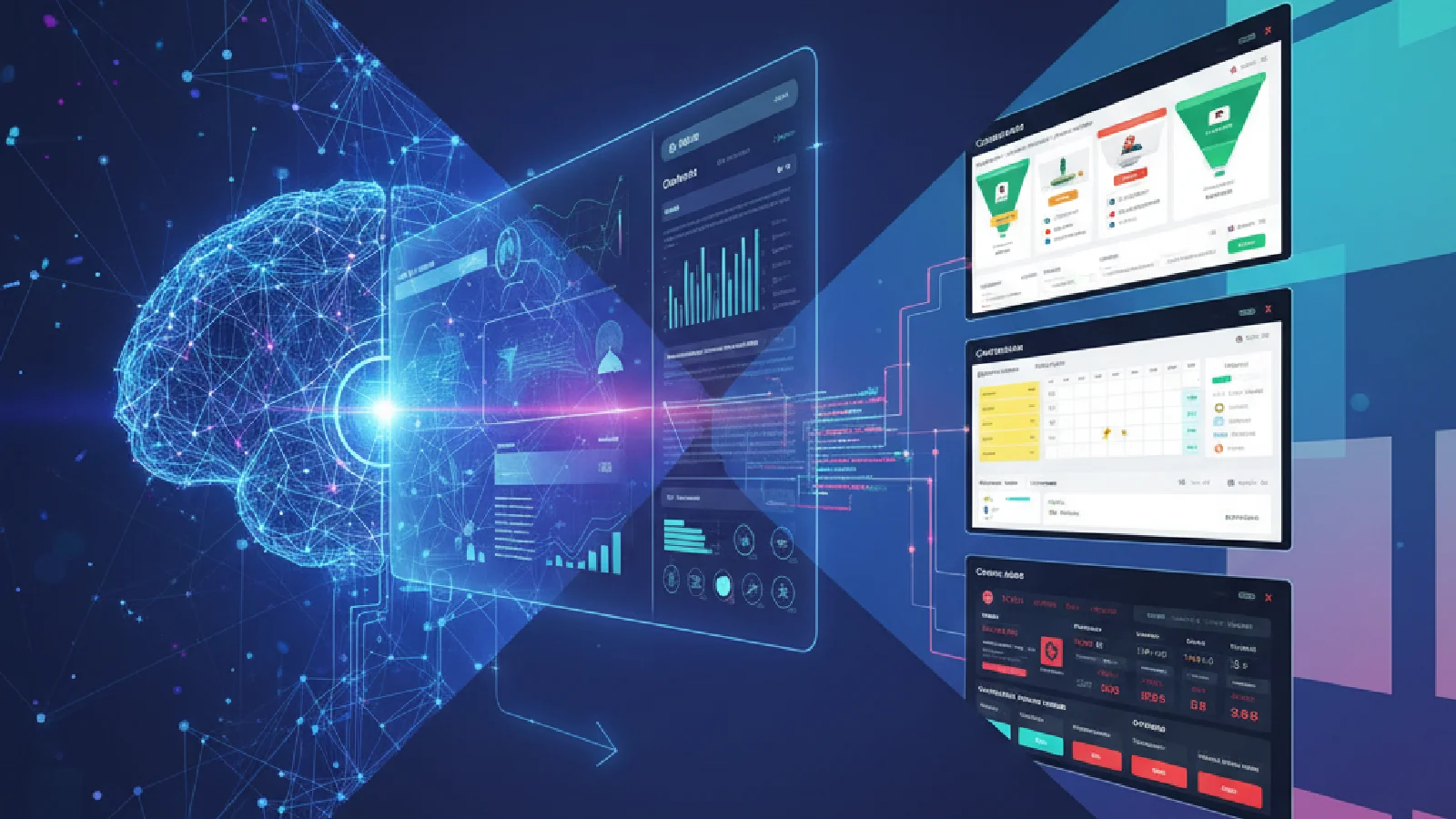
The marketing platform market is undergoing a major strategic bifurcation. On one side, giants like Salesforce Einstein and HubSpot AI are deploying transversal AI engines capable of orchestrating the entire customer journey. On the other, players like ActiveCampaign and Kiliba are honing their sectoral expertise to meet precise needs. The question is no longer whether one of these approaches will prevail, but which one aligns with your business model and data maturity.
The numbers speak for themselves: 91% of marketing agencies now use AI in some form, according to a recent study. But widespread adoption doesn't guarantee effectiveness. Between promises of automation and the reality on the ground, this comparison deciphers the strengths, limitations, and concrete results of each strategy.
AI Integration: When the Platform Becomes the Central Brain
Platforms that have opted for massive AI integration no longer just offer tools, but a true marketing nervous system. Oracle Eloqua, Salesforce Einstein, HubSpot AI, and Zeta (which integrated Selligent) have built architectures where artificial intelligence permeates every function: email, mobile, web, programmatic advertising, CRM, and predictive analytics.
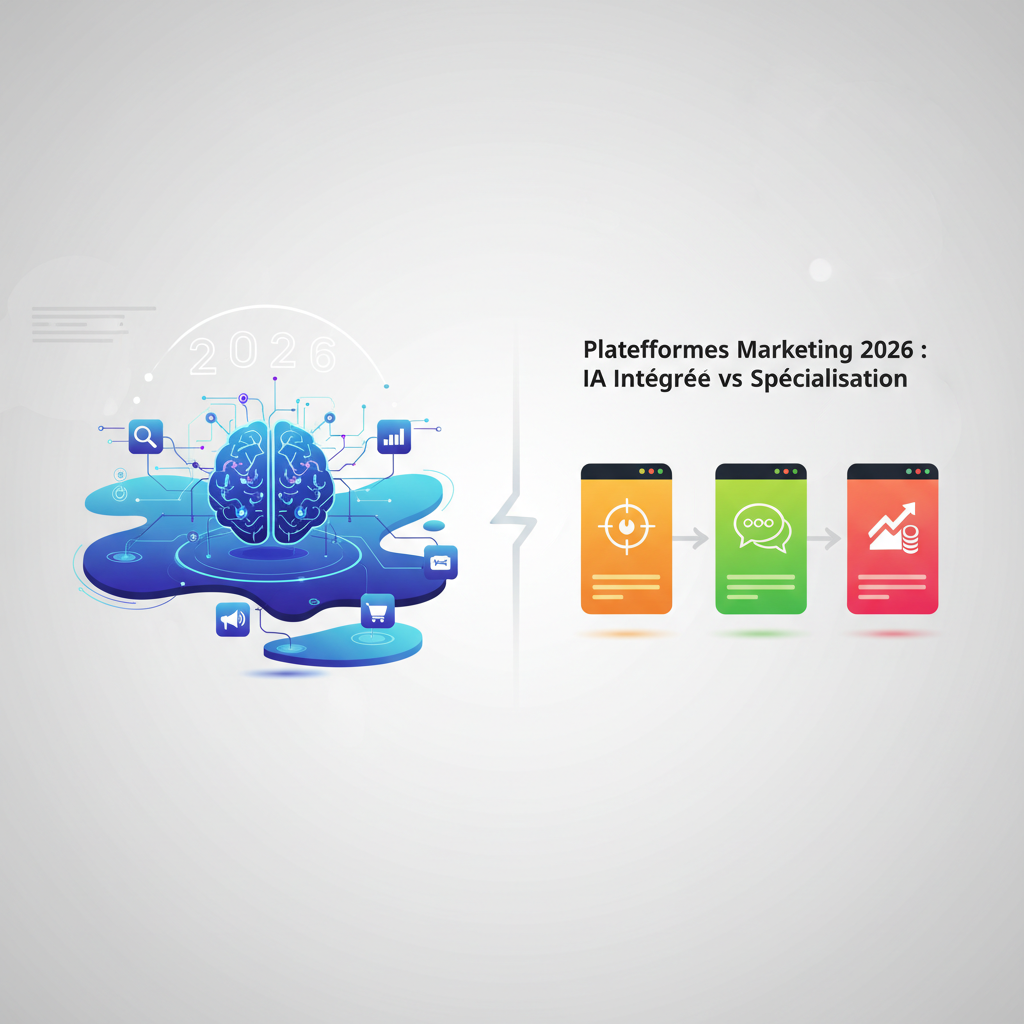
The principle is based on three pillars: generative agents, real-time decision models, and cross-channel orchestration. Specifically, these platforms analyze first-party data, trigger personalized scenarios at scale, and continuously adjust customer journeys. According to available data, these systems significantly improve operational efficiency, with measurable gains in campaign ROI for large B2B and B2C companies.
Measurable Results for Complex Structures
The benefits of this approach are particularly evident in organizations with a mature data infrastructure. Companies capable of centralizing their customer data on a unified base see a significant improvement in their marketing performance.
Zeta Global highlights that conversational AI will become “the operating system of modern marketing” in 2026, with AI agent systems capable of moving from simple responses to autonomous action. This ability to automate complex decisions represents a turning point for marketing teams.
Integrated platforms are particularly suitable for:
- Companies with large customer bases (>100,000 contacts)
- Multi-channel organizations requiring a unified view
- B2B structures with long sales cycles and multiple touchpoints
The Trade-offs of Total Orchestration
This technical sophistication, however, comes with challenges. Implementation requires several months, advanced data skills, and strict automation governance. The risk of over-automation exists: as predictive rules multiply, personalization can become intrusive or disconnected from the real context.
Furthermore, technological dependence increases. Migrating from one integrated AI platform to another is a major undertaking, with often underestimated hidden costs. For SMEs without a dedicated data team, this complexity can quickly outweigh the benefits.
Specialization: Vertical Expertise as Differentiation
Against the multi-functional behemoths, another family of platforms takes the opposite bet: that of depth rather than breadth. Mailchimp for SMBs, ActiveCampaign for mid-market automation, Kiliba for e-commerce RFM loyalty… These players focus their developments on specific use cases.

Their value proposition is based on three assets: speed of implementation, reduced learning curve, and targeted integrations. Unlike all-in-one suites, these tools position themselves as experts in their field, with native functionalities designed for specific workflows.
For an e-merchant, Kiliba deploys loyalty scenarios based on RFM analysis (recency, frequency, monetary value) without requiring an external consultant. For an SME seeking advanced automation, ActiveCampaign offers a balance between power and accessibility. Mailchimp remains the benchmark for solopreneurs and small structures looking for a frictionless all-in-one solution.
Rapid ROI and Operational Flexibility
Specialized platforms excel in contexts where time-to-value is paramount. A startup can launch its first automated campaigns in a few days. A merchant can segment their customer base according to concrete business criteria, without going through a complex predictive analysis layer.
This agility translates into controlled entry costs and autonomy for marketing teams. No need for a data engineer to set up an abandoned cart funnel on Mailchimp or deploy a nurturing sequence on ActiveCampaign. The democratization of automation remains their main strength.
According to 2026 marketing trends, the vast majority of marketing teams integrate AI to create personalized content and automate campaigns, but successful adoption often comes through accessible tools rather than complex suites.
The Limits of a Siloed Vision
The downside of this specialization: the fragmentation of the marketing ecosystem. Multiplying specialized tools requires managing multiple databases, API connectors, and dashboards. When contact volume increases and cross-channel orchestration needs emerge, these solutions show their limitations.
The absence of a 360° customer view can also hinder advanced personalization. Scenarios often remain confined to a single channel (email) or a phase of the journey (acquisition, loyalty), without the possibility of managing a consistent omnichannel experience.
Selection Criteria: Which Strategy for Which Organization?
The match between integrated AI and specialization is not resolved by an absolute winner. It plays out on a set of organizational and business variables that determine strategic suitability.
| Criterion | Integrated AI | Specialization |
|---|---|---|
| Company Size | >50 employees, structured marketing teams | SMBs, small teams |
| Data Maturity | Consolidated CRM infrastructure, unified data | Fragmented data, multiple tools |
| Needs | Omnichannel orchestration, prediction, scoring | Targeted automation, rapid launch |
| Annual Budget | >€50K (licenses + implementation) | <€20K |
| Time-to-value | 6-12 months | 1-4 weeks |
Technological Maturity and Company Culture
Beyond quantitative indicators, the organization's data culture weighs heavily. A company accustomed to driving its actions through behavioral analysis will fully leverage an integrated AI platform. Conversely, a structure where marketing remains focused on advertising acquisition and occasional emailing will only exploit a fraction of these capabilities.
The question of data governance also becomes central. AI platforms require a continuous flow of qualified data. Without cleaning, enrichment, and synchronization processes, predictive models produce approximate results. Specialized platforms, less demanding of structured data, tolerate imperfection better.
Scalability and 3-Year Vision
The strategic choice must also anticipate the growth trajectory. A startup in its seed phase will prioritize the simplicity and autonomy of a specialized platform. But if the ambition is to quickly scale to an omnichannel model, migrating to an integrated suite mid-way will be more expensive than starting directly with the right tool.
Conversely, over-equipping an SME with an enterprise platform risks creating unnecessary technical debt and demotivating teams due to complexity. The alignment between ambition, resources, and product roadmap remains the best arbiter.
“In 2026, the gap between brands that adapt and those that hesitate will widen dramatically, driven by AI agent systems, the unification of identity data, and measurement models capable of revealing the true levers of growth.” — Zeta Global
Hybridization: The Third Way Emerges
Between total integration and pure specialization, a hybrid approach is gaining ground. It consists of combining a light central platform (CRM, unified database) with specialized tools connected via API.
Specifically: a CRM like HubSpot Free or Salesforce Essentials to centralize contacts, enhanced by ActiveCampaign for advanced automation and Kiliba for e-commerce loyalty. This modular architecture preserves the flexibility of specialized tools while maintaining a common data backbone.
No-code connectors (Zapier, Make, Integromat) facilitate this integration without requiring heavy development. Data flows between systems, and each tool does what it does best. The total cost remains controlled, and scalability is preserved.
This strategy particularly appeals to mid-sized companies and scale-ups: mature enough to structure their marketing ecosystem, but still too agile to be confined to a monolithic suite. However, it requires clear governance of data flows and a manager capable of orchestrating the whole.
To delve deeper into measurement and infrastructure challenges, consult our article on proprietary measurement infrastructure versus Google Ads.
Conversational AI and GEO: The New Playing Field
Beyond the integration vs. specialization debate, a deeper transformation is redefining the rules of the game: the rise of GEO (Generative Engine Optimization). While traditional SEO optimized for classic search engines, GEO aims to be recommended by conversational AIs like ChatGPT, Perplexity, or Google SGE.
This evolution directly impacts the content strategies of marketing platforms. Brands must now structure their data to be sourced and cited by AI agents in their responses. This implies rich content, structured with schema.org, and a strong presence on the knowledge bases these AIs consult.
Integrated platforms, with their semantic analysis capabilities and AI-assisted content production, are gaining an advantage in this area. But specialized tools are not left behind: several publishers are developing modules dedicated to GEO, allowing optimization of product pages, business listings, or editorial content for this new visibility.
According to a recent analysis, the shift from SEO to GEO is becoming mandatory for local businesses and e-merchants who want to remain visible. 2026 AI trends confirm that conversational AI is becoming the default interface, reshaping purchasing journeys.
Governance and Ethics: The Underestimated Challenge
The massive integration of AI into marketing platforms raises governance questions that few organizations anticipate. Who validates the decisions made by algorithms? How to ensure that predictive scoring does not reproduce discriminatory biases? What transparency to offer customers on the use of their data?
Integrated platforms, with their automation power, amplify these risks. A poorly calibrated model can exclude entire customer segments or over-solicit certain profiles to the point of saturation. Regulatory safeguards (GDPR, ePrivacy) impose limits, but responsibility remains in the hands of marketing teams.
Specialized platforms, with more restricted functional perimeters, facilitate human control. Scenarios remain auditable, segmentation rules explicit. This traceability of decisions represents an advantage often overlooked in technical comparisons.
Rising ethical concerns are pushing some publishers to offer AI audit modules: dashboards explaining predictive decisions, alerts in case of behavioral drift, granular deactivation options. A selection criterion that will gain importance as regulations tighten.
To better understand the challenges of consent and proprietary measurement, discover our analysis on the end of advertising targeting without explicit consent.
Towards Progressive Convergence?
While strategies seem opposed today, several signals indicate convergence in the medium term. Integrated platforms are developing “light” versions and progressively activatable modules to reduce the barrier to entry. HubSpot, for example, offers sectoral packages (e-commerce, B2B, services) that simplify onboarding.
For their part, specialized players are enriching their integration capabilities and incorporating advanced AI components. ActiveCampaign is deploying churn prediction features, Mailchimp is testing conversational agents for customer support. The boundary between the two approaches is becoming more porous.
This dynamic is reminiscent of CRMs ten years ago: enterprise suites (Salesforce, Microsoft Dynamics) now coexist with vertical specialists (Pipedrive, Copper) and hybrid solutions (Zoho, Agile CRM). The marketing platform market is following the same path, with a diversification of offerings to cover all segments.
The challenge for marketing departments: not to get locked into a closed ecosystem too early, while avoiding technological dispersion. The key lies in a modular architecture where the central component (CRM, CDP) remains interoperable, allowing tools to be connected or disconnected as needs evolve.
Conclusion
The debate between integrated AI and specialization is not settled by a universal verdict. All-in-one platforms like Salesforce Einstein or HubSpot AI are suitable for mature organizations seeking sophisticated omnichannel orchestration. Specialized tools like ActiveCampaign, Mailchimp, or Kiliba better meet the needs for speed, autonomy, and budget control of SMBs and mid-sized companies. The hybrid approach emerges as a credible third way: a unified CRM foundation enriched with connected specialized tools. This modular architecture preserves agility while progressively structuring the data ecosystem. Whatever the chosen strategy, two imperatives remain: rigorous automation governance and a clear vision of the growth trajectory. AI does not replace marketing strategy; it amplifies it. However, this strategy must exist, be shared, and be based on reliable data. It is this coherence, much more than the technological choice, that will determine the real effectiveness of your marketing platform in 2026.