Audio-Visual Multimodality: Towards Augmented Human Interaction
Machines are beginning to understand us like never before. No longer just by what we say, but by how we say it, what we show, and even what we feel. Audio-visual multimodal AI marks a turning point where technology no longer just responds, but truly interacts.
This new generation of intelligent systems transcends the boundaries between sensory modalities to create experiences where dialogue with a machine feels more like a human conversation than a computer command.
Sensory Fusion: When AI Learns to "See" and "Hear" Simultaneously
The architecture of multimodal models relies on a fundamental capability: simultaneously processing multiple heterogeneous information streams. Unlike traditional systems that analyze text, image, or sound separately before combining the results, modern transformer architectures integrate this data from the earliest processing layers.
This approach uses contrastive alignment and cross-attention mechanisms, allowing the system to create unified representations. Concretely, when a user asks a question while showing an object to their webcam, the model understands the relationship between the spoken words and the visual element in real-time.
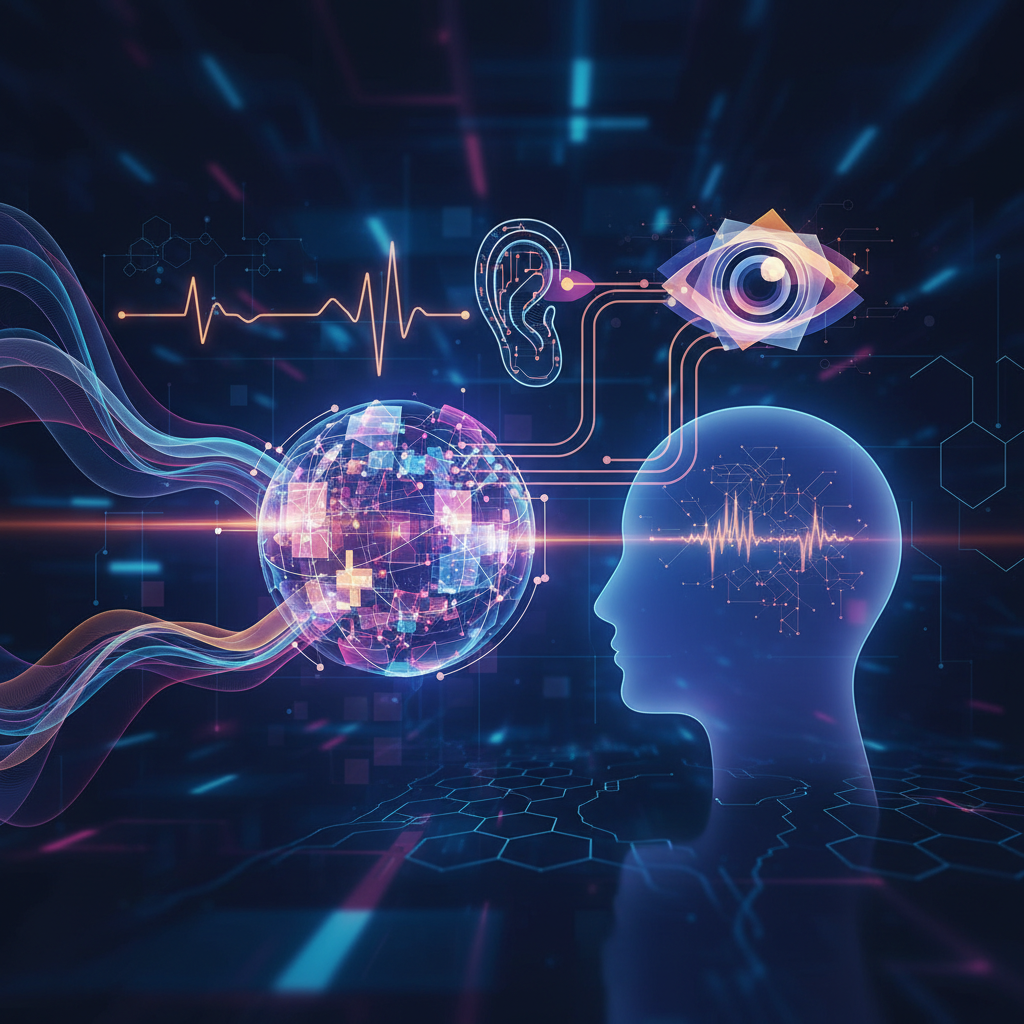
Models like GPT-4o, Gemini 2.5 Flash, and Pro embody this evolution. They analyze not only the visual content of a sequence but also spoken dialogues, ambient noises, subtitles, and even gestures or body language. This capacity for multimodal learning paves the way for truly contextual interactions.
From Recognition to Emotional Responsiveness
The true innovation lies not only in the ability to process multiple data types but in the capacity to extract emotional and situational context from them. Current systems achieve latency times of less than 200 milliseconds, allowing for fluid exchanges that no longer break the natural rhythm of conversation.
These models adapt voice and tone based on the emotional state detected via combined audio and visual analysis. A conversational agent can now slow its pace if the user seems confused, adjust its intonation in a stressful situation, or offer more detailed responses when it perceives hesitation in the voice.
Voice models capture not only the spoken words but also intonation, rhythm, and emotions, transforming how we interact with machines.
This emotional dimension relies on technologies like Whisper for audio recognition and transcription, combined with facial analysis and microexpression detection systems. The integration of these components creates a user experience where the machine not only understands what is said but also grasps how and why it is communicated.
The Three Technological Pillars of Multimodal Interaction
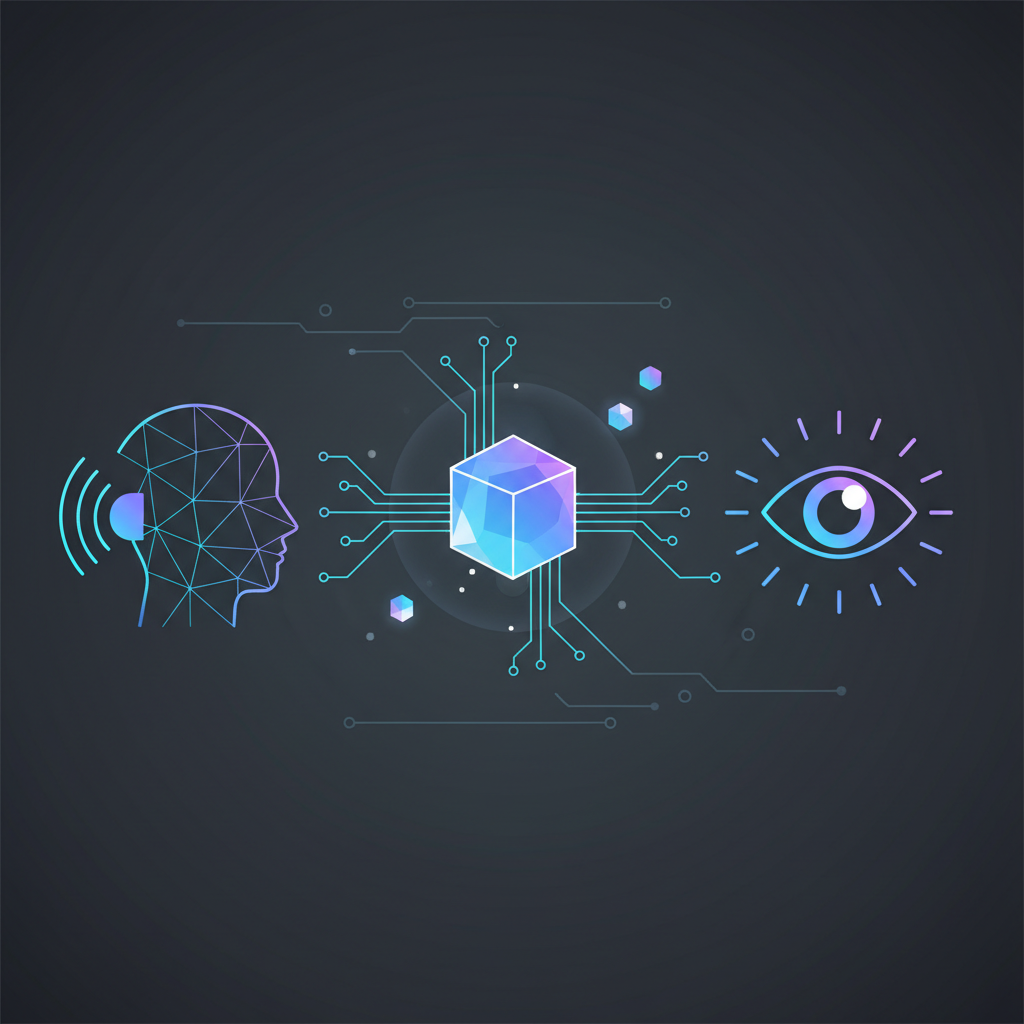
The audio-visual AI ecosystem is built on three complementary families of technologies that work in synergy to create natural interaction experiences.
- Speech-to-Text (STT): Speech recognition models convert speech into text with remarkable accuracy. OpenAI's Whisper represents the current state of the art, capable of transcribing in over 90 languages while managing accents, background noise, and dialectal variations.
- Text-to-Speech (TTS): Synthetic voice generation has crossed the threshold of authenticity. Current systems produce voices indistinguishable from human voices, with granular control over emotion, rhythm, and prosody. Modern voice models can even clone voices from just a few seconds of recording.
- Multimodal Fusion: Beyond simple audio-text juxtaposition, architectures like GPT-4o or Gemini Live integrate understanding of visual, gestural, and environmental context. An assistant can thus respond to "can you explain what I'm looking at?" by simultaneously analyzing the camera's video feed and the interrogative tone of the question.
Concrete Applications: Beyond the Tech Gadget
The use cases for multimodal AI extend far beyond spectacular demonstrations. In the healthcare sector, assistive robots simultaneously analyze patients' facial expressions, voice tone, and gestures to detect signs of pain or distress that words alone may not always reveal. For a more in-depth analysis of the ethical challenges of AI in medicine, you can consult our article on AI and biomedicine.
Distance education also benefits from these advancements. Virtual tutors can now observe if a student frowns at a difficult concept, hesitates on an answer, or shows signs of fatigue – all clues that allow for real-time adaptation of the pedagogical pace.
In the world of consumer virtual assistants, multimodality radically transforms the user experience. An assistant can now respond by showing a graphic, adjust its explanation based on the user's reaction, and even produce animated avatars that synchronize facial expressions and speech to create a more engaging presence.
Video game and virtual reality environments leverage these capabilities to create non-player characters (NPCs) capable of organic interactions, reacting not only to the player's choices but also to their tone of voice, hesitations, or enthusiasm.
Technical Challenges and Current Limitations
Despite these impressive advancements, several challenges remain. Latency remains a critical issue: although the current 200 milliseconds are acceptable, they can still create a slight desynchronization in fast-paced conversations or demanding environments.
The energy consumption of multimodal models also raises questions. Simultaneously processing multiple high-resolution data streams requires considerable computational resources, raising ecological and economic concerns for large-scale deployment.
Algorithmic biases constitute another major challenge. Emotional analysis systems can interpret expressions differently depending on cultural backgrounds, disabilities, or neurodiversities, creating risks of unintentional discrimination that must be addressed.
Towards Truly Conversational AI
The evolution towards systems capable of "speaking by showing" marks a decisive step. Synchronized video-audio generation models, illustrated by projects like Make-A-Video or Gemini Live, allow conversational agents to point to an object while explaining it, draw a diagram to clarify a concept, or modulate their gestures according to the context.
This ability to orchestrate multiple simultaneous communication modalities significantly brings human-machine interactions closer to natural human exchanges. An assistant can now accompany its verbal response with a visual demonstration, adapt its tone according to the emotional context, and even use strategic silences to allow the user to assimilate complex information.
The integration of these technologies into advanced multimodal architectures also enables deep contextual understanding. A system can maintain conversational coherence over long periods, remember preferences expressed both verbally and gesturally, and anticipate needs even before they are explicitly formulated.
| Aspect of Multimodal AI | Key Characteristic | Impact on Interaction |
|---|---|---|
| Sensory Fusion | Simultaneous processing of heterogeneous data | Rich contextual understanding |
| Emotional Responsiveness | Audio-visual analysis of emotional context | Adaptability of machine's tone and pace |
| "Showing" Communication | Video-audio-gesture synchronization | More human-like interactions |
Humans at the Heart of Augmented Interaction
Beyond technical prowess, the true promise of audio-visual multimodal AI lies in its ability to reduce cognitive friction between humans and machines. Interfaces are gradually becoming invisible: no longer is it necessary to formulate requests in an artificial language or navigate complex menus.
This naturalness of interaction also opens up new perspectives for accessibility. People with visual impairments can benefit from audio descriptions enriched with visual context, while those with speech disorders can use combinations of gestures, facial expressions, and partial vocalizations to communicate effectively with systems.
Professional environments are also beginning to integrate these technologies. Meeting rooms equipped with multimodal assistants can now transcribe exchanges, identify speakers, detect moments of tension or agreement, and even suggest breaks when non-verbal signals indicate a collective drop in attention.
This transformation is part of a broader vision where technology adapts to humans rather than the other way around. Multimodal systems represent a step towards machines capable of understanding not only our instructions but also our intentions, our emotions, and our situational context.
Audio-visual multimodal AI is therefore not limited to improving the technical performance of virtual assistants. It fundamentally redefines the very nature of human-machine interaction, paving the way for more intuitive, inclusive, and truly conversational experiences. As these technologies continue to mature, they promise to make artificial intelligence not smarter in the computational sense, but more human in its ability to communicate and understand.