
Autonomous AI Agents: 2026, The Year of Business Transformation
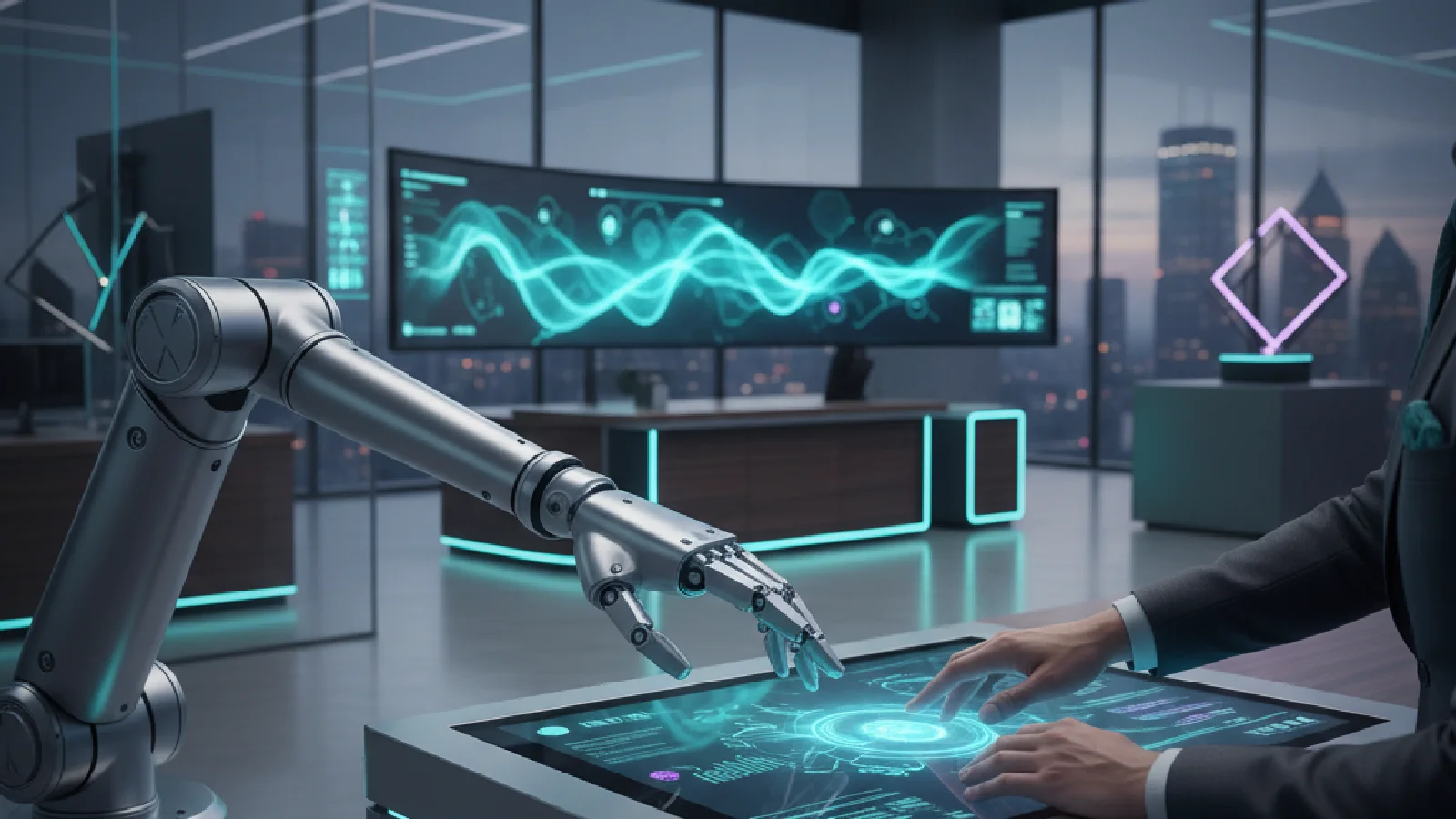
For months, IT departments multiplied their “Proof of Concepts”: AI agents capable of answering customers, sorting invoices, or analyzing documents. The result? A few impressive demos, but few concrete deployments. In 2026, this experimental phase is coming to an end. Companies are no longer testing: they are deploying. And those who do not adopt these autonomous agents see their competitors gain a decisive lead.
This shift is not by chance. Three dynamics are now converging to overcome the technical and organizational obstacles that hindered massive adoption: pre-configured agents integrated into central systems, accessible platforms without advanced AI expertise, and partner ecosystems offering proven industry-specific solutions. The result? Business managers become architects of intelligent automation, without months of development.
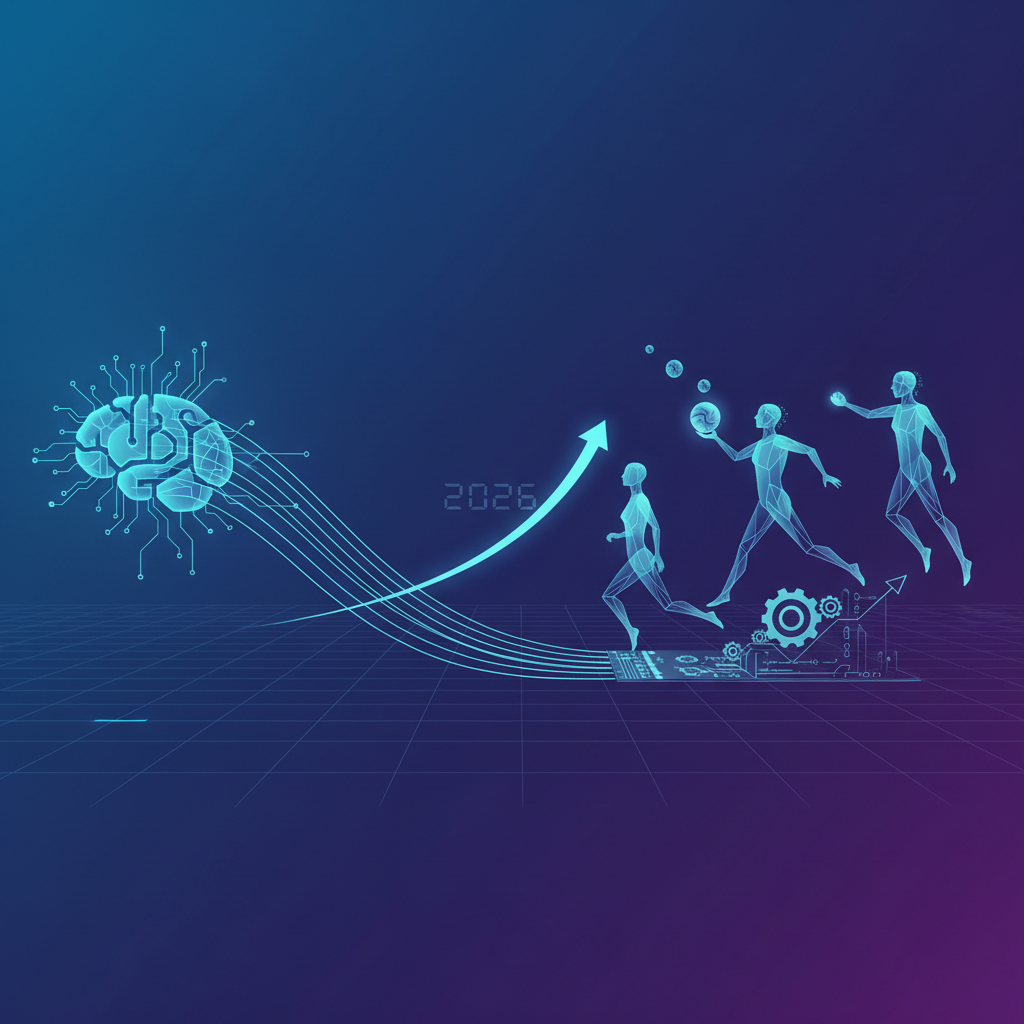
The End of the Pilot Era: From Lab to Field
The era of pilot projects is ending. According to Oracle, the obstacles that once made the deployment of AI agents "insurmountably complex" are gradually being removed. The reason? Technological maturity that finally allows for scaling.
Companies succeeding today no longer rely on the raw power of language models. They prioritize integration speed, responsible governance, and the ability to transform their processes into networks of autonomous agents. This approach radically changes the game: where a chatbot waits for an instruction, the agent plans, reasons, and orchestrates complex tasks end-to-end.
The numbers reflect this acceleration. Over 32,000 certified experts are now deploying these agents at scale, transforming entire departments into intelligent automation ecosystems. Conversational "ask-and-answer" interaction becomes three times more frequent than the use of isolated AI tools, a sign that employees are naturally adopting these new interfaces.
From Isolated Agent to Collective Orchestration
A single agent can manage a task. But the real value leap comes from multi-agent orchestration, the ability to coordinate several specialized agents to solve complex business problems. Deloitte emphasizes that this coordination becomes the true driver of intelligent automation: companies are moving from unitary agents to coordinated systems capable of structuring workflows according to criticality and resilience.
Concretely, this means an agent can trigger a cascade of actions: analyze a customer email, consult purchase history, check inventory, propose a personalized solution, and update the CRM, all without human intervention. This proactive autonomy frees employees from repetitive tasks so they can focus on value creation and customer relationships.
"Companies are no longer testing: they are deploying. And those who do not adopt these autonomous agents see their competitors gain a decisive lead."
The Three Pillars of Massive Adoption
Why now? Because three structural developments have converged at the same time, finally making viable what was yesterday organizational science fiction.
- Pre-configured agents and native integration: ERP, CRM, and business platform providers now integrate native agents into their systems. No more need to tinker with APIs or develop custom connectors: the agent arrives pre-configured, with industry knowledge and ready-to-use workflows. This native integration drastically reduces deployment costs and times.
- No-code platforms to create agents: Democratization also comes through accessible interfaces. Platforms now allow business managers to configure their own agents without writing a single line of code. Defining an objective, specifying data sources, setting governance rules: everything becomes visual and guided. This accessibility transforms operational managers into automation designers.
- Partner ecosystems and industry solutions: Each industry has its specificities. Publishers and integrators now offer vertical solutions: agents for banking compliance, for industrial supply chains, for patient record management. These proven solutions accelerate adoption by offering immediately operational use cases.

A Rapidly Growing Market, Ambitious Forecasts
The autonomous AI agent market will reach $8.5 billion in 2026. But this figure doesn't tell the whole story. What truly matters is the speed of integration into enterprise applications. Forecasts indicate that 33% of applications will integrate agentic AI by 2028, with at least 15% of operational decisions made autonomously.
This rapid penetration disrupts organizational models. Companies are redefining their business processes to leverage this new digital workforce. They are moving from a "click-and-hunt" logic – where the user searches for information in menus and tabs – to a conversational logic where they directly ask for what they want. This interface change profoundly alters the employee and customer experience.
The question is no longer whether your company will use autonomous agents, but how quickly it will deploy them. The delay accumulated in 2026 will translate into a competitive gap that will be difficult to close in subsequent years, as organizational learning and governance mastery take time.
Governance, Trust, and Human-Machine Balance
The autonomy of agents raises a central question: how far should a machine be allowed to decide alone? Deloitte reminds us that a balance must be maintained between autonomy and human supervision: human in the loop (systematic validation), on the loop (monitoring and veto power), or out of the loop (full autonomy with post-hoc audit).
Each approach corresponds to a different level of criticality. For an agent processing a leave request, full autonomy poses few risks. For an agent validating a multi-million credit, human supervision remains essential. Companies therefore structure their orchestration architectures based on the level of risk, the reversibility of decisions, and regulatory compliance.
This governance also implies traceability: every decision made by an agent must be auditable, with the ability to trace back to the reasoning that motivated it. Orchestration platforms now integrate governance dashboards that allow real-time visualization of agent activity, their success rates, and situations where human intervention was necessary.
Ethical issues are also present. How to avoid biases in automated decisions? How to ensure that the agent respects company values and the rights of those concerned? These issues, already addressed in the context of the European AI Act, become concrete when thousands of daily decisions escape the direct control of employees.
Interoperability and Standards: The Battle for the Future
Multi-agent orchestration poses a major technical challenge: how to make agents developed by different vendors, using different models, and deployed on distinct infrastructures communicate? Interoperability becomes a strategic issue, with an ongoing battle between open source protocols and proprietary solutions.
Companies that build modular systems, capable of integrating new agents without a complete overhaul, gain valuable flexibility. They can choose the best agent for each use case, rather than being locked into a single ecosystem. This modularity also ensures resilience: if an agent malfunctions, the system can replace or bypass it without paralyzing the entire process.
Inter-agent communication standards are still emerging, but their rapid adoption conditions companies' ability to scale. The unified orchestration platforms emerging today play a conductor's role, ensuring data consistency, communication security, and action traceability.
Role Transformation and Skill Upgrading
The massive arrival of autonomous agents does not eliminate jobs, but profoundly transforms them. Employees stop performing repetitive tasks to become agent supervisors, process architects, performance analysts. This evolution requires rapid skill upgrading: understanding what an agent can do, knowing how to configure it, interpreting its results, and intervening when necessary.
The most advanced companies train their teams in these new skills. They create hybrid roles, halfway between business and technology, where process mastery takes precedence over pure technical skill. This cultural transformation is often longer than the technological deployment itself, but it conditions long-term success.
Startups that stand out in 2027 have understood this well: differentiation no longer comes solely from the algorithm, but from the ability to integrate AI into the organization's DNA, to train teams, and to continuously adjust processes.
Leading Sectors and Emerging Use Cases
Some sectors are adopting autonomous agents faster than others. Finance uses agents for real-time fraud detection, credit analysis, and regulatory compliance. The supply chain deploys agents capable of predicting stockouts, optimizing logistics routes, and automatically negotiating with suppliers. Customer service sees the emergence of agents that solve complex problems end-to-end, without human escalation.
In the healthcare sector, agents assist practitioners in diagnosis, treatment personalization, and patient monitoring. They continuously analyze medical data to detect weak signals and alert teams in case of anomalies. These uses raise questions of responsibility and clinical validation, but the gains in efficiency and quality of care are already measurable.
Human resources are also transforming their practices with agents capable of recruiting, assessing skills, personalizing training paths, and detecting signs of disengagement. The challenge here is to maintain a human dimension in processes where empathy and judgment remain essential.
---
Sectors and Use Cases of Autonomous Agents
| Sector | Key Use Case |
|---|---|
| Finance | Fraud detection, credit analysis, compliance |
| Supply Chain | Logistics optimization, stock prediction |
| Customer Service | Complex problem resolution, customer support |
| Healthcare | Diagnostic assistance, patient monitoring, personalization |
| Human Resources | Recruitment, skills assessment, training |
---
Persistent Challenges Despite Momentum
Despite this massive adoption, obstacles remain. The security of autonomous agents is a concern: how to prevent a compromised agent from becoming an attack vector? How to ensure that sensitive data handled by agents remains protected? Companies are strengthening their security architectures, isolating agents in controlled environments and encrypting inter-agent communications.
Data quality remains an absolute prerequisite. An agent is only as good as the data it uses. Companies that have neglected their data governance are now encountering agents that produce inconsistent or biased results. Data cleaning, structuring, and enrichment are becoming priority projects.
Finally, resistance to change does not disappear overnight. Some employees see agents as a threat to their jobs or autonomy. Others fear losing control over important decisions. Supporting this cultural transition, explaining the benefits, and involving teams in agent design are essential levers for successful transformation.
Outlook: Towards an Agentic Enterprise
2026 marks a turning point, but it's just the beginning. Companies succeeding today are not content with merely adding agents to their existing processes: they are rethinking their operational models around agentic AI. They envision organizations where humans and agents collaborate fluidly, where decisions are made at the speed of data, and where innovation is continuous.
The 2028 horizon depicts a reality where a third of enterprise applications natively integrate agentic AI. Employees no longer "use" tools: they orchestrate agents that execute for them. This profound transformation redefines competitiveness, productivity, and the work experience. Companies that successfully navigate their agentic transition will have a lasting strategic advantage, based not on isolated technology, but on an organizational capacity to learn, adapt, and innovate continuously.