
GEO and SEO: Towards Unified Content Strategies in 2026

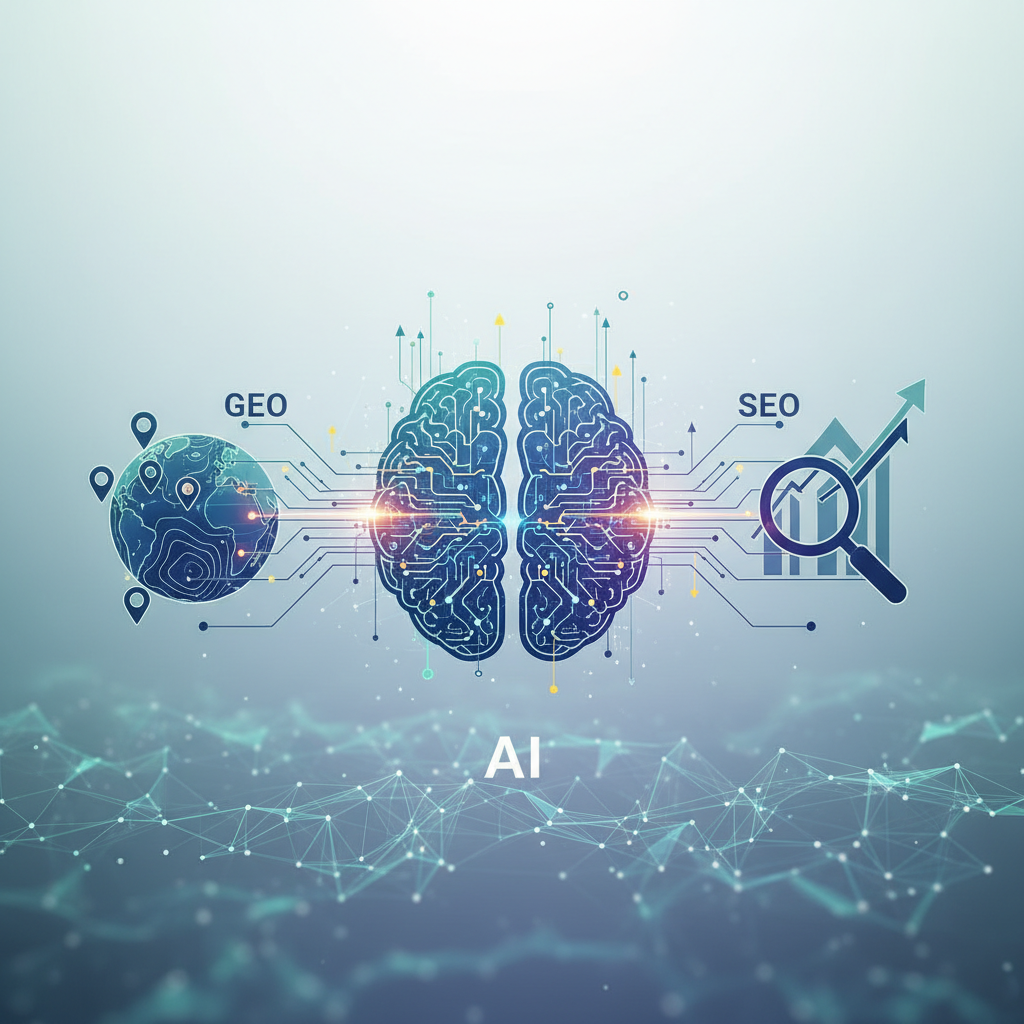
The year 2026 marks a decisive turning point for digital marketing professionals. As traditional search engines now coexist with conversational agents powered by LLMs (Large Language Models), a new discipline is emerging: Generative Engine Optimization (GEO). Does this evolution challenge the fundamentals of SEO, or does it call for a strategic merger?
The Emergence of GEO: A Silent Revolution
Generative Engine Optimization is no longer just a trend but an operational reality. As Adobe explains with its new LLM Optimizer tool, brands must now optimize their content to be visible in an ecosystem where ChatGPT, Perplexity, and Gemini are redefining the rules of search engine optimization.
This transformation is accelerating at a dizzying pace. In 2026, over 35% of searches now incorporate a generative AI component, disrupting how users consume information. Instead of browsing lists of results, they get direct, contextualized answers.
The fundamental difference? Where traditional SEO aims to position pages in search results, GEO seeks to have its content cited and referenced in AI-generated responses. This approach requires a complete rethinking of content creation.
Technical Challenges of Hybrid Optimization
Adapting to AI-powered search engines imposes new technical challenges on marketing teams. Websites must now be readable by more sophisticated algorithms, capable of analyzing semantics and context with unprecedented precision.
Technical Architecture Optimized for AI
LLMs prioritize structured and semantically rich content. This means:
- Complete HTML pre-rendering to avoid JavaScript blockages
- Advanced structured schemas (JSON-LD, microdata) to contextualize information
- Robust keyword architecture maintaining thematic consistency
Eliminating unindexable JavaScript blocks becomes critical. AI response engines analyze content more deeply than traditional crawlers, requiring perfect technical accessibility.
| Technical Element | Implication for GEO |
|---|---|
| HTML Pre-rendering | Makes content accessible |
| Structured Schemas | Provides semantic context |
| Keyword Architecture | Ensures thematic consistency |
From Keywords to Lexical Fields
Web writing is undergoing a radical transformation. Gone is single-keyword optimization: writers must now master the art of broad lexical fields and creating citable content.
"LLMs favor semantically rich, authoritative content formatted to answer natural questions" - GEO Trends Analysis 2025
This evolution requires moving from a technical approach to a more sophisticated editorial strategy, where E-E-A-T (Experience, Expertise, Authoritativeness, Trustworthiness) becomes the foundation of any content strategy.
Strategic Opportunities of Unified Marketing
Successful integration of GEO into an existing SEO strategy opens up unprecedented opportunities for visibility and engagement. Pioneering brands are discovering new growth levers particularly suited to the conversational ecosystem.
New Performance Indicators
Traditional SEO KPIs are enriched with GEO-specific metrics:
- Citation frequency in AI responses
- AI authority score based on source quality
- Mention rate in generated conversations
- Impact on brand awareness via direct citations
These new indicators make it possible to measure a brand's real influence in the conversational ecosystem, beyond simple traffic metrics.
Increased Visibility and Early Engagement
GEO offers the unique ability to reach users from the conversational search phase, even before they visit a website. This early visibility transforms the brand-consumer relationship by creating more natural and contextualized touchpoints.
Enterprises that master this approach cultivate engaged communities that naturally feed the expertise signals recognized by AI. A virtuous circle that strengthens both traditional SEO authority and GEO relevance.
Towards a Unified Content Strategy
The opposition between SEO and GEO is a false debate. The most successful brands in 2026 adopt a holistic approach that makes traditional SEO the foundation upon which a targeted GEO layer is intelligently superimposed.
This unified strategy is based on three complementary pillars:
- Robust SEO foundations: Technical architecture, internal linking, and domain authority remain essential. These bases are the necessary ground for any advanced optimization.
- Strategic GEO layer: Specific optimization for response engines, creation of citable content, and development of expertise recognized by AI.
- Operational synergy: Integration of both approaches into a coherent roadmap, where each piece of content produced simultaneously serves both SEO and GEO objectives.
The Future of Intelligent Content Marketing
The evolution towards unified content strategies represents more than a technical adaptation: it is a fundamental transformation of the relationship between brands and their audiences. In 2026, companies that master this hybrid approach will have a decisive competitive advantage.
Generative AI tools are becoming strategic partners in content creation, enabling the large-scale production of optimized texts for both ecosystems. This intelligent automation frees marketing teams to focus on strategy and innovation.
Integrating ethical artificial intelligence solutions into creation processes ensures a responsible approach to this transformation. Brands that invest in this direction build a lasting relationship of trust with their audiences, the foundation of any sustainable content strategy.
Practical Implementation of the Hybrid Approach
The transition to a unified SEO-GEO strategy requires a structured roadmap and adapted resources. Companies that successfully make this transformation generally follow a progressive three-phase approach.
Phase 1: Audit and Foundations - Evaluation of existing SEO, identification of citable content, and technical upgrade for AI compatibility.
Phase 2: Hybrid Optimization - Creation of dual-purpose content, implementation of advanced structured schemas, and development of recognized sectoral expertise.
Phase 3: Measurement and Iteration - Deployment of new KPIs, analysis of cross-performance, and continuous optimization based on feedback from both ecosystems.
This methodical approach helps avoid the pitfalls of an overly abrupt transformation while maximizing synergies between the two disciplines. Data security issues remain central to this process, particularly when integrating AI tools into creation processes.
Industry Evolution Prospects
The horizon of 2026 already outlines an even more integrated ecosystem, where the boundary between traditional and conversational search is gradually blurring. Tech giants continue their innovation race, promising increasingly sophisticated tools for marketing professionals.
This constant evolution requires teams to maintain continuous technological watch and rapid adaptability. Specialized GEO training is multiplying, testifying to the growing maturity of this discipline. Simultaneously, the emergence of hybrid SEO-GEO certifications confirms the institutionalization of this unified approach.
The future belongs to brands that can navigate this dual ecosystem with agility, maintaining operational excellence on both fronts while anticipating future technological developments.