
TSMC Revolutionizes the AI Chip Race in 2026
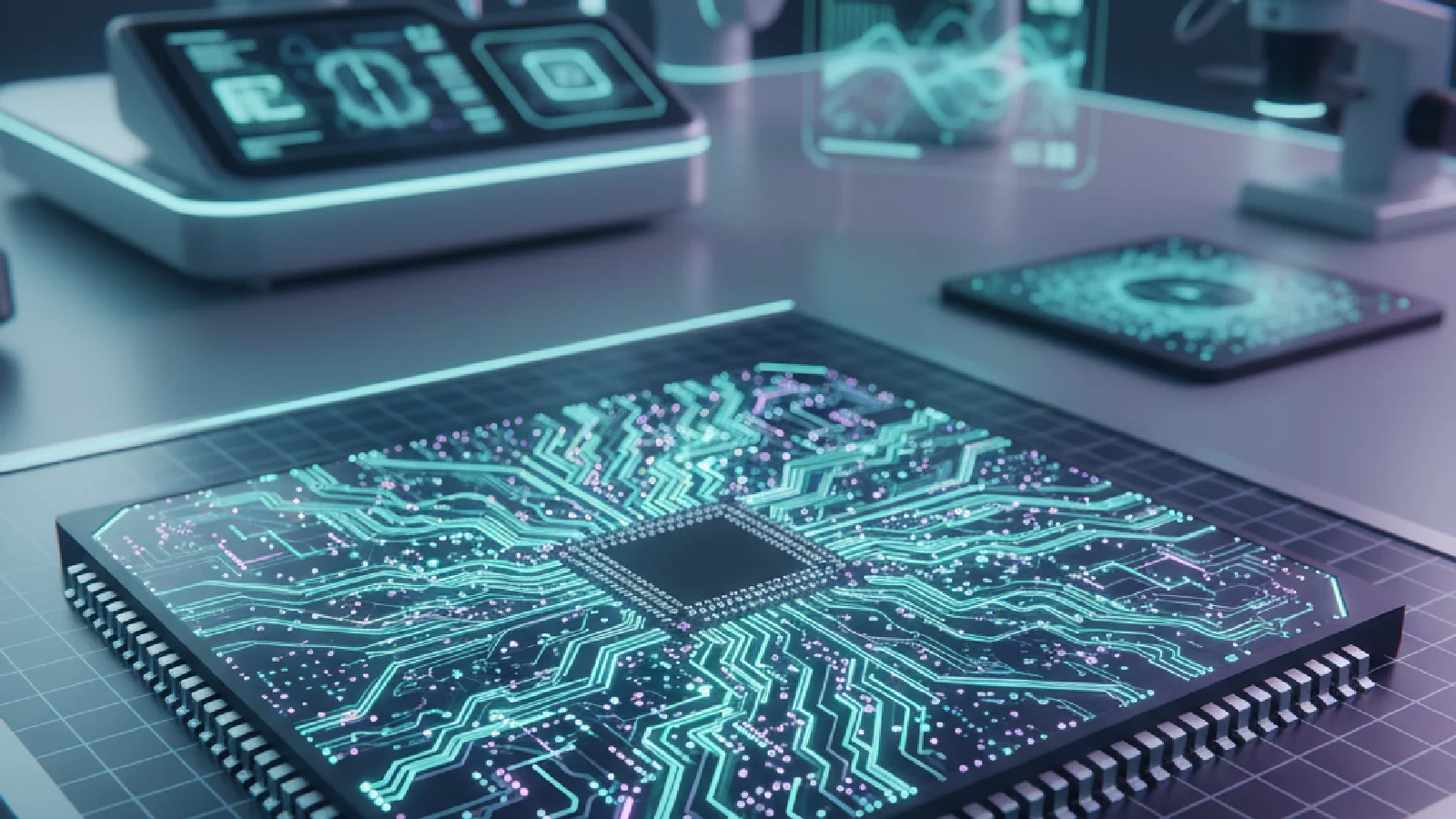
The artificial intelligence revolution is in full swing, and at the heart of this transformation is a fierce battle for control of the world's most advanced semiconductors. Taiwan Semiconductor Manufacturing Company (TSMC) is positioning itself as the undisputed leader in this technological race, holding nearly 90% of the ultra-advanced chip market and generating record revenues driven by the explosion in AI demand.

TSMC's Technological Dominance Amidst the AI Explosion
TSMC is no longer just a chip manufacturer: it has become the central pillar of the global AI ecosystem. The Taiwanese company produces the processors that power giants like Nvidia, AMD, and Apple, establishing itself as an irreplaceable link in an exploding value chain.
The numbers speak for themselves: the company shows revenue growth of over 30% in one year, with record gross margins approaching 60%. This exceptional performance is explained by the insatiable demand for high-performance chips for data centers and generative AI applications.
Global investment in AI reached $202.3 billion in 2025, representing 50% of all venture capital deployed worldwide.
This historic concentration of investments directly translates into TSMC's order books, which are struggling to meet the growing demand from its strategic customers. NVIDIA CEO Jensen Huang has publicly urged TSMC to increase its wafer production to support the rapid expansion of the AI market.
| Key TSMC Indicator | Value | Implication for AI |
|---|---|---|
| Chip Market Share | ~90% ultra-advanced | Essential player in the AI ecosystem |
| Revenue Growth | +30% in one year | Insatiable AI demand |
| Gross Margins | Nearly 60% | High profitability of the AI chip market |
| AI Investment | $202.3 billion (2025) | Direct support for TSMC orders |
Innovation for Performance: The 2-Nanometer Revolution
TSMC's strategy is based on a continuous race for miniaturization and energy efficiency. In 2025, the company launched volume production of its 2nm chips, a technological feat that gives it several years' lead over its competitors.
This new generation of processors offers tenfold computing performance while significantly reducing energy consumption – two essential criteria for AI applications that require massive calculations and optimized infrastructures.
Beyond the etching fineness, TSMC is also relying on advanced packaging technologies like CoWoS (Chip-on-Wafer-on-Substrate) and InFO (Integrated Fan-Out), which increase computing density and improve the performance of next-generation AI systems.

Geographical Diversification: Addressing Geopolitical Challenges
Facing growing geopolitical tensions between the United States, China, and Taiwan, TSMC has embarked on an ambitious geographical diversification strategy. The company is investing heavily in new production sites to secure its supplies and reduce its geographical dependence.
Expansion projects include:
- New fabs in Taiwan: Tainan and Hsinchu sites to strengthen domestic capabilities
- American expansion: $40 billion industrial complex in Arizona
- Japanese partnership: production facility in collaboration with Sony and Denso
This diversification responds to geopolitical pressures while allowing TSMC to get closer to its strategic customers and benefit from substantial government support.
Structural Challenges of Explosive Growth
Despite its dominant position, TSMC faces considerable challenges that could jeopardize its technological supremacy. The increasing complexity of 2nm manufacturing processes generates colossal investment costs, requiring several billion dollars per new factory.
The supply of EUV (Extreme Ultraviolet) lithography equipment is another critical point. TSMC largely depends on ASML, the world's sole manufacturer of these ultra-sophisticated machines, creating a potential bottleneck in its production chain.
The talent war also represents a major challenge. TSMC's geographical expansion requires the recruitment and training of thousands of specialized engineers in cutting-edge technologies, in a context of fierce competition with other players in the sector.
Competition Awakens
Samsung and Intel are not standing still in the face of TSMC's dominance. Both tech giants are investing heavily to catch up on 3nm and 2nm nodes, threatening the Taiwanese foundry's near-monopoly position.
Intel, in particular, is banking on its "IDM 2.0" strategy, which combines internal production and foundry services to regain market share. The American company benefits from financial support from the US government via the CHIPS Act, giving it the means to compete with TSMC in terms of innovation.
Towards a Consolidation of Technological Leadership
To maintain its competitive edge, TSMC relies on three complementary strategic pillars. First, accelerating innovation cycles with ambitious technological roadmaps towards 1.4nm and beyond. Second, strengthening partnerships with key players in the AI ecosystem, notably Nvidia and cloud hyperscalers.
Finally, optimizing its "fabless" foundry model, which allows it to remain neutral towards its customers while capitalizing on their respective innovations. This collaborative approach constitutes a unique competitive advantage in an increasingly vertically integrated sector.
The company is also developing tailored solutions for specific AI needs, including chips optimized for real-time inference and distributed machine learning. These innovations position TSMC as a strategic technological partner rather than a mere service provider.
The Transformative Impact on the Global Economy
TSMC's position in the AI value chain generates considerable ripple effects on the global economy. The Taiwanese company directly contributes to accelerating the digital transformation of businesses and the development of new economic models based on artificial intelligence.
Its influence extends far beyond the technology sector, impacting industries as diverse as automotive, healthcare, finance, and energy. Each TSMC innovation opens new possibilities for integrating AI into business strategies, creating a virtuous cycle of innovation and growth.
This central position also places TSMC at the heart of debates on technological sovereignty and supply security. Governments worldwide now recognize the strategic importance of advanced semiconductors, transforming the Taiwanese company into a leading geopolitical player.
TSMC's trajectory perfectly illustrates the convergence between technological innovation and geostrategic issues that characterize the era of artificial intelligence. In this AI chip race, the Taiwanese company has successfully transformed its manufacturing expertise into a sustainable competitive advantage, establishing itself as the invisible architect of the ongoing digital revolution.