
Multimodal RAG: Image/Audio Integration Redefines Search
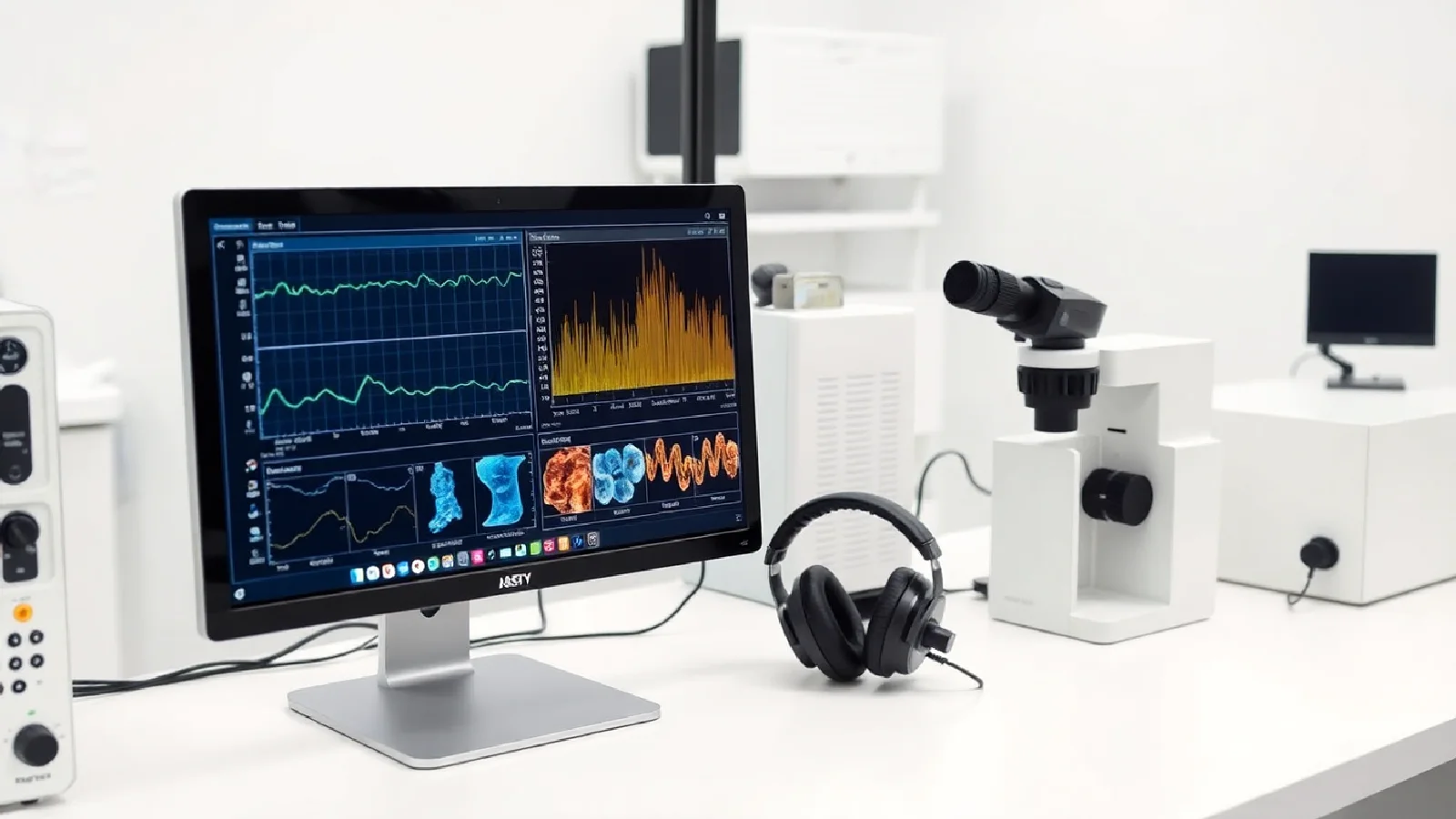
An automotive company wants to train its technicians. An employee photographs a defective component and asks: “How do I replace this part?” In a few seconds, the internal assistance system analyzes the image, retrieves the corresponding technical diagram, the associated video manual, and generates a precise, step-by-step answer. This scenario, still experimental until recently, is becoming a reality thanks to multimodal RAG.
The extension of retrieval-augmented generation beyond text – integrating images, audio, and video – marks a turning point for businesses. Where traditional RAG systems were limited to querying textual document bases, new multimodal architectures allow for simultaneous semantic search across multiple modalities, radically enriching the user experience and the relevance of generated responses.

From Text to Multiple Modalities: The Evolution of RAG
Understanding Classic RAG
Retrieval-Augmented Generation (RAG) combines an information retrieval system with a large language model (LLM). Rather than relying solely on the model's pre-trained knowledge, RAG first retrieves relevant documents from a knowledge base, then uses them as context to generate a factual and up-to-date response.
This approach addresses two major limitations of LLMs: outdated training data and the risk of hallucinations. By grounding responses in verifiable sources, RAG improves the factual reliability of generative AI systems.
Multimodal Extension: When AI Reads, Sees, and Hears
Multimodal RAG takes an additional step. Instead of limiting the search to textual documents, it converts images, diagrams, tables, audio recordings, and videos into usable vector representations. Thanks to vision-language models like GPT-4o or CLIP, and audio-to-text models like Whisper, every multimedia element becomes semantically searchable.
Concretely, a query like “What is the network topology diagram presented at the March 15th meeting?” can now simultaneously retrieve the textual meeting minutes, the audio recording of the meeting, and the diagram projected on the screen. This ability to cross-reference modalities opens up unprecedented opportunities for businesses.
Technical Mechanisms of Multimodal RAG
Vector Embeddings and Multimodal Databases
The core of the system relies on transforming each modality into vector embeddings – numerical representations capturing the semantic meaning of the content. A technical diagram, a product photo, or a minute of a podcast are converted into vectors stored in specialized databases (Pinecone, Weaviate, Milvus).
When a user formulates a query, it is also vectorized. The search engine then identifies the content – textual, visual, or auditory – whose vectors are semantically closest. These relevant elements are transmitted to the LLM, which generates a synthetic response.
Hybrid Orchestration: BM25 and Semantic Search
The most performant architectures combine several search techniques. Keyword search (BM25) remains effective for finding precise terms, while vector search excels at understanding context and abstract concepts. This hybrid orchestration maximizes the relevance of results, especially when documents combine text and visuals.
As explained in the DataCamp guide on multimodal RAG, an operational system also requires sophisticated pre-processing modules: image extraction from PDFs, audio transcription, table and diagram detection. Each modality requires specific processing before integration into the RAG pipeline.

Concrete Business Applications
Technical Support and Maintenance
In manufacturing or after-sales services, multimodal RAG transforms technical assistance. A technician facing a breakdown can photograph the defective equipment. The system analyzes the image, identifies the component, retrieves relevant disassembly videos, and generates contextualized instructions – all in real-time.
This ability to visually guide drastically reduces incident resolution time and limits reliance on senior experts, thereby increasing overall productivity.
Training and Onboarding
Training documents often combine text, diagrams, and explanatory videos. A multimodal RAG system allows new employees to ask questions in natural language and receive enriched answers: relevant video excerpts, annotated diagrams, manual passages. Learning becomes more fluid and personalized.
Automated Customer Service
Customer relationship centers accumulate considerable volumes of multimodal data: screenshots sent by users, conversation recordings, video tutorials. Integrating this content into a multimodal RAG system allows for generating more relevant responses, illustrating solutions with adapted visuals or audio excerpts.
Implementation Challenges and Considerations
Costs and Technical Complexity
Orchestrating a multimodal RAG pipeline requires specialized skills. It involves coordinating multiple models (vision, audio, text), optimizing the API costs of proprietary LLMs, and correctly sizing the vector storage infrastructure. The multiplication of modalities also increases the need for bandwidth and computing power.
Companies must evaluate the cost-benefit ratio: not all use cases justify this complexity. A progressive approach – starting with text and image, then integrating audio – allows for managing investments.
Data Compliance and Confidentiality
Integrating photos, videos, or audio recordings raises questions of regulatory compliance. GDPR imposes strict obligations on the processing of visual or vocal personal data. Companies must ensure anonymization, secure vector databases, and regularly audit indexed content.
Sensitive sectors (healthcare, finance, defense) require on-premise architectures or sovereign clouds to prevent strategic data leaks.
Model Quality and Bias
Vision-language models can exhibit biases related to their training data: imperfect recognition of certain faces, culturally biased interpretations, difficulties with highly specialized technical diagrams. It is crucial to rigorously test the system on representative datasets and integrate human feedback loops.
Outlook: Towards an Augmented User Experience
Contextual Voice Assistants
The alliance of multimodal RAG and autonomous AI agents promises assistants capable of summarizing an internal podcast, extracting key decisions from a video meeting, or automatically annotating technical diagrams. These agents no longer just answer: they anticipate needs, suggest complementary documents, and enrich interactions.
Cross-Media Semantic Search
Imagine an enterprise search engine where a query like “2026 provisional budget” simultaneously returns the Excel file, the presentation slide, and the audio excerpt of the CFO commenting on the figures. This convergence of modalities breaks down documentary silos and streamlines access to information.
Integration with Business Workflows
The next generations of multimodal RAG will integrate natively into collaborative tools (Slack, Teams, Notion). A user will be able to query a knowledge base directly from their messaging app, get an illustrated answer, and enrich it with visual feedback – thus creating a continuous improvement loop.
A Transformation Underway
Multimodal RAG is not just a technical evolution: it redefines how businesses leverage their knowledge. By enabling unified semantic search across text, images, videos, and audio, this technology improves the relevance of responses, reduces search times, and enriches the user experience.
However, this promise comes with demands: sophisticated orchestration, cost management, regulatory compliance, and vigilance regarding algorithmic biases. Companies that master these challenges will gain a decisive competitive advantage in a world where rapid access to relevant information becomes a key performance factor.
The integration of generative AI in startups and the normative framework established by the European AI Act accompany this transition. Multimodal RAG, by combining analytical power and semantic richness, is establishing itself as an essential building block of tomorrow's AI infrastructure for organizations.