
SaaSpocalypse: CIOs Redefine Their Purchasing Strategies

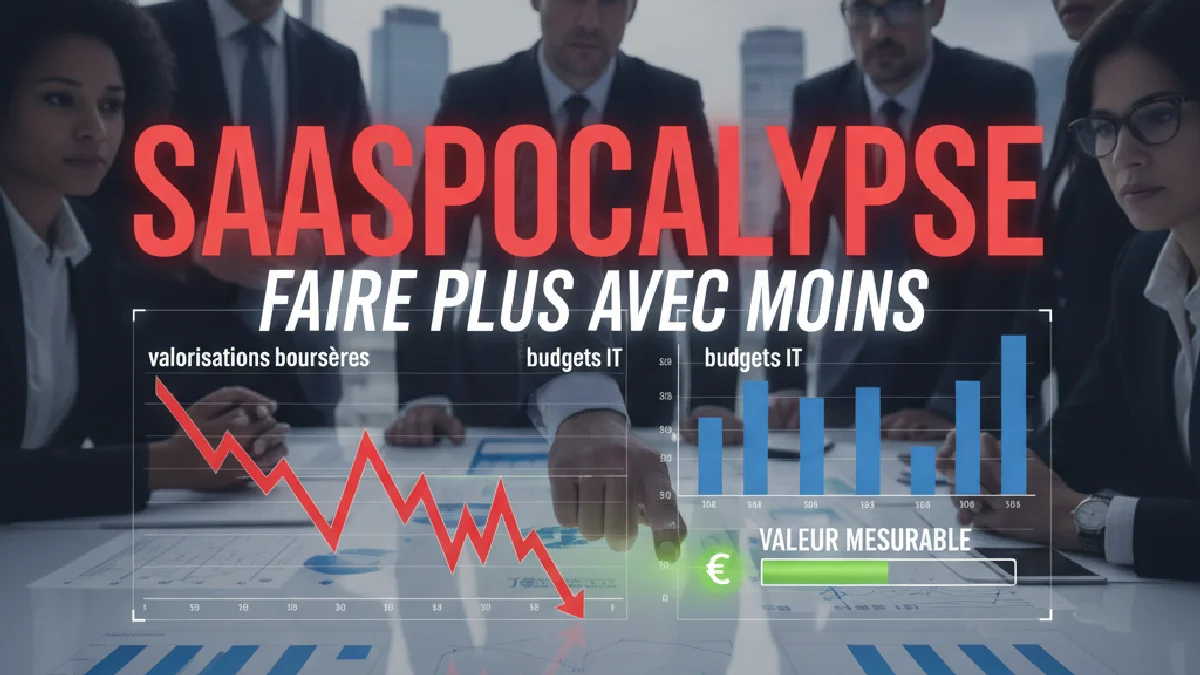
SaaS vendor stock valuations have plummeted, IT budgets are stagnating, and CIOs (Chief Information Officers) face an unprecedented challenge: doing more with less, while demonstrating the value of every euro invested. This context of economic strain, now dubbed "SaaSpocalypse" (source), marks a profound shift in the relationship between buyers and cloud solution providers.
CIOs are no longer just looking for a license or a subscription: they now demand that every expenditure translates into measurable value, forcing vendors to radically transform their business models. The rules of the game have changed, and providers who fail to adapt risk losing their most strategic clients.
From License to Value: The Shift to Outcome-Based Models
The first demand from CIOs concerns outcome-based pricing. Gone are the days when a SaaS contract was simply a price per user or per month. IT departments now want contractual commitments that directly link cost to measurable performance: reduced processing times, increased conversion rates, or savings generated on business processes.
This transformation is part of a broader movement to optimize IT costs. According to a Cigref report on cost reduction levers, CIOs must now structure their strategy around three axes: primary costs, function (BUILD/RUN), and accounting treatment (CAPEX/OPEX). This analytical framework helps to better understand where potential savings lie and how to effectively exploit them.
SaaS vendors are thus compelled to rethink their value proposition. Instead of selling a tool, they must demonstrate how their solution concretely contributes to their clients' business objectives. This paradigm shift transforms commercial relationships into results-oriented partnerships, where risk is shared between provider and client.
Evolution of CIO Expectations for SaaS Vendors
| Old Model (before SaaSpocalypse) | New Model (SaaSpocalypse) |
|---|---|
| Simple contract: price per user/month | "Outcome-based" pricing (linked to results) |
| Focus on the solution or tool | Focus on measurable value and business objectives |
| Risk primarily borne by the client | Risk sharing between client and provider |
IFRS Accounting Constraints Upset the Status Quo
The adoption of IFRS (International Financial Reporting Standards) has introduced a major constraint: the limitation on capitalizing SaaS purchases. Previously, certain software expenses could be accounted for as CAPEX (capital expenditures), allowing them to be spread over time. Now, the majority of cloud subscriptions must be treated as OPEX (operating expenses), directly impacting the income statement.
This accounting evolution pushes CIOs to favor flexible OPEX contracts that adapt to activity fluctuations. Pay-per-use models (pay-per-transaction, pay-per-outcome) are becoming the norm, allowing real-time adjustment of expenses according to business needs. This financial agility is even more crucial in a volatile economic climate.
“CIOs are no longer just looking for a license or a subscription; they demand pricing models where every dollar spent translates into measurable value.”
Full Transparency and Deliverable-Oriented SLAs
Faced with the proliferation of SaaS tools and the risk of shadow IT (adoption of uncontrolled solutions by the IT department), IT departments are imposing radical transparency on usage costs. They demand detailed dashboards, allowing real-time monitoring of each service's consumption and identification of optimization opportunities.
SLAs (Service Level Agreements) are also evolving. Rather than focusing on user interface availability (99.9% uptime), CIOs are demanding performance guarantees oriented towards business deliverables. For example, for solutions integrating AI, SLAs now cover prediction accuracy, query processing time, or the quality of results generated by software agents.
This evolution reflects a profound change in the perception of value: the interface is no longer the essential part; it's the execution layer that matters. CIOs want solutions capable of orchestrating complete processes, from start to finish, without constant human intervention. Vendors must therefore prove that their AI agents can genuinely replace or augment tasks performed by employees.
Avoiding Vendor Lock-in
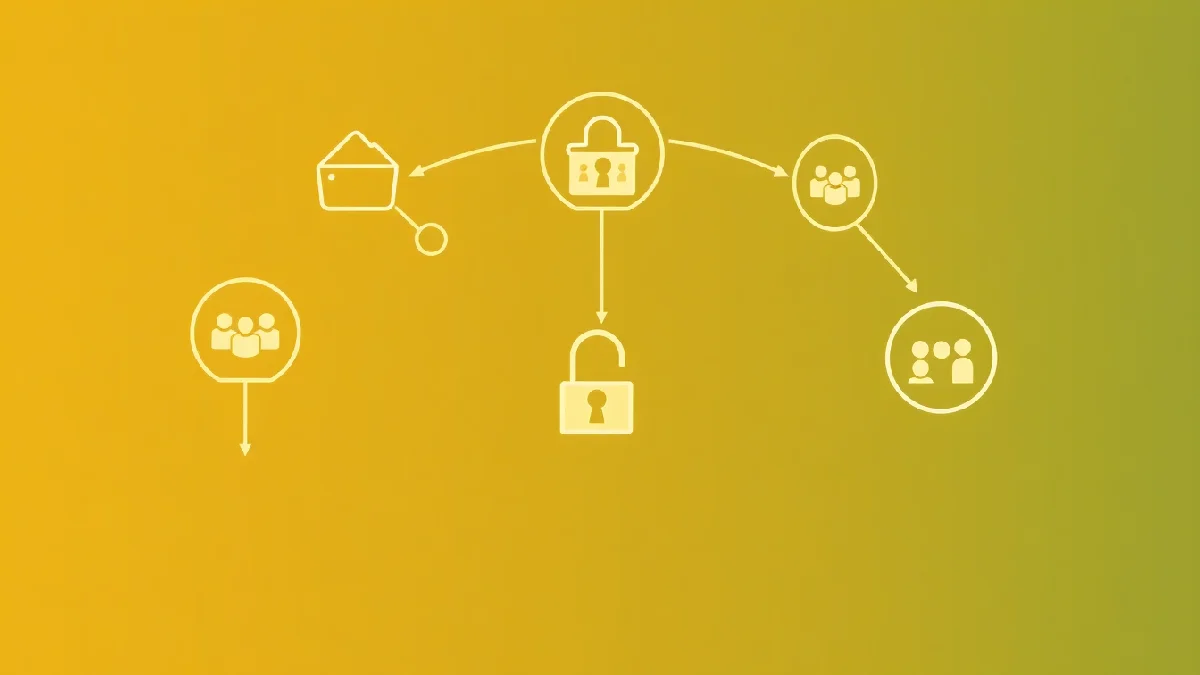
Vendor lock-in has become one of the major concerns for CIOs. Investing heavily in a proprietary solution, where data and processes are difficult to migrate to another provider, represents an unacceptable strategic risk in the current context.
CIOs therefore demand guarantees of portability and interoperability:
- Open and standardized data formats, allowing easy export
- Documented and accessible APIs to facilitate integration with other tools
- Ability to quickly switch between providers without data loss or service interruption
This demand for flexibility pushes vendors to adopt modular architectures, where each functional component can be replaced without undermining the entire system. CIOs also favor solutions compatible with market standards, thereby reducing dependence on a single provider.
Security, Compliance, and Shadow IT Reduction
The rise of SaaS solutions comes with increased risks in terms of data security and regulatory compliance. CIOs must ensure that each tool complies with current standards (GDPR, NIS2, SOC 2, ISO 27001) and that sensitive data is protected against intrusions and leaks.
To reduce shadow IT, CIOs adopt a proactive approach: rather than prohibiting the use of unauthorized solutions, they offer validated service catalogs that meet business needs while ensuring compliance. This strategy involves close collaboration with business departments to understand their expectations and co-construct adapted solutions.
SaaS providers must therefore natively integrate security and compliance features, rather than offering them as options. CIOs also expect complete traceability of access and actions performed within applications, facilitating audits and anomaly detection.
The Rise of Software Agents and Value Transformation
The arrival of AI agents capable of autonomously executing business processes profoundly changes the value proposition of SaaS solutions. Rather than providing interfaces that allow users to perform tasks, vendors must now offer agents capable of performing them on their behalf.
This transition shifts the software's value to the execution layer. CIOs expect vendors to demonstrate their agents' ability to orchestrate complex workflows, make intelligent decisions, and adapt in real-time to business constraints. This evolution is part of a push for advanced automation, where the goal is to free employees from repetitive tasks so they can focus on higher-value missions.
Vendors must also prove that their agents are reliable, transparent, and auditable. CIOs do not want "black boxes" whose decisions are incomprehensible. They demand clear explanations of decision-making logic, allowing for compliance validation and correction of potential biases.
Outsourcing Development: Buy Rather Than Build
Faced with the increasing complexity of IT solutions and the shortage of technical skills, a strong trend is emerging: buy rather than build. CIOs are re-evaluating their internal development strategies, finding that the majority of pilot projects fail to generate real value. As this analysis on the pitfalls of internal development highlights, a significant portion of initiatives turn into costly and interminable "scientific projects."
CIOs now favor packaged solutions, provided they meet their requirements for flexibility, security, and performance. This strategy reduces implementation times, pools development costs among multiple clients, and benefits from the expertise of specialized vendors.
However, this approach requires rigorous vendor selection. CIOs must ensure that vendors share their long-term vision, invest in innovation, and are capable of adapting to technological and regulatory changes, an issue also addressed in this in-depth analysis of CVC 2026.
Flexible and Economically Resilient Partnerships
The relationship between CIOs and SaaS providers is evolving towards strategic partnerships, where both parties share risks and benefits. Contracts are becoming more complex, incorporating performance clauses, cost adjustment mechanisms, and co-innovation commitments.
CIOs seek providers capable of:
- Rapidly adapting to changes in economic and technological contexts
- Investing in R&D to evolve their solutions in line with market needs
- Offering responsive support and dedicated teams to accompany digital transformation
This partnership approach also implies increased financial transparency. CIOs want to understand vendors' cost structures to ensure that proposed prices are fair and sustainable. They favor vendors with solid economic models, thereby minimizing the risk of failure or acquisition.
Outlook: Towards a New Balance
The SaaSpocalypse marks a pivotal stage in the evolution of the cloud solutions market. CIOs, facing unprecedented budgetary and accounting constraints, are forcing providers to radically transform their business models. This pressure pushes vendors to innovate, not only technologically but also contractually and relationally.
In the medium term, this dynamic should foster the emergence of a more mature SaaS ecosystem, where solutions are selected based on their real value rather than marketing promises. Providers capable of demonstrating a clear ROI, ensuring security and compliance, and offering pricing models aligned with business results will be the big winners of this transformation.
For CIOs, the challenge is to build agile purchasing strategies that leverage technological innovations while controlling costs and risks. This involves strengthening internal skills in IT governance, contractual negotiation, and performance management. CIOs who successfully navigate this transition will be those who can turn current constraints into strategic opportunities, placing IT at the heart of their organization's value creation.
The coming months will reveal the extent of ongoing transformations and the market players' ability to adapt to this new environment. One thing is certain: the relationship between CIOs and SaaS providers will never be the same.
FAQ (JSON format - translate question and answer fields only):