CRM Automation: Hyper-Personalization in 2026
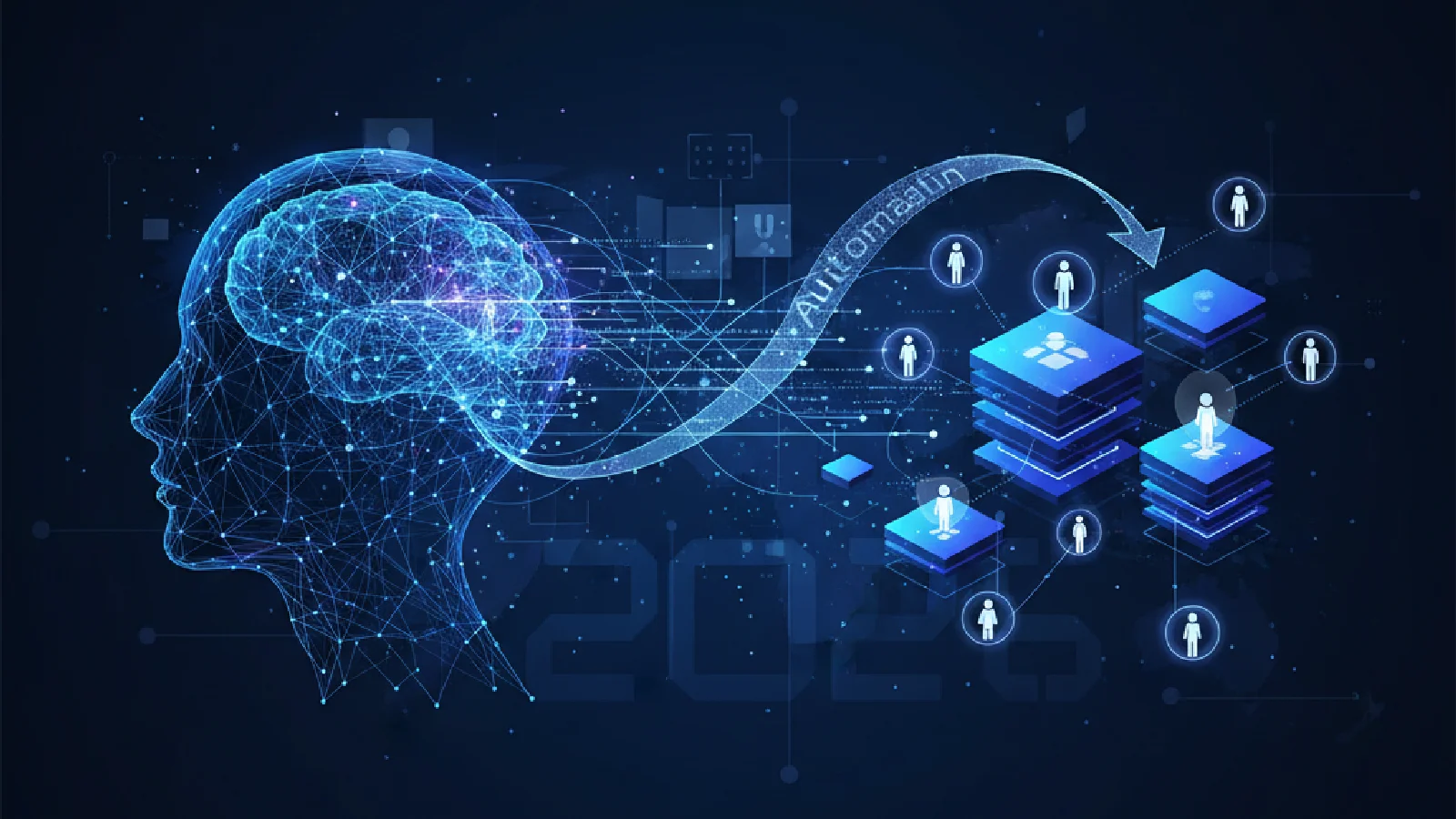
In 2026, CRM platforms have reached a decisive milestone. Long confined to contact management and scheduled email sending, they are transforming into true relational intelligence engines capable of anticipating, reacting, and personalizing every interaction in real-time. Automation is no longer just executing repetitive tasks; it orchestrates consistent, proactive, and ultra-contextual customer experiences.
This transformation is based on several converging innovations: the use of zero-party data, the detection of behavioral micro-moments, the integration of predictive AI, and the rise of low-code interfaces accessible to business teams. The result: brands can now interact with their customers as if they knew them intimately, while respecting their privacy.
According to Symantra, these trends define a new era for CRM.

Zero-Party Data, the New Black Gold of Personalization
Zero-party data refers to information that customers voluntarily share with a brand: explicit preferences, quiz answers, choices during onboarding, declared interests. Unlike inferred behavioral data, this information is precise, consented, and up-to-date.
In 2026, the most advanced CRMs place this type of data at the heart of their strategy. Why? Because it allows each message to be aligned with the consumer's real desires, without algorithmic approximation. An e-commerce platform can thus adapt its recommendations not only based on purchase history, but also on styles, colors, or brands explicitly chosen by the user during registration.
This approach also addresses a regulatory imperative: in the era of GDPR and privacy laws, collecting data with consent becomes a competitive advantage. Customers, in turn, appreciate controlling what they share and receiving genuinely relevant experiences in return.
Micro-Moments and Ultra-Precise Behavioral Triggers
Automated triggers are evolving. In 2026, they are no longer limited to macro actions like an abandoned cart or a birthday. CRMs now detect micro-moments: a quick exit from a product page, a prolonged zoom on an image, a price filter adjustment, hesitation between two variants.
These tiny signals, continuously analyzed by AI, automatically assign a purchase intent score. When the system identifies a high-potential prospect or a customer in the disengagement phase, it instantly generates multi-channel reaction flows: personalized email, push notification, WhatsApp message, or SMS.
According to Claritysoft, this ability to read real-time behavior transforms CRMs into systems that “anticipate user needs before they even articulate them.” The CRM becomes an intelligent advisor, capable of predicting churn risks, identifying VIP prospects, and proposing upsell actions with a quantified conversion probability.

Predictive AI and Autonomous Agents: Towards an Active CRM
Artificial intelligence no longer just suggests; it acts. Autonomous agents are emerging as one of the key trends for 2026. These AI-driven systems can orchestrate several complex actions without human intervention: enriching a customer profile, triggering a multi-channel campaign, adjusting sales follow-up priorities, or even responding to simple requests in natural language.
As 32Steps highlights, “AI agents no longer just respond, they act and orchestrate.” This autonomy allows marketing and sales teams to focus on strategy, creativity, and high-value interactions, while AI manages relational logistics.
Predictive AI also analyzes historical and behavioral data to anticipate opportunities. A CRM can thus alert a salesperson that a dormant account is showing signs of reactivation or that a loyal customer has a profile suitable for an upgrade. These insights, once buried in dashboards, are now actionable with a single click.
“In 2026, your CRM must know your customers better than they know themselves.” – Claritysoft
360° Customer View: Unify to Better Orchestrate
Hyper-personalization only works if data is unified, enriched, and continuously synchronized. 2026 CRMs natively integrate interactions from multiple channels – website, social media, chat, call center, physical points of sale – to build a 360° view of the customer journey.
This unification goes beyond marketing data. The most advanced platforms connect to ERPs, financial systems, logistics tools, and customer service solutions. The result: a salesperson can access real-time support history, declared preferences, and purchase predictions, all within a single interface.
This omnichannel orchestration ensures that every interaction – whether digital or human – remains consistent, relevant, and anticipatory. A customer who chats with a chatbot and then calls customer service will no longer have to repeat their information: the context is already shared.
For companies embarking on their SaaS migration, this integration becomes a major selection criterion when choosing a modern CRM platform.
Low-Code, No-Code: Democratizing Automation
Technical complexity has long hindered the adoption of advanced automation. In 2026, low-code and no-code environments remove this obstacle. Marketing teams can now create, test, and adapt complex automation scenarios without development skills.
These interfaces allow for building customer journeys with nested logical branches, flow priorities, conditional wait times, and integrated A/B tests. A CRM manager can thus design a multi-channel nurturing sequence in a few hours, then adjust it based on real-time results.
Voice interfaces and natural language processing complement this ecosystem. Field sales representatives can record voice notes, trigger actions, or query the CRM without a keyboard, simply by speaking. This accessibility accelerates adoption and reduces operational friction.
| Feature | Description |
|---|---|
| Zero-Party Data | Voluntarily shared info for precise personalization. |
| Micro-Moments | Detection of subtle behavioral signals to anticipate needs. |
| Autonomous Agents | AI that acts and orchestrates complex actions without human intervention. |
| 360° View | Unification of data from all channels for a complete customer view. |
| Low/No-Code | Tools for creating automations accessible to business teams. |
Real-Time Assistance: Augmenting the Human Element
Human agents remain indispensable for complex, emotional, or strategic interactions. But in 2026, they are augmented by AI. Modern CRMs offer real-time assistance: instant call transcription, contextual surfacing of knowledge bases, suggestions for the next best action, live sentiment analysis.
According to CX Today, these tools “provide agents with a 360-degree contextual view, including interaction history, relevant product signals, and external sentiment captured on social media.” Supervisors also use AI to deliver targeted coaching based on recurring themes or development areas automatically detected.
This hybrid approach – AI + human – ensures that technology does not replace empathy, but makes it more efficient and better informed.
Privacy-First and Compliance: Personalizing Without Intrusiveness
Hyper-personalization can only thrive within a framework of trust. 2026 CRMs natively integrate consent management, GDPR compliance, and international data protection standards. EU hosting, preference management options, and consent traceability become standard features.
Successful brands are those that personalize transparently and respectfully. They clearly explain why they collect data, offer control options, and respect user choices. This ethical approach strengthens loyalty and transforms regulatory compliance into a competitive advantage.
The Business Impact of Intelligent Automation
The measurable benefits of these innovations are numerous.- Significant increase in conversion rates
- Reduction in acquisition costs
- Improvement in customer satisfaction
- Time savings for sales representatives, who focus on high-value opportunities.
Startups optimizing their metrics – such as the burn multiple, which has become key for Series A fundraising – find these CRMs valuable allies for driving profitable growth. Established companies, meanwhile, use automation to reinvent themselves and compete with native digital players like Vinted, which built its success on a fluid and personalized customer experience.
According to Klaviyo, “2026 is the year marketers become AI experts. What started as a creative shortcut has become a true marketing co-pilot, capable of analyzing, planning, and optimizing campaigns automatically.”
Towards Ultra-Contextual Omnichannel Orchestration
The 2026 CRM is no longer just a contact management tool. It is the heart of an omnichannel orchestration that connects marketing, sales, customer service, and business data. It detects weak signals, anticipates needs, personalizes at scale, and acts in real-time, all while respecting user privacy.
This transformation redefines customer expectations and customer experience standards. Brands that adopt these innovations gain efficiency, responsiveness, and relevance. Those that remain on legacy systems risk being outpaced by more agile and better-informed competitors. The CRM trends for 2026-2027 confirm this direction.
Intelligent automation does not replace humans: it frees them, augments them, and allows them to focus on what they do best – building connections, devising strategies, and fostering lasting relationships.