
Hardware Wallet Security: The Impact of Supply Chain Attacks in 2026
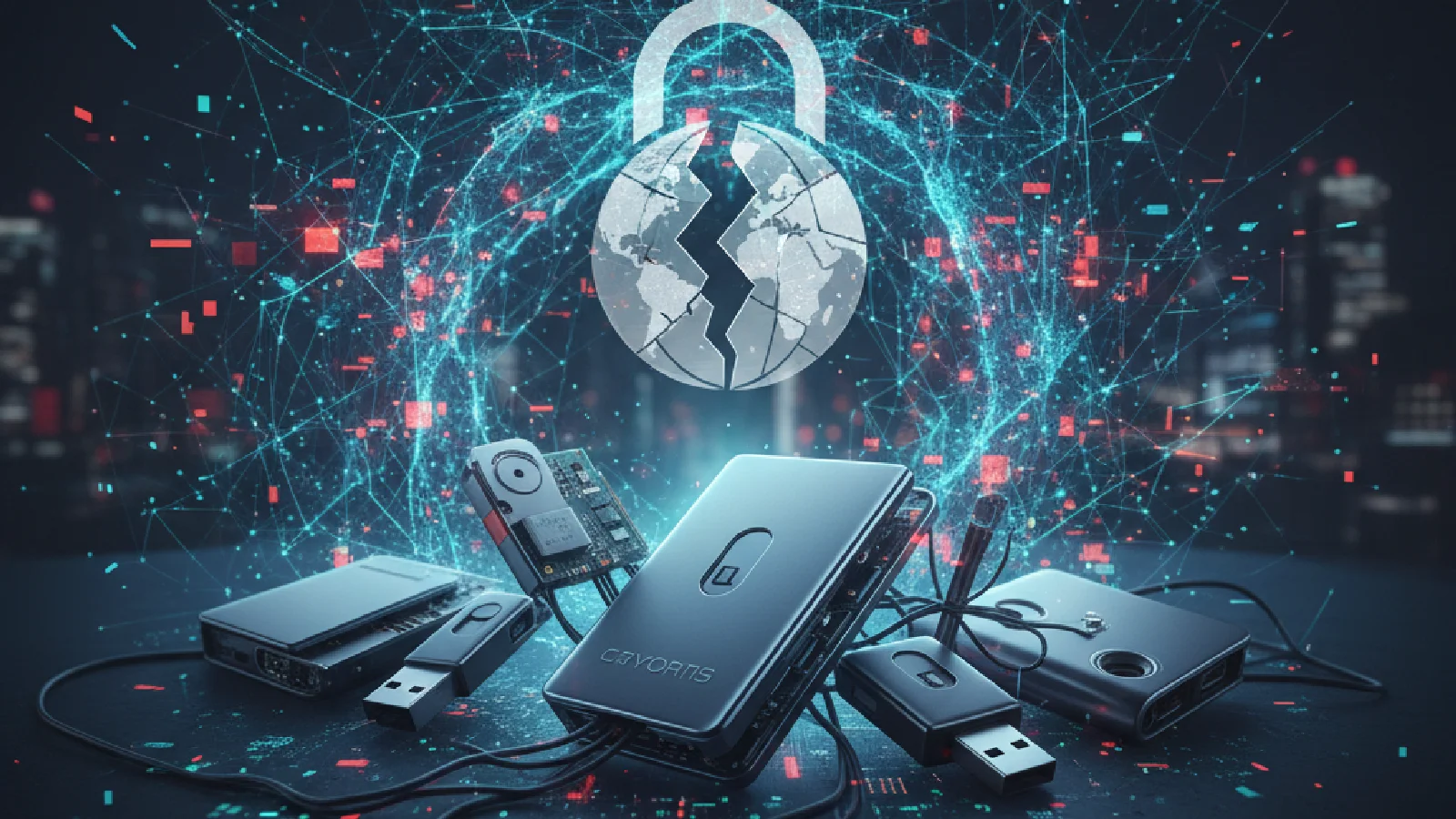
Your hardware wallet, that digital safe meant to protect your digital assets, could be compromised long before you even take it out of its packaging. In 2026, attacks targeting the physical wallet supply chain are experiencing a worrying resurgence, forcing manufacturers and users to radically rethink their security practices.
The threat no longer comes solely from hackers trying to remotely penetrate your devices, but from malicious actors infiltrating the manufacturing process itself. Between tampered chips inserted during assembly in Asia and compromised firmware via stolen signing keys, attack vectors are multiplying and becoming more sophisticated.

The Anatomy of a Modern Supply Chain Attack
Supply chain attacks now target every link in a hardware wallet's lifecycle. The most feared scenario: the insertion of malicious components directly onto assembly lines. Malicious actors manage to introduce tampered chips capable of exfiltrating the seed phrase – the 12 to 24-word sequence that controls access to your cryptocurrencies – without triggering any alerts.
The sophistication doesn't stop at physical components. Attackers also target the firmware – the embedded software that runs your wallet. Several methods coexist: compromising open-source code repositories used by manufacturers, stealing cryptographic keys to sign fraudulent updates, or injecting backdoors during the compilation process.
"The supply chain now represents the weakest link in crypto security, with potential vulnerabilities at every stage of manufacturing and distribution."
These intrusions often remain undetectable to the end-user. The wallet functions normally, displays the correct information, but discreetly transmits sensitive data to servers controlled by the attackers. By the time the victim realizes they have been compromised, it is usually too late: the funds have already been transferred.
Critical Vulnerabilities in the Logistics Chain
The hardware wallet ecosystem presents several structural weaknesses. The first concerns the lack of source code integrity verification. Too many manufacturers do not publish reproducible builds – compilations that any developer can verify exactly match the published source code. Without this transparency, it's impossible to ensure that the firmware installed on your device actually corresponds to the audited code.
Physical component validation also remains problematic. Manufacturers rely heavily on third-party suppliers for chips, printed circuit boards, and other electronic components. However, many of these suppliers are not certified to strict security standards, creating opportunities for malicious substitutions.
The problem worsens with excessive reliance on intermediaries. Between the manufacturing plant and the end-user, a hardware wallet passes through many hands: logistics providers, distributors, resellers. Each step represents a potential opportunity for manipulation, especially when packaging lacks verifiable tamper-evident seals.
Firmware update procedures constitute another major vulnerability. If an attacker manages to compromise the update signing mechanism, they can massively distribute malicious code that will be accepted as legitimate by users' devices. CoolWallet identifies this type of risk among the priority threats for 2026.
Preventive Measures Adopted by Manufacturers
Faced with this growing threat, hardware wallet manufacturers are significantly strengthening their security measures. The adoption of certified Secure Elements is becoming the norm. These specialized chips, used notably in bank cards and biometric passports, offer hardware protection against attempts to extract private keys, even in case of physical access to the device.
Secure boot is also becoming an essential standard. This mechanism cryptographically verifies the integrity of the firmware each time the wallet starts up. If the code has been modified, the device refuses to boot, preventing the execution of any malicious software. Robust cryptographic signatures for each firmware image ensure that only authentic updates can be installed.
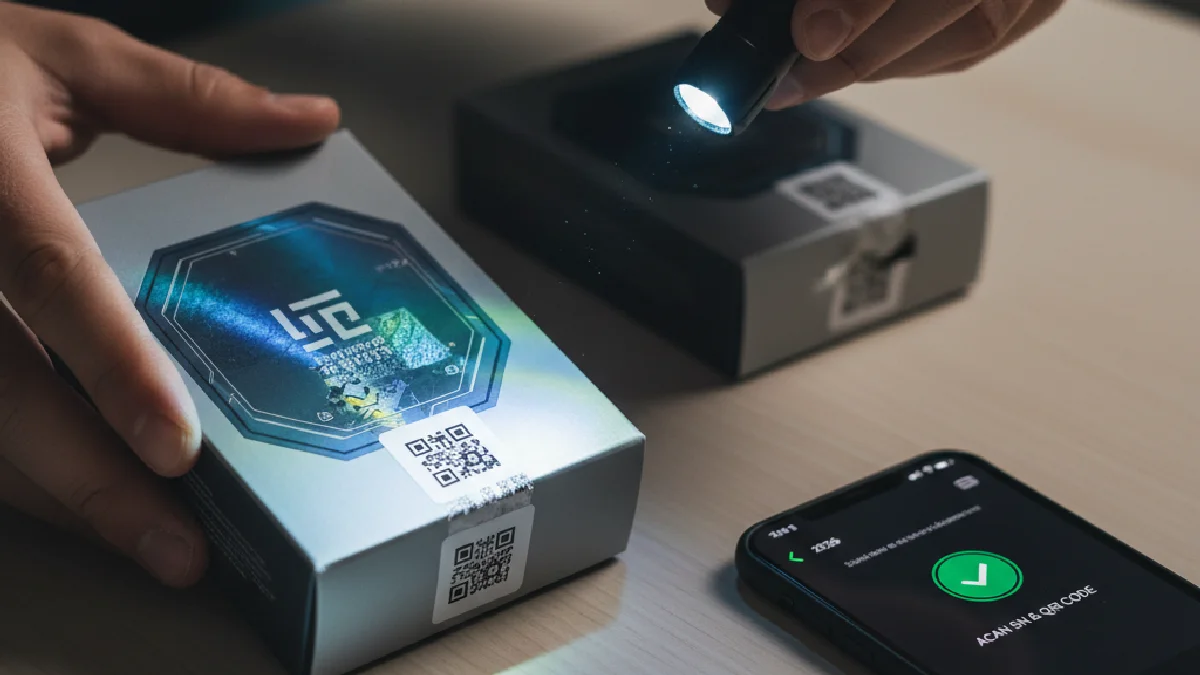
Tamper-evident packaging is evolving considerably. Manufacturers are now deploying unique holographic seals, verifiable QR codes to confirm product authenticity, and sometimes even packaging equipped with sensors that detect any attempt at opening. Some go as far as proposing blockchain traceability systems to track the journey of each unit from the factory.
Supply chain auditing is also becoming more professional. Serious manufacturers are implementing:
- Random checks of chips and electronic components before assembly
- Regular penetration tests on assembly lines
- Security audits of suppliers and subcontractors
- Strict segregation of access to sensitive production areas
Transparency is becoming a major selling point. Manufacturers are increasingly publishing reproducible builds, allowing the developer community to verify that the distributed firmware exactly matches the audited source code. This open-source approach creates a collective control mechanism far more effective than any private audit.
Best Practices for Users
The security of a hardware wallet does not depend solely on the manufacturer. Users must adopt essential habits. The first rule: acquire your wallet only through official channels. Absolutely avoid unauthorized third-party resellers, generic marketplaces, or second-hand offers. A device purchased from an unverified platform could have been tampered with or compromised.
Upon receipt, meticulously inspect the packaging. Look for any signs of prior opening, check the integrity of holographic seals, and use the verification tools provided by the manufacturer (QR codes, serial numbers). If there is the slightest doubt, contact official support before any use.
Verifying firmware signatures before each update is a critical step. Never rely solely on the user interface indicating that an update is available. Always consult the manufacturer's official website, download the checksums (cryptographic fingerprints), and verify them manually. This process, although a bit technical, is your best guarantee against installing compromised firmware.
Activate all multi-layer protections offered by your device:
- Complex PIN code with a timeout after repeated errors
- BIP39 passphrase (25th word) to create a hidden wallet
- Physical locking of the device when not in use
Regarding the backup of your seed phrase, diversify your approaches. Never settle for a single paper copy. Consider redundant storage in physically separate locations, the use of fire and water-resistant metal plates, or even splitting it using the Shamir scheme to distribute the secret among several media.
The Evolving Crypto Threat Landscape
Supply chain attacks are part of a broader context of increasing sophistication in crypto cybercrime. Threats are evolving rapidly, notably with the emergence of AI-powered scams and increasingly convincing deepfakes. Attackers now use AI-generated videos to impersonate industry figures and promote fake investment opportunities. `https://web3.gate.com/fr/crypto-wiki/article/what-are-the-biggest-crypto-security-risks-and-smart-contract-vulnerabilities-in-2026-20260110`
Address poisoning is also a rapidly expanding technique. Attackers generate crypto addresses whose first and last characters resemble those you regularly use. By injecting these addresses into your transaction history, they hope you will accidentally copy their address during a future send. This method, combined with hardware wallet vulnerabilities, creates particularly formidable multi-layered attack scenarios.
The specific targeting of developers represents another worrying trend. Attackers seek to compromise code repositories, development tools, or even the personal computers of contributors to open-source wallet projects. A single compromise can potentially affect thousands of end-users.
Faced with these developments, the crypto industry is developing new approaches. Some projects are exploring the use of bank-grade Hardware Security Modules (HSMs) for institutional storage. Others are experimenting with decentralized multi-signature protocols, where no single device holds complete control over funds.
Blockchain technology itself is being mobilized to improve traceability. Initiatives are emerging to record every step of a hardware wallet's manufacturing on a public blockchain, creating an immutable and verifiable record of its provenance. This increased transparency could significantly complicate attempts to manipulate the supply chain.
The Importance of a Holistic Security Approach
Protection against supply chain attacks is not limited to choosing the right hardware wallet. It requires a holistic security strategy combining hardware devices, software practices, and behavioral vigilance.
| Strategy Component | Detailed Description |
|---|---|
| Hardware | Use of Secure Elements and Secure Boot to ensure the physical and software integrity of the device. |
| Software | Firmware signature verification, source code audits, authenticated updates to counter malicious firmware. |
| Supply Chain | Supplier audits, tamper-evident packaging, blockchain traceability to prevent the insertion of counterfeit components. |
| User | Purchase from official channels, packaging inspection, activation of multi-layer protections, and secure seed phrase backup. |
Diversify your storage solutions based on the amount and usage. For small amounts used regularly, a mobile wallet may suffice. For intermediate amounts, a quality hardware wallet with all necessary verifications is essential. For large sums intended for long-term storage, consider more sophisticated solutions: multi-signature configuration with several hardware wallets from different manufacturers, bank vaults for physical backups, or even institutional custody solutions for very high amounts.
Continuous education remains essential. The threat landscape is constantly evolving, and yesterday's techniques become obsolete against tomorrow's attacks. Follow industry news, participate in crypto security communities, and don't hesitate to regularly question your practices.
The crypto ecosystem would also benefit from standardization of security standards. Independent, industry-recognized certifications would allow users to more easily distinguish serious manufacturers from less reliable actors. Some initiatives are emerging in this direction, but the path to true standardization remains long.
Finally, public education is a major challenge. Too many users still consider their hardware wallet a "plug and play" device without understanding the underlying risks. Manufacturers, exchanges, and the community as a whole must intensify their educational efforts so that every cryptocurrency holder understands the stakes of supply chain security.
The intersection between hardware wallets and other blockchain technologies also opens new perspectives. CBDCs (Central Bank Digital Currencies) could integrate specific hardware security mechanisms, while the evolving altcoin landscape influences the technological choices of wallet manufacturers.
Towards a More Secure Future
The year 2026 marks a turning point in collective awareness around hardware wallet security. Supply chain attacks, long considered theoretical or marginal, are now recognized as a concrete and priority threat. This awareness catalyzes innovation and pushes the industry towards unprecedented security standards.
Emerging technologies promise significant advances. Quantum-resistant chips are beginning to appear in the specifications of next-generation wallets. Formal verification protocols make it possible to mathematically prove the absence of certain categories of vulnerabilities in the code. Remote hardware attestation systems offer the ability to verify a device's integrity even after deployment.
International collaboration is also intensifying. Regulators, long absent from the hardware wallet security debate, are beginning to establish normative frameworks. The European Union, with its MiCA and DORA regulations, is progressively imposing security requirements on crypto ecosystem actors. These regulatory developments, although sometimes perceived as restrictive, contribute to raising the overall level of security.
Industry itself is organizing. Consortia bringing together manufacturers, auditors, and security researchers are developing shared best practices. Bug bounty programs, rewarding researchers who discover vulnerabilities, are now extending to the entire supply chain, not just the final firmware.
For users, the message is clear: security is a continuous process, not a fixed state. Every decision – from choosing the manufacturer to the backup method, including verifying updates – contributes to your overall security posture. In a context where supply chain attacks are becoming the norm rather than the exception, vigilance is not an option but an absolute necessity.
The combination of reinforced hardware, verifiable chains of trust, and rigorous user practices is today the best defense against the threats to your digital assets. The crypto ecosystem is maturing, and with it, security standards are evolving towards levels of robustness comparable – and sometimes superior – to those of the traditional financial industry.