XRP vs Stablecoins: The Cross-Border Payments Showdown 2026
Financial institutions face a strategic choice: leverage the speed and flexibility of the XRP token or prioritize the guaranteed stability of regulated stablecoins? In 2026, regulatory clarity is transforming this debate. The two solutions are no longer in a binary competition but are shaping a complementary landscape for international payments.
The post-MiCA landscape has reshuffled the cards. While Ripple consolidates its RippleNet infrastructure and deploys its own RLUSD stablecoin, traditional stablecoin issuers are benefiting from unprecedented legal recognition. For banks and fintechs, the equation is now clear: combine the strengths of each technology to optimize cost, speed, and compliance.
XRP: The Bridge Currency Accelerating Transfers
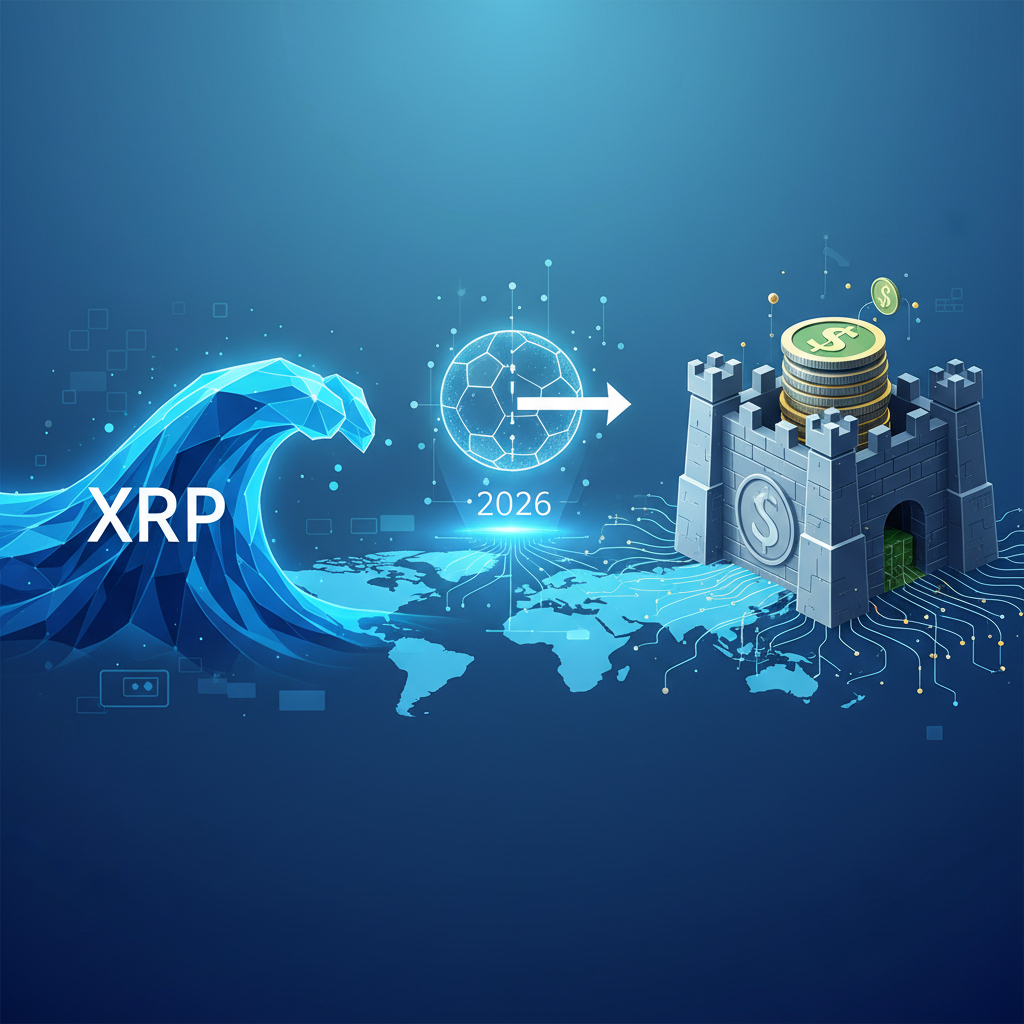
The XRP token remains a benchmark for institutions seeking to eliminate pre-funding of liquidity. Its role as a bridge asset in Ripple's On-Demand Liquidity (ODL) service allows financial institutions to instantly convert fiat currencies without maintaining costly reserves in each payment corridor.
The underlying technology, the XRP Ledger (XRPL), relies on a consensus algorithm that confirms transactions in a few seconds. Unlike blockchains requiring mining, XRPL mobilizes a supermajority of trusted validators (at least 80%) to validate each operation, thus eliminating massive energy consumption and delays inherent in proof-of-work.
Scalable and Multi-Chain Infrastructure
Recent XRPL evolution now integrates EVM-compatible sidechains, paving the way for interoperability with the Ethereum ecosystem and its decentralized applications. This ability to communicate with multiple blockchains strengthens XRP's position as a universal bridge between fiat currencies and crypto-assets.
According to Axi, over 100 financial institutions worldwide use Ripple's infrastructure, demonstrating solid institutional adoption. This installed base gives XRP a competitive advantage in traditional payment corridors, particularly between Asia, Latin America, and the United States.
XRP's strengths:
- Final settlement in 3 to 5 seconds
- Extremely low transaction fees (fractions of a cent)
- Reduced or eliminated need for pre-funding via ODL
- Growing interoperability with other blockchain networks
Regulated Stablecoins: The Guarantee of Stability
Facing the natural volatility of crypto-assets, stablecoins offer a radically different value proposition: predictability. Pegged to fiat currency reserves (dollar, euro), these tokens guarantee near-perfect parity with their reference currency, eliminating the risk of fluctuation between issuance and settlement of a payment.
The entry into force of the MiCA (Markets in Crypto-Assets) framework in Europe marks a turning point. Stablecoin issuers must now comply with strict requirements regarding reserve transparency, minimum capital, and regular reporting. This standardization reassures traditional institutions, which were previously hesitant due to legal uncertainty.
The Launch of RLUSD: Ripple Plays Both Sides
Ripple has not remained on the sidelines of this trend. The deployment of RLUSD in 2025 illustrates a hybrid strategy: retaining XRP for speed and conversion flexibility, while offering a regulated stablecoin for clients demanding total stability during final settlement.
“Stablecoins will anchor global settlement as crypto enters a 'production era' in 2026,” says Monica Long, Ripple's director, in a statement reported by MEXC.
This vision reflects a growing consensus in the industry: regulated stablecoins are becoming the preferred interface between the traditional financial system and the blockchain universe, while crypto-assets like XRP ensure routing and intermediate liquidity functions.
Operational Comparison: When to Use What?
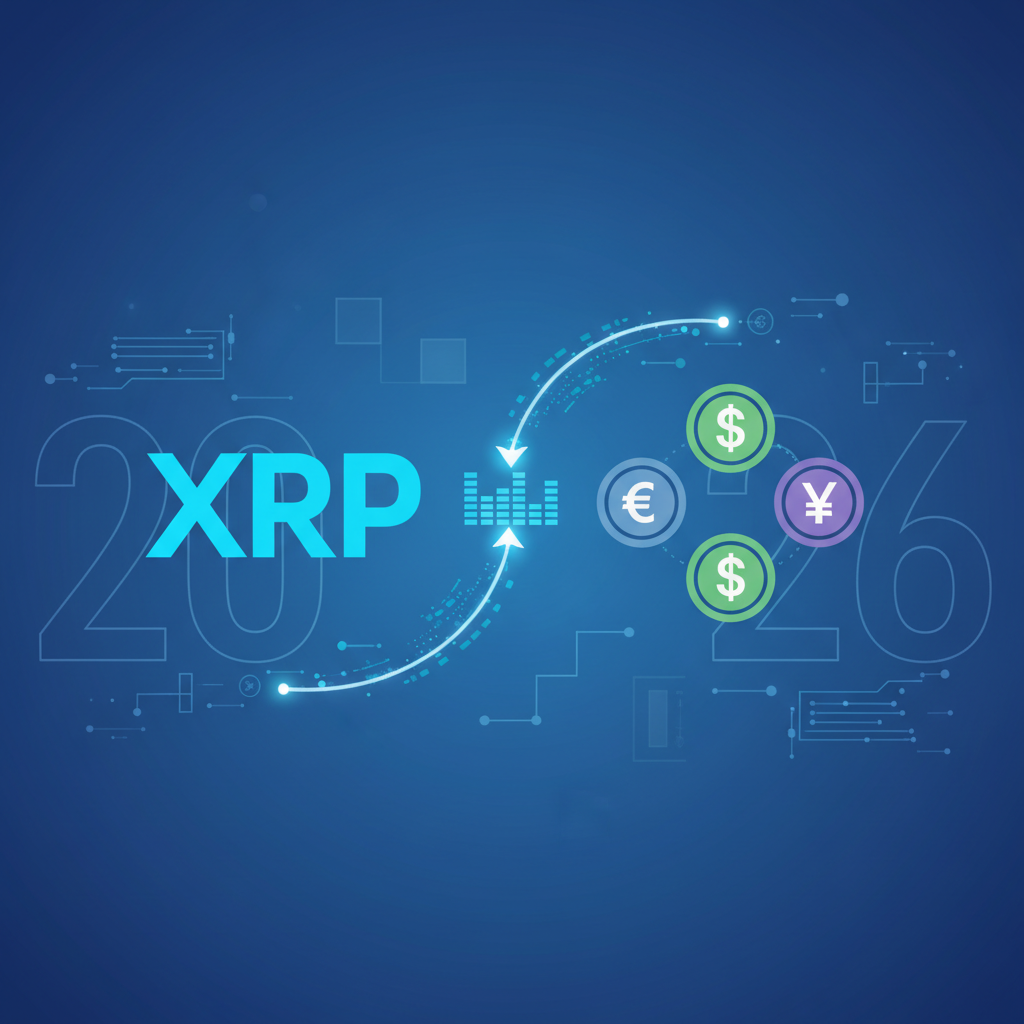
The question is no longer which technology will “win,” but rather which combination optimizes each use case. Institutions are now adopting a modular approach, selecting XRP or stablecoins depending on the operational context.
| Characteristic | XRP | Regulated Stablecoins |
|---|---|---|
| Key Benefit | Reduced pre-funding, conversion speed | Value stability, regulatory compliance |
| Use Case | Remittances, low-liquidity corridors, low fees | High-value B2B settlements, payroll payments, traceability |
| Volatility | Moderate to high (depending on market) | Low (parity with fiat currency) |
| Regulation | Growing legal clarity (USA) | MiCA (Europe), transparency and reserve requirements |
Preferred Use Cases for XRP
XRP excels in scenarios requiring rapid conversions between multiple currencies, particularly when payment corridors are fragmented or volumes fluctuate. Its ability to serve as a bridge without requiring massive pre-funding makes it an optimal choice for operators managing unpredictable flows.
Remittances to emerging markets, where local currency liquidity is limited, particularly benefit from ODL. A payment provider can instantly convert dollars to Philippine pesos via XRP, without maintaining a local bank account or tying up capital.
Preferred Use Cases for Stablecoins
Regulated stablecoins are essential when regulatory compliance and the complete absence of exchange rate risk are priorities. High-value B2B settlements, cross-border payroll payments, or transactions requiring precise accounting traceability naturally favor stability.
International companies using stablecoins avoid valuation discrepancies that could affect their balance sheets. A payment issued in USDC or RLUSD will arrive with exactly the same nominal value, simplifying accounting reconciliation and eliminating currency hedging.
Hybrid Strategies: The Best of Both Worlds
Many institutions are deploying multi-rail architectures, combining XRP for liquidity optimization and stablecoins for final settlement. A typical flow might look like this: fiat conversion → XRP for rapid transfer → reconversion to regulated stablecoin → credit to beneficiary account.
This hybrid approach maximizes operational efficiency while respecting regulatory constraints and client treasury requirements. It illustrates the growing maturity of the sector, where solutions are no longer mutually exclusive but complementary.
Regulatory Challenges: MiCA and Beyond
The regulatory clarity achieved in Europe via MiCA is a major catalyst for institutional adoption. Regulated stablecoins now benefit from a European passport, allowing them to circulate freely within the Union while offering legal guarantees to users.
For XRP, the situation has also become clearer. Recent judicial developments in the United States have reduced the uncertainty surrounding the token's classification, facilitating its integration by American banking players. This dual clarification – stablecoins in Europe, XRP in the United States – opens a favorable period for experimentation and large-scale deployment.
Reserve Requirements and Transparency
Stablecoin issuers under MiCA must publish regular attestations proving the adequacy between tokens in circulation and reserves held. This increased transparency addresses concerns related to past collapses of unregulated stablecoins, strengthening institutional confidence.
XRP, as a native, unbacked asset, is not subject to the same reserve constraints. Its valuation depends on supply and demand in the markets, which implies potential volatility but also an absence of counterparty risk related to fiat reserves.
Outlook for Cross-Border Payments in 2026
The year 2026 marks the entry into a mature production phase, where blockchain infrastructures are no longer experiments but operational payment rails. Volumes transiting through RippleNet and stablecoin platforms are growing steadily, gradually reducing the share of traditional SWIFT networks for certain corridors.
Traditional financial players, long observers, are becoming actors. Several European and North American banks are now integrating stablecoin settlement capabilities, while others are testing Ripple's ODL to optimize their international treasury management.
This XRP-stablecoin coexistence creates a landscape where technological diversity becomes a strategic asset. Institutions that master both approaches can adapt their flows according to local regulatory constraints, client requirements, and cost optimization opportunities. To learn more about the evolution of decentralized infrastructures, consult our analysis on Web3 infrastructure and critical challenges for mass adoption.
The emergence of new payment corridors, particularly between Asia and Africa or Latin America and Europe, stimulates innovation. Hybrid solutions combining speed, compliance, and capital efficiency are becoming the norm rather than the exception. To understand how other blockchains address specific issues, discover how VeChain transforms food traceability.
Conclusion
The match between XRP and regulated stablecoins does not result in a single winner. In 2026, these two technologies structure a complementary ecosystem where each meets specific needs. XRP retains its advantage for rapid conversions, multi-currency liquidity management, and the elimination of pre-funding. Regulated stablecoins establish themselves as the trusted interface between traditional finance and blockchain rails, offering stability and compliance.
Institutions that can orchestrate these two tools will have a decisive competitive advantage in the race for efficiency in international payments. Far from being confined to a logic of opposition, the future belongs to hybrid architectures, capable of exploiting the best of each technology according to the operational context.