
Fed Interest Rates 2026: The Impact of New Leadership on Markets

The year 2026 is shaping up to be a pivotal moment for US monetary policy. With Jerome Powell's term set to end in May, the Federal Reserve is preparing for a major transition that could redefine the approach to interest rates for years to come.
Financial markets are already scrutinizing signals from the monetary institution, while analysts are trying to anticipate the impact of new leadership on future decisions. This transition period comes in a complex economic context, marked by persistent inflationary pressures and major geopolitical challenges.

An Economy in Transition
The US economy enters 2026 in a particularly nuanced context. According to the latest analyses from Morningstar Investment Management, two rate cuts are anticipated for the year, one more than the Fed's official forecasts.
The resilience of the private sector is one of the pillars of this economic stability. American businesses and households show generally healthy balance sheets, with controlled debt levels that allow them to absorb economic shocks. This financial solidity provides significant room for maneuver for monetary policymakers.
However, areas of uncertainty remain. Inflation is still above the Fed's 2% target, while the job market shows signs of gradual cooling. This tension between the central bank's two mandates – price stability and full employment – complicates future trade-offs.
Major Influencing Factors
Several elements structure the monetary debate for 2026:
- Artificial intelligence and its massive investments in data centers
- Tariff policies and their potential impact on inflation
- Fiscal policy with anticipated stimulus measures before the midterm elections
Rate Forecasts: Between Consensus and Divergences
The consensus among economists points towards a gradual monetary easing in 2026. However, the extent of this easing is debated. While the official Fed favors a cautious approach with only one cut expected, markets and several financial institutions are banking on more significant reductions.
"The Fed indicates a pause is expected, but we anticipate two rate cuts next year" - Preston Caldwell, Senior Economist at Morningstar Investment Management
This divergence of opinion reflects the uncertainty surrounding economic developments. On one hand, US growth remains robust, supported by massive technological investments. On the other hand, signs of slowdown are emerging in certain sectors, particularly the housing market and household consumption.
| Rate Cut Forecasts (2026) | Source |
|---|---|
| 1 Cut | Official Fed |
| 2 Cuts | Morningstar Investment Management, Markets |
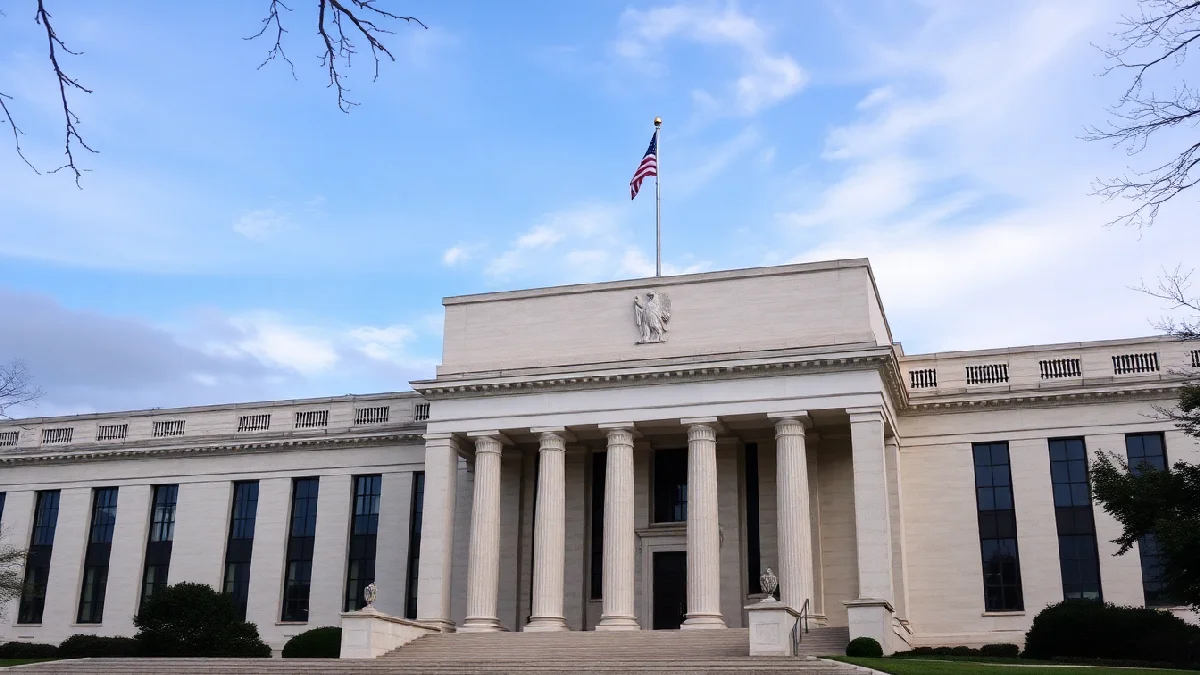
Analysts at Boursorama emphasize that "data gaps" complicate forecasts, especially with Powell's scheduled departure adding a political dimension to monetary decisions.
Change of Leadership: A Strategic Turning Point
The appointment of a new Fed chair represents much more than a simple personnel change. This transition could mark a philosophical shift in the approach to US monetary policy. Macros & Strategy - January 2026 also offers an overview of the challenges ahead.
The names of Kevin Hassett and Kevin Warsh are circulating as potential successors to Jerome Powell. These candidates are perceived as more favorable to a "pro-growth" policy, prioritizing support for employment and economic activity, even if it means tolerating inflation slightly above 2%.
Implications for Monetary Policy
A more growth-oriented leadership could translate into:
- Increased tolerance for inflation between 2% and 2.5%
- Earlier rate cuts in the event of an economic slowdown
- Less rigid communication on long-term inflation targets
- Potential easing of credit conditions to stimulate investment
This evolution is part of a broader political context, where pressures to support economic growth are intensifying as the 2026 election deadlines approach.
Impact on Financial Markets and Investments
Financial markets are gradually integrating these prospects of change. The high valuations of US tech stocks contrast with more attractive opportunities in other market segments.
According to Invesco's 2026 investment outlook, a "rebalancing" could occur towards non-US equities, small caps, and cyclical sectors, historically more sensitive to rate variations. Similarly, Goldman Sachs' 2026 outlook explores these dynamics.
Investors are particularly monitoring three key indicators:
- The evolution of the interest rate differential between the United States and other major economies
- Bond volatility around FOMC meetings
- International capital flows into US assets
Winning and Losing Sectors
A more accommodative rate environment would traditionally favor:
- The real estate sector and REITs
- High-growth technology companies
- Financial services through improved margins
- Cyclical consumer goods
Conversely, persistent inflation would penalize sectors with fixed margins and highly indebted companies with variable rates.
Risks and Uncertainties to Monitor
Despite the generally favorable outlook, several risk factors could disrupt this baseline scenario. The evolution of the trade war and tariff policies is one of the main unknowns for 2026, as highlighted by Investing.com in its 10 surprises.
A sharp slowdown in the artificial intelligence boom also represents an underestimated risk. Massive investments in data centers and technological infrastructure are currently supporting growth, but a reversal could force the Fed to take emergency measures.
Geopolitical tensions and their repercussions on global supply chains add an extra dimension of uncertainty. These external factors are largely beyond the control of US monetary policy.
For French investors looking to diversify their portfolios, these American developments are intertwined with local opportunities, particularly the 2025 trading platforms that democratize access to international markets.
Adaptation Strategies for Investors
Facing this transition period, investors must adapt their strategies to take advantage of opportunities while managing risks. Geographic diversification becomes crucial in an environment where monetary policies diverge among major economies.
Asset allocation between stocks and bonds deserves particular attention. A persistently low-rate environment favors growth assets, but increased volatility around Fed decisions requires active risk management.
Companies preparing for their IPO will need to particularly monitor changes in financing conditions and investor appetite for risk.
The monetary conditions of 2026 will shape investment opportunities for years to come, requiring a strategic approach adapted to new economic paradigms.
The year 2026 will thus mark a decisive step in the evolution of US monetary policy. Between institutional continuity and potential shifts in direction, investors will need to navigate with agility in a rapidly transforming environment, where Fed decisions will continue to influence global financial markets.