Robo-Advisors and ETFs 2027: Synergies for Passive Investing
Robo-Advisors and ETFs 2027: Synergies for Passive Investing
Robo-advisors are undergoing a major transformation. These automated investment platforms, which already manage approximately 1 trillion euros globally, are now relying on the rapid evolution of ETFs to offer passive portfolios of unprecedented sophistication. This technological convergence is redefining the standards of automated investing.

The Evolution of ETFs Serving Algorithms
The universe of ETFs (Exchange-Traded Funds) has expanded considerably in recent years. Robo-advisors are leveraging this increasing diversification to refine their asset allocation models. New thematic, factor-based, and even quantitative active bond ETFs significantly broaden the possibilities for portfolio construction.
These innovations allow automated management algorithms to integrate more nuanced strategies. Rather than being limited to traditional index ETFs, robo-advisors can now incorporate funds targeting specific factors (value, growth, low volatility) or investment themes (energy transition, technology, healthcare).
"The proliferation of specialized ETFs offers robo-advisors a much richer palette of tools to optimize the risk-return relationship," according to the Fintech Observatory 2024.
Fractional Shares, a Quiet Revolution
The introduction of fractional ETF shares represents a turning point for automated investing. This innovation allows robo-advisors to optimize allocation with unparalleled precision, even for small amounts. No more idle cash or allocation approximations: every euro can now be invested according to the exact proportions defined by the algorithm.
This feature particularly transforms the experience of novice investors, who can access professional diversification from their very first euros invested.
Dynamic Rebalancing and Tax Optimization
Modern robo-advisors are no longer content with basic periodic rebalancing. They now integrate real-time rebalancing mechanisms, leveraging micro market movements to continuously optimize portfolios.
This dynamic approach relies on several levers:
- Automatic arbitrage between similar ETFs to capture temporary price discrepancies
- Continuous tax optimization via tax-loss harvesting
- Intelligent reallocation during contributions or withdrawals to minimize friction
The increasing integration of ESG ETFs and climate-focused ETFs also enriches allocation options. Algorithms can now incorporate sustainability criteria without compromising performance, responding to growing investor demand.
Deflationary Pressure on Fees
The price war affecting the ETF industry directly benefits robo-advisor users. With ETF management fees continuing their structural decline, the total cost of automated portfolios becomes even more competitive compared to traditional management.
This cost deflation allows robo-advisors to expand their offerings to previously inaccessible customer segments, while maintaining sufficient margins to invest in improving their algorithms.
Artificial Intelligence at the Heart of Decisions
AI-driven decision-making tools represent the next frontier in the evolution of robo-advisors. These systems continuously analyze correlations between assets, identify arbitrage opportunities, and adjust allocations based on market signals.
AI also enables more advanced personalization of recommendations, by analyzing each client's investment behavior to refine their risk profile and preferences.
| Key Feature | Investor Benefit |
|---|---|
| Thematic ETFs | Targeted diversification |
| Fractional Shares | Ultra-precise allocation |
| AI | Advanced personalization |
Open Architecture and Increased Diversification
Open architecture platforms are transforming the robo-advisor ecosystem. These systems can now access a much broader ETF universe, no longer limited to exclusive partnerships with certain issuers.
This openness results in better portfolio diversification and a more objective selection of financial instruments, based solely on their intrinsic merits rather than commercial considerations.
Robo-advisors can thus offer truly multi-issuer solutions, combining the best ETFs from BlackRock, Vanguard, Amundi, or State Street according to the specific needs of each allocation.
Market Evolution Prospects
The annual growth of approximately 20% in robo-advisor assets under management is accompanied by increasing sophistication of their offerings. This rise in power helps amortize technological development costs and attract the best talent in the sector.
The progressive integration of new types of ETFs (crypto-assets, alternative commodities, liquid alternative strategies) opens new diversification perspectives. Robo-advisors are particularly well-positioned to leverage these innovations, thanks to their ability to analyze and rapidly integrate new instruments.
As experts explain in future sectors, the technological revolution in asset management is profoundly transforming the relationship between managers and investors.
This evolution is part of a broader trend towards the democratization of sophisticated investing, where individuals gain access to strategies previously reserved for institutional investors. The 2026 portfolios reflect this trend towards a more personalized and technological approach to investing. To learn more about the dynamics of the European ETF market, Citywire offers a detailed analysis.
The Impact on Traditional Passive Investing
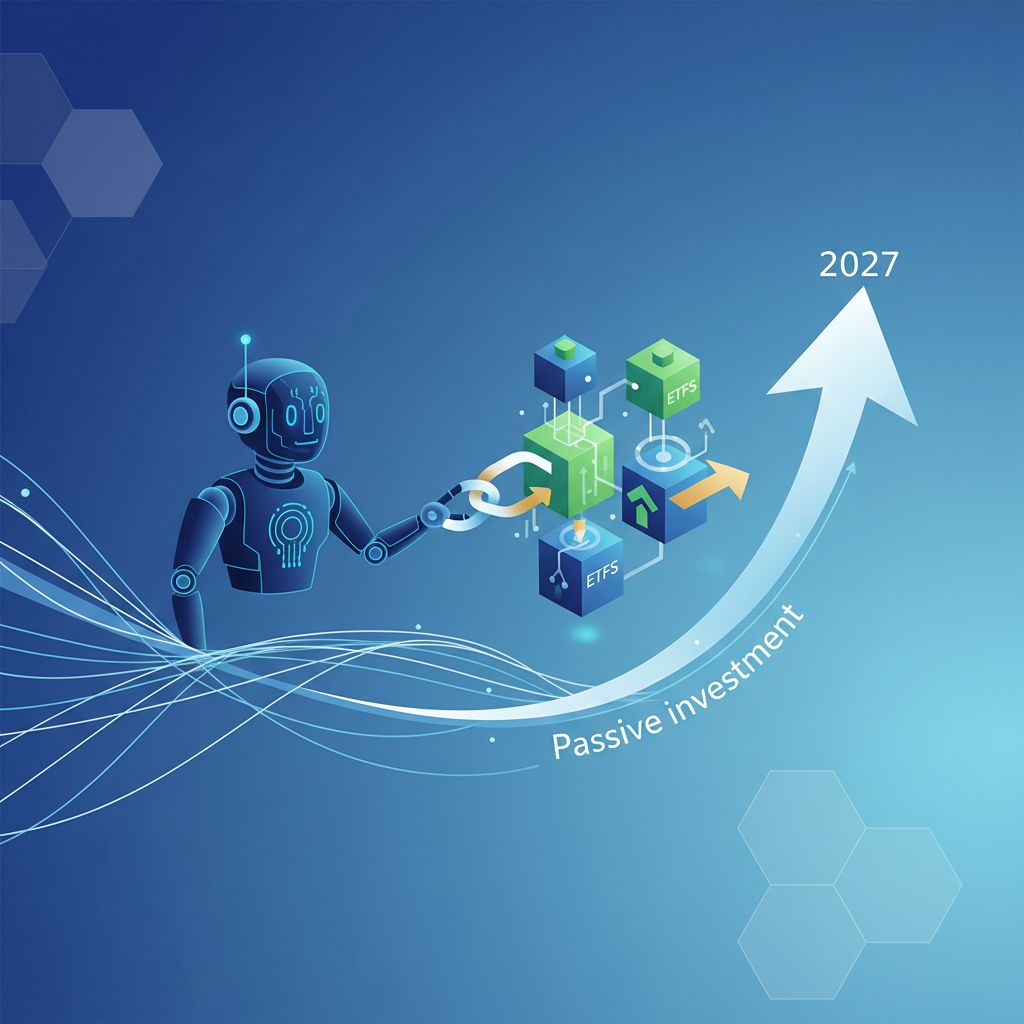
This robo-advisor/ETF convergence redefines the contours of passive investing. Today's automated portfolios are more dynamic, diversified, and optimized than the simple index funds of a few years ago.
This evolution responds to a growing demand for investment solutions that combine the simplicity of passive with the sophistication of active, without the prohibitive costs traditionally associated with personalized active management.
Investors can now benefit from automated professional management that constantly adapts to market conditions, integrates their personal constraints, and continuously optimizes the risk-return relationship.
This transformation also aligns with new approaches to ESG investment strategies, where sustainability criteria are naturally integrated into allocation algorithms. For a broader overview of wealth management trends, the Finscale broadcast offers insightful perspectives.
Technological Challenges and Limitations
Despite these advances, robo-advisors face several challenges. The increasing complexity of algorithms requires expert human oversight to avoid biases and systemic errors. The transparency of allocation methods is also becoming a major regulatory issue.
The management of extreme market phases remains a critical test for these automated systems. Algorithms must be able to maintain investment discipline during crises while protecting clients from their behavioral biases.
Regulatory evolution, particularly concerning investor protection and algorithm transparency, directly influences the development of these platforms.