Epistemic Justice and Equity: Revolutionizing Global Cancer Research

Precision medicine has promised personalized cancer treatments. But for whom exactly? Underrepresented populations in clinical trials, ignored indigenous knowledge, marginalized patient voices: these gaps compromise the effectiveness and equity of oncological innovations. The emergence of the concept of epistemic justice in global cancer research marks a major turning point. This approach, which values long-excluded knowledge and experiences, is transforming how we conceive, conduct, and apply research against this disease that affects all humanity.

Understanding Epistemic Justice in a Medical Context
Epistemic justice refers to the equitable recognition of all forms of knowledge and testimony in the production of knowledge. In the health field, this notion takes on a particularly critical dimension.
Philosopher Miranda Fricker identified two forms of epistemic injustice: testimonial injustice, which occurs when a person's testimony is systematically devalued due to prejudice, and hermeneutical injustice, which occurs when the experiences of certain groups cannot be understood due to a lack of adequate conceptual frameworks. For a deeper exploration of this concept, one can consult this thesis on experiences of epistemic injustice.
In cancer research, these injustices manifest concretely. Researchers from low-income countries see their work less cited and less funded. Patients from ethnic minorities report symptoms that standardized protocols do not recognize. Traditional knowledge about medicinal plants is ignored or appropriated without recognition.
The recently updated Enhanced Core Competencies Framework for Health Systems Research in Canada now explicitly integrates the dimension of epistemic justice. As one of the consulted experts explains: “The increased awareness of the importance of addressing learning and epistemic justice from a decolonial perspective has truly led us to reflect on how to better recognize the value of diverse perspectives expressed in health systems.”
Biases Compromising Oncological Research
The systematic exclusion of certain voices in cancer research generates epistemic biases with serious consequences. Cancer clinical trials, for example, have historically overrepresented white, male, urban, and educated populations.
This homogeneity of research cohorts creates dangerous blind spots. Biomarkers identified in specific populations may prove less reliable for other genetic groups. Standardized treatment protocols do not account for metabolic variations linked to ethnic origin, diet, or environmental conditions specific to certain regions.
Hermeneutical biases are equally problematic. When frameworks for interpreting symptoms, pain, or quality of life are constructed without consulting the affected communities, entire aspects of the cancer experience remain invisible. Patients cannot find the words to describe what they are experiencing, and caregivers lack the tools to understand them.
This situation is exacerbated in low- and middle-income countries, where research infrastructures remain fragile and dependent on priorities set by Western funders. Locally relevant research questions – cancers linked to specific environmental exposures, interactions with endemic diseases – are underfunded.
“Health inequalities, chronic diseases, pandemic threats, the emergence of new social needs: the challenges facing health systems continue to grow in complexity.”
| Type of Bias | Consequence on Oncological Research |
|---|---|
| Representation Bias | Less reliable biomarkers, protocols not adapted to diversity. |
| Hermeneutical Bias | Patient experiences made invisible, caregiver misunderstanding. |
| Financial Dependence | Funding focused on Western priorities, underfunding of local research. |
Precision Medicine and Genomic Diversity
Precision medicine in oncology promises to adapt treatments to the genetic characteristics of each tumor and each patient. But this promise remains largely theoretical for the majority of humanity as long as genomic databases remain biased.
Major genomic sequencing initiatives have historically favored populations of European ancestry. However, human genetic diversity is greatest in Africa, the cradle of our species. Ignoring this diversity compromises the discovery of relevant biomarkers for all humanity.
Integrating epistemic justice into precision medicine involves several concrete steps. First, the active inclusion of underrepresented populations in genomic studies, with culturally adapted informed consent protocols. Second, training researchers on interpretation biases that can affect genomic data analysis.
Epistemological reflections on biomarkers highlight that these diagnostic tools are never neutral: they embody methodological choices, research priorities, and interpretive frameworks that can reproduce or, conversely, correct existing inequalities.
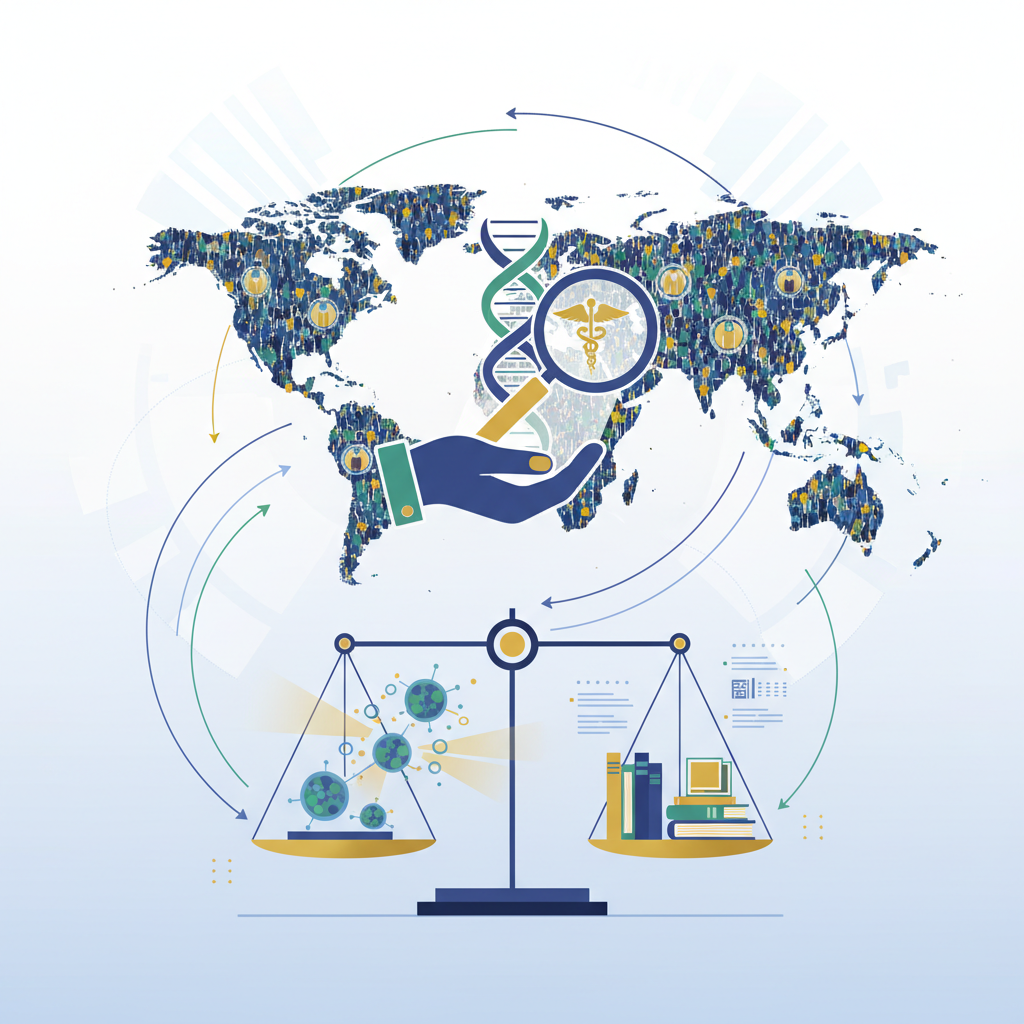
Indigenous Knowledge and Cancer Medicine
Indigenous communities hold ancestral knowledge about the medicinal properties of thousands of plants. Some anticancer molecules currently used clinically were, in fact, identified from traditional pharmacopoeias.
However, the extraction of this knowledge has too often occurred in a logic of biopiracy, without recognition of collective intellectual rights or equitable sharing of benefits. Epistemic justice demands a radical paradigm shift.
Collaborative research protocols are emerging where Indigenous communities are stakeholders from the design stage of studies. These approaches respect the principles of ownership, control, access, and possession of data (OCAP principles). They also recognize that Indigenous knowledge is not limited to extractable information but constitutes holistic knowledge systems integrating spirituality, ecology, and community practices.
In Australia, New Zealand, and Canada, regulatory frameworks are beginning to require that research involving Indigenous communities be co-designed and co-led by them. This evolution paves the way for therapeutic innovations that effectively combine modern medicine and traditional knowledge.
Training a New Generation of Researchers
The transformation of cancer research through epistemic justice requires a rethinking of researcher training. Traditional technical skills – mastery of statistical methods, laboratory techniques – must now be accompanied by skills in intersectionality, decolonial ethics, and participatory research.
Several pioneering institutions are integrating these dimensions into their curricula. Future researchers learn to:
- Identify epistemic biases in existing research protocols
- Consult affected communities from the formulation of research questions
- Adapt methodologies to diverse cultural and linguistic contexts
This evolution also concerns research ethics committees, which must develop new evaluation criteria. Beyond respecting classic bioethical principles – autonomy, beneficence, non-maleficence, justice – they must ensure that submitted projects equitably value different forms of knowledge and ensure a just redistribution of benefits.
As the movement towards personalized medicine in Africa highlights, the integration of environmental ethics, global justice, and gender equality constitutes an essential dimension of this transformation. For more information on ethical issues in public health, you can consult this related article.
Equitable Research Infrastructures
Epistemic equity also requires a transformation of research infrastructures on a global scale. Cancer research capacities remain massively concentrated in high-income countries, creating a structural dependence for other regions.
Research funding reflects and reinforces these inequalities. Funding agencies in wealthy countries prioritize projects conducted in their own institutions or in collaboration with them, according to excellence criteria defined by and for the Western academic context.
Initiatives are emerging to correct these imbalances. South-South collaborative research networks allow African, Asian, and Latin American institutions to develop horizontal rather than vertical partnerships. Capacity-building programs invest in laboratories, equipment, and the training of local researchers.
Open access to scientific data and publications is another major lever. When research results are locked behind expensive paywalls, researchers from low-income countries are de facto excluded, perpetuating their epistemic marginalization.
Global Impact: Towards Universal Oncological Care
Integrating epistemic justice into global cancer research does not only address an ethical imperative. It also improves the scientific quality and health impact of discoveries.
By broadening the diversity of studied populations, questions asked, and methodological approaches, research gains robustness. Therapeutic innovations become truly universal rather than circumstantially adapted to privileged subgroups.
This transformation directly contributes to reducing global inequalities in cancer. In many low- and middle-income countries, cancer mortality rates remain significantly higher than in wealthy countries, not only due to limited access to treatments but also because late diagnoses and inappropriate protocols compromise the effectiveness of available care.
Treatments designed with local epidemiological, genetic, nutritional, and environmental realities in mind are more likely to be effective and accepted. Diagnostics developed with the participation of affected communities are better understood and utilized.
An epistemic justice approach also reconnects fundamental research with the real needs of populations. It limits the waste of resources on technological innovations disconnected from global health priorities and redirects attention to neglected cancers that primarily affect poor populations.
Conclusion
The recognition of epistemic justice as a fundamental principle of global cancer research marks a profound paradigm shift. It forces us to question who produces oncological knowledge, according to what criteria, for whose benefit, and with what consequences for excluded populations.
This transformation requires substantial investments in research infrastructures in the Global South, a rethinking of academic excellence criteria, a reform of consent and benefit-sharing protocols, and above all, epistemic humility from dominant institutions.
The potential benefits are immense: more effective therapeutic innovations for all humanity, a reduction in global cancer inequalities, and a more democratic and legitimate science. The road is long, but the first steps have now been taken. The future of cancer research will be inclusive, or it will miss its target.
FAQ (JSON format - translate question and answer fields only): [ { "answer": "Epistemic justice refers to fairness in the production and recognition of knowledge. In medical research, this means equally valuing patient testimonies, the knowledge of indigenous communities, and the work of researchers from the Global South, rather than prioritizing only dominant perspectives from prestigious Western institutions. This combats two injustices: the systematic devaluation of certain testimonies (testimonial injustice) and the absence of frameworks to understand certain experiences (hermeneutical injustice).", "question": "What exactly is epistemic justice?" }, { "answer": "Current genomic databases massively overrepresent populations of European ancestry, while human genetic diversity is greatest in Africa. This gap compromises the identification of relevant biomarkers for the majority of humanity and limits the effectiveness of personalized treatments for underrepresented populations. Integrating genomic diversity improves the scientific robustness and equity of innovations in precision medicine.", "question": "Why is genomic diversity important for precision medicine?" }, { "answer": "Indigenous communities possess ancestral knowledge about the medicinal properties of thousands of plants, some of which have already provided anticancer molecules. Beyond this pharmacological dimension, their holistic approaches to health offer complementary perspectives on prevention, supportive care, and quality of life. Equitable collaboration with these communities, respecting their collective intellectual rights, enriches research while redressing historical injustices.", "question": "How can indigenous knowledge contribute to cancer research?" }, { "answer": "Researchers must develop new skills: identifying biases in existing protocols, co-designing studies with affected communities, adapting methodologies to diverse cultural contexts, and ensuring equitable sharing of benefits. This also requires a transformation of academic evaluation criteria to value social impact and inclusivity rather than solely publications in prestigious Western journals.", "question": "What concrete changes does epistemic justice imply for researchers?" }, { "answer": "On the contrary, epistemic inclusion accelerates real progress by improving the relevance and robustness of discoveries. Innovations designed with a diversity of perspectives are more effective for all humanity, reduce the waste of resources on unsuitable solutions, and increase the acceptability and use of treatments. Science gains in quality and impact when it integrates the complexity of reality rather than limiting itself to homogeneous populations and contexts.", "question": "Does this approach slow down scientific progress?" } ]