GAFAM Ecosystems: Apple vs Google, Closed vs Open Models

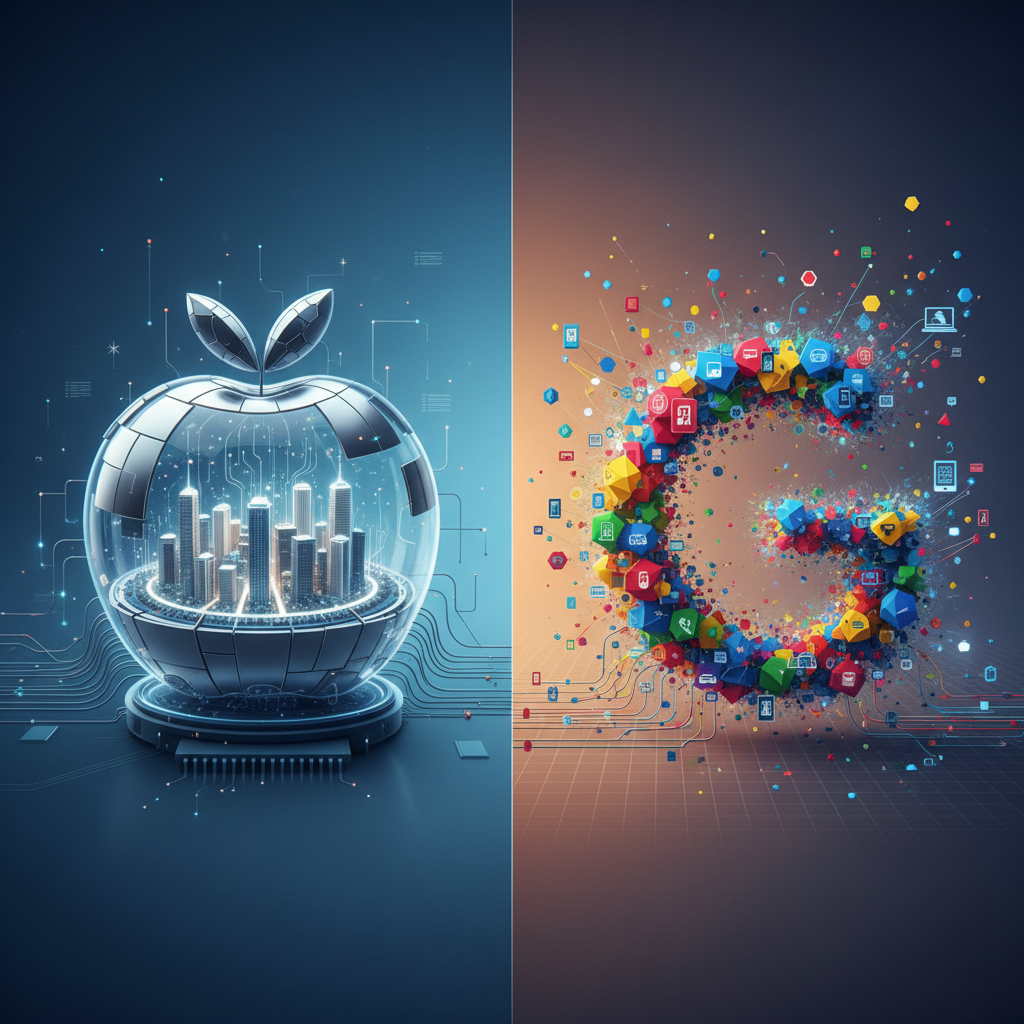
In 2025, the battle between technological ecosystems redefines our relationship with digital technology. On one side, Apple persists with a closed model where every component is controlled end-to-end. On the other, Google bets on openness and interoperability. This fundamental opposition shapes the experience of billions of users and influences the technological choices of businesses.
The question goes beyond simply choosing between iPhone and Android. It questions our vision of digital freedom, data security, and technological innovation. Each model offers distinct advantages that meet different needs of consumers and developers.
Apple's Closed Ecosystem: Total Control and Premium Experience
Uncompromising Vertical Integration
Apple has built its strategy around absolute control of its products and services. In 2025, this approach extends far beyond the iPhone to encompass the Apple Watch, AirPods, Apple TV, and even future augmented reality headsets. Each device communicates seamlessly with others thanks to proprietary protocols like AirDrop or Handoff.
This vertical integration offers a consistent user experience: photos taken on an iPhone instantly appear on an iPad, calls transfer from one device to another, and the iCloud ecosystem synchronizes everything automatically. For Apple users, this fluidity often justifies the premium price of the products.
Security and Privacy as Differentiating Arguments
The closed nature of the Apple ecosystem offers advantages in terms of cybersecurity. The App Store imposes strict rules on developers, reducing the risk of malware. End-to-end data encryption and Apple's "Privacy by Design" philosophy contrast with the advertising models of its competitors.
In 2025, Apple has strengthened its commitments with features like App Tracking Transparency, which limits ad tracking, and dedicated security chips in all its devices. These measures reassure users concerned about their digital privacy.
Google's Open Model: Freedom of Choice and Collaborative Innovation
Android and the Open Ecosystem Par Excellence
Google took the opposite approach with Android, an open-source operating system available on hundreds of different brands. In 2025, this strategy allows consumers to choose from a wide range of devices, from smartphones costing 100 euros to premium flagships over 1000 euros.
This openness stimulates innovation: manufacturers like Samsung, Xiaomi, or OnePlus can customize Android according to their needs, creating distinctive user interfaces. The result is a diverse and competitive ecosystem where innovation comes from multiple players.
Services and AI: The Power of Open Data
The Google ecosystem relies on interconnected services that are accessible from any platform. Google Search, Gmail, Google Drive, or YouTube work equally well on iPhone and Android. This strategy maximizes data collection to feed artificial intelligence algorithms.
"More than 57% of Alphabet's revenue still comes from Google Search, demonstrating the power of an open model that captures attention across all platforms." - Alphabet Financial Report 2024
In 2025, Google Gemini and generative AI services benefit from this open approach, integrating into thousands of third-party applications via public APIs.
Impact on User Experience: Two Opposing Philosophies
Consistency versus Personalization
Apple's closed ecosystem prioritizes experience consistency. Every product adheres to the same visual codes and interactions. This uniformity reassures users but limits personalization options. An iOS user cannot change their default launcher or install apps outside the App Store without jailbreaking their device.
Conversely, Android offers almost total personalization freedom. Users can install alternative launchers, third-party app stores, and even replace system applications with their preferred alternatives. This flexibility appeals to expert users but can be daunting for novices.
Performance and Optimization
Apple's complete control over its ecosystem allows for advanced optimizations. A-series processors are specifically designed for iOS, ensuring high performance even with less RAM than Android competitors. This approach explains why iPhones maintain their performance longer.
Google compensates for this fragmentation with powerful cloud services and centralized security updates via Google Play Services. However, the diversity of Android configurations complicates universal application optimization.
Freedom of Technological Choice: Advantages and Constraints
Apple's Proprietary Lock-in
Apple's closed ecosystem creates a phenomenon of technological lock-in. Switching to a competitor means losing access to the App Store, iTunes purchases, and iCloud synchronization. This "walled garden" effectively retains customers but limits their freedom of choice.
Apple's proprietary formats (Lightning until 2024, specific video formats) also complicate interoperability with other ecosystems. Even the recent adoption of USB-C on iPhone remains limited by software restrictions.
Google's Openness: Opportunities and Challenges
Google's open approach facilitates migration between different Android brands and even to other platforms. Since Google services are cross-platform, users retain access to their data regardless of their device choice.
However, this openness presents challenges:
- Fragmentation of Android versions depending on manufacturers
- Variable quality of devices and software support
- Increased exposure to advertising data collection practices
Economic and Competitive Stakes in 2025
Divergent Economic Models
Apple generates its revenue primarily from the sale of premium hardware and App Store commissions. This model justifies high margins but limits the user base to the wealthiest segments. In 2025, services represent approximately 25% of Apple's revenue.
Google favors a model based on advertising and data. Since Android is free, the goal is to maximize the number of users to optimize information collection. This strategy explains Google's dominance in search and online advertising, as highlighted by the analysis of GAFAM vs BATX.
Growing Regulatory Challenges
Both models face increasing regulatory pressure. The European Union questions Apple's practices with the Digital Markets Act, forcing the opening of the App Store to alternative stores. Google, meanwhile, is subject to antitrust investigations for abuse of dominant position in search and advertising, as detailed in the document Towards a renewal of abuse of dominant position.
These regulatory developments could force both giants to adapt their strategies, as discussed in the analysis on the end of the centralized web.
Innovation and Application Development
App Store versus Play Store: Two Approaches to Development
The Apple App Store imposes strict rules but guarantees a premium environment. Developers benefit from an audience with high purchasing power and recent devices. Revenue per iOS user traditionally exceeds that of Android.
Google Play Store promotes accessibility and diversity. Entry barriers are lower, allowing more developers to publish their applications. This openness stimulates innovation but complicates monetization in a more fragmented market.
Impact on Technological Innovation
Apple's closed ecosystem allows for integrated innovations like Face ID, which requires close coordination between hardware and software. This approach often explains Apple's technological lead on certain features.
Google compensates with open innovations that benefit the entire Android ecosystem. Advances in artificial intelligence, computer vision, or voice assistants quickly benefit all partner manufacturers.
Conclusion
In 2025, Apple's and Google's closed and open models continue to coexist, addressing different needs. The Apple ecosystem appeals with its consistency, security, and optimized performance, at the cost of limited freedom of choice and high prices. Google relies on diversity, accessibility, and collaborative innovation, accepting some fragmentation and consistency challenges.
The future could see a forced convergence of these models under regulatory pressure. Europe is pushing Apple towards more openness, while Google faces increased accountability demands. This evolution could lead to a third model combining the advantages of each approach.
For consumers, the choice remains personal: prioritize Apple's integrated and secure experience or the freedom and diversity of the Google ecosystem. This duality continues to enrich the technological landscape by stimulating innovation through competition. As shown by new data protection regulations, the balance between innovation and user protection will remain a major challenge in the coming years.
Comparison of Apple and Google Ecosystems
| Characteristic | Apple Ecosystem (Closed) | Google Ecosystem (Open) |
|---|---|---|
| Integration | Vertical, total control (hardware, software, services) | Horizontal, partnerships (Android on multiple brands) |
| Freedom of choice/personalization | Limited, predefined consistent experience | High, extensive personalization |
| Economic Model | Sale of premium hardware and App Store commissions | Advertising, services, data (Alphabet, the most underestimated GAFAM?) |
| Security/Privacy | Strict App Store, encryption, "Privacy by Design" | Less centralized, depends on third-party manufacturers' practices |
| Innovation | Integrated (hardware/software), technological lead on certain functions | Open (AI, voice assistant), benefits the entire ecosystem |