
AI Copilots Become Autonomous: Towards Self-Executing Developer Agents
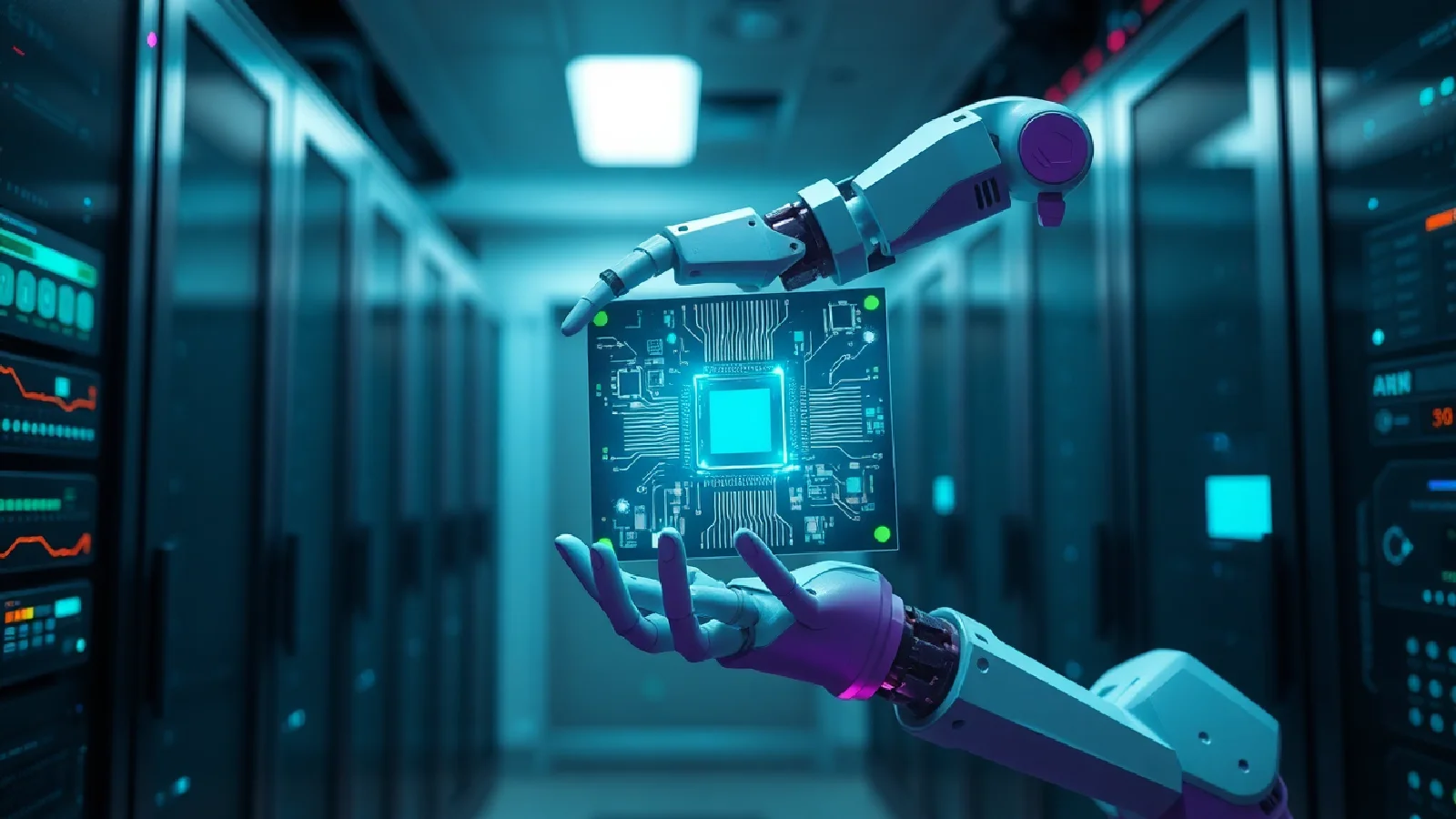
Coding assistants have long played the role of discreet companions, suggesting lines of code or correcting one-off errors. Today, that era is coming to an end. Microsoft is redefining development assistance by transforming its AI copilots into autonomous agents capable of executing complete processes, from code generation to production deployment.
This transformation relies on advanced orchestration capabilities: thanks to Copilot Studio, teams can now design agents that, from a simple natural language description, generate code, write tests, fix bugs, refactor modules, trigger CI/CD pipelines, and publish artifacts. All without continuous human intervention.

Microsoft Copilot Tasks AI: From Assistance to Autonomy
The transition from a passive copilot to an autonomous agent marks a major turning point in the history of software development. Where traditional tools merely auto-completed a function or suggested a correction, the new AI agents handle complete workflows.
Microsoft announced the deployment of Copilot towards agentic AI, an architecture for creating, configuring, and deploying specialized agents. These agents integrate advanced generation models from OpenAI and Anthropic Claude, combining contextual understanding and multi-step execution capabilities.
Concretely, a developer can ask the agent: “Create an OAuth2 authentication module, write associated unit tests, then integrate it into our main API.” The agent analyzes the request, generates the corresponding code in the correct framework, produces the tests, performs local validation, then submits a pull request to the Git repository. This self-execution capability radically transforms team productivity.
Copilot Studio: The Platform for Creating Custom Agents
At the heart of this transformation is Copilot Studio, an environment for building customized agents tailored to the specific needs of each organization. Technical teams can define complex workflows, integrate internal data sources, and configure governance rules.
Among other features, the tool offers App Builder and Workflows agents, specialized in the automated creation of business applications. These agents leverage generation models to assemble user interfaces, design databases, and orchestrate business logic, all from functional descriptions in natural language.
Agent 365: Governance and Security at Scale
Facing the rise of autonomous agents, Microsoft introduces Agent 365, a centralized control system designed to oversee their deployment at the enterprise level. Available from May 1, 2026, at a price of $15 per user, this platform offers governance, monitoring, and security features.
Agent 365 allows IT managers to define granular access policies, track agent actions, and audit automated decisions. This control layer addresses legitimate organizational concerns about the reliability and transparency of autonomous systems.
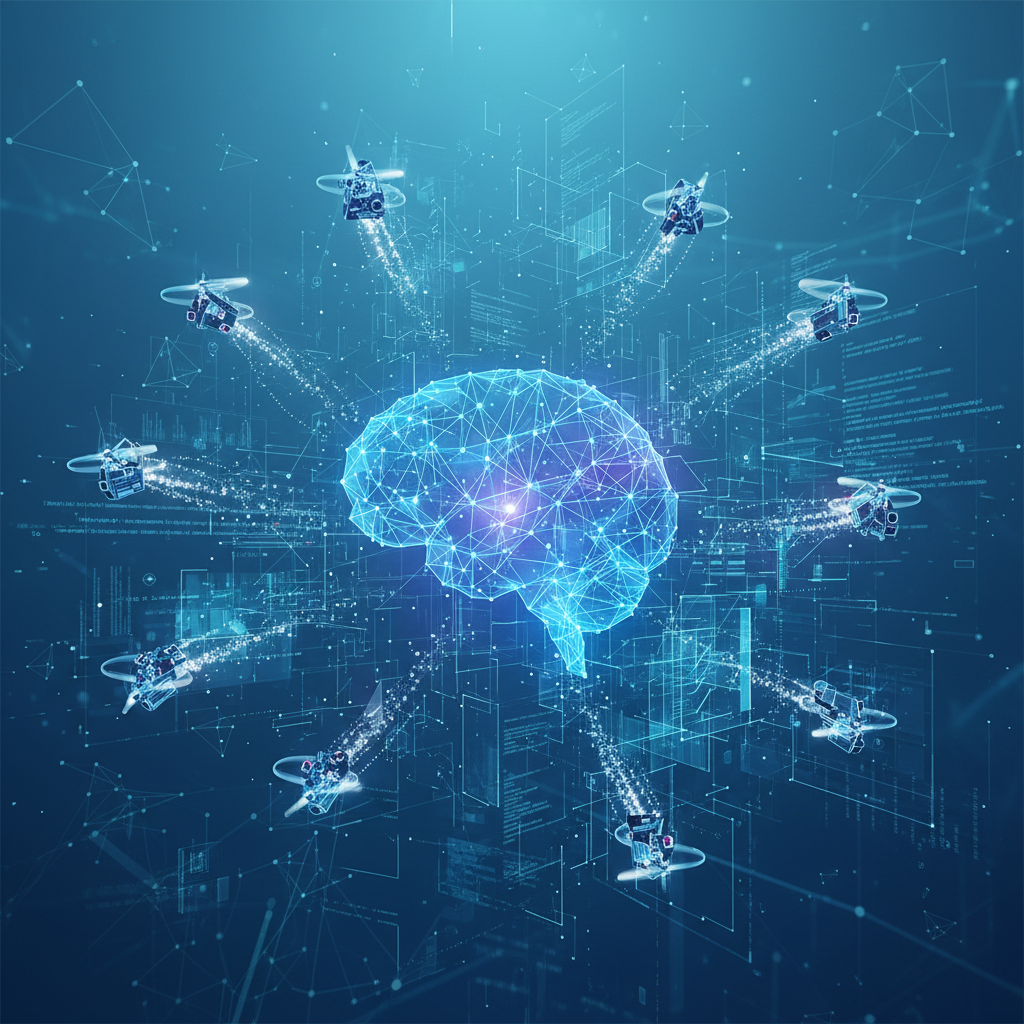
“Every organization will have a constellation of agents — ranging from a simple question-and-answer system to full autonomy.” — Microsoft
This vision of a constellation of specialized agents foreshadows an ecosystem where each task of the development cycle will be orchestrated by a dedicated agent: one for code generation, another for testing, a third for documentation, etc. The whole is integrated into an automated chain coordinated by intelligent orchestrators.
| Key Feature | Description | Main Benefit |
|---|---|---|
| Access Policies | Definition of granular rules for agents. | Precise control over actions and data. |
| Action Traceability | Detailed recording of operations performed. | Auditability and accountability. |
| Decision Auditing | Verification of automated agent choices. | Reliability and transparency. |
| Pricing (2026) | $15 per user per month. | Clear economic model. |
A New Role for Developers
The autonomization of AI copilots raises a fundamental question: what will be the role of the developer in a world where agents generate, test, and deploy code autonomously?
The answer lies in upskilling towards higher value-added tasks. Developers become system architects, agent supervisors, and designers of intelligent workflows. Their expertise focuses on defining business objectives, validating technical choices, and solving complex problems that agents cannot yet handle.
This transformation is part of a broader trend observed in the IT industry. AI agents are now deployed in multiple domains: open-source AI video generation is transforming content production, while Edge AI is pushing the capabilities of consumer devices. Software development follows the same movement of augmenting human capabilities with artificial intelligence.
Current Limitations of Autonomy
Despite their spectacular advances, autonomous developer agents still encounter technical limitations. A fine understanding of complex architectures, managing inter-system dependencies, and anticipating side effects remain major challenges.
Language models, however powerful, can generate syntactically correct code that is conceptually unsuitable for the application context. Human validation therefore remains essential, particularly for:
- Architectural decisions impacting long-term scalability
- Securing sensitive data flows
- Optimizing critical performance
The concept of supervised autonomy emerges as the preferred operational model: agents execute repetitive and time-consuming tasks, while developers validate strategic choices and intervene in complex cases.
Orchestration of the Software Lifecycle
One of the major contributions of autonomous agents lies in their ability to orchestrate the entire software lifecycle. Beyond simple code generation, they coordinate the different phases of development in a continuous execution chain.
An agent can detect a regression in an automated test, analyze the offending code, identify the necessary correction, generate the patch, apply it, rerun the tests, and then notify the team of the deployed fix. This self-correction loop drastically reduces incident resolution times.
Similarly, agents can manage the continuous refactoring of legacy code. They identify obsolete code sections, propose modernized architectures, progressively migrate modules, and maintain compatibility with existing systems. This capability addresses a major strategic challenge for organizations facing aging codebases.
Implications for IT Organizations
The adoption of autonomous developer agents requires profound organizational adjustments. IT teams must rethink their processes, working methods, and skills.
Training and Acculturation
Mastering AI agents requires specific training. Developers must learn to formulate effective instructions, supervise generated outputs, and integrate these tools into their daily workflows. Microsoft also offers dedicated resources to maximize Copilot's impact in organizations.
This acculturation goes beyond mere technical learning: it implies a cultural change in the perception of the developer's role and in human-machine collaboration.
Impacts on Quality and Velocity
Early adoption experiences show significant productivity gains. Teams equipped with autonomous agents observe accelerated development cycles, reduced time spent on repetitive tasks, and improved test coverage. These trends are part of the overall evolution of the 10 IT Trends 2025.
However, these benefits come with new risks: the proliferation of generated code can lead to technical debt if validations are not rigorous. The balance between velocity and quality remains a major challenge for organizations.
Perspectives: Towards Distributed Intelligence
The evolution of AI copilots towards full autonomy is part of a broader vision: that of distributed intelligence where each component of the information system has its own cognitive capabilities.
Developer agents are just a first step. Tomorrow, specialized agents will manage cloud infrastructure, optimize network performance, secure data flows, and orchestrate multi-region deployments. This constellation of intelligences will collaborate to maintain and evolve IT systems of unprecedented complexity.
This transformation also opens the way for new synergies with other areas of AI. Developer agents could thus rely on multimodal RAG techniques to integrate knowledge from visual or audio documentation, thereby enriching their contextual understanding.
The major challenge in the coming years will be to orchestrate this increasing complexity while preserving human control over systems. Organizations that can find this balance between agent autonomy and strategic supervision will gain a decisive competitive advantage.