Solana Faces Quantum Threat: Adaptation Strategies

The emergence of quantum computers is no longer science fiction. Their ability to break current cryptographic algorithms, particularly the elliptic curves that secure blockchains, forces decentralized protocols to anticipate today a threat that could become a reality in the coming years. Solana, a blockchain network renowned for its speed and efficiency, has launched an internal research program dedicated to the transition to post-quantum signature algorithms.
This proactive approach places Solana alongside Bitcoin in a technological race against time. As quantum computing advances, blockchain protocols must reinvent themselves to preserve the security of funds and user trust. But how does Solana intend to meet this challenge? What technical solutions are being considered, and what deployment schedule is planned?
The Quantum Threat: A Cryptographic Urgency
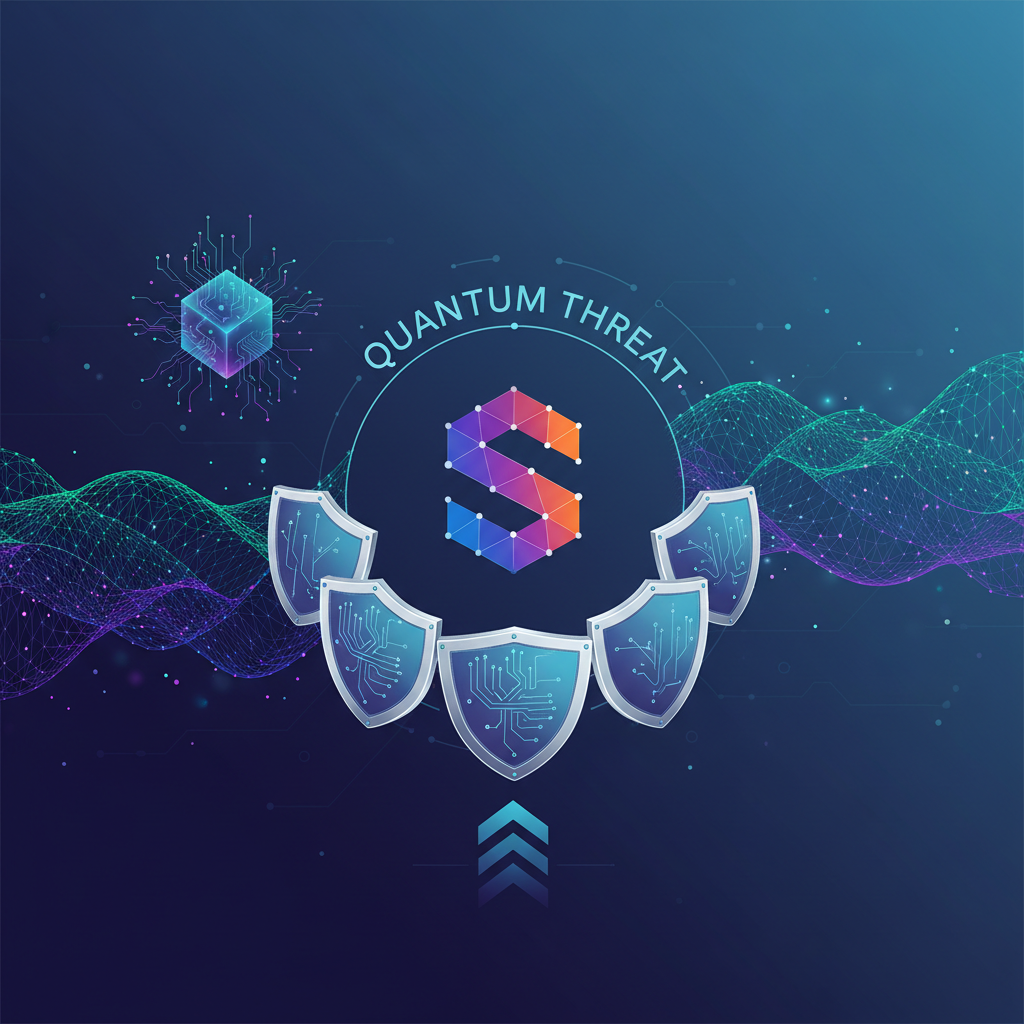
Quantum computers leverage principles of quantum mechanics to perform calculations exponentially faster than classical machines. This computing power poses a direct threat to current digital signature algorithms, notably Ed25519, used by Solana to secure transactions.
A sufficiently powerful quantum computer could, in theory, derive a private key from a public key, making all digital assets protected by elliptic curves vulnerable. This prospect is pushing the entire blockchain ecosystem to explore quantum-resistant alternatives.
The scientific community estimates that the first quantum computers capable of threatening blockchains could emerge between 2030 and 2040. However, the precautionary principle dictates acting now, as migrating to new cryptographic standards requires several years of development, testing, and gradual deployment. For a more in-depth analysis of global technological challenges, one can refer to this study on the "polycrisis".
Solana's Research Program: An Ambitious Roadmap
As early as 2024, Solana initiated an internal research program focused on integrating post-quantum signature algorithms. The Solana Foundation has published a roadmap detailing the steps of this major transition, planned to accelerate in 2025.
Algorithms Based on Lattice Functions
Among the solutions explored, Solana favors cryptographic schemes based on lattice functions, considered resistant to quantum attacks. Two families of algorithms are being considered:
- NTRU: a cryptographic system based on Euclidean lattices, recognized for its robustness against Shor-type quantum algorithms.
- Dilithium: a post-quantum signature scheme standardized by NIST (National Institute of Standards and Technology), offering a good compromise between security and performance.
These algorithms have the advantage of being compatible with Solana's performance constraints, a network designed to process several thousand transactions per second. The challenge is to preserve this execution speed while strengthening cryptographic security.
A New “Quantum-Ready” Transaction Format
Solana's roadmap includes the introduction of a new transaction format allowing coexistence between classical (Ed25519) and post-quantum algorithms. This hybrid approach, deployed via soft forks scheduled for 2025, offers several advantages:
- Backward compatibility: existing transactions remain valid, avoiding a sudden network disruption.
- Flexibility for validators: each node can choose, via network parameters, the signature algorithm best suited to its security level.
- Progressive migration: users and developers have the necessary time to adapt their applications.
“The transition to post-quantum algorithms cannot happen overnight. The hybrid approach allows for a smooth migration, while preserving network performance.”
| Feature | Classical Algorithms (Ed25519) | Post-Quantum Algorithms (NTRU, Dilithium) |
|---|---|---|
| Quantum Attack Resistance | Vulnerable | Resistant |
| Solana Adoption | Current | Target (from 2025) |
| Performance Impact | Optimized | Potentially larger (signatures) |
Ecosystem Collaboration: Wallets and Validators
Securing the Solana network against the quantum threat does not only concern the protocol itself. Digital wallets play a crucial role, as they manage users' private keys.
Solana actively collaborates with major wallet projects, including Phantom and Ledger, to update private key formats. The goal: to allow users to generate hybrid keys (classical + quantum) before quantum computers become a concrete threat.
This collaboration strategy also extends to network validators, who will need to update their infrastructures to support the new signature algorithms. Research grants and hackathons are funded by the Solana Foundation to encourage the integration of post-quantum libraries into the protocol's runtime.
Solana and Bitcoin: Two Converging Approaches
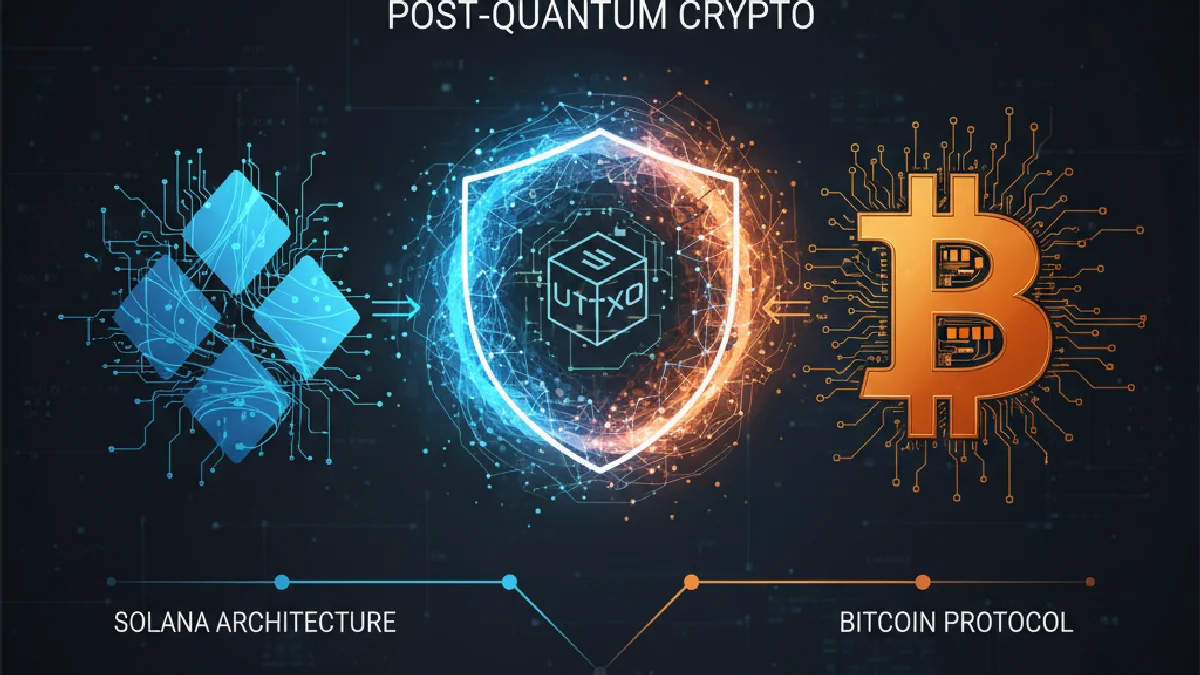
Solana's approach is reminiscent of the Bitcoin community, which is also exploring post-quantum solutions. Bitcoin is notably considering the integration of post-quantum Schnorr signatures and future protocol upgrades to protect UTXOs (Unspent Transaction Outputs) against quantum attacks.
Despite their architectural differences — Bitcoin prioritizes maximum decentralization, while Solana focuses on performance — both networks converge on the urgency of preparing for the quantum era. This convergence illustrates a growing consensus within the blockchain ecosystem: long-term security outweighs the technical specificities of each protocol. For a prospective view on blockchain strategies facing these challenges, research such as that on the economic strategies necessary for blockchain implementation is relevant.
To delve deeper into comparisons between these two ecosystems, consult our detailed analysis on Ethereum vs. Solana 2026: Which Blockchain Dominates?.
Technical and Organizational Challenges
The transition to post-quantum algorithms raises several major challenges:
- Performance and signature size: post-quantum signatures are generally larger than classical signatures. On a network like Solana, which processes several thousand transactions per second, this increase in data size can impact bandwidth and storage costs.
- Compatibility with smart contracts: existing smart contracts, particularly those developed on the Solana Program Library, will need to be audited and potentially rewritten to support the new cryptographic standards.
- Ecosystem coordination: migrating to post-quantum algorithms requires coordination among protocol developers, validator operators, wallet creators, and decentralized applications. This coordination represents a major organizational challenge.
Outlook and Deployment Schedule
Solana's roadmap outlines several key steps for the coming years:
- 2025: deployment of the first soft forks allowing the coexistence of Ed25519 and post-quantum algorithms.
- 2026-2027: progressive generalization of hybrid keys in wallets and migration of validators.
- 2028 and beyond: complete transition to post-quantum algorithms, with gradual deprecation of classical signatures.
This ambitious timeline demonstrates Solana's desire to anticipate the quantum threat without waiting for it to become an immediate reality. However, the success of this transition will depend on the adherence of the entire ecosystem and the network's ability to maintain its performance while strengthening its security.
To discover how other blockchains address security challenges in different contexts, consult our article on Ethereum and Supply Chain: Practical Cases and Challenges 2026.