Agritech 2026: Vertical Farming and CEA Revolutionize
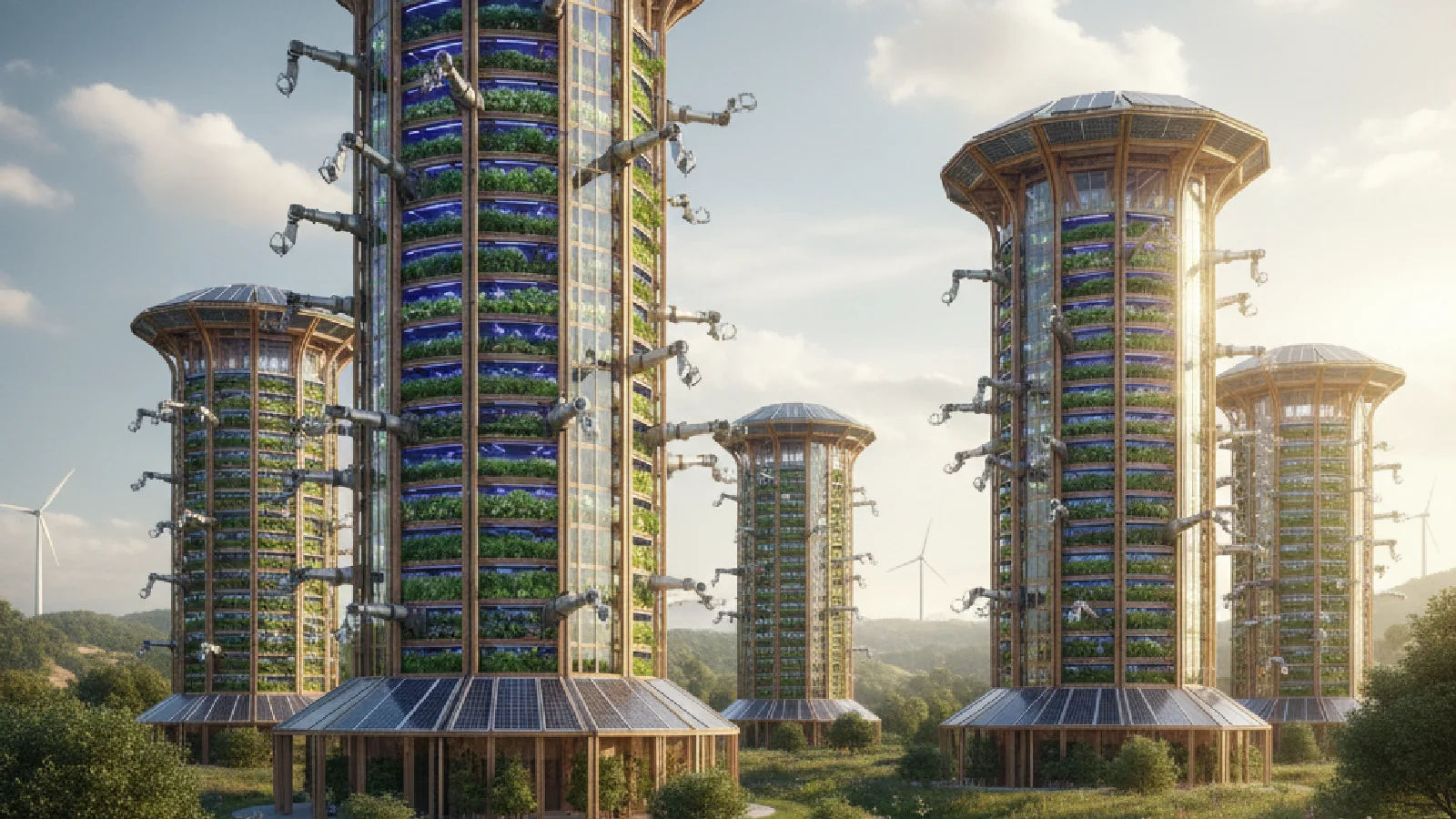
In a world where the urban population continues to grow and arable land becomes scarcer, two technological revolutions are emerging to radically transform how we produce food. Vertical farming and Controlled Environment Agriculture (CEA) are no longer mere futuristic concepts: they are already redefining the contours of the global agritech market.
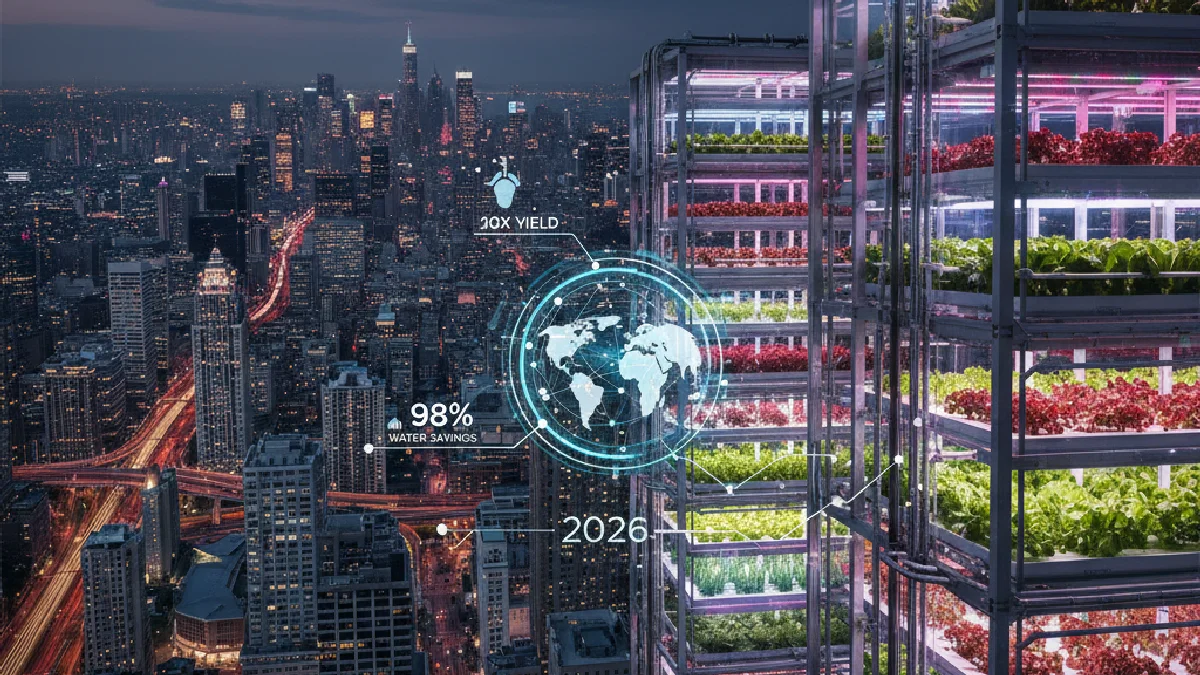
Vertical Farming: The Revolution of Urban Crop Towers
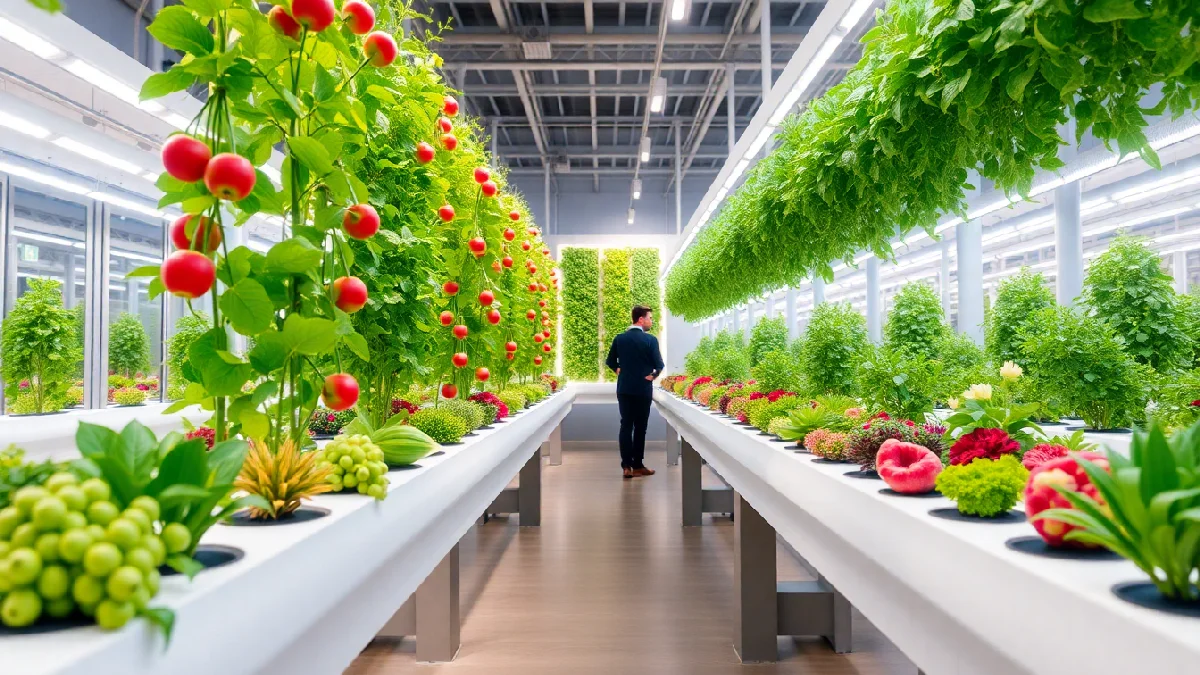
Vertical farming represents the vanguard of modern food production. By stacking crops on multiple levels within controlled facilities, this technology revolutionizes the use of urban space. The global vertical farming market was valued at USD 6.92 billion in 2024 and is projected to reach USD 50.10 billion by 2032, exhibiting a compound annual growth rate of 28.8%.
Key Technologies and Innovation
Vertical farms rely on three main production systems:
- Hydroponics: cultivation in liquid nutrient solutions.
- Aeroponics: root growth in a gaseous environment.
- Aquaponics: integration of fish farming and plant cultivation.
LED lighting is the technological heart of these installations. Advances in lighting efficiency now allow for a 40% reduction in energy consumption compared to traditional systems, making vertical farming economically viable even in densely populated urban areas.
Major Environmental Benefits
Vertical farming achieves remarkable environmental performance. It uses up to 98% less water than conventional agriculture and occupies only 1% of the surface area required for open-field crops. This spatial efficiency allows production units to be installed in the heart of urban centers, drastically reducing transport distances and the associated carbon footprint.
"Vertical farms enable local, resilient, and sustainable food production, directly integrated into the urban ecosystem." - Fortune Business Insights Report, 2025
CEA: An Expanded Technological Ecosystem
Controlled Environment Agriculture (CEA) encompasses a broader spectrum of technologies than vertical farming alone. It includes high-tech greenhouses, containerized farms, modular indoor units, and even insect farming. This systemic approach represents the majority of agritech investments and is a pillar of national food security strategies.
Diversity of Applications
CEA stands out for its adaptability to different environments and crops. From polycarbonate greenhouses to containerized systems deployable in the Canadian Arctic, this technology offers tailor-made solutions for every geographical and climatic context.
Artificial Intelligence and Advanced Monitoring
The integration of artificial intelligence into CEA systems allows for real-time monitoring of growth parameters. IoT sensors monitor humidity, temperature, nutrient levels, and detect diseases and pests early. This automated monitoring optimizes inputs and greatly reduces pesticide use compared to traditional methods.
Comparison of Impacts on the Global Market
Distinct Commercial Positioning
Vertical farming primarily targets premium urban markets, with "turnkey" installations attractive to venture capital investors. Its economic model favors high-value crops such as leafy greens, herbs, and certain berries.
CEA, on the other hand, adopts a more inclusive approach, covering a wider spectrum of agricultural production. Its more accessible entry cost and modularity make it a solution adoptable by operators of various sizes, from startups to agribusiness multinationals.
Strategic Geographical Expansion
Investments are accelerating particularly in regions with specific food challenges. The Middle East and North Africa are investing heavily in CEA to overcome water constraints. Africa is exploring these technologies as levers for transforming its food systems, particularly to secure supply for rapidly growing urban areas.
| Characteristic | Vertical Farming | Controlled Environment Agriculture (CEA) |
|---|---|---|
| Primary Target | Premium urban markets, high-value crops | Wide spectrum of production, adaptable to various operators |
| Economic Model | Attractive for venture capital investors | More accessible entry cost, modular |
| Geographical Expansion | Densely populated cities | Regions with food challenges (e.g., water constraints, Africa) |
Technological Innovation and Convergence
Integrated Bio-Circular Systems
The evolution towards circular ecosystems marks a major trend. The integration of insect farming into CEA systems creates closed nutritional loops, where organic waste feeds insects, whose excretions fertilize crops. This holistic approach optimizes resource efficiency and diversifies protein sources.
Automation and Robotics
Agricultural robots are transforming planting, monitoring, and harvesting operations. In many cases, automating these tasks significantly reduces labor costs while improving the precision of interventions, helping to make local production viable even in countries with high labor costs.
Will the agriculture of the future be limited to robots cultivating in urban towers? The reality is more nuanced and exciting.
Current Challenges and Limitations
Despite their potential, these technologies face significant obstacles. In vertical farming, energy costs can represent a significant portion of operational expenses, which impacts the profitability of installations. Furthermore, the technical complexity of these systems requires specialized skills that are still rare in the agricultural sector.
Social acceptance also constitutes a major challenge. Consumers sometimes remain skeptical of products from these new methods, necessitating in-depth information and awareness campaigns.
Integration Prospects and Synergies
Complementarity of Models
Rather than direct competition, vertical farming and CEA are developing strategic complementarity. Vertical farms excel in local urban production, while expanded CEA ensures food security at regional and national levels.
This synergy is observed in agricultural innovation strategies, where both approaches converge towards common goals of sustainability and food resilience.
Evolution towards Agriculture 4.0
Integration with digital technologies accelerates the transition to Agriculture 4.0. Blockchain secures traceability, IoT optimizes resources, and artificial intelligence predicts yields. This technological convergence positions controlled agriculture as a cutting-edge innovation sector, attracting talent and investments.
The future of our food is taking shape in these green laboratories where technology and nature combine to sustainably feed a changing planet. While vertical farming conquers city centers with its futuristic towers, CEA discreetly extends its influence through solutions adapted to each territory. These two revolutions, far from opposing each other, together trace the contours of a more resilient, efficient, and environmentally friendly food system. By 2026, their progressive integration will not only transform our plates but redefine our relationship with food production and natural resource management.
The convergence of these technologies will even surpass innovations in energy infrastructure, creating unexpected synergies between sectors. Controlled agriculture could thus benefit from advances in energy storage to optimize its electricity consumption and strengthen its energy autonomy.