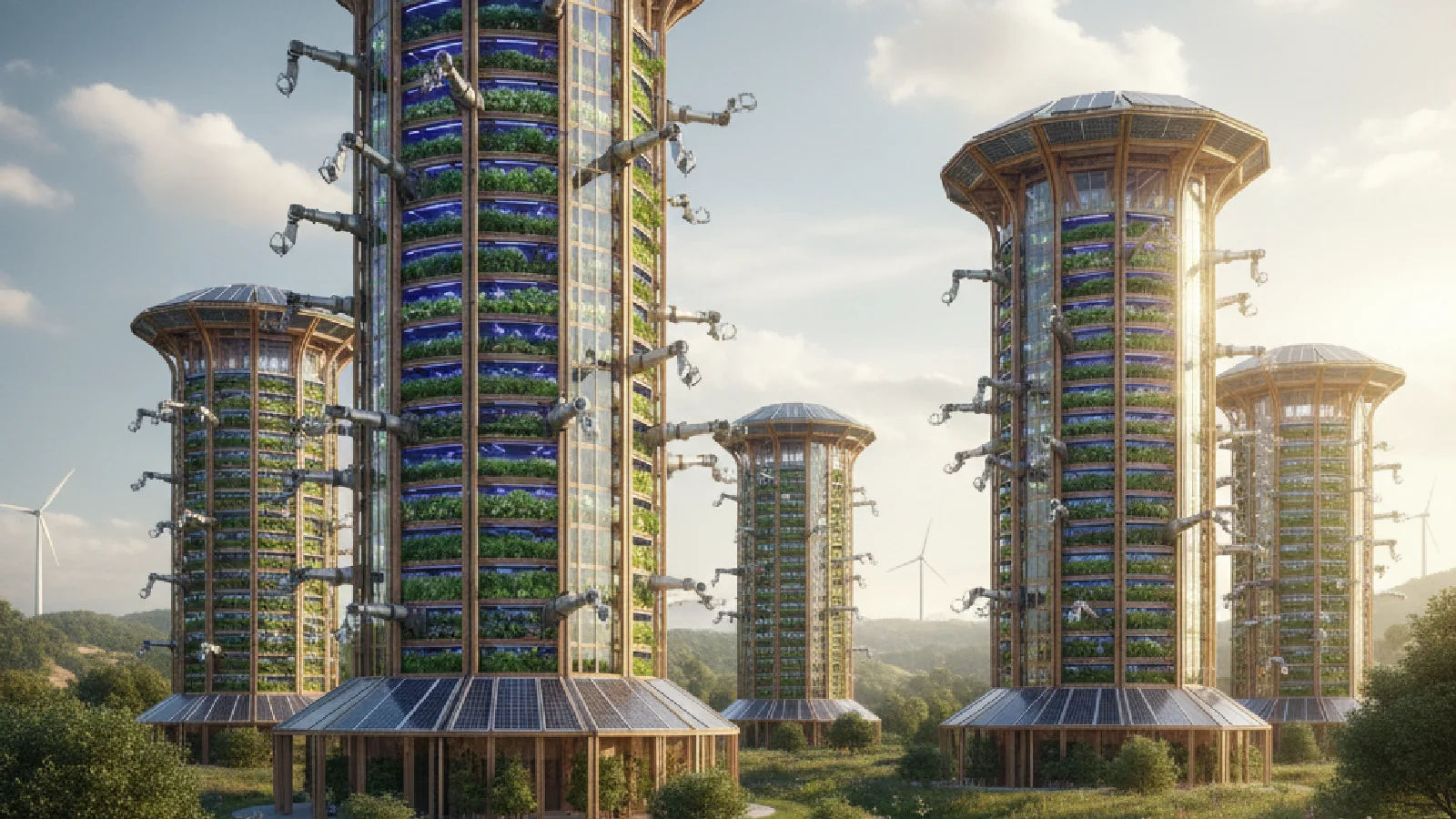
Vertical vs. Precision Agriculture: A Duel for Sustainability 2026
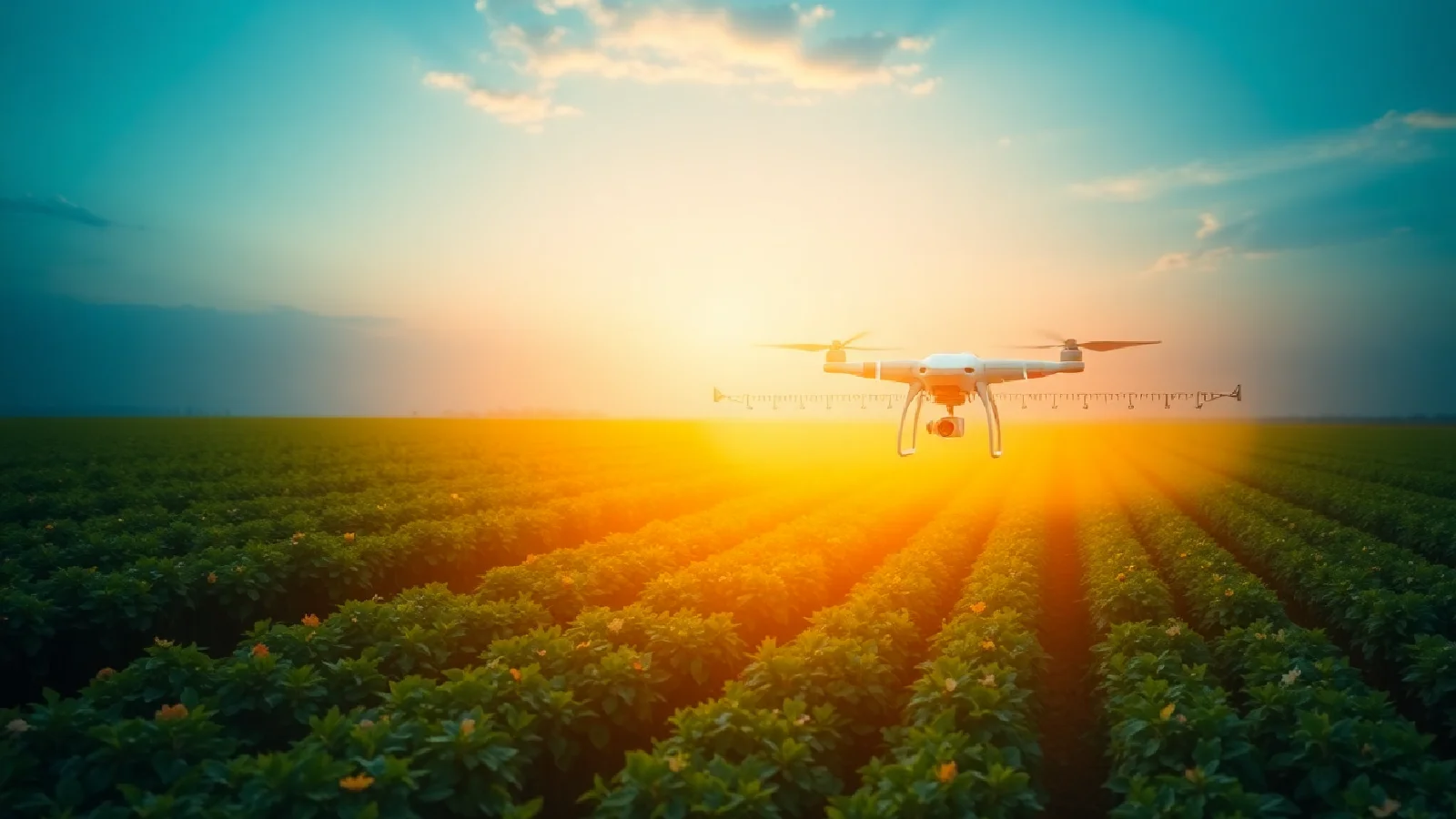
In the urban laboratories of Singapore, perfect strawberries grow without soil, without pesticides, stacked fifteen stories high. A thousand kilometers away, in the American Midwest plains, smart sensors guide the irrigation of thousands of hectares of corn millimeter by millimeter. In 2026, these two visions of sustainable agriculture – vertical agriculture and precision agriculture – are competing for the future of our food.
As the global population approaches 8 billion and climate change intensifies pressure on agricultural resources, these technological approaches promise to revolutionize our food system. But which offers the best path to sustainability?
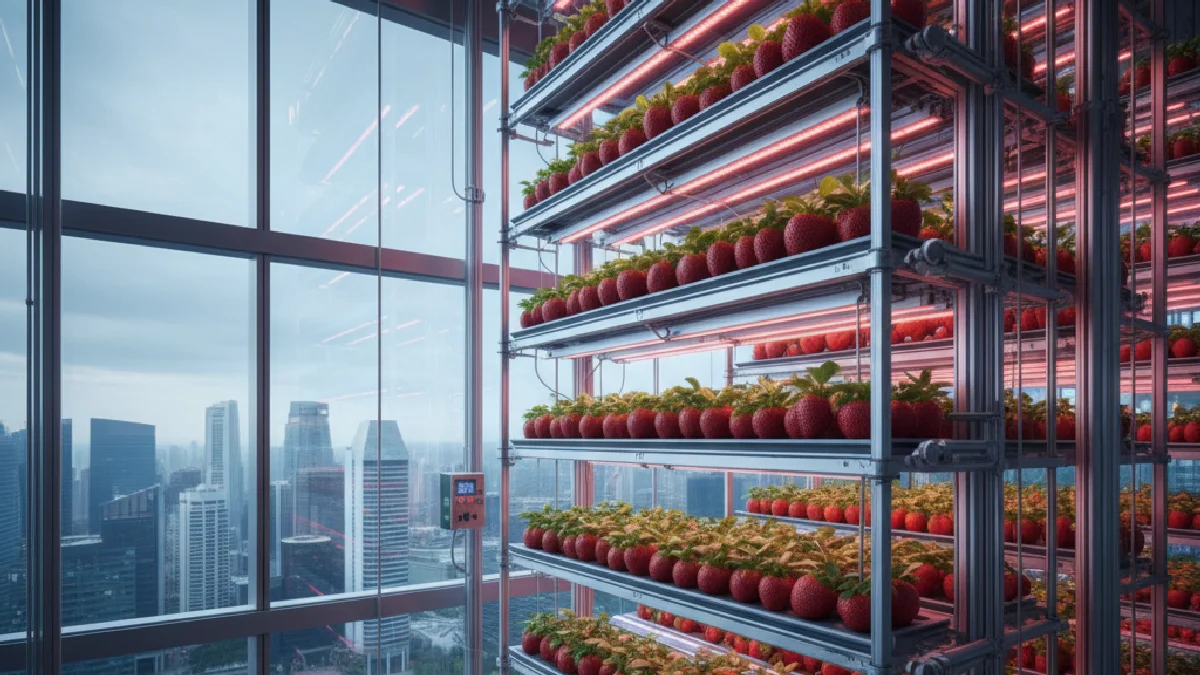
Vertical Agriculture: The Food Tower Revolution
Vertical agriculture represents a radical break from traditional methods. By stacking crops in controlled environments, this approach transforms urban spaces into food production centers.
Environmental Impacts: Resource Economy
Vertical farms excel in their exceptional water efficiency. According to recent analyses, these facilities use up to 90% less water than traditional agriculture thanks to hydroponic and aeroponic systems. This drastic saving is due to the permanent recirculation of nutrients and the absence of evaporation.
Land footprint is another major advantage. A vertical farm can produce the equivalent of 95% less agricultural land, potentially freeing up millions of hectares for reforestation or other ecological uses.
However, the Achilles' heel lies in energy consumption. LED lighting and air conditioning account for 70% of operational costs. In regions dependent on fossil fuels, the carbon footprint can paradoxically exceed that of conventional agriculture.
Economic Challenges and Limited Adoption
The installation cost of a vertical farm ranges from 15 to 40 million euros depending on the area. This financial barrier explains why adoption remains concentrated in wealthy metropolises and countries offering substantial subsidies.
In 2026, premium leafy greens and small fruits represent 80% of vertical production, with selling prices 3 to 5 times higher than conventional products. This premium reflects both the taste quality and the high production costs. For more information on investing in this sector.
Precision Agriculture: Intelligence Serving the Fields
Precision agriculture adopts a different philosophy: optimizing what already exists rather than revolutionizing it. This approach relies on a range of digital technologies to refine every agricultural action.
Converging Technologies for Maximum Efficiency
IoT sensors, drones, satellites, and artificial intelligence algorithms form the ecosystem of precision agriculture. These technologies allow for fine mapping of needs, optimizing the supply of water, fertilizers, and phytosanitary treatments down to the square meter.
The results speak for themselves: a 20 to 30% reduction in chemical inputs, a 5 to 15% increase in yields, and a 25% average decrease in nitrous oxide (N₂O) emissions. This precision transforms extensive agriculture into reasoned intensive agriculture.
"Precision agriculture can reduce water usage by 20% while increasing yields by 15% through resource optimization." - European Institute of Agricultural Technologies, 2026
Accessibility and Gradual Democratization
Unlike vertical farms, precision agriculture adapts to existing farms. A basic system including humidity sensors, GPS mapping, and analysis software costs between 15,000 and 50,000 euros depending on the size of the farm.
This modularity encourages gradual adoption. Farmers can start with simple tools before expanding their technological arsenal according to their means and specific needs.
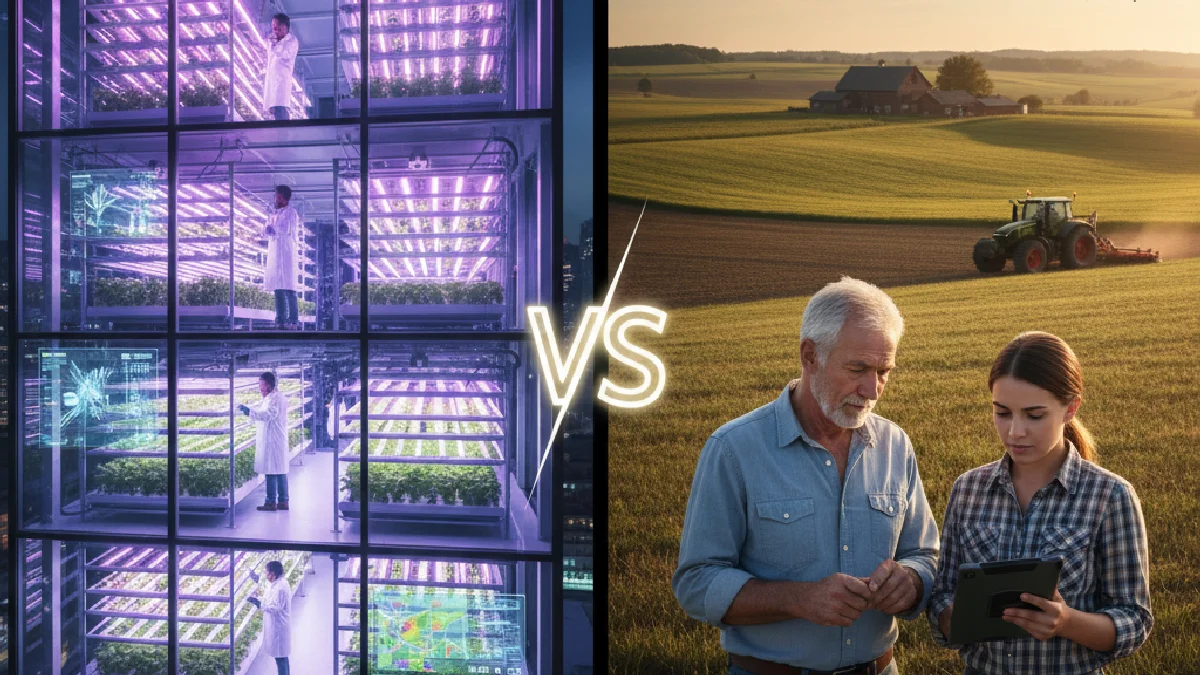
Social Impacts: Two Models, Two Philosophies
Transformation of Agricultural Professions
Vertical agriculture generates new highly skilled jobs: hydroponics technicians, botanical data analysts, horticultural lighting engineers. These positions, concentrated in urban areas, attract a young and educated workforce but can marginalize traditional rural farmers.
Precision agriculture, on the other hand, transforms rather than replaces. It requires new digital skills but preserves traditional agronomic expertise. This evolution promotes intergenerational transmission and maintains the vitality of rural areas.
Local Food Security versus Global Resilience
Urban vertical farms strengthen the local food autonomy of metropolises, reducing dependence on long supply chains. In the event of a logistical or climatic crisis, these facilities guarantee a minimum supply of fresh produce.
Precision agriculture improves the overall resilience of the food system by optimizing yields on existing land. This approach avoids the artificialization of new territories and preserves the biodiversity of traditional agricultural ecosystems.
Adoption Challenges and 2026 Prospects
Technological and Regulatory Hurdles
Vertical agriculture faces energy costs and the limitation of possible crops. Only short-cycle, high-value-added vegetables remain economically viable, excluding cereals and legumes that form the global food base.
Precision agriculture faces different challenges: data fragmentation, system interoperability, user training. The multiplicity of technological players complicates the emergence of uniform standards.
Complementarity Rather Than Competition?
Some experts advocate for a hybrid approach. Vertical farms would excel in producing premium vegetables in constrained urban areas, while precision agriculture would optimize mass production in traditional agricultural basins.
This complementarity is already emerging in the strategies of agri-food giants, who are simultaneously investing in both technologies depending on the target markets.
Regional Adoption Trajectories
Europe: Subsidized Precision, Experimental Vertical
The Common Agricultural Policy in Europe favors precision agriculture through eco-schemes and agri-environmental measures. European farmers benefit from substantial aid to equip their farms with digital technologies. For an in-depth analysis of agri-environmental policies.
At the same time, a few pilot vertical farm projects are emerging in capitals, supported by urban innovation funds but without prospects for massive generalization.
Asia-Pacific: Global Innovation Laboratory
Singapore, Japan, and South Korea are pioneers in vertical agriculture, driven by urban density and proactive policies. These countries aim for 30% local food production by 2030 thanks to urban farms.
China and India are focusing more on precision agriculture to feed their large populations, with massive public investments in rural digital infrastructure.
The following table summarizes the main advantages of each approach:
| Characteristic | Vertical Agriculture | Precision Agriculture |
|---|---|---|
| Water Efficiency | Up to 90% reduction | Up to 20% reduction |
| Land Footprint | Very low (urban areas) | Optimization of existing land |
| Energy Cost | High (light, air conditioning) | Moderate (sensors, machinery) |
| Initial Cost | 15-40 million euros | 15,000-50,000 euros |
| Crop Types | Leafy greens, small fruits | Wide range of crops |
The comparative analysis reveals that far from being opposed, vertical and precision agriculture outline complementary approaches to sustainable food. The former will excel in high-value-added production in constrained urban environments, while the latter will transform the mass agriculture inherited from the 20th century. As experts point out, this technological diversification is probably our best insurance against future food challenges.
The success of these transitions will depend as much on technical innovations as on supportive public policies. In 2026, regions that can orchestrate this hybrid transformation will gain a head start in the race for sustainable food sovereignty. For companies looking to optimize their environmental impact, these agricultural developments are part of a broader ecological transition, similar to revolutionary adoption strategies in industry and the integration of new energy technologies.
FAQ (JSON format - translate question and answer fields only):