
CCS: Adoption Strategies Revolutionize the Industry
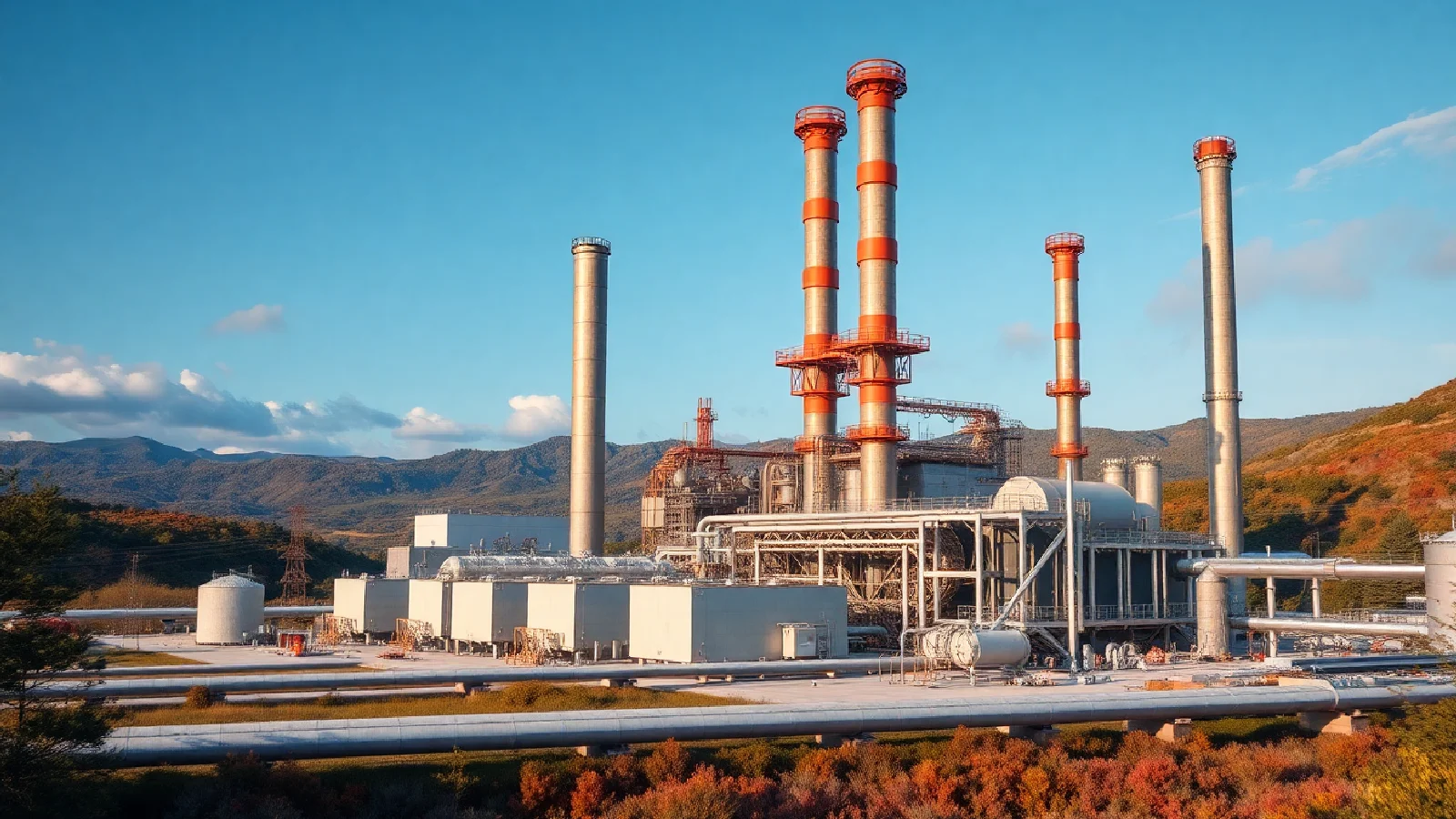
In the face of the climate emergency, energy companies are radically transforming their investment strategies. Carbon Capture, Utilization, and Storage (CCS) is no longer confined to R&D labs but is now asserting itself as an essential strategic lever. In 2026, industry players are deploying innovative approaches to overcome the economic and technical barriers that have long hindered the widespread adoption of these technologies.
This silent revolution is reshaping the energy industry, where traditional giants now coexist with specialized start-ups and unprecedented industrial consortiums.
Key Sectors: A Strategy of Geographic Concentration
Energy companies have identified a pragmatic approach: concentrating their CCS investments in heavy industrial sectors where decarbonization alternatives remain limited. This geographic clustering strategy optimizes CO₂ transport and storage infrastructure.
The Cement Industry: A CCS Innovation Laboratory
The cement sector accounts for nearly 8% of global CO₂ emissions. Calcination processes generate irreducible emissions, making carbon capture an almost mandatory solution. Energy companies like TotalEnergies and Shell are developing partnerships with cement manufacturers to deploy modular capture units.
These pilot projects reveal capture costs ranging from 60 to 150 EUR/tCO₂ depending on technical configurations, a threshold that is starting to become competitive with current European carbon prices.
Chemicals and Steel: Concentrated Emissions, Targeted Solutions
The chemical and steel industries have the advantage of concentrating significant emission volumes in geographically defined sites. This concentration facilitates the deployment of shared CO₂ transport infrastructure, significantly reducing unit costs.
"Industrial clusters reduce infrastructure investment costs by two-thirds compared to isolated projects" - Report from the French High Council on Climate, 2023
The Emergence of Hybrid CCU Economic Models
Carbon Capture, Utilization, and Storage (CCU) transforms captured CO₂ into a commercial opportunity. Energy companies are developing industrial ecosystems where carbon becomes a valuable raw material.
Synthetic Fuels: A New Economic Eldorado
Oil companies are converting their refineries to produce synthetic fuels from captured CO₂. This strategy allows them to maintain their existing industrial assets while reducing their carbon footprint. ExxonMobil and BP are investing heavily in these technologies, anticipating growing demand, particularly from the aviation sector.
This CCU approach improves the profitability of CCS projects by creating additional revenue streams, partially offsetting the high costs of capture.
| CCU Strategy | Primary Objective | Key Advantage |
|---|---|---|
| Synthetic Fuels | Produce fuels from captured CO₂ | Maintain industrial assets, reduce CO₂ |
| Industrial Ecosystems | Valorize captured carbon as a raw material | Create additional revenue streams |

Persistent Challenges in Funding and Regulation
Despite technological advancements, energy companies face major structural obstacles that condition their adoption strategies.
Regulatory Uncertainty: Brake or Accelerator?
Regulatory instability complicates long-term planning. However, certain mechanisms such as the US 45Q tax credit or European support mechanisms for clean technologies create attractive investment opportunities.
Companies now prioritize projects located in jurisdictions offering stable regulatory guarantees for 10 to 15 years, the time needed to amortize heavy CCS investments, as detailed in this document on Canada's carbon management strategy.
Infrastructure Costs: The Transport and Storage Equation
The transport of CO₂ from capture sites to storage areas represents a considerable logistical and financial challenge. Companies are developing shared pipeline networks to distribute these costs among several industrial players.
The availability of safe geological storage sites also determines project feasibility. Canada and certain European regions have natural geological advantages that attract international investments, as highlighted by Canada's carbon management strategy.
Emerging Technologies: BECCS and DACCS, Bets for the Future
Energy companies are diversifying their CCS investments towards emerging technologies with disruptive potential, despite their still limited technological maturity.
BECCS: When Biomass and Capture Unite
Bioenergy with Carbon Capture and Storage (BECCS) offers the unique prospect of negative emissions. By burning biomass while capturing the CO₂ produced, this technology can theoretically remove more carbon from the atmosphere than it emits.
However, companies remain cautious about the challenges of biomass sustainability and potential conflicts with food uses or biodiversity.
DACCS: Direct Air Capture as the Ultimate Solution
Direct Air Carbon Capture and Storage (DACCS) fascinates investors with its theoretically unlimited potential. Companies like Climeworks and Carbon Engineering are attracting considerable funding, particularly from tech giants seeking carbon neutrality. To learn more about the importance of capture in this context: Carbon Capture and the Essential Role It Could Play.
Current costs, exceeding 400 EUR/tCO₂, still limit commercial deployment, but projections anticipate a fourfold reduction by 2030.

Partnership Strategies and Industrial Alliances
Faced with the colossal investments required, energy companies are favoring unprecedented collaborative approaches in their traditionally competitive sector.
Technology Consortiums: Sharing Risks
Alliances like "Northern Lights" in Norway bring together Equinor, Shell, and TotalEnergies to jointly develop CO₂ transport and storage infrastructure. This pooling allows for sharing technological and financial risks while accelerating commissioning times.
These partnerships reveal a profound cultural transformation where coopetition becomes the norm for large-scale CCS projects.
Rethinking Vertical Integration
Some energy companies are developing specialized CCS subsidiaries, creating new integrated value chains. This approach allows for total control of the technological chain while developing expertise marketable to third-party industrial players.
This integration strategy fits perfectly with corporate fleet electrification initiatives, creating synergies with fleet electrification strategies for a holistic decarbonization approach.
Social Acceptability: An Underestimated Challenge
The public perception of CO₂ storage is a critical factor often overlooked in adoption strategies. Energy companies are now investing heavily in communication and community engagement.
Concerns primarily focus on the long-term safety of geological storage and liability in the event of leaks. Companies are developing advanced monitoring protocols and insurance mechanisms to reassure local populations and regulators.
According to the assessment report of the French High Council on Climate, this societal dimension largely determines the acceptance of CCS projects by local communities.
Future Prospects: Towards a Mature CCS Industry
The carbon capture industry is reaching a critical inflection point in 2026. Energy companies that quickly master these technologies will have sustainable competitive advantages in decarbonized energy markets.
Announced investments now exceed 10 billion euros annually in Europe and North America, signaling an irreversible industrial dynamic. This ramp-up is accompanied by a professionalization of teams and a standardization of equipment that foreshadows a progressive commoditization of CCS technologies.
This transformation is part of a broader dynamic of restructuring the energy sector, similar to the acquisition movements observed recently, where technical skills become strategic assets of prime importance.
The prospects for a mature CCS industry are characterized by several key points:
- Growing investments: Billions of euros invested annually in Europe and North America.
- Professionalization: Specialized teams and constantly evolving technical expertise.
- Standardization: Homogenized equipment and processes for better efficiency.
- Commoditization: Progressive cost reduction and increased accessibility of technologies.
- Competitive advantages: Rapid mastery of CCS confers a strong position in decarbonized energy markets.