
CATL and the Maritime Expansion of Sodium-Ion Batteries
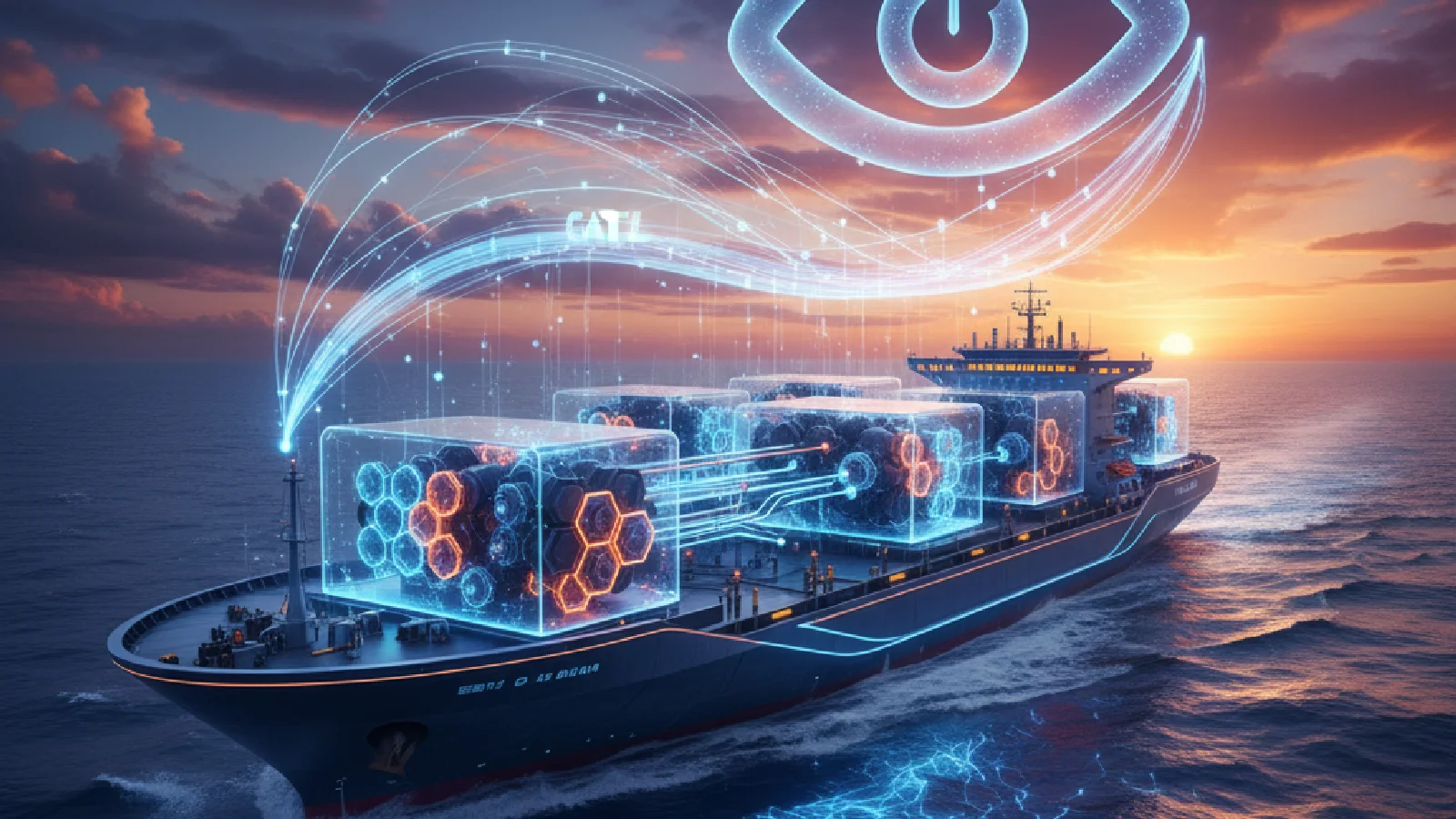
The maritime transport sector, responsible for a significant portion of global CO₂ emissions, is on the verge of a major transformation. CATL, a world leader in batteries, has just announced an unprecedented commitment to decarbonizing the sector: the deployment of sodium-ion batteries specifically designed for ships, with a dedicated program that has seen its engineering and specialist staff double.
This technological ramp-up marks a strategic turning point. While lithium-ion batteries dominate the automotive market, CATL is betting on alternative chemistry to conquer the seas: sodium. This choice is based on decisive advantages for the marine environment.

An Ambitious Maritime Strategy Driven by Sodium-Ion
CATL is not simply transferring its terrestrial technology to ships. The company has created a dedicated maritime program with a doubled team of engineers and system integration specialists, according to information reported by Caixin Global. This increase in expertise reflects the scale of the challenge: adapting energy modules to specific maritime constraints.
The first pilot modules of sodium-ion batteries are already in production to equip short-distance ferries and medium-sized cargo ships. The objective? Commercial deployment as early as 2026, an ambitious deadline that demonstrates the technical maturity achieved.
Why Sodium Instead of Lithium?
The choice of sodium-ion for maritime applications is based on several structural advantages:
- Abundant raw materials: Sodium is widely available, reducing geopolitical tensions related to supply, as highlighted in the IRENA report on sodium-ion batteries (IRENA, 2025)
- Low-temperature performance: Crucial for shipping routes crossing cold regions
- Intrinsic safety: Lower risk of thermal runaway, essential in a confined marine environment
These technical characteristics, combined with a controlled cost, position sodium-ion as a credible alternative to replace diesel generators on routes where electric propulsion becomes feasible.
| Characteristic | Sodium-Ion Battery | Lithium-Ion Battery (comparison) |
|---|---|---|
| Material Abundance | Very abundant (Sodium) | Less abundant (Lithium) |
| Low Temp. Performance | Good | Variable |
| Safety | Lower runaway risk | Thermal runaway risk |
| Cost | Controlled | Higher |
Sodium-Ion, a Pillar of CATL's 2026 Strategy
The maritime commitment is part of a broader vision. At its supplier conference in December 2025, CATL announced its intention to massively deploy sodium-ion batteries in four key areas in 2026: battery swapping, passenger vehicles, commercial vehicles, and energy storage, as reported by 36Kr.
This multi-sector strategy aims to capitalize on the cost and safety advantages of sodium-ion while securing sufficient production volumes to accelerate the industrial learning curve. Maritime thus becomes a full-scale testing ground for a technology destined for widespread adoption.
“The value of sodium-ion batteries lies in their ability to achieve large-scale application more quickly,” CATL emphasizes in its 2026 strategy.
Concrete Applications to Decarbonize Maritime Transport
The first targeted vessels are short-distance ferries and medium-sized cargo ships, segments where electrification is technically and economically viable today. These routes, often repetitive and short-duration, allow for regular recharging at the dock and do not require the autonomy of transoceanic crossings.
By replacing diesel generators with sodium-ion battery packs, these vessels can drastically reduce their local emissions and overall carbon footprint. This progressive approach allows for technology validation before considering more ambitious applications.
A Changing Maritime Ecosystem
CATL's initiative is part of a broader movement to decarbonize maritime transport, supported by increasingly strict international regulations. The International Maritime Organization (IMO) is pushing the sector towards alternative fuels and zero-emission solutions.
In this context, sodium-ion batteries offer an attractive intermediate solution: they allow for the gradual electrification of certain fleets without waiting for the full maturity of technologies like green hydrogen or ammonia, whose infrastructures still need massive development.
To learn more about the challenges of recycling these new batteries, consult our article on the challenges and solutions for recycling sodium-ion batteries.
Challenges of System Integration in the Marine Environment
Adapting batteries to the marine environment is not just about installing modules in a hold. The system integration specialists, whose numbers CATL has doubled, must address specific challenges:
- Environmental constraints: Saline humidity, corrosion, ship movements, and significant thermal variations require robust protection and thermal management systems.
- Operational safety: In the event of an incident, evacuating a ship is more complex than a land vehicle. Safety protocols must be impeccable.
- Electrical integration: Compatibility with existing propulsion and electrical management systems requires custom engineering for each type of vessel.
These challenges explain why CATL has chosen to massively strengthen its technical teams rather than simply adapting existing solutions. The goal is to build specific maritime expertise that will become a sustainable competitive advantage.
A Strategic Positioning for the Future of Green Transport
By investing massively in maritime with sodium-ion batteries, CATL is not just diversifying its markets. The company is positioning this chemistry as a viable alternative to lithium-ion in specific applications, while continuing to develop solid-state batteries for ultimate performance.
This two-pronged strategy – sodium-ion for volume and democratization, solid-state batteries for premium performance – reflects a pragmatic market vision. As stated on the official CATL website, the company has already launched the first mass-produced vehicle equipped with sodium-ion batteries in partnership with Changan Automobile, demonstrating the technology's maturity.
Maritime represents a natural expansion ground: weight constraints are less critical than in automotive, the lower energy density of sodium-ion becomes less penalizing, and the volumes of batteries needed justify significant industrial investments.
Europe and France in the Battery Race
CATL's initiative comes as Europe tries to catch up in battery production. The European Battery Alliance aims to create a complete value chain, from raw material extraction to recycling, to reduce dependence on Asia (IRIS, 2021).
In this context, sodium-ion batteries could offer Europe an opportunity to differentiate itself by focusing on chemistry less dependent on critical lithium and cobalt supplies. France, through actors like CEA and CNRS, is investing in research on these alternative technologies.
To understand the broader issues of energy transition, our article on geothermal heat pumps and their performance in 2026 offers additional insight into emerging green technologies.
Outlook and Medium-Term Impacts
The commercial deployment planned for 2026 will mark a strong symbolic step. If CATL succeeds in its maritime gamble, other players will likely follow, creating a specific market for batteries adapted to naval transport.
The benefits extend beyond the maritime sector. By demonstrating the viability of sodium-ion on a large scale, CATL contributes to diversifying the battery ecosystem and reducing pressure on lithium resources. This technological diversification strengthens the overall resilience of the energy transition.
In the longer term, the experience gained on ships could inform other applications: large-scale stationary storage, heavy-duty utility vehicles, or industrial applications requiring safe and economical batteries.
The central question remains that of economic performance: will sodium-ion achieve sufficiently competitive costs to sustainably rival marine diesel? The coming years will provide concrete answers, ship by ship, route by route.