Sodium-ion Batteries: Challenges and Solutions for Their Recycling

The sodium-ion battery market has been experiencing accelerated growth since 2024. These energy storage devices, long overshadowed by their lithium-ion counterparts, are now attracting the attention of industry and researchers due to their abundant raw materials and lower cost. However, a crucial question arises: how can these batteries be efficiently recycled when current infrastructures are still designed for lithium?
The challenges of circularity are now acutely apparent. Unlike lithium-ion batteries, for which recycling channels are beginning to be structured, sodium-ion batteries require a radically different approach, integrating innovative materials from the design stage to facilitate their disassembly. An Arval report highlights that battery recycling is hampered by a lack of standards and dedicated infrastructure.
Sodium-ion Batteries: Promises and Material Specifics
Sodium-ion batteries (SIBs) stand out for several technical advantages. Sodium, 500 times more abundant than lithium in the Earth's crust, offers unparalleled price stability and supply security. Their tolerance to dendrites—metallic formations responsible for short circuits—and their high-power performance surpass lithium technologies in certain stationary applications.
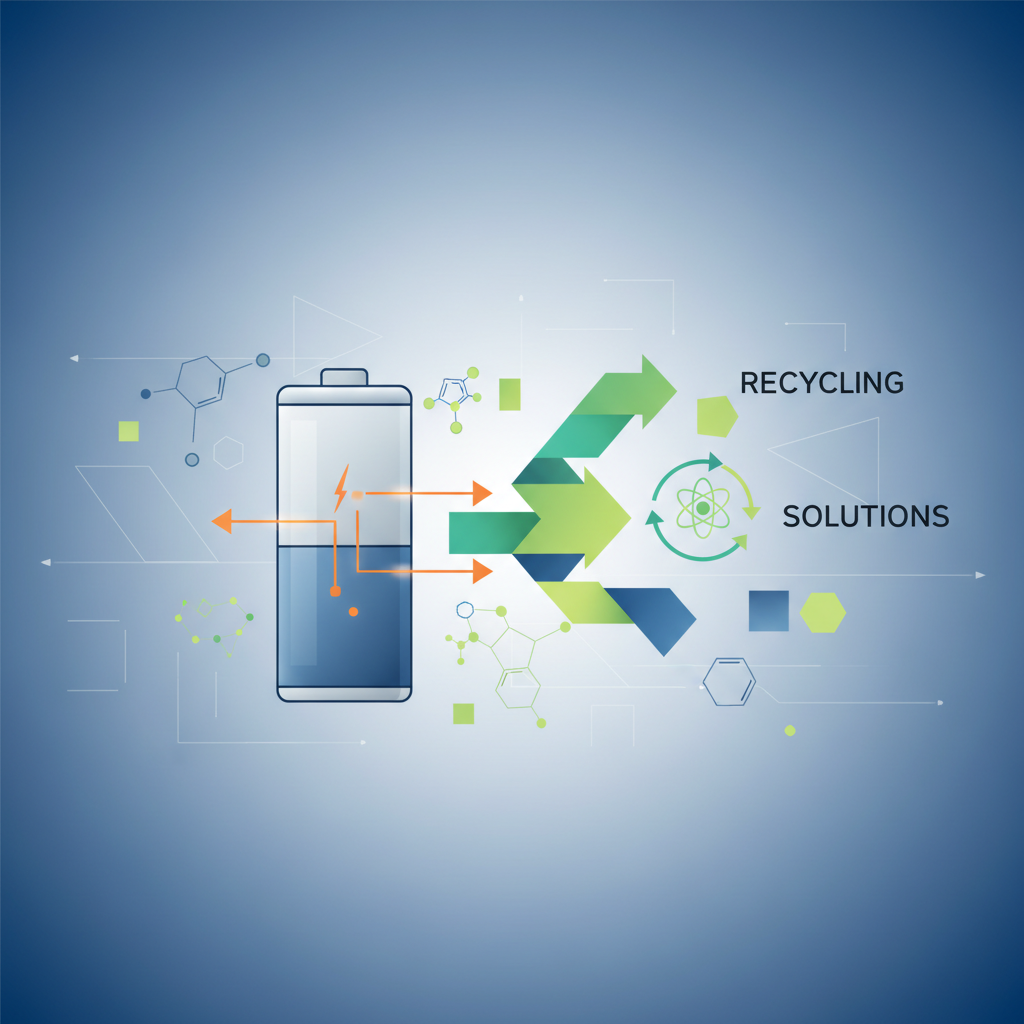
Their architecture differs significantly: cathodes primarily use sodium-manganese oxides (Na-Mn-O) or sodium-iron phosphates (Na-Fe-PO₄), while anodes frequently consist of hard carbon. This heterogeneous composition, combined with polymer binders and specific electrolytes, considerably complicates end-of-life dismantling. Research such as that presented in a thesis on phase transformations of cathode materials contributes to a better understanding of these materials.
One of the main challenges lies in the nascent nature of the industry. As highlighted by a CNRS study on the societal impact of batteries, research into new battery chemistries must integrate recycling issues from the earliest development phases, to avoid repeating the mistakes of previous generations.
Current Obstacles to Sodium-ion Battery Recycling
Recycling sodium-ion batteries faces several structural barriers. Firstly, the low proportion of end-of-life cells: in 2026, the majority of SIBs placed on the market are still in service, limiting the economic viability of dedicated recycling infrastructures.
Secondly, the absence of collection and traceability standards hinders the organization of efficient channels. Unlike lithium-ion batteries, whose recycling is governed by strict European regulations, SIBs do not yet benefit from specific normative frameworks.
"Battery design must integrate recyclability from the R&D phase, with a 'design for recycling' approach that conditions the effectiveness of future circular channels."
Thirdly, the complexity of heterogeneous assemblies makes pyrometallurgical processes—high-temperature melting—particularly energy-intensive and not very selective. Traditional hydrometallurgical methods, using acids to dissolve metals, must be adapted to the chemical specificities of sodium, which is more reactive than lithium.
Finally, the lack of collaboration between industrial players, research centers, and recyclers slows down the emergence of standardized and economically viable solutions.
Self-Assembling Materials: A Revolution for Deconstruction
Facing these challenges, self-assembling materials are emerging as a promising solution. These compounds, based on reversible chemical bonds, allow for controlled disintegration of electrodes at the end of their life, drastically simplifying recycling operations.
Specifically, this involves:
- Reversible network polymer binders: these materials depolymerize at moderate temperatures (typically between 80°C and 150°C) or in the presence of a mild solvent (water, ethanol), releasing the active cathode and anode particles without chemical degradation.
- Smart gel-electrolyte separators: designed to dissolve selectively, they facilitate the separation of different battery layers during pre-treatment.
- Recoverable conductive additives: conductive carbon, traditionally difficult to extract, can be reformulated into reusable nanostructures.
Expert centers such as Arkema's center specializing in battery materials are actively working on these innovations. Their approach consists of developing bio-based or chemically recyclable polymer binders, reducing the carbon footprint of manufacturing while improving recyclability.

The main advantage of these materials lies in their ability to avoid energy-intensive and non-selective pyrometallurgical processes. Controlled disintegration allows for the recovery of components as monomers or intact particles, directly reusable for manufacturing new electrodes.
Practical Steps for an Optimized Recycling Chain
To transform these innovations into operational channels, several steps must be implemented in a coordinated manner.
Selective Collection and Traceability The first step is to implement battery passport systems, integrating data on chemical composition, charge cycles performed, and material origin. This information, stored via blockchain or secure databases, allows each module to be directed to the appropriate recycling circuit.
Mechanical Pre-treatment Manual or robotic dismantling separates the modules, followed by controlled crushing. The use of self-assembling materials facilitates this step: a light thermal treatment or immersion in a mild solvent is sufficient to disaggregate the electrodes, avoiding intensive crushing that mixes fractions.
Adapted Aqueous Leaching Unlike lithium, sodium dissolves easily in water. Aqueous leaching processes at ambient or moderate temperatures allow for the recovery of sodium salts, as well as transition metals (manganese, iron) present in the cathodes. This approach has a significantly lower environmental footprint than the sulfuric acid baths used for lithium.
Recovery and Purification Self-assembling polymer binders, once depolymerized, can be recovered as monomers and purified for direct reuse. Active cathode particles (Na-Mn-O, Na-Fe-PO₄) retain their crystalline structure and can be reintegrated into new electrodes after a simple regeneration treatment.
Reintegration into the Value Chain Recovered materials then feed production lines, reducing dependence on virgin raw materials. This circular loop significantly reduces the carbon footprint and manufacturing costs.
Collaborative Models and Process Standardization
The structuring of a sodium-ion battery recycling chain requires close collaboration between multiple stakeholders. Battery manufacturers must integrate recyclability constraints from the design stage, favoring self-assembling materials and modular architectures.
| Stakeholder | Key Role |
|---|---|
| Battery Manufacturers | Integrate recyclability from design (self-assembling materials). |
| Research Centers | Test/validate processes, optimize formulations, model impacts. |
| Recyclers | Invest in infrastructure for new chemistries. |
Research centers, such as those involved in the Priority Research Equipment Program (PEPR) Batteries, play a central role in testing and validating selective hydrometallurgical processes, optimizing binder formulations, and modeling environmental impacts.
Recyclers, for their part, must invest in infrastructures capable of processing these new chemistries. Projects like Eramet's ReLieVe plant in Dunkirk, initially designed for lithium-ion, are gradually integrating lines dedicated to emerging technologies, including sodium-ion.
Standardization also involves European standards currently being developed, aiming to harmonize dismantling methods, safety protocols, and quality criteria for recycled materials.
Second Life and Reuse: Extending the Cycle
Beyond strict recycling, the second life of sodium-ion batteries constitutes a complementary lever for the circular economy. Modules that have lost part of their capacity for mobile uses remain perfectly functional for stationary applications, such as solar or wind energy storage.
Companies are developing automated diagnostic platforms, evaluating the State of Health (SOH) of each module to direct still-performing cells to second-hand markets. This approach extends the useful life and delays the need for recycling, thereby optimizing the overall environmental footprint.
Self-assembling materials also facilitate this reuse: their ability to be disassembled and reassembled without degradation allows modules to be reconfigured, capacities to be adapted, or only defective components to be replaced.
To delve deeper into circular economy models, the article on the circular economy of e-waste presents innovative strategies for dealing with metal price volatility, applicable to batteries.
Outlook: Towards a Complete Circular Loop
The horizon of 2030 could see the emergence of fully circular sodium-ion channels, where every component is designed to be recovered, purified, and reintegrated. This vision rests on several pillars:
Material Innovation: continuous research into bio-based binders, depolymerizable solid electrolytes, and simplified cathode architectures promises substantial gains in recyclability.
Digitalization and Traceability: the integration of IoT sensors into batteries will enable real-time performance monitoring and predictive fault diagnostics, optimizing reuse or recycling decisions.
Innovative Economic Models: battery-as-a-service schemes, where the manufacturer retains ownership of the modules and manages their complete lifecycle, naturally encourage design for recycling and reuse.
Incentive Policies: European regulations are evolving towards binding recyclability targets, with minimum rates of recycled materials in new batteries and strengthened collection obligations.
Synergies between sodium-ion batteries and other storage technologies also open new avenues. For example, bifunctional sodium-ion batteries capable of desalinating seawater illustrate how innovation can multiply uses and economically justify investments in advanced recycling.