Bifunctional Sodium-Ion Batteries: Storing Energy and Desalinating Seawater

Facing the scarcity of fresh water resources and the challenges of energy transition, an emerging technology offers an unexpected solution: bifunctional sodium-ion batteries. Capable of storing renewable energy while desalinating seawater, these hybrid systems could radically transform off-grid coastal installations. How can a simple battery simultaneously produce electricity and potable water?
Sodium, an Abundant Alternative to Lithium
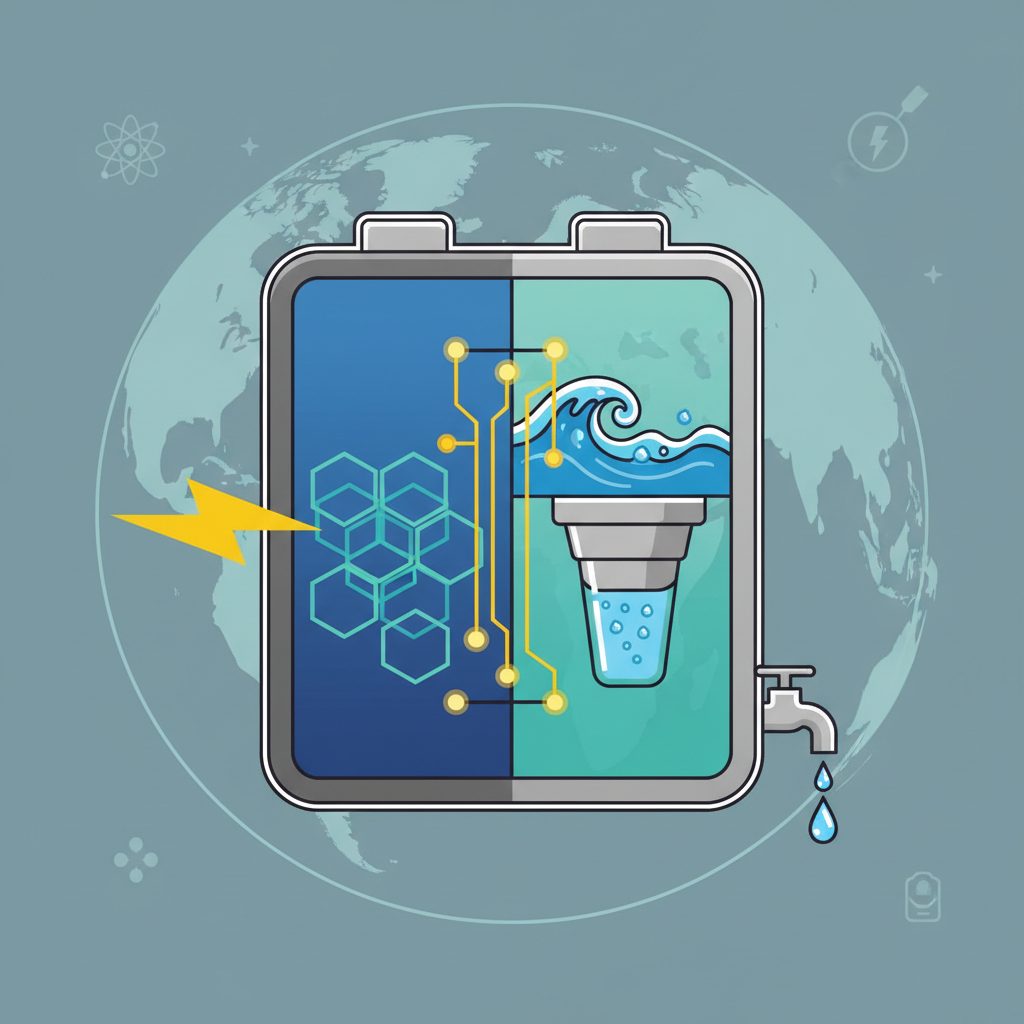
Unlike lithium-ion batteries that currently dominate the market, sodium-ion batteries use a much more accessible chemical element: sodium. Abundant in sea salt and terrestrial deposits, this material offers decisive advantages for certain stationary applications.
These batteries exhibit an energy density between 100 and 150 Wh/kg, which is lower than lithium but largely sufficient for grid storage. Their major asset lies in their remarkable cyclic stability: they support more than 2000 charge-discharge cycles with a capacity loss of less than 20%, ensuring a lifespan suitable for industrial installations.
Another significant advantage: these batteries operate at ambient temperature without strict cooling requirements, making them particularly suitable for coastal installations exposed to marine conditions. The abundance of sodium and its uniform geographical distribution also reduce geopolitical tensions related to critical raw material supplies.
Sodium-ion batteries combine material accessibility, thermal stability, and longevity, creating ideal conditions for large-scale stationary applications.
Coupling with Desalination Processes
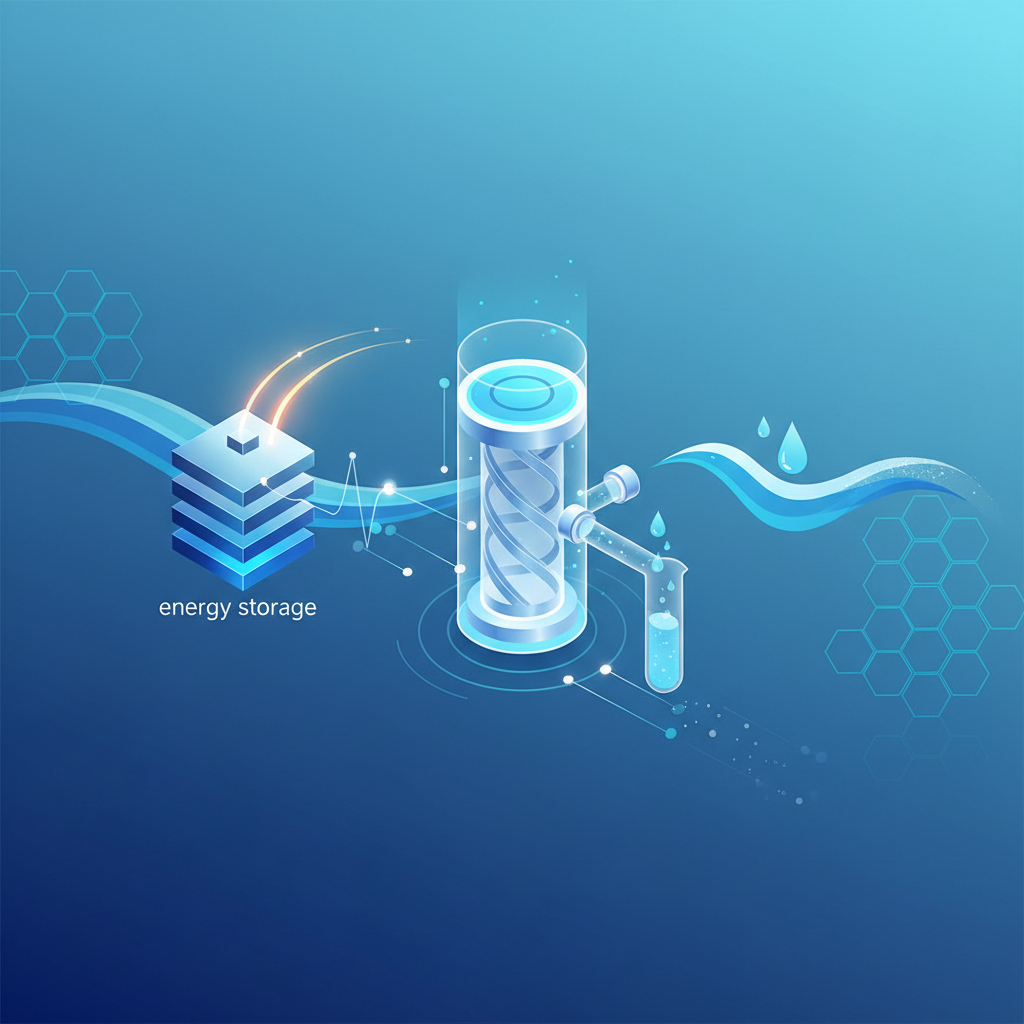
The major innovation lies in the coupling of sodium-ion batteries with electrodialysis systems or capacitive deionization. In these hybrid configurations, the energy stored in the battery directly powers electrode modules that remove Na⁺ and Cl⁻ ions from seawater.
This process offers dual efficiency: not only does the battery store electricity produced by renewable sources (solar or wind), but it uses this energy to simultaneously desalinate marine water. The sodium ions captured during the desalination process can even contribute to the battery's electrochemical operation, creating a unique synergy.
According to available data, these hybrid systems can reduce the overall energy consumption of desalination by 30 to 50% compared to conventional installations powered by the electricity grid. This efficiency is explained by the elimination of electricity conversion and transport losses, since energy production, storage, and use occur in the same location.
Prototypes developed have demonstrated the ability to produce several tens of liters of fresh water per kilowatt-hour of stored energy. For coastal regions simultaneously facing water stress and energy transition challenges, this technology represents a major strategic opportunity, as highlighted by recent studies on desalination plants developed in the Mediterranean context.
| Characteristic | Bifunctional Sodium-Ion Batteries | Conventional Desalination (Thermal/Reverse Osmosis) |
|---|---|---|
| Energy Efficiency | 30 to 50% reduction | ~ 3 to 6 kWh/m³ |
| Energy Generation | Integrated (renewable storage) | External (grid, fossil) |
| Autonomy | Potential for off-grid installations | Dependent on grid or generators |
| Water Production | Several tens of liters/kWh stored | Linked to direct electricity consumption |
Autonomous Installations to Secure Two Vital Resources
The true potential of this innovation lies in the creation of autonomous multifunctional installations. These systems can store solar or wind energy during periods of excess production, then convert it into potable water when renewable energy production decreases.
This intelligent operating model addresses two major challenges:
- Intermittency of renewables: buffer storage compensates for fluctuations in solar and wind production
- Securing access to fresh water: potable water production becomes independent of electricity grid variations
For island territories, arid coastal areas, or isolated industrial installations, these systems offer particularly valuable energy and water autonomy. They fit perfectly into the strategies of circular economy and resource valorization that characterize the current ecological transition.
Potential applications range from off-grid coastal villages to offshore platforms, including scientific bases in isolated environments or port facilities seeking to reduce their environmental footprint.
Technological and Environmental Challenges
Despite its promises, bifunctional sodium-ion battery technology still needs to overcome several obstacles before large-scale commercialization. The optimization of electrodes to simultaneously maximize energy storage and desalination efficiency remains a priority research area.
Managing concentrated brines, an inevitable residue of desalination, is also a major environmental issue. Installations must integrate strategies for discharging or valorizing these saline discharges to avoid impacts on coastal marine ecosystems. Environmental impact studies of desalination plants conducted in Morocco highlight the importance of rigorous management of these effluents.
Optimal system sizing represents another challenge: finding the right balance between electrical storage capacity and water production volume requires a fine understanding of local needs and consumption profiles. Seasonal variations in sunlight, water demand, and marine conditions complicate this equation.
Finally, the initial cost of installations remains a barrier, even if the gradual decrease in sodium prices and the improvement of manufacturing processes suggest better competitiveness in the medium term. A complete life cycle analysis, including component recycling and maintenance, will be crucial to establishing long-term economic viability.
Integration Prospects in Energy Strategies
The emergence of bifunctional sodium-ion batteries is part of a broader context of energy system transformation. As with technological advancements in carbon capture and storage, these innovations demonstrate a systemic approach seeking to maximize the value of each infrastructure.
Prospective scenarios envision a gradual integration of these systems into several types of configurations. Island microgrids are a prime application area, where energy and water autonomy provide increased resilience against climatic and logistical hazards.
Coastal industrial installations represent another promising segment: chemical plants, agro-food processing sites, or tourist complexes could simultaneously valorize their local solar production and secure their supply of process or potable water.
In the longer term, extending the concept could lead to distributed storage networks where each node contributes to both grid stabilization and decentralized fresh water production. This vision aligns with the principles of territorial resilience and climate adaptation that increasingly guide planning policies. To learn more about decarbonization challenges, read our article on COP30 and beyond.
Synergies with other innovations, particularly in the field of battery recycling and the circular economy of metals, will strengthen the overall sustainability of these systems. Sodium, easily recoverable and reusable, offers a substantial advantage in this perspective of closing material cycles.
A Dual Impact for Coastal Territories
Bifunctional sodium-ion batteries embody an innovative approach to infrastructure: transforming each installation into a multifunctional solution rather than equipment dedicated to a single use. This logic of maximizing material and spatial resources addresses the increasing constraints on coastal territories.
For local decision-makers, these systems offer an opportunity to simultaneously address two strategic issues: the energy transition towards low-carbon sources and the securing of water supply in the face of demographic and climatic pressures. Coastal areas with strong tourist or industrial development, subject to seasonal demand peaks, find a particularly suitable management tool.
The technology remains in a maturation phase, with prototypes demonstrating technical feasibility but still requiring improvements in efficiency and cost. The coming years will be decisive for scaling up to industrial levels. The first operational deployments will allow for refining economic models and validating long-term environmental sustainability.
Beyond purely technical aspects, this innovation questions our relationship with infrastructure: rather than juxtaposing specialized equipment, why not design integrated systems capable of simultaneously meeting several essential needs? This philosophy could inspire other developments in the fields of energy, water, and resources, particularly in the context of geothermal networks.