
Regenerative Agriculture in the United States: 2026 Review and Outlook
Introduction
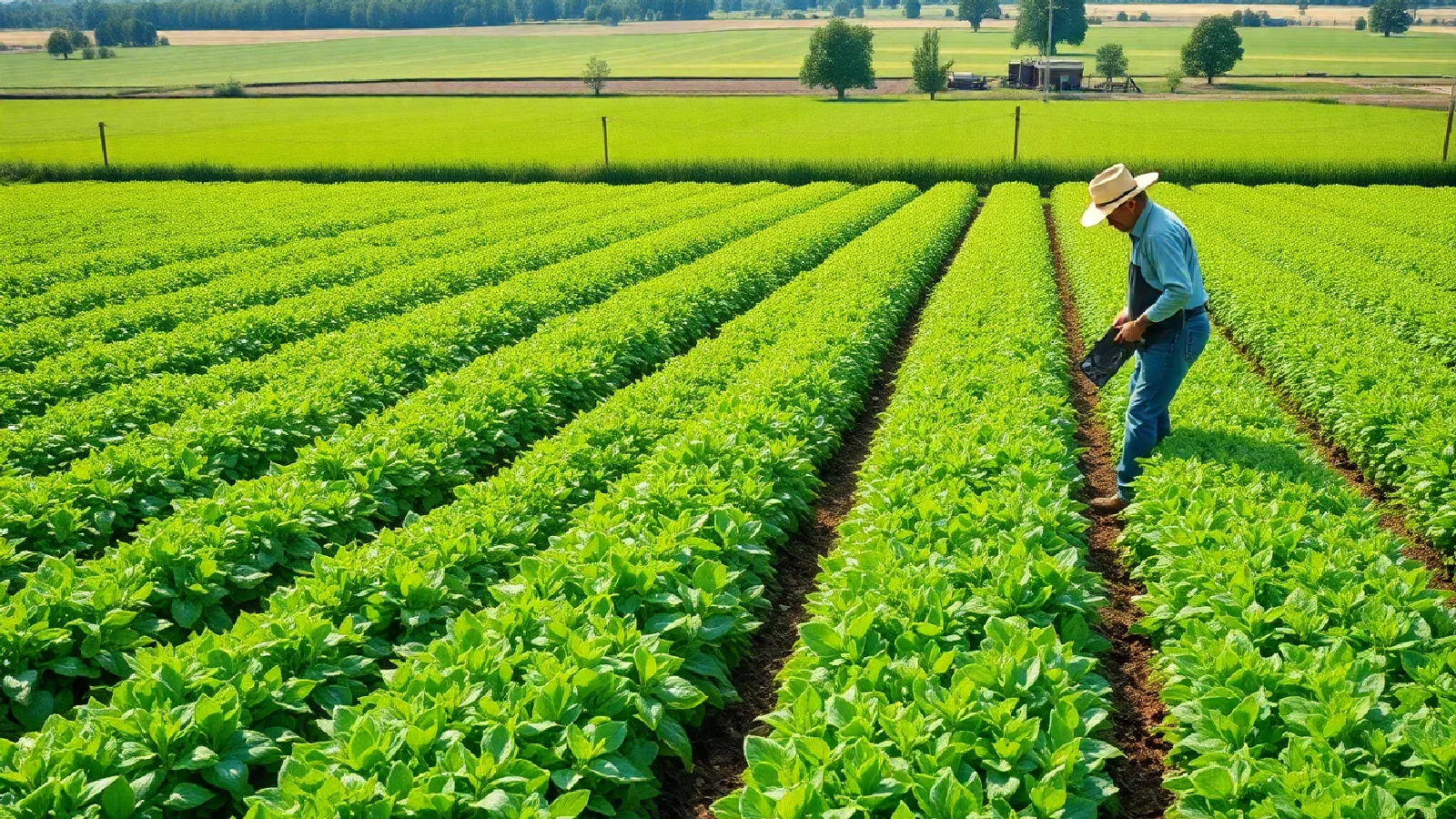
More than half of American consumers are willing to buy products from regenerative agriculture. This observation, far from being anecdotal, marks a profound transformation of the agricultural sector in the United States in 2026. As climate challenges intensify and soil degradation threatens long-term productivity, regenerative agriculture is emerging not as a marginal niche, but as a viable and rapidly expanding economic model.
From Californian family farms to large Midwest corporations, regenerative practices are gaining ground: cover crops, diversified rotation, reduced tillage, agroforestry. Supported by sophisticated digital tools and incentive public policies, these methods promise to restore ecosystem health while maintaining, or even increasing, farm profitability.
This 2026 review explores the state of this agricultural transformation, its technological and economic drivers, and the growth prospects that are reshaping the future of American agricultural sustainability.

Regenerative Practices in Full Adoption
Regenerative agriculture is distinguished by a holistic approach that goes beyond simply reducing chemical inputs. It aims to actively restore the ecological functions of agricultural soils and ecosystems. In 2026, several key techniques are widely deployed across the United States.
Cover Crops and Crop Rotation
The use of cover crops during intercropping periods protects the soil from erosion, enriches its organic matter, and promotes microbial biodiversity. Diversified rotations, integrating legumes, cereals, and cash crops, break pest cycles and reduce reliance on pesticides. In California, as reported by Farmonaut, these practices have become central to responding to chronic drought and soil degradation.
Reduced Tillage and Composting
Reduced tillage or no-till practices preserve soil structure and limit carbon emissions. Large-scale composting, meanwhile, recycles organic matter into rich amendments, gradually replacing synthetic fertilizers. These methods improve water retention, a crucial asset in the face of increasingly frequent drought episodes.
Agroforestry and Animal Integration
The integration of trees into agricultural systems—agroforestry—brings multiple benefits: carbon sequestration, creation of favorable microclimates, and diversification of income. Integrated livestock grazing in rotation on plots also helps naturally fertilize soils while reducing the need for external inputs.
Digital Technologies for Regeneration
The rise of regenerative agriculture is not solely based on a return to traditional methods. It is propelled by advanced digital tools that enable precise resource management and continuous optimization of practices.
Satellites, Artificial Intelligence, and Microbiome Monitoring
Platforms using satellite imagery coupled with artificial intelligence offer farmers real-time insights into soil health, crop vigor, and irrigation needs. Some solutions, such as those developed by Farmonaut, allow for precise monitoring of changes in organic matter and microbial biodiversity, essential parameters in a regenerative approach.
Soil microbiome monitoring is becoming a strategic decision-making tool. By analyzing microbial communities, farmers can adjust their practices to promote beneficial organisms, improve nutrient availability, and enhance resilience to diseases.
Input Optimization and Carbon Footprint Reduction
Thanks to data collected and analyzed by these technologies, farmers significantly reduce the use of chemical inputs. Bio-based fertilizers, microbial inoculants, and biostimulants are gaining popularity, supported by USDA programs that encourage this transition. Circular solutions, integrating nutrient recycling at the farm level, are multiplying and meeting the growing demands for climate resilience.
“Regenerative agriculture is no longer a niche movement: it’s an industrial shift driven by farmers, brands, and retailers.”
Market Dynamics and Consumer Pressure
Consumer demand is a powerful driver of regenerative adoption. Expectations for transparency, sustainability, and environmental responsibility are transforming the strategies of producers and distributors.
Growth in Value of Sustainable Products
In 2026, the value of products displaying sustainability attributes saw a notable increase. Fresh fruits and vegetables from regenerative practices are experiencing sustained growth, driven by increased demand. Claims related to carbon sequestration and responsible sourcing are multiplying on packaging, attesting to brands' commitment to this approach.
Supply Chain Structuring by Distributors
Retailers such as Whole Foods have structured their aisles around recognized regenerative certifications, facilitating consumer access to these products. Large agri-food companies are investing heavily in converting their supply chains, anticipating that this transition will become a major differentiation criterion in the market.
This trend is not limited to the United States: as observed by the world's largest natural products trade show, Natural Products Expo West 2026, regenerative certifications have become the number one trend, ahead of plant-based proteins and nutritional innovations.
Public Policies and Institutional Incentives
Institutional support is a decisive lever for accelerating the adoption of regenerative practices on a large scale. Federal and state programs offer financial and technical incentives to farmers wishing to make this transition.
USDA Programs and Subsidies
To support the transition to regenerative agriculture, the USDA has intensified its efforts and offers several levers for action:
- Targeted subsidies: Granted for the adoption of cover crops, the establishment of agroforestry systems, and the acquisition of equipment favoring reduced tillage.
- Financial support: Helps farmers navigate the transition phase, which is often economically costly.
- Soil health promotion: Supports practices that improve soil quality and reduce agricultural emissions.
These measures aim to financially support farmers during the transition phase, which is often delicate economically.
State Incentives and Regional Partnerships
Several states, notably California, have implemented regional programs to encourage regenerative agriculture and soil health. These initiatives integrate public-private partnerships, technical training, and monitoring tools to measure the environmental impact of adopted practices. The objective is to create a favorable ecosystem where farmers have the necessary resources to succeed in this transformation.
Environmental Impact and Measurable Benefits
Beyond theoretical promises, regenerative agriculture demonstrates concrete and measurable environmental and agronomic benefits.
Carbon Sequestration and Emission Reduction
Agriculturally managed soils in a regenerative manner become significant carbon sinks. By restoring organic matter and promoting microbial biomass, these practices contribute to mitigating greenhouse gas emissions from the agricultural sector. Field studies confirm a progressive increase in carbon sequestration capacity on converted farms.
Improved Water Retention and Drought Resilience
Regenerated soils exhibit better structure and increased water retention capacity. In a context of increasing water stress, this characteristic offers a major competitive advantage, reducing reliance on irrigation and improving the climate resilience of farms.
Biodiversity Restoration and Ecosystem Services
Crop diversification, the integration of semi-natural areas, and the reduction of pesticides promote the return of functional biodiversity: pollinators, beneficial insects, beneficial microorganisms. This restoration of ecosystem services improves long-term productivity and reduces health risks.
Growth Prospects and Challenges to Overcome
While the dynamism of the sector is undeniable, regenerative agriculture still faces several challenges to achieve massive and sustainable adoption.
| Key Challenge | Issue | Solution / Lever |
|---|---|---|
| Economic Transition | Initial yield decline | Financial support, insurance |
| Farmer Training | Skill development | Training programs, conferences |
| Movement Credibility | Greenwashing | Certification standardization |
| Impact Measurement | Transparency | Scientific measurement tools |
Regenerative Technologies Market
The market for technologies and solutions dedicated to regenerative agriculture is experiencing rapid expansion. Analyses predict sustained growth in the coming years, driven by demand for bio-based fertilizers, monitoring tools, and specialized consulting services. Investments in this sector are pouring in, demonstrating the confidence of economic actors in the sustainability of this model.
Farmer Training and Support
The transition to regenerative practices requires significant skill development. Training initiatives are multiplying, such as Field School programs or specialized conferences like the Fertilizer & Nutrient Congress 2026, which bring together experts and practitioners to share best practices and innovations. The Regenerative Agriculture Summit 2026 is another key event in this field.
Certification Standardization and Impact Measurement
To ensure the credibility of the movement, the standardization of regenerative certifications is becoming crucial. Consumers and distributors need reliable benchmarks to distinguish authentic approaches from greenwashing practices. Impact measurement tools, based on robust scientific indicators, play an essential role in this transparency.
Economic Challenges of Transition
The transition period can represent an economic risk for farmers, with potentially lower yields in the first few years. Financial support mechanisms, adapted climate insurance, and remuneration models based on ecosystem services provided are all levers to be developed to secure this critical phase.
Towards a Resilient and Restorative Agricultural Model
Regenerative agriculture outlines a horizon where food production no longer merely minimizes its negative impacts but actively contributes to the restoration of ecosystems. In 2026, the United States demonstrates that such a large-scale transformation is possible, driven by a convergence of technological innovations, market demands, and political will.
Farms adopting these practices show better resilience to climate hazards, maintained or even improved profitability in the medium term, and a positive contribution to national climate goals. This model inspires other regions of the world and is part of a global dynamic of transition towards sustainable food systems.
Challenges remain, particularly in terms of training, standardization, and economic support. But the momentum has begun. Regenerative agriculture is no longer a utopia: it is a growing economic and ecological reality that is redefining the contours of agricultural sustainability for decades to come.
To further explore the links between agricultural innovation and sustainable technologies, also discover how the circular economy is transforming e-waste recycling or how sodium-ion batteries open new perspectives for the energy transition.