
CCUS in Business: A Practical Guide to Deploying Carbon Capture
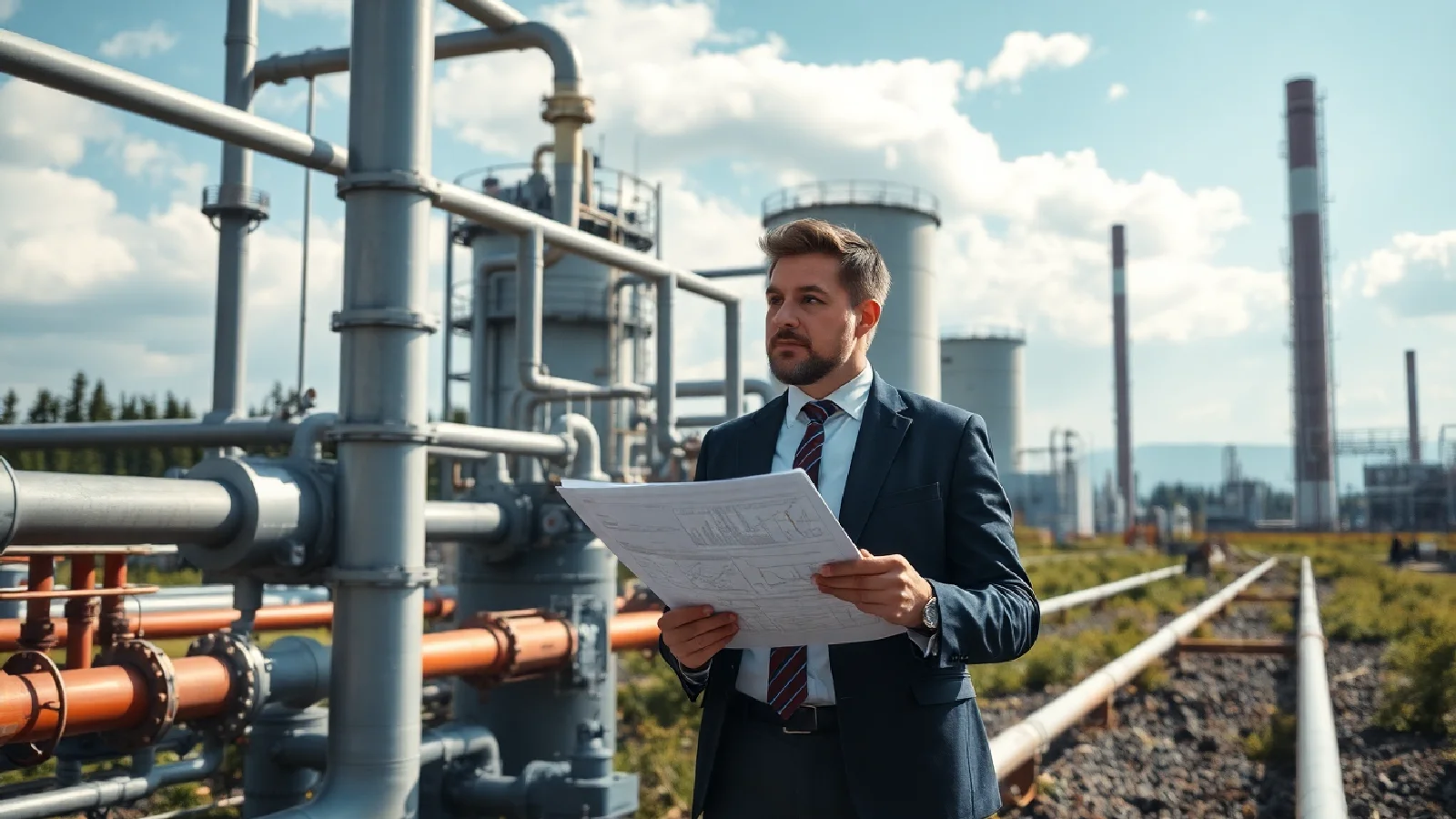
As carbon neutrality targets tighten for 2050, industrial companies face a major challenge: how to drastically reduce their CO₂ emissions while maintaining competitiveness? The answer may well lie in CCUS (Carbon Capture, Utilization, and Storage) technologies, which can capture up to 95% of industrial emissions according to the latest technical studies.
Given the climate emergency and new regulations, implementing a CCUS project is no longer an option but a strategic necessity for many industrial sectors.
Preliminary Assessment: Analyzing Your Project's Feasibility
Before any commitment, a thorough technical assessment is essential. This first step determines the economic and technical viability of your future CCUS project.
Analyzing the emissions profile forms the basis of this assessment. It is necessary to precisely quantify the volumes of CO₂ emitted, identify their purity, temperature, and pressure. These parameters dictate the choice of the most suitable carbon capture technology for your facility.
Local constraints also play a crucial role. Social acceptability, regional policies, and the surrounding industrial ecosystem directly influence project feasibility. A market study helps identify potential synergies with other local stakeholders.
Key criteria for preliminary assessment include:- CO₂ emissions profile (volume, purity, temperature, pressure).
- Availability of suitable capture technologies.
- Local constraints (social acceptability, regional policies).
- Surrounding industrial ecosystem for potential synergies.

"CCUS projects require a holistic approach integrating technical, economic, social, and environmental dimensions from the design phase." - CMC Research Institutes Report
Technology Selection: Choosing the Optimal Capture Solution
The market offers four main CO₂ capture technologies, each suited to specific contexts.
| Capture Technology | Description | Primary Application |
|---|---|---|
| Post-combustion | Amine solvents treat flue gases after combustion. | Existing facilities |
| Pre-combustion | Fuel is converted to hydrogen and CO₂ before combustion. | New facilities or renovations |
| Oxy-combustion | Uses pure oxygen, producing CO₂-concentrated flue gases. | High capture yields, substantial investments |
| Direct Air Capture (DAC) | Extracts atmospheric CO₂. | Promising but costly technology |
Post-combustion capture with amine solvents remains the most mature solution for existing facilities. This technology allows for treating flue gases after combustion without modifying the main production infrastructure.
Pre-combustion is more suitable for new installations or during major renovations. The fuel is first converted into hydrogen and CO₂ before combustion, facilitating separation.
Oxy-combustion uses pure oxygen instead of air, producing CO₂-concentrated flue gases. This approach requires substantial investments but offers high capture yields.
Finally, Direct Air Capture (DAC) extracts atmospheric CO₂, a promising technology but still costly for large-scale industrial applications.
Transport and Destination of Captured Carbon
Once CO₂ is captured, its destination determines the necessary transport chain. Three main options are available to companies depending on the volumes and distances involved.
Pipelines represent the most economical solution for large volumes over long distances. However, this infrastructure requires significant initial investments and coordination with other industrial players.
Tanker truck transport is suitable for moderate volumes and short to medium distances. This solution offers appreciable flexibility but generates higher operational costs.
For coastal facilities, maritime transport opens up prospects for offshore storage sites or international utilization markets.
CO₂ valorization transforms this waste into a resource. Applications include the production of synthetic fuels, chemicals, or innovative building materials. This approach generates additional revenue while contributing to the circular economy.
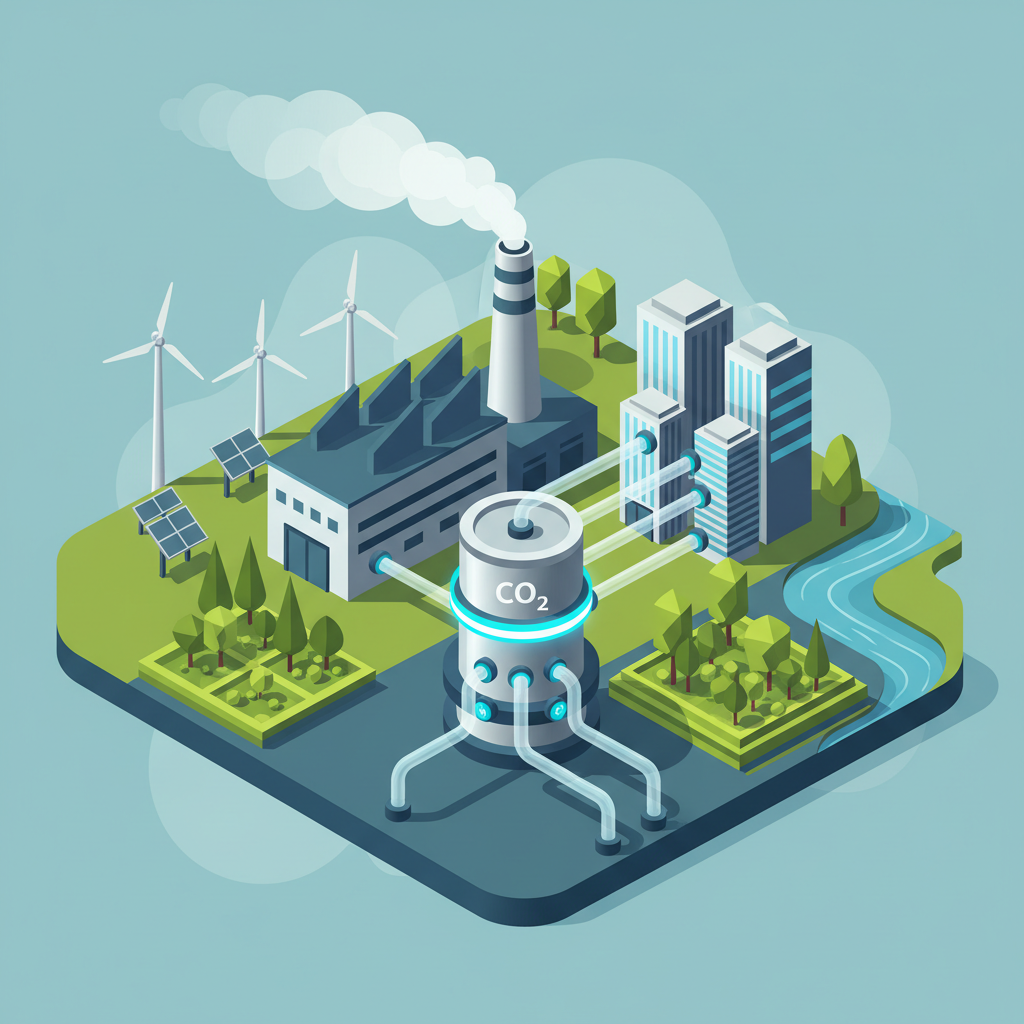
Geological Storage: Securing CO₂ Long-Term
Geological storage is the final step for unutilized CO₂. Three types of underground formations offer secure storage capacities.
Deep saline aquifers represent the greatest storage potential. These geological formations, located more than 800 meters deep, allow for permanent storage due to their natural impermeability.
Depleted oil or gas fields benefit from extensive geological knowledge. Their integrity, proven over millions of years, offers high storage security.
Saline aquifers complete the storage options, particularly in regions lacking other geological alternatives. Continuous monitoring of these sites guarantees the integrity of long-term storage.
The installation of monitoring wells allows for permanent monitoring of storage sites. This equipment detects any abnormal CO₂ migration and validates the effectiveness of geological confinement.
Regulation and Funding: Navigating the Legal Ecosystem
Obtaining environmental permits is a critical step in the project. Deadlines can extend over several years depending on technical complexity and local acceptability.
Funding mobilization benefits from an increasingly favorable environment. CCUS tax credits in Canada offer substantial incentives for companies investing in these technologies.
Canada's carbon management strategy defines a policy framework favorable to the development of these technologies. Companies can thus benefit from a public and private support ecosystem.
Stakeholder engagement requires transparent and continuous communication. Local communities, regulators, and industrial partners must be involved from the preliminary phases to ensure the project's social acceptance. To learn more about stakeholder engagement, you can consult specific studies such as the one on engagement for an integration posture. Additionally, initiatives like Project IGNITE | ECO Canada aim to support companies in reducing their emissions.
Operational Implementation: From Installation to Optimization
Detailed design translates preliminary studies into precise technical specifications. This phase involves all technical stakeholders: engineers, equipment suppliers, construction companies, and industrial safety experts.
Installing capture, transport, and storage equipment requires millimeter-perfect coordination. Integration constraints with existing facilities demand rigorous planning of production shutdowns.
Commissioning begins with performance tests to validate design parameters. Optimization of operational parameters generally extends over several months to achieve nominal performance.
Some projects can benefit from synergies with emerging technologies such as those developed in vertical agriculture and controlled environments, which also use sophisticated gas management systems.
Operation and Maintenance: Ensuring Long-Term Performance
Continuous operation of a CCUS system requires permanent performance monitoring. Automated control systems monitor flows, concentrations, temperatures, and pressures in real-time at all critical points.
Preventive maintenance guarantees equipment availability. Critical components such as capture solvents require periodic replacement according to strict protocols.
Integrity verification of storage sites is carried out through regular measurement campaigns. Geophysical monitoring technologies detect any abnormal migration of stored CO₂.
Producing compliance reports meets regulatory requirements. These documents attest to compliance with environmental and safety standards, an essential condition for maintaining operating authorizations.
Technological evolution offers opportunities for continuous improvement. The integration of new solutions can optimize energy efficiency, reduce operational costs, and expand the applications for captured CO₂ utilization.
Economic Optimization and Evolution Prospects
Financial optimization of a CCUS project involves several levers. Improving energy efficiency reduces operational costs, the main expense item after the amortization of initial investments.
Expanding utilization applications for captured CO₂ opens new valorization markets. Partnerships with CO₂-using companies help secure long-term outlets.
Pooling infrastructure with other industrial players optimizes transport and storage costs. This collaborative approach is particularly relevant in concentrated industrial areas.
Regulatory evolution tends towards strengthening emissions reduction requirements. Companies that have anticipated this transition benefit from a substantial competitive advantage, as illustrated by developments in the European electric vehicle market which also anticipates future regulations.
Towards an Integrated Carbon Strategy
The successful implementation of a CCUS project fundamentally transforms a company's environmental strategy. Beyond emissions reduction, these technologies position the organization as a responsible actor in the energy transition.
Mastering these technologies also opens up opportunities for international development, as the global market for CCUS solutions is growing rapidly. Pioneering companies can thus transform their internal expertise into a commercial advantage. To better understand the dynamics of the CCUS market, additional resources are available on carbon capture, utilization, and storage technologies.
Integrating CCUS into a global carbon management approach maximizes economic and environmental benefits. This strategic vision allows for building a coherent roadmap towards carbon neutrality while preserving industrial competitiveness.