
DAC: The Challenge of Industrialization Amidst Delays
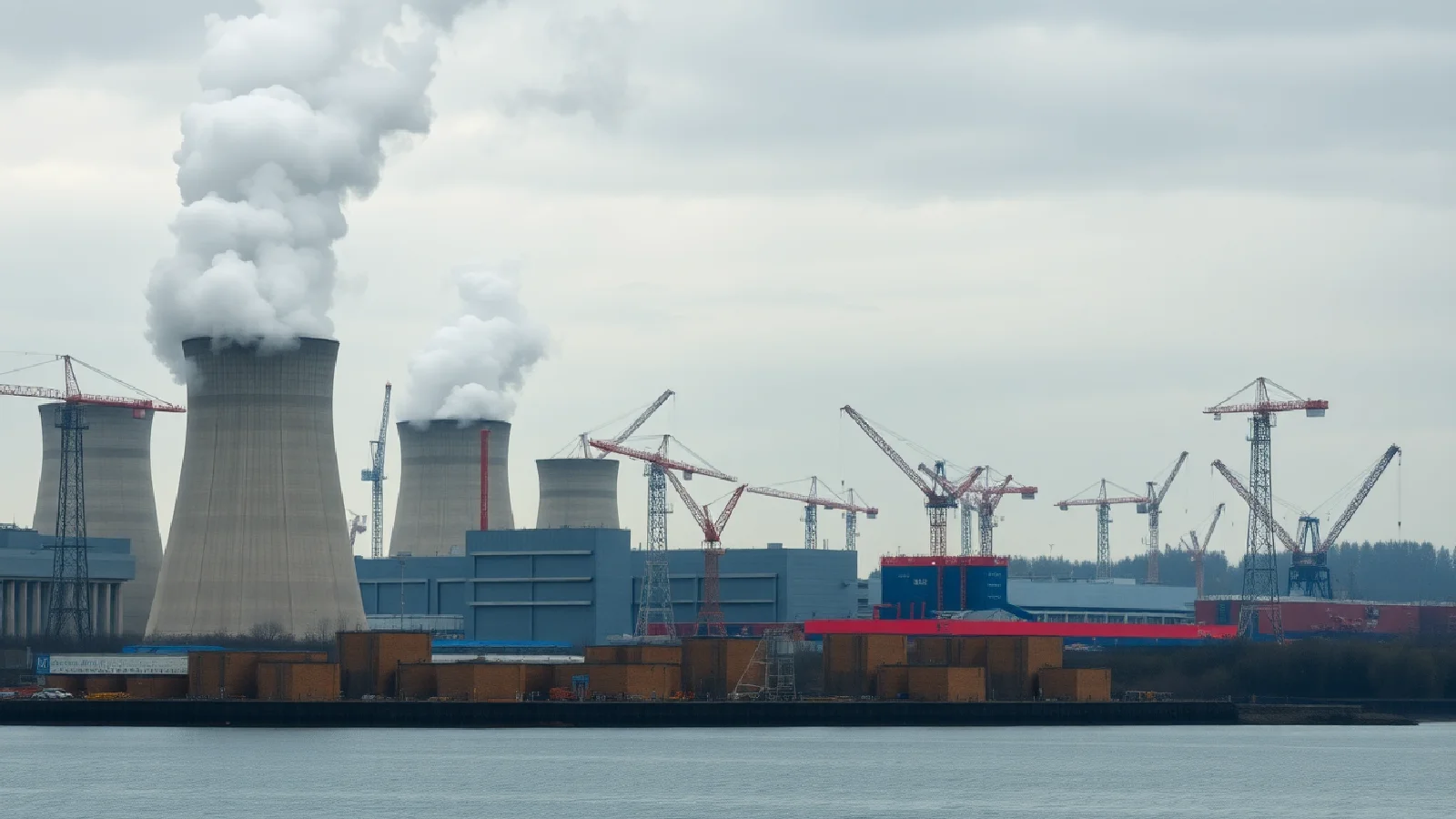
Direct Air Capture (DAC) has generated considerable enthusiasm for several years. This technology, theoretically capable of extracting carbon dioxide directly from the atmosphere, appears as a potential answer to diffuse and historical emissions. However, behind the announcements and pilot projects, a reality emerges: the transition from laboratory to industrial scale faces very concrete obstacles. Delays, budget overruns, and operational complexity are hindering the emergence of a sector that some considered essential.
Investment Costs, the Primary Barrier to Industrialization
CAPEX (Capital Expenditures) constitutes the primary major impediment to the deployment of DAC projects. Building a facility capable of capturing several thousand tons of CO₂ per year requires colossal sums. Infrastructure must include not only the capture equipment itself, but also treatment, compression, and, in many cases, transport and storage systems for CO₂.
Unlike industrial point-source capture technologies (classic CCUS), where CO₂ is already concentrated in flue gases, DAC must process atmospheric air where CO₂ concentration does not exceed 420 ppm. This dilution necessitates considerable air volumes and oversized equipment. The French Energy Regulatory Commission (CRE) report on carbon dioxide capture and value chain highlights that structuring a CCUS sector (of which DAC represents an extreme variant) requires coordinated investments across the entire chain.
Early commercial installations reveal that unit construction costs remain significantly higher than initial estimates. Specific adsorbent materials, thermal or electrochemical regeneration systems, and safety constraints inflate budgets. Without economies of scale, profitability remains out of reach.
| Main Obstacle | Description |
|---|---|
| High CAPEX | Colossal costs for building facilities and infrastructure. |
| CO₂ Dilution | Requires oversized equipment for 420 ppm of CO₂ in the air. |
| Unit Costs | Installation costs significantly higher than initial forecasts. |
The Energy Bill, an Operational Achilles' Heel
Beyond initial investment, operating expenses (OPEX) heavily impact the economic viability of DAC. The process of capturing and regenerating sorbents is extremely energy-intensive. Depending on the technologies used (solid adsorption or liquid absorption), needs vary, but all require heat (between 80 and 900 °C depending on the process) and electricity for fans, compressors, and auxiliaries.
This massive energy consumption makes profitability directly dependent on electricity prices and availability. If the energy comes from fossil fuels, the overall carbon footprint of DAC becomes paradoxical, even negative. Access to low-carbon sources (wind, solar, nuclear, geothermal) then becomes a sine qua non condition.
“The effective decarbonization of DAC relies on the availability of abundant and cheap renewable energy, a prerequisite rarely met.”
However, in many countries, access to competitively priced decarbonized electricity remains limited. Optimal sites must combine proximity to renewable energy, access to water (for certain technologies), and CO₂ transport infrastructure. This combination drastically restricts viable implantation zones and delays investment decisions.
Technological and Logistical Bottlenecks
The industrialization of DAC also faces technical constraints that are still poorly controlled. Adsorbent materials, the core of the process, are not produced on a large scale. Their manufacturing requires sophisticated and costly chemical processes. The limited lifespan of some sorbents necessitates frequent replacements, adding a recurring operational burden.
The regeneration of sorbents, whether thermal or electrochemical, requires rapid and efficient cycles to optimize productivity. Current technologies struggle to achieve regeneration rates that allow continuous operation without performance drift.
Furthermore, once captured, CO₂ must be transported and stored. Pipeline transport infrastructure, still embryonic in most regions, requires complex authorizations, cross-border agreements, and often uncertain social acceptability. Geological or maritime storage, although technically mastered in a few pilot sites, remains subject to lengthy approval procedures and geological risks that need careful assessment.
Regulatory and Administrative Burdens
Authorization procedures for the creation of DAC facilities and associated infrastructure constitute an often underestimated obstacle. In France, for example, the application for authorization to create complex installations related to CO₂ storage (like the Cigéo project for radioactive waste, whose procedures are similar) shows that instruction times can span years.
Project developers must contend with:
- Detailed environmental impact studies
- Often lengthy and contentious public consultations
- Still vague legal frameworks concerning long-term geological storage liability
This regulatory uncertainty discourages private investors and delays financing decisions. Without visibility on authorization timelines and future obligations, it is difficult to structure a credible business plan.
Industry Responses: Standardization, Mutualization, Innovation
Facing these obstacles, the DAC industry is not idle. Several strategies are emerging to accelerate scaling up.
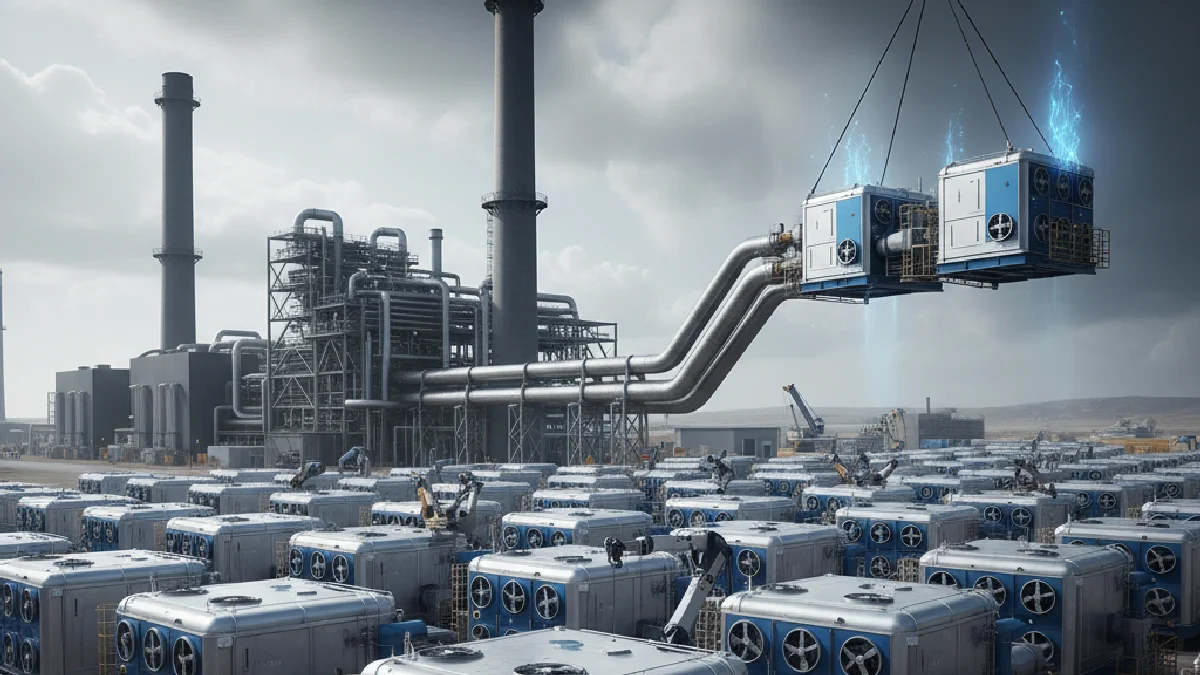
Modular approaches are becoming widespread. Rather than immediately building giant facilities, actors are deploying replicable modular units. This strategy allows for testing processes, identifying bottlenecks, and progressively reducing unit costs through learning effects. Each installed module helps refine technical parameters and optimize supply chains.
Mutualization of infrastructure with existing CCUS projects is another promising avenue. Rather than building new pipelines and storage sites, DAC project developers are leveraging infrastructure developed for industrial capture. This approach reduces CAPEX and accelerates commissioning.
Innovation in sorbents represents a key lever. Research teams are working on materials that are less expensive, more durable, and require less energy for regeneration. Advances in electrochemical sorbents or selective membranes suggest substantial efficiency gains.
Finally, securing dedicated decarbonized energy sources is becoming a priority. Several projects integrate wind or solar farms specifically sized to power DAC facilities, thus ensuring a positive carbon balance and control over operating costs.
Essential Financial and Political Levers
Without massive public support, DAC will not be able to cross the industrialization threshold. Public subsidies, carbon pricing mechanisms, and long-term purchase agreements (carbon off-take agreements) are becoming indispensable to secure investments.
Several governments, particularly in the United States and Europe, have implemented dedicated funding programs. France's aviation decarbonization roadmap, for example, envisions integrating DAC into compensation strategies for hard-to-abate sectors.
Public-private partnerships enable risk sharing and accelerate deployment. In exchange for carbon price guarantees or purchase volumes, companies agree to invest in pilot and then industrial facilities. This model is beginning to bear fruit in a few pioneering regions.
Simplifying authorization processes and clarifying long-term responsibilities for CO₂ storage are also priority areas. Without a stable and predictable legal framework, investors will remain hesitant.
Social Acceptability and Communication: Challenges Not to Be Overlooked
Beyond technical and financial aspects, the social acceptability of DAC and CO₂ storage projects remains a crucial issue. Local populations are legitimately concerned about potential risks related to geological storage, nuisances during the construction phase, and the impact on landscapes.
Awareness campaigns and early consultation processes are being implemented by some project developers. The objective: to explain climate challenges, expected benefits, and safety measures. Some territories, facing the threat of global warming, are more open to hosting these infrastructures, aware of the urgency to act.
Transparency on technical data, complete carbon footprints, and monitoring mechanisms is becoming a requirement. Actors who manage to establish constructive dialogue with stakeholders gain valuable time and reduce the risks of administrative or legal blockages.
Outlook: A Future Conditioned on a Convergence of Efforts
The industrial deployment of large-scale DAC remains a complex equation. No miracle solution will overcome all obstacles at once. Only a convergence of efforts — technological innovation, public-private financing, regulatory simplification, social acceptability — can transform promises into reality.
The coming years will be decisive. Pilot projects currently under construction will provide valuable data on real costs, operational performance, and unforeseen challenges. If these lessons learned allow for adjustment of economic and technical models, DAC could become a complementary tool in the array of decarbonization solutions.
But let's not be fooled: DAC is not a panacea. Its energy and financial cost limits it to unavoidable residual emissions and sectors without other options. The priority remains drastic emission reductions at the source, as highlighted by issues related to oceanic microplastics or biodiversity protection.
DAC must therefore find its place in a global, balanced, and realistic climate strategy. Its industrialization, if it occurs, will be gradual, costly, and conditioned by strong political will. Current delays are not inevitable, but they remind us that no technology, however promising, can replace ambitious and immediate climate action.
FAQ (JSON format - translate question and answer fields only):