Ocean Microplastics: The Hidden Threat to the Carbon Cycle
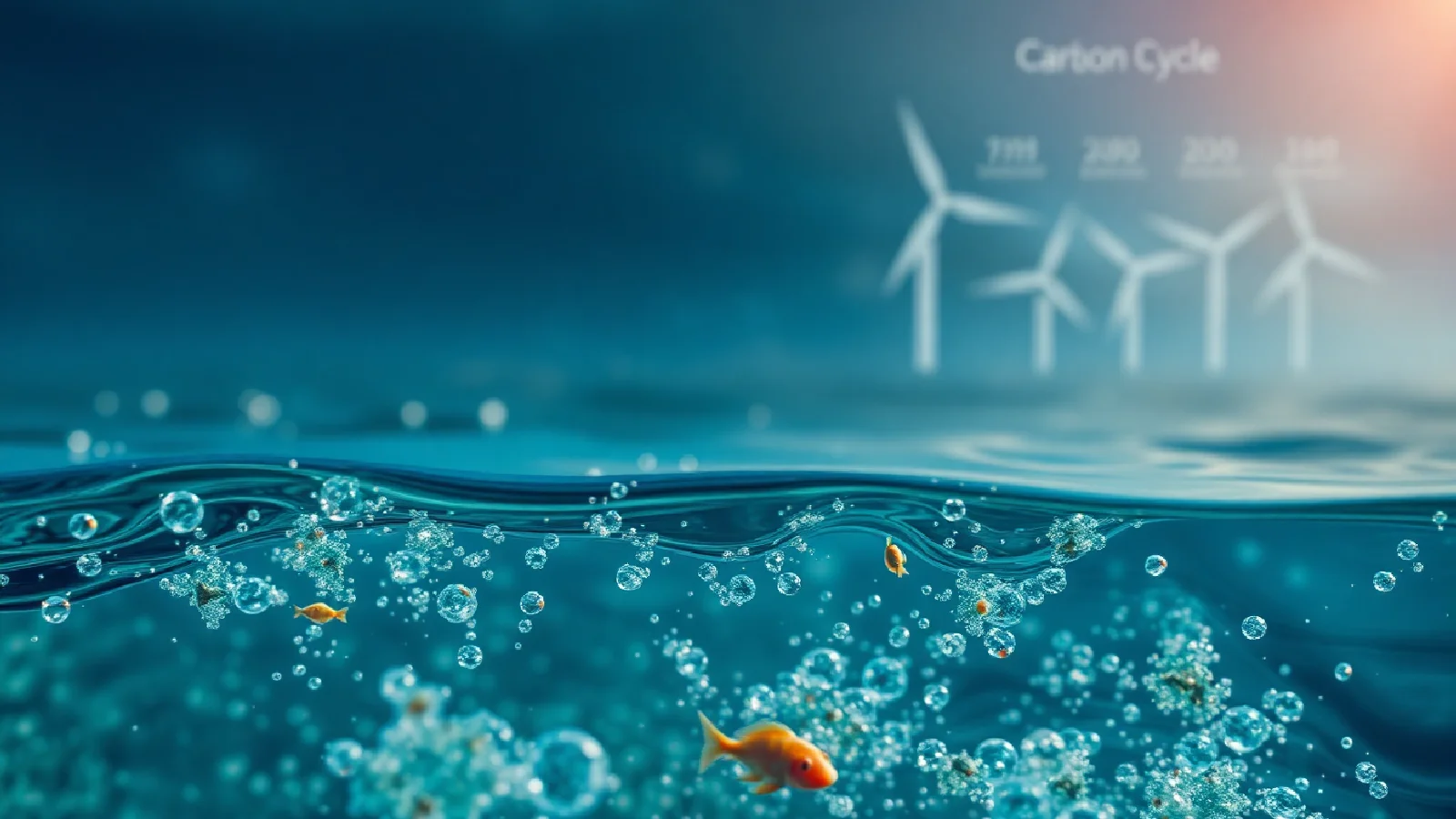
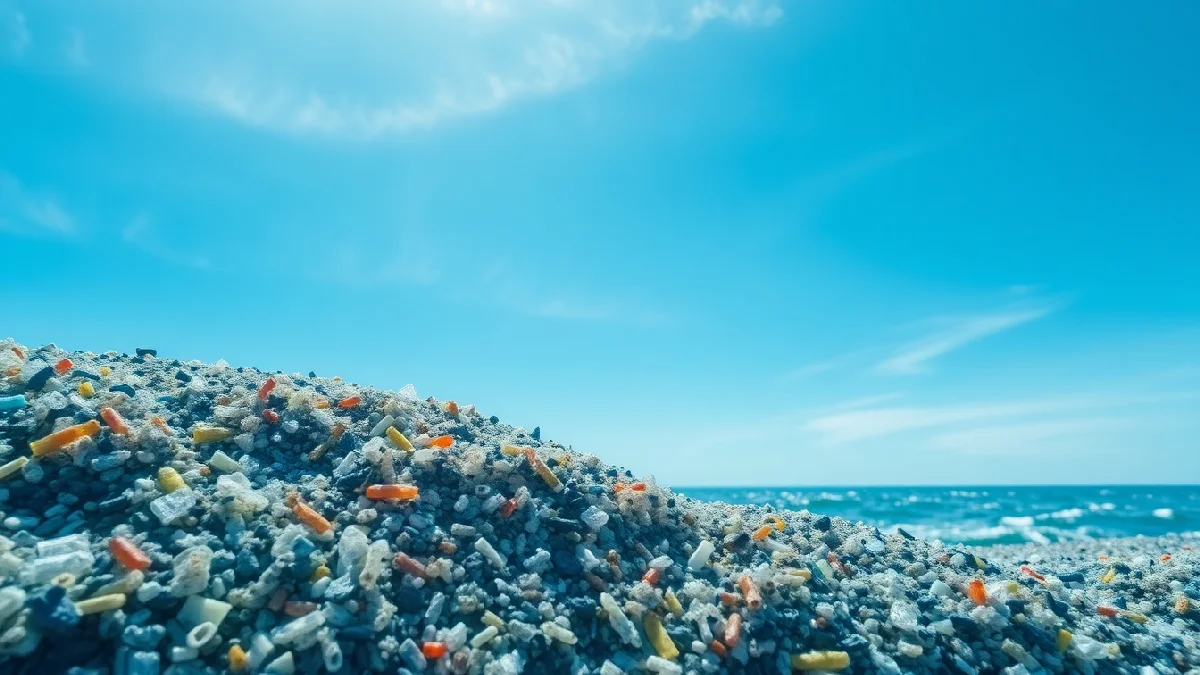
Invisible to the naked eye but ubiquitous from surface waters to deep sediments, microplastics are now revealing an unsuspected facet of their environmental impact. Beyond visible contamination, these particles, less than five millimeters in size, disrupt a fundamental climate process: the oceans' ability to absorb atmospheric carbon dioxide.
The oceans are the planet's largest natural carbon sink, absorbing about a quarter of the CO2 emissions produced by human activity. This regulatory function is crucial for maintaining climate balance. However, microplastics are interfering with this age-old mechanism with potentially dramatic consequences.
The Ocean's Biological Pump Under Pressure
The oceanic carbon sequestration process relies on a sophisticated mechanism called the "biological pump." Phytoplankton, these microscopic plant-like organisms found at the surface, capture atmospheric CO2 through photosynthesis. A portion of this fixed carbon then sinks to the depths as organic particles, where it remains trapped for decades, even centuries.
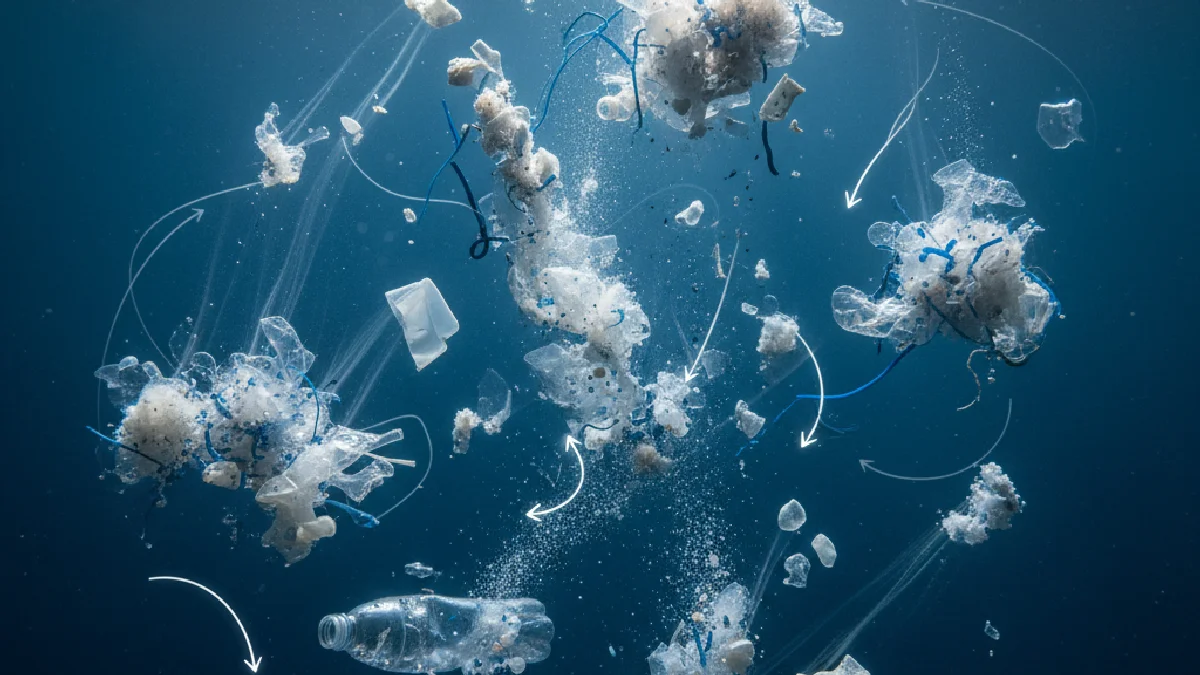
Microplastics disrupt this sequence at several levels. By acting as adsorbent surfaces for hydrophobic pollutants, they promote the formation of microbial biofilms that alter the composition and activity of phytoplankton communities. This alteration often reduces photosynthesis and primary production, the crucial first step in CO2 sequestration.
"Microplastics alter water turbidity, reflectivity, and viscosity, limiting gas exchange and decreasing the efficiency of the oceanic carbon sink."
According to the Canadian scientific assessment of plastic pollution, these disruptions extend far beyond simple physical contamination. The complex interactions between microplastics and marine ecosystems create cascades of effects that are still largely unknown.
Impact on Phytoplankton Communities
Research reveals concerning changes in phytoplankton behavior in the presence of microplastics. These microscopic organisms, the base of the marine food web, see their photosynthetic capacity altered by the adhesion of plastic particles to their cell surface.
Observed consequences include:- Reduced photosynthetic efficiency
- Altered plankton community composition
- Disrupted reproductive cycles
- Altered daily vertical migration
This last disruption is particularly critical. Phytoplankton naturally perform vertical migrations that contribute to the transport of carbon to deeper layers. Microplastics interfere with these movements, compromising the efficiency of the biological pump.
| Impact of Microplastics on Phytoplankton | Detail of Disruption | Consequence on Carbon Cycle |
|---|---|---|
| Photosynthetic Efficiency | Adhesion of plastic particles, cellular alteration | Reduced CO2 capture |
| Community Composition | Favors less efficient or resistant species | Less carbon sequestration |
| Vertical Migration | Interference with natural organism movements | Less carbon transport to depth |
Disruption of Air-Sea Gas Exchange
The ocean-atmosphere interface is another point of vulnerability to microplastics. These particles modify the physicochemical properties of the oceanic surface layer, a crucial zone for gas exchange with the atmosphere.
Microplastics influence several determining parameters:
Turbidity and reflectivity: Increased turbidity modifies solar light absorption, disrupting surface photosynthetic processes and water temperature.
Viscosity: The presence of plastic particles alters local viscosity, affecting bubble formation and CO2 dissolution.
Surface tension: Changes in surface tension directly influence gas solubility and their transfer between ocean and atmosphere.
These physical alterations, though subtle individually, can generate significant cumulative effects on an oceanic scale, as highlighted by research on aquatic pollutants in continental waters.
Aggregation and Sedimentation of Organic Carbon
A particularly concerning aspect involves the interaction of microplastics with suspended organic particles. These interactions modify the aggregation and sinking processes of particles towards the ocean depths, a mechanism essential for long-term carbon storage.
Microplastics can either accelerate or slow down sedimentation depending on their density and surface state. This variability complicates the prediction of impacts on vertical carbon transport, but initial observations suggest a significant disruption of natural flows.
The formation of mixed plastic-organic matter aggregates creates new types of particles with unprecedented properties. These "new" carbon transport vectors follow unpredictable sedimentation trajectories, disrupting the age-old efficiency of the oceanic biological pump.
Climate Implications and Feedbacks
Although the carbon mass contained in microplastics is negligible compared to the total oceanic carbon stock, their indirect effects on phytoplankton productivity and carbon transfer to sediments can significantly reduce the ocean's carbon absorption capacity.
This reduction in the efficiency of the oceanic carbon sink could create a positive climate feedback, accelerating the accumulation of atmospheric CO2. In a context where the 1.5°C warming could be reached as early as 2029, this silent threat adds an additional dimension to the climate emergency.
Towards Enhanced Monitoring
Faced with this emerging threat, the international scientific community is intensifying its monitoring and research efforts. Ocean observation programs are progressively integrating microplastic monitoring into their protocols, alongside traditional measurements of temperature, salinity, and biological productivity.
The challenge now is to precisely quantify the extent of these disruptions to better anticipate their consequences on the global climate system. This approach is part of a complementary strategy to emerging direct CO2 capture technologies, necessary to compensate for the reduced efficiency of natural sinks.
Current research also explores the possibilities of marine ecosystem adaptation and the critical thresholds beyond which disruptions would become irreversible. This work, according to studies on aquatic pollutants in the oceans, is crucial for guiding policies on plastic waste reduction and marine ecosystem protection.
The growing awareness of this climatic dimension of microplastics is gradually transforming the approach to combating plastic pollution. Beyond preserving marine biodiversity, it is the planetary climate balance that is at stake in this microscopic battle with potentially gigantic consequences.