SMRs and Data Centers: The Race for Decarbonized Energy Intensifies

A ChatGPT query, an AI-generated image, a machine learning model: behind these daily uses lies an invisible but undeniable reality. Artificial intelligence has become an insatiable energy consumer. Faced with this explosion in demand, tech giants have chosen a surprising path: new-generation nuclear power.
Microsoft, Google, Amazon, and Oracle are multiplying partnerships to deploy small modular reactors (SMRs) near their infrastructures. This strategic shift redefines the relationship between the digital industry and energy production, while raising crucial questions about the technical and economic feasibility of this transition.

The Energy Urgency of the Digital Economy
Data centers will consume 945 terawatt-hours annually by 2030, equivalent to Japan's total electricity consumption. This projection is not an abstraction: it reflects the exponential growth in computing loads linked to generative AI, cloud computing, and digital services.
For example, Google already consumed 25 TWh per year in 2023, twice the annual consumption of Lithuania. And this demand continues to rise. According to Introl data, tech giants have committed over 10 billion dollars in nuclear partnerships, with 22 gigawatts of SMR projects under development worldwide.
This situation creates a dual constraint: meeting growing energy needs while adhering to decarbonization commitments. Renewable energies, while essential, are not enough to guarantee continuous 24/7 power without carbon emissions. Hence the turn towards nuclear power.
Data centers will consume 945 terawatt-hours annually by 2030, equivalent to Japan's total electricity consumption.
Strategic Partnerships: Who is Investing Where?
The convergence between big tech and the nuclear industry is accelerating with structuring agreements concluded in 2024 and 2025. These partnerships go beyond declarations of intent to enter a phase of financial and contractual commitment.
- Microsoft signed a 20-year power purchase agreement with Constellation Energy to restart Unit 1 of Three Mile Island, a historic nuclear site in Pennsylvania. This project will provide 837 MW of carbon-free energy by 2028, directly powering the company's cloud infrastructure.
- Google partnered with Kairos Power to deploy seven SMRs near its cloud computing sites. This initiative aims to secure dedicated decarbonized production while testing the commercial viability of new-generation reactors.
- Amazon is exploring 0.3 GW of SMRs with Dominion in the United States, while Oracle plans to equip a future data center with three SMRs. These strategies reflect a common desire: to regain control of their energy supply rather than depend on electricity grids that are sometimes saturated or too carbon-intensive.
The challenge is not limited to decarbonization. It also involves securing energy independence in the face of demand that could exceed the capacity of existing infrastructures. In this context, SMRs appear as a tailor-made solution, capable of adapting to the specific needs of each site.
| Tech Player | Nuclear Partner | SMR Type and Power | Status and Objective |
|---|---|---|---|
| Microsoft | Constellation Energy | 837 MW (Three Mile Island) | Operational by 2028 |
| Kairos Power | 7 SMR | Dedicated decarbonized production | |
| Amazon | Dominion | 0.3 GW SMR | Potential exploration |
| Oracle | Unspecified | 3 SMR | Equip future data center |

SMR: A Reimagined Nuclear Technology
Small modular reactors differ radically from traditional nuclear power plants. Their design is based on the factory manufacturing of standardized components, which are then shipped to installation sites. This modular approach promises time and cost savings compared to conventional nuclear construction projects, often marked by delays and budget overruns.
Unlike conventional reactors, which are built on-site over 5 to 10 years, SMRs can be assembled in a few months once the modules are delivered. Their unit power, generally less than 300 MW, makes them suitable for specific needs such as those of data centers, without requiring the heavy infrastructure of large power plants.
The technical advantages are numerous:
- Cogeneration of heat: residual heat can be used for urban heating or industrial processes, bringing overall efficiency beyond 80%.
- Accelerated deployment: mass production and standardization of construction procedures.
- Flexibility of location: possibility of installing reactors in the immediate vicinity of data centers, reducing transmission losses.
The SMR market, valued at 6.3 billion dollars in 2024, is expected to reach 13.8 billion dollars by 2032. This growth reflects the increasing interest of industrialists in a clean baseload energy, capable of operating continuously without depending on weather conditions like wind or solar.
However, the technology is not without questions. Economic profitability remains to be proven on a large scale, and the first commercial feedback is not expected until around 2030, when the first installations will be fully operational.
Regulatory Challenges and Social Acceptance
While the technological promise of SMRs attracts investors, the path to effective deployment remains fraught with obstacles. Licensing procedures represent one of the main hurdles. Each new reactor design must obtain approval from nuclear safety authorities, a process that can take several years.
In the United States, the Nuclear Regulatory Commission (NRC) reviews each design according to enhanced safety criteria. SMRs, although smaller, must demonstrate safety at least equivalent to that of conventional reactors. This requirement extends certification times and increases development costs.
Local acceptance constitutes another major challenge. Despite improved safety profiles, nuclear energy remains associated in the collective imagination with historical accidents. SMR projects must therefore contend with sometimes strong opposition, as shown by the French experience in the debate on nuclear renaissance.
Managing radioactive waste, even reduced compared to conventional reactors, remains a legitimate concern. Project developers must integrate storage and treatment solutions that comply with the strictest standards from the design stage, while communicating transparently with affected populations.
Finally, the financing challenge cannot be underestimated. While tech giants have the necessary resources, economic models must prove their long-term viability. The first power purchase agreements, like Microsoft's, set guaranteed prices for 20 years, transferring part of the economic risk to energy producers.
Perspectives for the Energy Ecosystem
Big tech's commitment to nuclear power is not limited to solving their own energy needs. It could catalyze a broader transformation of the global energy mix. By funding the development of emerging technologies, these companies help reduce costs through economies of scale, potentially paving the way for other industrial sectors.
The complementarity between SMRs and renewable energies deserves to be explored. Rather than competition, these technologies can form a hybrid system: renewables for peak production depending on weather conditions, nuclear to provide a stable and predictable base. This approach could strengthen the resilience of electricity grids against climate hazards.
France, with its historical nuclear expertise, is observing these developments with attention. As Assystem highlights in its analysis, nuclear energy offers a reliable solution to the growth of data centers. Several European players are working on SMR designs adapted to the continental regulatory context, seeking not to leave the market solely to American and Chinese players.
Green hydrogen could also benefit from this dynamic. SMRs, by providing continuous low-carbon electricity, could power electrolyzers to produce decarbonized hydrogen on a large scale, thus creating synergies between digital infrastructures and energy transition. This perspective aligns with ongoing innovations in the hydrogen sector.
By 2030, if the first SMR-powered data centers deliver on their promises, other energy-intensive industries could follow suit: steel, chemicals, maritime transport. The current decade could thus mark the beginning of a nuclear renaissance, driven by players previously foreign to this sector.
Sovereignty and Competitiveness Issues
Beyond technical considerations, this race for SMRs raises questions of energy sovereignty. By developing their own production capacities, tech giants reduce their dependence on public grids and price fluctuations. This autonomy could redefine the balance of power between states, traditional utilities, and digital multinationals.
Europe, heavily dependent on fossil fuel imports, sees the development of new energies as an opportunity to regain control over its supply. The Net-Zero Industry Act, adopted in 2024 as part of the industrial Green Deal, sets quantified objectives to accelerate European production of technologies necessary for carbon neutrality.
This dynamic is part of a context of global technological competition. China is investing heavily in SMRs and could become a major exporter of this technology. The United States, through its technological champions, is trying to maintain its lead. Europe must find its place in this tense landscape, between climate ambitions and industrial realities.
The question of economic competitiveness remains central. As Bpifrance's report on new energies highlights, decarbonization cannot be achieved at the expense of prosperity. SMRs must prove that they can provide competitive electricity, otherwise the model will remain fragile compared to fossil or renewable alternatives.
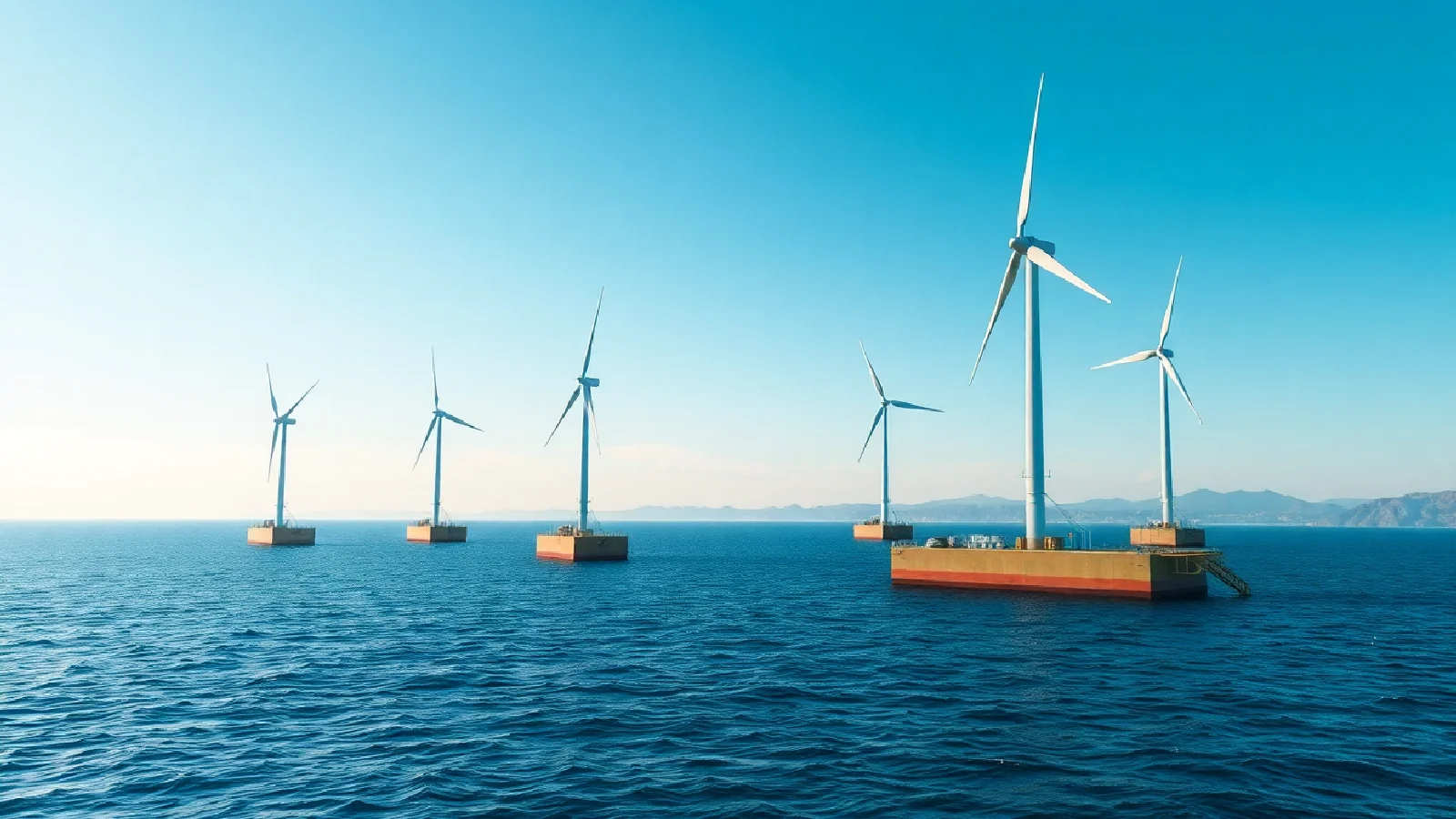
Interconnection with other decarbonized energy infrastructures, such as floating offshore wind, could create resilient regional energy ecosystems, combining several complementary sources to maximize stability and minimize costs.
Conclusion
The massive investments by tech giants in small modular reactors mark a turning point in the history of nuclear energy. For the first time, non-traditional players in the sector are taking the initiative to finance and deploy large-scale production infrastructures, driven by the urgency of their energy needs.
The first SMR-powered data centers, expected around 2030, will be a real-world test. Their success or failure will influence the energy trajectories of many industrial sectors. Beyond technical issues, the entire governance of the energy transition is being questioned: who decides, who finances, who benefits?
This transformation is part of a broader dynamic of impact measurement and environmental responsibility, where companies must demonstrate the reality of their climate commitments, beyond mere greenwashing. SMRs, if they deliver on their promises, could become a pillar of this new energy era. The challenge remains to turn ambition into operational reality.