Terra Innovatum and Mersen: SOLO Reactor Core Ready for 2027
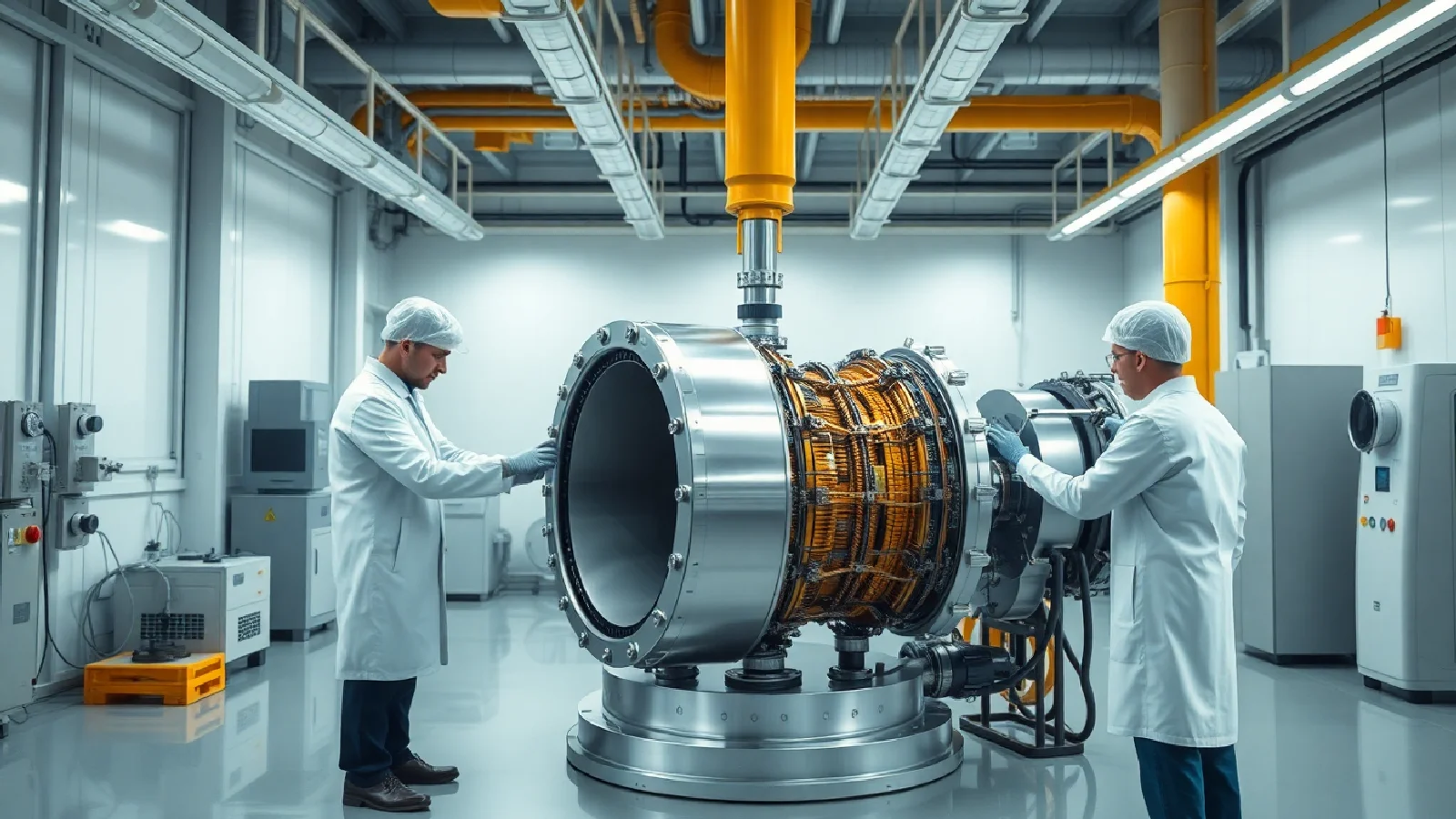
In April 2026, Terra Innovatum Global and French advanced materials specialist Mersen announced a concrete breakthrough in the development of the SOLO™ micro-modular reactor: the production and validation of a nuclear-grade graphite containment vessel prototype. This component, essential for the thermal safety of the reactor core, meets the required integration tolerances and confirms the company's ability to transition from supply chain preparation to series production. With deployment planned for the first reactor in 2027 and commercialization starting in 2028, Terra Innovatum's timeline is taking tangible shape.
Graphite Prototype Validates Reactor Architecture
Nuclear-grade graphite forms the structural and thermal core of SOLO™, a 1 MWe reactor designed for direct integration into isolated or industrial sites — data centers, mines, cement plants — without connection to the main grid. The material must withstand extreme temperatures while ensuring structural stability and neutron moderation.
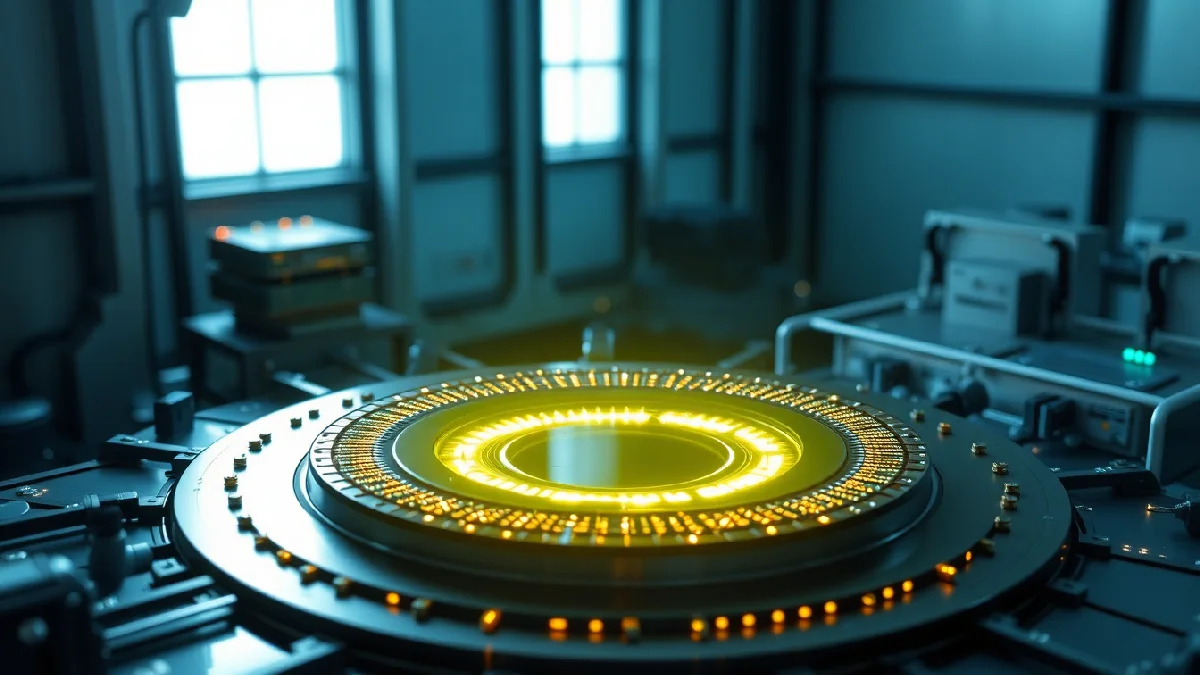
In March 2026, Terra Innovatum had already secured a graphite order from Mersen, a long-lead component in the nuclear industry. A month later, the physical prototype was produced and tested, demonstrating mastery of manufacturing tolerances and suitability for system specifications. This achievement represents a major transition: Terra Innovatum is moving from the design phase to industrial execution.
"This prototype marks a significant step in our transition from supply chain preparation to manufacturing execution," said Alessandro Petruzzi, CEO of Terra Innovatum.
"Build-Ready" Architecture Based on Commercial Components
The SOLO™ reactor stands out for its modular approach and "build-ready" design, meaning it is ready to be manufactured with standard commercial parts available on the market. This strategy reduces supply risks, accelerates production times, and lowers costs compared to conventional reactors that require custom components.
The SOLO™ architecture is based on a 1 MWe power output, sized for "behind-the-meter" installations — meaning directly integrated into consuming infrastructures, without passing through the electrical distribution network. This configuration addresses decentralized energy needs, particularly in areas where grid access is limited or costly.
Target applications include:
- Data centers requiring continuous and reliable power
- Isolated mining sites, often powered by diesel generators
- Heavy industries like cement plants, which require large amounts of heat and electricity
This positioning meets a growing demand for decarbonized, decentralized, and resilient energy solutions, especially in sectors where continuity of supply is critical.
A Tight Deployment Schedule: 2027-2028
Terra Innovatum has an ambitious but structured timeline. The First-of-a-Kind (FOAK) reactor, the first industrial demonstration unit, is planned for 2027. This deployment will allow for real-world system testing, refinement of operational procedures, and validation of design performance.
As early as 2028, commercialization of the Nth-of-a-Kind (NOAK) reactor is expected to begin, marking the transition to series production. The complete supply chain, including nuclear and non-nuclear components, is already aligned to support this ramp-up. The strategy relies on securing all critical components in advance, thereby limiting the risk of supplier-related delays.
This rapid deployment model contrasts with traditional nuclear projects, often characterized by decades-long delays. By leveraging standard components and a modular design, Terra Innovatum aims to reduce the time between design and commissioning.
Mersen's Key Role in Nuclear Graphite Mastery
Mersen, a French company listed on Euronext, brings recognized expertise in advanced materials and components for the nuclear industry. The nuclear-grade graphite it supplies to Terra Innovatum must meet strict requirements for purity, density, and behavior under irradiation.
The collaboration between Terra Innovatum and Mersen is not limited to a simple supplier-client relationship. The two companies have initiated joint R&D programs aimed at optimizing the properties of graphite for large-scale production. This work focuses on reducing manufacturing costs, improving material durability, and adapting to the specific constraints of the SOLO™ reactor.
This alliance illustrates a broader dynamic in the advanced modular reactor sector: the need to build industrial ecosystems capable of supporting series manufacturing while ensuring the quality and traceability of critical components.
A Favorable Context for Micro-Modular Reactors
The development of SOLO™ is part of an international context where modular reactors are attracting increasing interest. Micro-reactors, in particular, are seen as a solution to meet decentralized energy needs, especially in remote regions, military installations, or developing areas.
Several factors favor this dynamic:
- The need to decarbonize heavy industrial sectors and critical infrastructures
- The search for resilient energy solutions, independent of centralized grids
- The need to reduce costs and deployment times compared to conventional nuclear power plants
Meanwhile, other players are developing similar technologies, such as heavy water or light water reactors, which explore different avenues to optimize neutron moderation and system compactness. Terra Innovatum distinguishes itself by its choice of a modular architecture and high-performance graphite, combining passive safety and manufacturing simplicity.
| Criterion | SOLO™ Reactor (Terra Innovatum) | Conventional Reactors |
|---|---|---|
| Size / Power | Micro-modular (1 MWe) | Large scale (several hundred MWe) |
| Components | Standard commercial parts ("build-ready") | Custom, highly specific components |
| Deployment | Fast (FOAK 2027, NOAK 2028) | Long (several decades) |
| Target Infrastructure | Isolated / industrial sites (data centers) | Connection to the main grid |
Regulatory Challenges and NRC Validation
Beyond technical and industrial mastery, Terra Innovatum must also clear the regulatory hurdles necessary for the reactor's commissioning. In 2026, the U.S. Nuclear Regulatory Commission (NRC) officially docketed several of the company's technical reports, initiating the detailed design review process for SOLO™.
This "docketing" by the NRC confirms that the submissions contain sufficient information to allow for a thorough safety and design evaluation of the reactor as part of the Construction Permit and Operating License process. This regulatory step is crucial for progressing towards FOAK deployment in 2027.
The regulatory path for micro-reactors remains complex, but recent NRC advancements in frameworks adapted for small modular reactors could facilitate the approval of technologies like SOLO™, provided safety assurances are demonstrated.
A Series Production Strategy to Accelerate Deployment
Terra Innovatum's approach is based on serialization of production, meaning the repeated manufacturing of standardized units. This method reduces unit costs through economies of scale, improves quality through process repetition, and shortens commissioning times.
The validation of the graphite prototype constitutes an initial industrial proof of concept. It demonstrates that manufacturing procedures can be reliably reproduced, an essential prerequisite for moving to the NOAK phase. In parallel, Terra Innovatum has finalized the alignment of its supply chain, including not only graphite but also all nuclear and non-nuclear components.
This strategy is part of a just-in-time production logic, where each critical component is secured upstream to avoid bottlenecks. The objective is to be able to deliver several units per year starting in 2028, depending on demand and manufacturing capacity.
Short-Term Prospects and Challenges
While Terra Innovatum's stated timeline seems ambitious, the milestones achieved in 2026 demonstrate methodical progress. The validation of the graphite prototype, the securing of the supply chain, and regulatory advancements are signs of industrial maturity.
However, several challenges remain:
- Finalizing the regulatory process with the NRC, which requires in-depth technical validations
- The ability to maintain the FOAK schedule for 2027, a tight deadline for a first industrial deployment
- The ramp-up of NOAK production in 2028, which will depend on actual demand and the ability to industrialize processes
The decentralized energy sector is evolving rapidly, as evidenced by the rise of electric vehicle charging infrastructure and innovations in perovskite-based solar. Nuclear micro-reactors could play a complementary role by providing a stable baseload, where intermittent renewables require storage or backup solutions.
An Industrial Milestone for Micro-Reactors
The collaboration between Terra Innovatum and Mersen marks a concrete step in the transition of micro-reactors from concept to industrial reality. The graphite prototype validated in April 2026 is not just a technical achievement: it symbolizes a startup's ability to structure an industrial value chain, secure strategic partnerships, and move towards commercial deployment.
With a first FOAK reactor planned for 2027 and commercialization in 2028, Terra Innovatum has a clear roadmap. It remains to be seen whether the company will meet these deadlines and convince the market of the economic viability of its model. In a sector where technological promises are numerous, the ability to deliver operational units on time will be decisive.
To learn more about this advancement, consult Terra Innovatum and Mersen's official announcement.