AlphaFold 3: The Architectural Evolution Transforming Protein Prediction
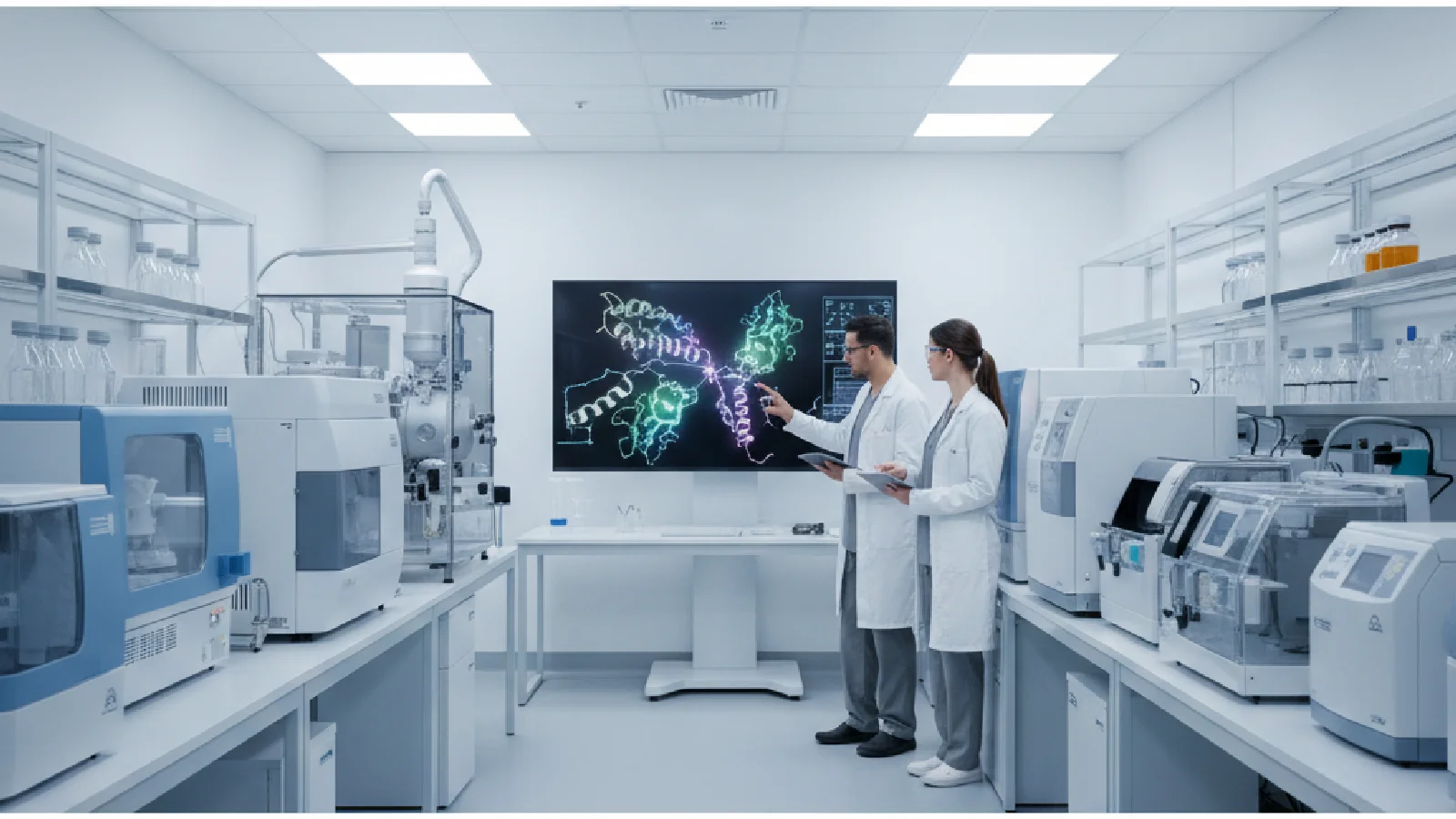
When DeepMind unveiled AlphaFold at the CASP competition in 2020, the scientific world witnessed a major breakthrough in structural biology. But this triumph wasn't born from a single stroke of genius: it's the result of a methodical architectural evolution, where each version rethought how artificial intelligence analyzes and predicts the three-dimensional structures of proteins. From the first iteration, based on modest convolutional neural networks, to AlphaFold 3, which now manipulates entire biomolecular complexes, the history of this technology illustrates how incremental innovation can produce spectacular advancements.
From Convolution to Spatial Intelligence: The Foundations of AlphaFold 1
The first version of AlphaFold relied on a direct approach: a convolutional neural network (CNN) transformed a protein's amino acid sequence into a distance map between residues. This method, while innovative for its time, had significant structural limitations. The model processed the sequence in a relatively linear fashion, without fully exploiting the evolutionary signals contained in multiple sequence alignments (MSAs).
Performance remained modest for complex structures. The CNN certainly captured local patterns but struggled to integrate the long-range dependencies that define protein folding. Nevertheless, this initial architecture laid the conceptual groundwork: the idea that an AI could learn directly from raw data to predict three-dimensional geometry.
The Evoformer: AlphaFold 2's Decisive Turning Point
In 2020, AlphaFold 2 marked a quantum leap with the introduction of the Evoformer module, a hybrid architecture that redefined the rules of the game. At the heart of this innovation: a dual representation combining multiple sequence alignment (MSA) and a pair-wise representation of residues.
The Evoformer continuously exchanges information between these two spaces. On one hand, the module analyzes how amino acids co-evolve across species (evolutionary signal). On the other, it progressively builds a map of spatial relationships between each pair of residues. This incessant dialogue between evolutionary data and spatial geometry allows the network to generate, from the very first processing blocks, a refined structural hypothesis.
The results stunned the scientific community: AlphaFold 2 achieved an average accuracy (lDDT) greater than 90%, a level close to experimental accuracy. For the first time, computational prediction rivaled X-ray crystallography or cryo-electron microscopy. This performance propelled AlphaFold to the rank of an indispensable tool, particularly for understanding fundamental cellular mechanisms where protein structure plays a central role.
AlphaFold 2 achieved an average accuracy (lDDT) greater than 90%, a level close to experimental accuracy, redefining the standards of computational structural biology.
Pairformer and Diffusion: AlphaFold 3's Redesigned Architecture
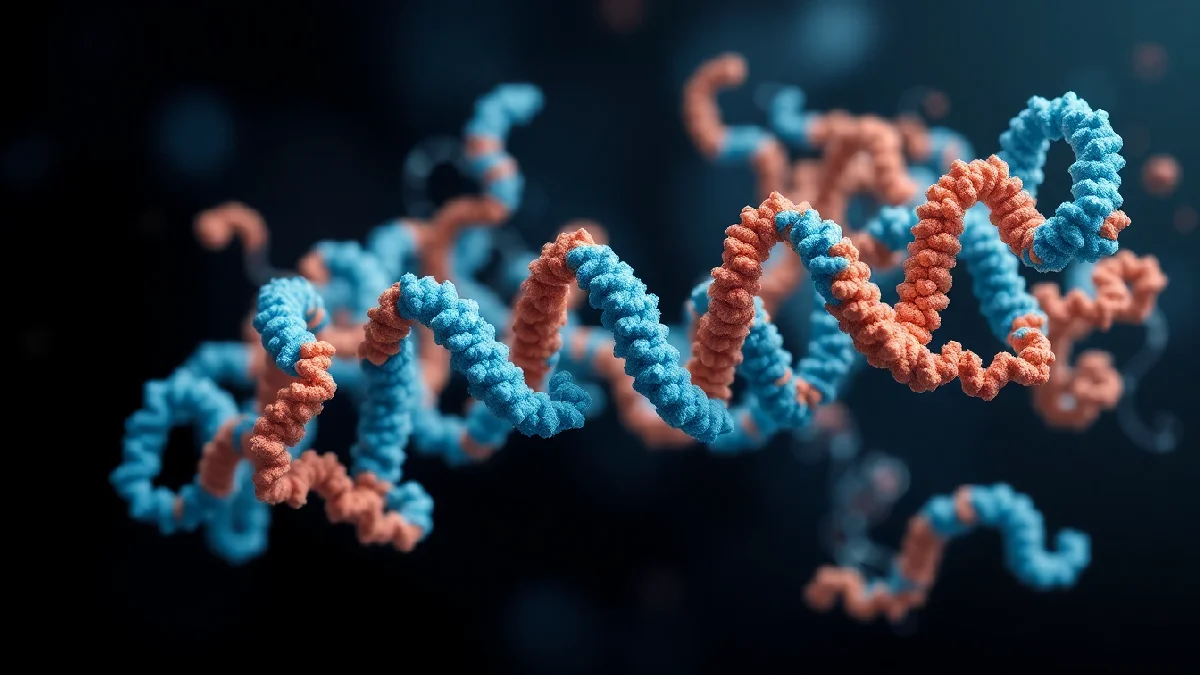
Released in 2024, AlphaFold 3 takes a new step by replacing the Evoformer with the Pairformer, a more compact and efficient module. This architectural redesign aims to drastically reduce MSA processing while maintaining a robust pair representation. The Pairformer focuses its operations on inter-residue relationships, thereby lightening the computational load without sacrificing accuracy.
But AlphaFold 3's major innovation lies in the addition of a diffusion module. Unlike AlphaFold 2, which predicted "residual frames" (local orientations of amino acids), this new module directly predicts raw atomic coordinates. This approach opens the door to modeling heterogeneous biomolecular complexes: protein-ligand, protein-DNA, protein-RNA, and protein-protein interactions.
The diffusion module works through successive iterations, progressively refining atomic positions from an initial noisy state. This process is reminiscent of modern generative techniques (diffusion models), but adapted to the constraints of structural chemistry. Result: AlphaFold 3 significantly improves DockQ and lDDT scores for complexes, with particularly marked gains for antibody-antigen interactions.
Comparison of AlphaFold Architectures
| Version | Year | Key Component | Primary Prediction Type | Complex Modeling |
|---|---|---|---|---|
| AlphaFold 1 | 2018 | CNN | Distance Map | No |
| AlphaFold 2 | 2020 | Evoformer | Residual Frames | Limited |
| AlphaFold 3 | 2024 | Pairformer + Diffusion | Atomic Coordinates | Yes (protein-ligand, DNA, RNA) |
Reduced Dependence on MSAs: A Strategic Advance
One of AlphaFold 3's most strategic developments concerns its reduced dependence on multiple sequence alignments. Deep MSAs, while extremely informative, pose practical challenges: they require massive databases and significant computation time, especially for poorly characterized or orphan proteins.
By optimizing the Pairformer and relying more on pair representations, AlphaFold 3 achieves better performance on systems with limited MSAs. This improvement is crucial for emerging applications like cellular bioengineering, where synthetic proteins are designed without obvious natural homologs.
The documented accuracy gains show p-values less than 10⁻³⁴, indicating a statistically robust improvement. This increased efficiency paves the way for large-scale predictions, including on entire proteomes or massive multi-protein complexes.
Consolidated Impact: From Fundamental Research to Therapy Development
Each architectural advancement of AlphaFold translates into tangible gains for the scientific community. Millions of protein structures have been deposited in the AlphaFold database, accelerating drug discovery, the study of genetic diseases, and the understanding of pathological mechanisms.
Concrete applications are multiplying:
- Drug Discovery: identification of binding sites for new therapeutic molecules
- Disease Understanding: structural analysis of mutated proteins involved in cancer or neurodegenerative diseases
- Protein Engineering: rational design of industrial enzymes or vaccines
AlphaFold 3's architecture, by extending prediction to biomolecular complexes, further strengthens this impact. Protein-ligand interactions are essential for virtual screening, while protein-DNA predictions elucidate genetic regulation mechanisms. The increased accuracy on antibody-antigen complexes particularly accelerates the development of immunotherapies.
A Trajectory Towards New Horizons
AlphaFold's evolution illustrates a broader trend in artificial intelligence: the importance of neural architecture beyond mere computational power. Moving from a basic CNN to the Evoformer, then to the Pairformer coupled with a diffusion module, demonstrates that innovation lies as much in network design as in the volume of training data.
This trajectory opens fascinating perspectives. Future versions could integrate the prediction of protein dynamics (movements and multiple conformations), or even model complete cellular systems with hundreds of proteins interacting simultaneously. The reduced dependence on MSAs could also allow for predicting structures for understudied organisms, expanding our understanding of molecular biodiversity.
AlphaFold has already transformed structural biology. Its architectural evolutions, far from being mere technical adjustments, redefine our ability to explore life at the molecular level. The next decade promises to be just as revealing, as these tools mature and integrate into daily research workflows.
Frequently Asked Questions
Q: What is the main difference between AlphaFold 2's Evoformer and AlphaFold 3's Pairformer? A: The Evoformer intensively processes multiple sequence alignments (MSAs) in parallel with a pair-wise representation, constantly exchanging information between these two spaces. The Pairformer, more compact, reduces MSA processing and focuses more on pair-wise relationships between residues, improving computational efficiency while maintaining high accuracy, especially for systems with limited MSAs.
Q: Why is the prediction of raw atomic coordinates a major advancement? A: AlphaFold 2 predicted "residual frames" (local orientations), an effective approach for isolated proteins but limited for heterogeneous complexes. AlphaFold 3's diffusion module directly generates raw atomic coordinates, allowing for accurate modeling of protein-ligand, protein-DNA/RNA interactions, and multi-protein complexes, significantly expanding the scope of application.
Q: What types of biomolecular complexes can AlphaFold 3 predict? A: AlphaFold 3 accurately predicts the structures of protein-ligand complexes (drugs, metabolites), protein-DNA, protein-RNA, protein-protein interactions, and notably antibody-antigen complexes. This versatility is made possible by the Pairformer architecture and the diffusion module, which unify the treatment of diverse chemical entities. To learn more about how it works, you can consult How does AlphaFold 3 work?
Q: How has AlphaFold reduced its dependence on multiple sequence alignments? A: By optimizing the architecture towards the Pairformer, AlphaFold 3 more efficiently utilizes pair representations and reduces the volume of MSA processing. This evolution improves performance on poorly characterized proteins or those without obvious homologs, while accelerating calculations and facilitating application to orphan or synthetic proteins. A comprehensive review of deep learning structural prediction methods is available via Protein structure prediction via deep learning.
Q: What is AlphaFold's concrete impact on drug discovery? A: AlphaFold significantly accelerates virtual screening by accurately identifying binding sites of target proteins. Researchers can predict how candidate molecules interact with a therapeutic target, reducing the time and cost of preclinical development. AlphaFold 3, with its ability to model protein-ligand complexes, further strengthens this strategic application, as detailed in The transformative impact of AI-enabled AlphaFold 3.