Cell Bioengineering: Designing the Next Generation of Therapies

In research laboratories worldwide, a discreet yet profound transformation is underway. Cell therapies, long confined to theoretical promises and limited clinical trials, are entering a new era. One where cell engineering adopts rigorous industrial methods: design, build, test. This systematic approach, inspired by classical engineering, now allows for the creation of custom biological systems aimed at treating previously incurable diseases.
The challenge is no longer just to repair a defective gene or transplant healthy cells. It's about reprogramming living organisms to become therapeutic agents themselves. This ambition, driven by synthetic biology and genomic editing, relies on a production chain as sophisticated as that of a chemical drug: from computational design to clinical validation, each step is optimized, standardized, and reproducible.

Design: Where Algorithms Meet the Genome
The design phase forms the foundation of any next-generation cell therapy. Even before manipulating a living cell, researchers leverage computational models and genetic databases to select the most suitable biological components. Machine learning plays an increasing role here: by analyzing millions of DNA, RNA, and protein sequences, these algorithms predict which genetic circuits will function best in a given therapeutic context.
Specifically, this design phase relies on the modularization of biological parts. Just as an engineer assembles electronic components to create a circuit, a bioengineer combines promoters, regulatory genes, functional RNAs, and selection markers to build a coherent system. According to a thesis on synthetic metabolic circuits, these computer-aided design tools allow for “reprogramming the DNA code” for applications ranging from bioproduction to biomarker detection.
The standardization of biological components, characteristic of synthetic biology, facilitates the rational assembly of complex genetic circuits intended for therapy.
In the cardiovascular field, some teams are working on modifying AAV vector capsids (adeno-associated viruses) to improve their cardiac tropism: by better targeting heart cells, efficacy is increased while reducing necessary doses. Other projects, such as those funded by Bioconvs in 2025, use generative artificial intelligence to optimize the expression of compensatory genes in Duchenne muscular dystrophy, a degenerative genetic disease.
Build: From DNA Synthesis to 3D Organoids
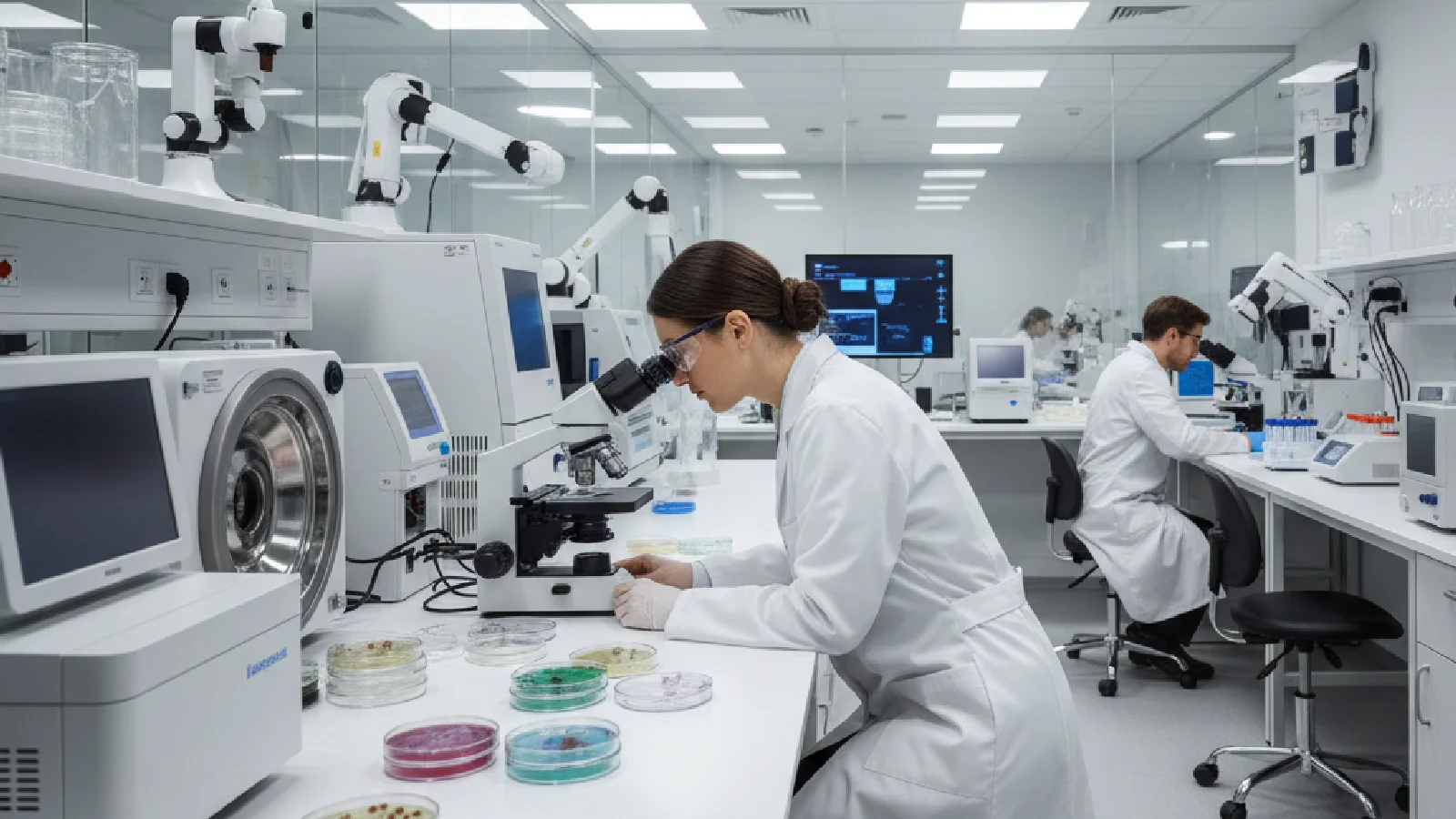
Once the genetic sequence is designed, it must be built. This is the build phase, made possible by spectacular advances in low-cost DNA synthesis and automation. Robotic platforms now assemble genetic fragments with nanometric precision, while editing techniques like CRISPR-Cas9 allow for inserting, deleting, or modifying genes directly in target cells.
Induced pluripotent stem cells (iPS) are a prime raw material for this engineering. Reprogrammed from adult cells, they can differentiate into any cell type in the body. However, their large-scale culture still poses challenges: their identity and genetic integrity must be preserved while producing quantities compatible with clinical use. A promising approach involves encapsulating these stem cells in porous biomimetic matrices, which protect the cells while allowing for nutrient exchange and waste elimination.
This encapsulation technique finds applications particularly in type 1 diabetes. By coating insulin-producing Langerhans β-cells in a biocompatible matrix, researchers hope to create a cellular “artificial pancreas,” protected from the patient's immune system without requiring heavy immunosuppressive treatment. Similarly, the creation of three-dimensional organoids — mini-organs grown in vitro — offers models for testing the efficacy and toxicity of these therapies before human administration.
| Type of Building Block | Key Technique/Material | Therapeutic Application |
|---|---|---|
| Genetic Sequence | DNA synthesis, CRISPR-Cas9 | Targeted gene modification |
| Pluripotent Stem Cells | iPS, encapsulation | Cellular artificial pancreas |
| Cellular Models | 3D Organoids | Efficacy and toxicity testing |

Test: High-Throughput Screening and Functional Validation
The test phase closes the engineering cycle. It relies on high-throughput screening platforms capable of simultaneously evaluating thousands of cellular variants or culture conditions. These automated systems measure survival, proliferation, differentiation, and, crucially, therapeutic function: does a modified cell produce the expected protein? In the right quantities? Without triggering an excessive immune response?
In vitro models are complemented by metabolic sensors integrated directly into genetic circuits. These biosensors detect in real-time the presence of key metabolites or cellular stress markers, providing valuable feedback to adjust the initial design. This iterative approach — test, analyze, redesign — is at the heart of the design-build-test method and significantly accelerates the development of new therapies.
In vivo trials remain essential to evaluate the integration of modified cells, their long-term survival, and the absence of adverse effects. Sophisticated animal models, including humanized mice carrying fragments of the human immune system, allow for better prediction of clinical response in patients. Finally, each batch of therapeutic cells must undergo rigorous quality control, compliant with Good Manufacturing Practices (GMP), to ensure safety and reproducibility.
Simulation tools also play an increasing role in this phase. As shown by a project modeling a biomedical process, simulation helps anticipate bottlenecks, optimize production flows, and comply with regulatory constraints related to handling human biomaterials.
Beyond the Limits of the First Generation
First-generation cell therapies paved the way but faced several major obstacles: prohibitive costs, logistical complexity, immunogenicity risks, and inter-patient variability. The new systematic engineering approach aims to overcome these limitations by leveraging three key factors:
- Automation and standardization: Manual processes, sources of errors and variability, are replaced by robotic production lines, reproducible on a large scale.
- Rational personalization: Rather than producing “off-the-shelf” (allogeneic) or fully personalized (autologous) cells, new hybrid strategies combine the advantages of both approaches through genomic editing.
- Artificial intelligence: Generative AI and deep learning algorithms optimize the design of genetic circuits, reduce the number of necessary iterations, and predict complex gene interactions.
This industrialization does not mean a dehumanization of medicine, but rather an increased capacity to offer tailored treatments to each patient, at controlled costs. Modular production platforms, which can be deployed in different hospital centers, bring manufacturing closer to patients and reduce access times to therapies.
Safety, Ethics, and Regulation: Necessary Safeguards
Cell engineering raises unprecedented ethical and regulatory questions. Modifying the human genome, even for therapeutic purposes, requires a strict framework to prevent abuses. Health agencies, in Europe as in the United States, are strengthening their requirements for traceability, informed consent, and long-term follow-up of treated patients.
The issue of hereditary transmission of genetic modifications remains central. While somatic therapies (which affect only certain body cells) are generally accepted, any intervention on germline cells remains prohibited in most jurisdictions. Researchers must therefore prove that their modifications cannot affect the patient's offspring.
Furthermore, the viral safety of vectors used to transfer therapeutic genes is subject to increased scrutiny. AAV vectors, although considered safe, can in rare cases cause immune responses or integrate unexpectedly into the genome. Prolonged trials and multi-year follow-up cohorts are necessary to detect potential late side effects.
Finally, the accessibility of these therapies raises a question of health equity. While technical progress can reduce costs, the risk of a two-tier medicine — where only patients in wealthy countries would benefit from these innovations — remains real. Initiatives for technology transfer to middle-income countries and solidarity-based financing models are essential to ensure equitable access.
From Fundamental Research to Clinic: A Developing Ecosystem
The transition from laboratory to patient bedside requires a complex ecosystem bringing together academic researchers, industrialists, regulators, and clinicians. In France, structures like Genethon or the Institut Imagine play a pivotal role in this continuum, ensuring the transition between fundamental research and preclinical development. Specialized startups, often stemming from public research, industrialize processes and raise funds to finance clinical trials.
Work in bioengineering, at the crossroads of several disciplines, shows that this “reformation of knowledge production” profoundly modifies research dynamics. Interdisciplinary collaboration — between biologists, computer scientists, engineers, and doctors — becomes the norm rather than the exception.
Public and private investments in this field are reaching unprecedented levels. International research programs, such as the Grand Challenges in Cancer, fund ambitious projects aimed at accelerating clinical translation. These efforts converge towards a common goal: making cell therapy an accessible and effective option for a wide spectrum of pathologies.
Outlook: Towards Widespread Regenerative Medicine
The coming years will likely see the emergence of cell therapies for previously unexplored indications. Beyond cancer and rare genetic diseases, neurodegenerative diseases, chronic cardiovascular pathologies, and even certain forms of aging could benefit from these approaches. Regenerative medicine, which combines cell therapy and bioengineering, promises to repair or replace damaged tissues rather than merely managing symptoms.
Artificial intelligence will continue to play an increasing role, not only in the design of genetic circuits but also in the personalization of treatments. By analyzing each patient's genome, transcriptome, and microbiome, algorithms will be able to predict which therapy will work best and adjust doses in real-time.
Finally, the democratization of synthetic biology tools — accessible DNA synthesizers, open-source CRISPR kits, open genomic databases — could accelerate innovation by enabling new actors, including in emerging countries, to contribute to this therapeutic revolution.
Cell bioengineering no longer just promises: it delivers. Each iteration of the design-build-test cycle brings the scientific community closer to truly personalized medicine, where each patient could benefit from a therapy designed specifically for their case. Many challenges remain — scientific, ethical, economic — but the momentum has begun. And it is already transforming hopes into clinical realities.