Telomeres and Longevity: From Research to Clinical Practice

For decades, telomeres – the protective caps at the ends of our chromosomes – were only of interest to a handful of researchers. Today, they occupy a central place in medical consultations. In 2025, telomere length measurement has become a standardized tool, integrated into preventive health check-ups from the age of 40. This transition from the lab bench to the doctor's office marks a turning point in our approach to aging.
Telomeres naturally shorten with each cell division. When they become too short, the cell stops dividing and enters senescence – a resting state which, paradoxically, can generate genetic damage. Recent work has shown that cellular senescence results more from irreparable genome damage than from simple telomere erosion. This discovery refines our understanding of aging and opens new therapeutic avenues.
From Chronological Age to Biological Age
The major innovation of 2025 lies in the standardization of telomere blood tests. These analyses, now reimbursed by several health insurance providers, make it possible to establish a “biological age” that complements classic cardiovascular, metabolic, and oncological risk parameters.
Biological age differs from chronological age: two 50-year-olds can have radically different telomeric profiles. One will show telomeres corresponding to a 40-year-old physiology, while the other will reveal accelerated aging equivalent to 60 years. This objective measurement now guides doctors in prioritizing preventive interventions.
“Telomere length doesn't just reflect our age; it predicts our future health trajectory. It's a dynamic marker that we can influence through our lifestyle choices.”
Epigenetic clocks, which analyze chemical modifications to DNA without altering its sequence, complement this assessment. Together, these tools paint a precise picture of our health capital and our longevity potential.
Personalized Clinical Protocols
Armed with this data, the medical community is developing tailored intervention protocols. In 2025, these programs integrate several research-validated axes:
- Individualized prevention: Protocols are adjusted according to the patient's biological age, risk factors, and genetic markers.
- Multidisciplinary approach: Involvement of nutritionists, sports coaches, psychologists specializing in stress management, in addition to the treating healthcare professional.
- Regular monitoring and adjustments: Programs are not static; they evolve based on patient progress and new scientific data.
Targeted supplementation: Studies show that supplementation with vitamin D (2,000 IU/day) and omega-3 measurably slows telomere shortening. These nutritional interventions, long relegated to general advice, are becoming precise prescriptions, adjusted according to individual biological markers.
Lifestyle modifications: Structured programs combine several levers of action. Moderate physical activity (150 minutes per week), intermittent fasting, and stress management through meditation or breathing have shown simultaneous improvement in inflammatory markers and stabilization of telomere length. The longevity trend is also emerging as a key wellness concept in 2025.
Sleep optimization: Sleep duration and quality (7 to 9 hours per night) play a crucial role in telomere preservation. Clinical protocols now include a section dedicated to sleep hygiene, with monitoring by connected devices.
Telomerase Activators: Between Promise and Caution
Regenerative medicine centers offer, under strict medical supervision, low-dose telomerase activators for patients with advanced telomere erosion. TA-65, derived from astragalus, is among the most studied molecules.
Telomerase is the enzyme capable of lengthening telomeres. While its activation seems promising for slowing aging, it raises safety concerns: excessive stimulation could promote the proliferation of abnormal cells. This is why these treatments remain regulated, reserved for specific profiles, and accompanied by regular biological monitoring.
Alternative approaches, such as certain nutritional interventions, are also gaining scientific credibility. Specific micronutrients appear to act on cellular repair mechanisms and telomere protection.
Digital Monitoring and Real-Time Adjustments
The arrival of digital monitoring platforms is transforming the monitoring of biological age. These tools allow for quarterly measurement of telomeres and the epigenetic clock, offering a dynamic view of the patient's evolution.
Thanks to this data, nutritional strategies, micronutrient dosages, and sleep protocols are continuously adjusted. The patient is no longer a mere observer of their aging, but an informed actor, able to visualize the concrete impact of their daily choices on their biological markers.
This approach is part of a 4P medicine logic: predictive, preventive, personalized, and participatory. It relies on patient empowerment, now equipped with precise information to manage their health.
Beyond Telomeres: The Twelve Hallmarks of Aging
Telomeres are just one of the twelve biological mechanisms identified in the aging process. Genomic instability, epigenetic alterations, loss of proteostasis, mitochondrial dysfunction, cellular senescence, chronic inflammation, and intestinal dysbiosis form a complex network of interactions.
Research is now moving towards an integrated understanding of these mechanisms. Rather than targeting each parameter in isolation, clinical protocols in 2025 adopt a systemic approach, recognizing that improving one marker positively influences the entire biological system.
This holistic vision aligns with discoveries in regenerative medicine and epigenetics, where it is observed that targeted interventions can trigger cascades of beneficial effects at the cellular level.
Limitations and Future Prospects
Despite these advances, several challenges remain. Interindividual variability in response to interventions remains significant: what works for one patient may be less effective for another. The precise mechanisms explaining these differences are still partially elucidated.
Furthermore, access to telomere tests and personalized protocols raises equity issues. While some insurance companies now cover these analyses, their availability remains uneven across regions and healthcare systems. The risk of a two-speed longevity medicine is emerging.
Finally, the temptation to “medicalize” aging, a natural and inevitable process, deserves ethical consideration. The goal is not to promise immortality, but to optimize healthy life years – what researchers call “healthspan” as opposed to “lifespan”.
Bridges Between Fundamental Research and Clinical Application
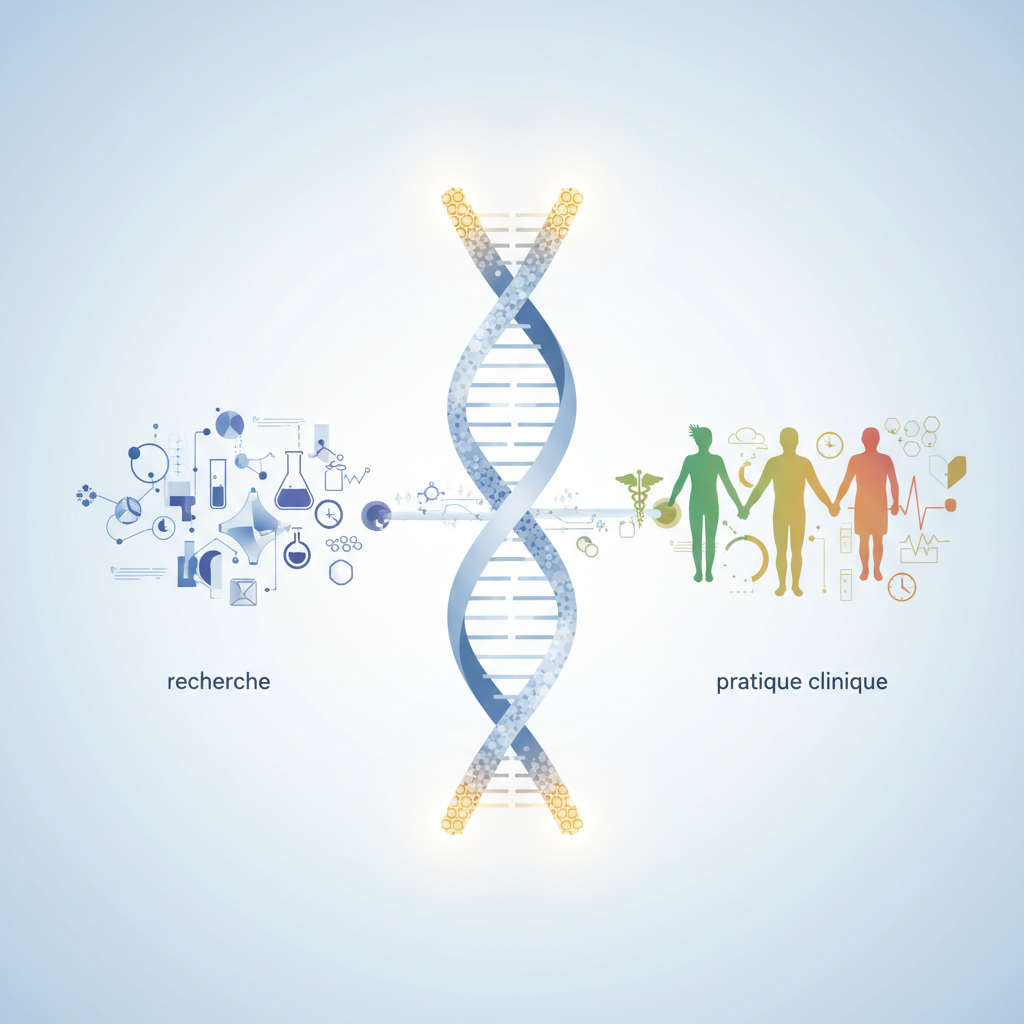
The integration of telomeres into medical practice perfectly illustrates the continuum between fundamental research and clinical application. The pioneering work of Elizabeth Blackburn, awarded the Nobel Prize in Medicine in 2009, laid the theoretical foundations. Two decades later, these discoveries permeate daily consultations.
This acceleration of knowledge transfer also benefits other scientific fields. Advances in particle physics or equitable cancer research remind us that science progresses through cross-fertilization between disciplines.
Redefining Preventive Medicine
The era of clinical telomerics redefines preventive medicine. Rather than waiting for the appearance of pathologies, this approach anticipates health trajectories and intervenes upstream. The medical paradigm is shifting: we are moving from a reactive logic (treating illness) to a proactive logic (preserving health).
This transformation is accompanied by a profound cultural change. Patients become co-actors in their health journey, armed with precise biological information and personalized protocols. Healthcare professionals take on a guiding role, supporting this preventive approach in the long term.
In 2025, the promise of telomeres is not to live forever, but to live better, longer. A measurable, adjustable promise, and, above all, accessible to a growing number of people. Aging remains inevitable; its speed, however, becomes modulable.
| Concept | Chronological Age | Biological Age |
|---|---|---|
| Definition | Time elapsed since birth | Physiological measure of cellular aging |
| Determination | Date of birth | Telomere length, epigenetic clocks |
| Utility | Social benchmark | Health trajectory prediction, intervention guide |
| Variability | Fixed for all | Different from person to person |