
Blue Origin Aims for April 19 for New Glenn NG-3 Flight
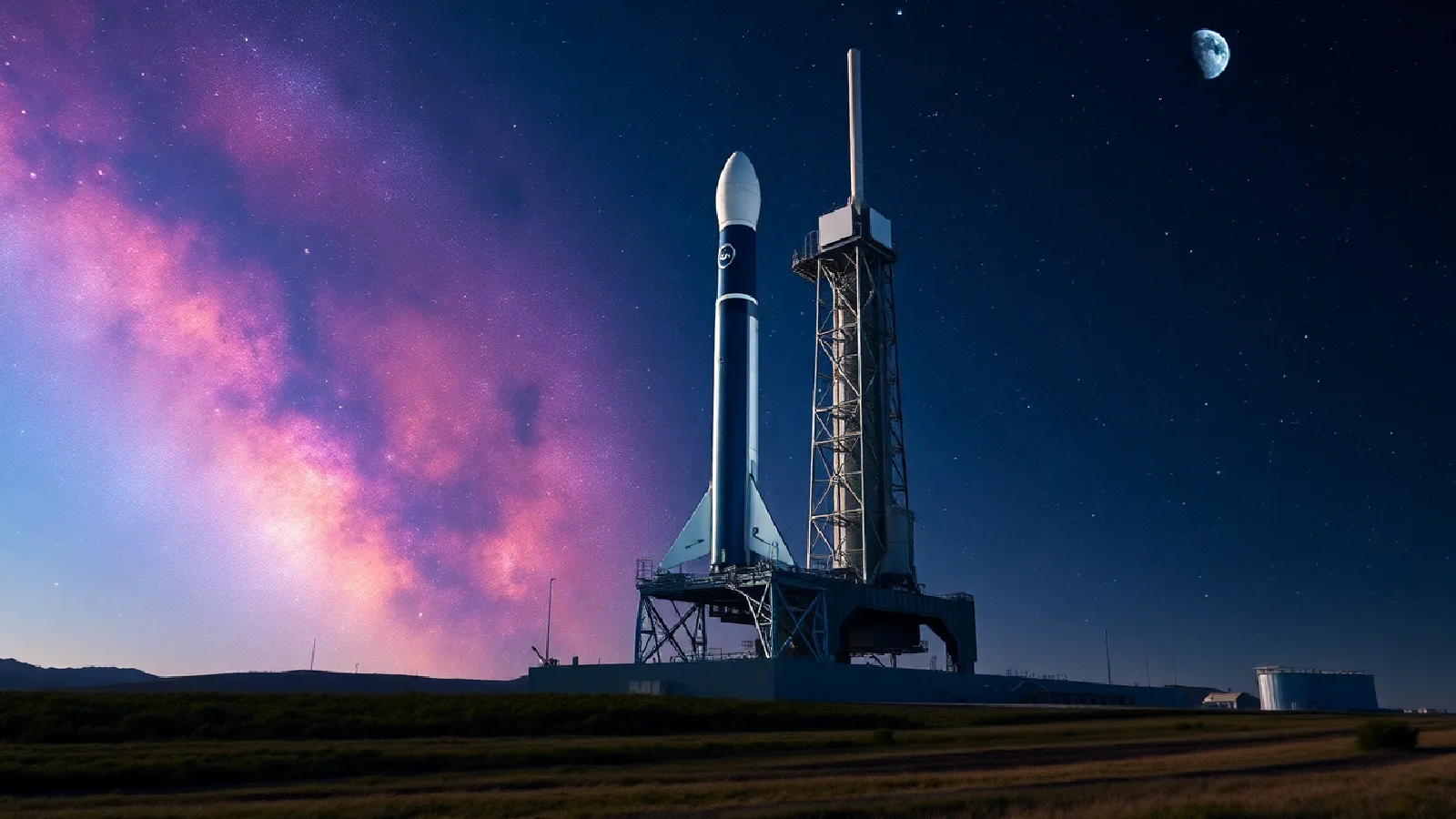
The third New Glenn flight is set to be a decisive step for Blue Origin. Scheduled for April 19, 2026, from Launch Complex 36 at Cape Canaveral in Florida, this NG-3 flight combines two major challenges: deploying a strategic satellite for space telecommunications and demonstrating the economic viability of reusing an orbital booster.
The launch window will open from 6:45 AM to 8:45 AM EDT (10:45 AM-12:45 PM UTC), and Blue Origin will broadcast the event live on its official website 30 minutes before liftoff. This mission marks a significant acceleration in the heavy-lift launcher's development schedule, following the historic success of the second flight last November.

The Return of the "Never Tell Me The Odds" Booster
The most remarkable aspect of the NG-3 mission lies in the reuse of the first stage named "Never Tell Me The Odds" — a direct reference to the Star Wars universe. This booster made a perfect landing during the NG-2 flight in November 2025, becoming the first orbital stage recovered by Blue Origin.
This new attempt places Jeff Bezos' company in an exclusive category. Only SpaceX had previously demonstrated the ability to operationally refly orbital boosters. According to Blue Origin, New Glenn's stages are designed to support at least 25 flights, an ambition aimed at drastically reducing launch costs.
Reusing an orbital booster represents a considerable technical challenge. The BE-4 engines, which power the first stage, must be inspected and potentially refurbished between each flight. Blue Origin has conducted several static fire tests at Kennedy Space Center to validate the booster's condition before this third launch.
BlueBird 7: A Satellite to Connect Smartphones
The payload for the NG-3 mission is AST SpaceMobile's BlueBird 7 satellite, which will play a key role in deploying a network for direct-to-smartphone telecommunications. Unlike traditional satellite networks that require specific terminals, this technology allows standard phones to connect directly to satellites in low Earth orbit.
BlueBird 7 will join AST SpaceMobile's constellation and help expand the network's capacity for a commercial deployment planned for 2026. This type of service represents one of the major evolutions in the space sector: democratizing access to high-speed internet, even in the most isolated areas of the planet.
Low Earth orbit (LEO), where the satellite will be placed, offers advantages in terms of latency and coverage. However, it requires a significant constellation to ensure continuous global coverage. The launch of BlueBird 7 is part of this progressive deployment logic, with each satellite adding another building block to the network.

New Glenn: The Capabilities of a Heavy-Lift Launcher
New Glenn is designed to compete with the most powerful launchers on the market. With a capacity of over 45 metric tons to low Earth orbit (LEO) and 13 metric tons to geostationary transfer orbit (GTO), this launcher positions itself as a credible alternative to giants like SpaceX's Falcon Heavy or ULA's future Vulcan Centaur.
The launcher stands approximately 98 meters tall and features a seven-meter diameter fairing, twice the volume of standard five-meter fairings. This characteristic offers increased flexibility for integrating voluminous or multiple payloads. The upper stage uses liquid hydrogen and liquid oxygen (LOX-LH2), a technical choice that optimizes performance for missions to high orbits.
The seven BE-4 engines that power the first stage collectively generate colossal thrust at liftoff. These same engines also power ULA's Vulcan Centaur launcher, attesting to their reliability and technological maturity.
New Glenn's design philosophy is based on standardization: a single configuration to meet a wide range of missions. This approach aims to reduce development and operational costs while simplifying logistics for customers.
| Characteristic | Detail |
|---|---|
| LEO Capacity | > 45 metric tons |
| GTO Capacity | 13 metric tons |
| Height | ~98 meters |
| Fairing Diameter | 7 meters |
| First Stage Engines | 7x BE-4 |
| Upper Stage | LOX-LH2 |
Blue Origin's Accelerated Schedule
The launch cadence for New Glenn is accelerating significantly. After a successful inaugural flight in early 2025, Blue Origin followed up with the NG-2 flight in November, marked by the first successful booster landing. Less than six months later, the NG-3 mission will take another step by reflying that same booster.
This rapid progress demonstrates increasing operational maturity. Blue Origin has invested heavily in its launch infrastructure at Cape Canaveral and its production facility in Huntsville, Alabama. The company aims to establish a regular launch cadence to meet the growing demand in the commercial satellite market.
In parallel, Blue Origin announced a pause in flights of its suborbital New Shepard vehicle to focus resources on developing lunar capabilities as part of NASA's Artemis program. This strategic decision reflects the company's priorities: positioning itself in the most promising segments of the space sector, particularly lunar exploration and heavy orbital launches.
Strategic Stakes of the NG-3 Flight
Beyond technical aspects, the NG-3 mission holds significant strategic importance for Blue Origin. Demonstrating the ability to reliably and economically refly an orbital booster is a powerful commercial argument against competitors. SpaceX currently dominates the market with its reusable Falcon 9s, but the arrival of New Glenn reshuffles the cards.
The competition in the heavy-lift launcher sector is intensifying. Customers are seeking credible alternatives, particularly to diversify their suppliers and reduce their dependence on a single operator. New Glenn, with its superior payload capacity and voluminous fairing, meets specific needs that other launchers do not cover as well.
The market for low Earth orbit satellite constellations is experiencing explosive growth. Companies like AST SpaceMobile, OneWeb, and Amazon (with its Project Kuiper, also supported by Blue Origin) plan to deploy thousands of satellites in the coming years. This sustained demand offers a substantial pipeline of commercial missions for New Glenn.
Furthermore, Blue Origin is also targeting the institutional sector. The company was selected by NASA to develop a lunar lander as part of the Artemis program, in partnership with Lockheed Martin, Boeing, and other major players. The demonstration of New Glenn's capabilities enhances Blue Origin's credibility for these strategic government contracts.
Towards a New Era of Reusable Spaceflight
The NG-3 flight is part of a profound transformation of the space industry. Launcher reuse, once considered an insurmountable technical challenge, is gradually becoming the norm for major operators. This evolution significantly reduces launch costs, opening new perspectives for space exploration and commercial exploitation.
Blue Origin aims to make New Glenn a "space plane" capable of flying regularly with minimal refurbishment between each mission. This vision aligns with SpaceX's, which has already demonstrated that a single Falcon 9 booster can fly more than 20 times. However, New Glenn distinguishes itself by its superior payload capacity and its architecture designed from the outset for intensive reuse.
The success of the NG-3 mission will pave the way for an increased launch cadence. Blue Origin hopes to achieve several launches per month by 2027, an ambitious but necessary goal to amortize the colossal investments made in the launcher's development. This ramp-up will require continuous optimization of refurbishment processes and meticulous logistics.
Beyond the commercial aspect, the development of New Glenn contributes to American competitiveness in space. With Artemis II on the horizon, and the race to explore destinations like Europa and Enceladus, having reliable and economical heavy-lift launchers becomes a national imperative. The United States seeks to maintain its lead against China and other emerging space powers.
A Decisive Test Before Expansion
April 19 will therefore mark a pivotal moment for Blue Origin. The success of the NG-3 mission will validate not only the technical robustness of the launcher but also the economic viability of the company's model. The eyes of the industry will be on Cape Canaveral to see if "Never Tell Me The Odds" will once again live up to its audacious name.
The coming months will likely see the announcement of new commercial missions for New Glenn. Several satellite operators have already expressed interest, attracted by the launcher's unique capabilities. Blue Origin also hopes to secure government contracts for scientific or defense missions, a lucrative and strategic segment.
The live coverage of the launch will allow the public to follow the different phases of the mission in real-time: liftoff, stage separation, booster landing, and satellite deployment. These spectacular moments help popularize space exploration and inspire future generations.
With this third mission, Blue Origin crosses a symbolic and operational threshold. The company demonstrates that it can not only design and launch a heavy-lift rocket but also fly it repeatedly — an indispensable prerequisite for becoming a major player in New Space. The countdown has begun for this April rendezvous, which could well redefine industry standards.
Key Points of the NG-3 Mission:
- Date and Location: April 19, 2026, Cape Canaveral, Florida.
- Main Objective: Deployment of BlueBird 7 satellite and demonstration of booster reuse.
- Reused Booster: "Never Tell Me The Odds" (NG-2 first stage).
- Payload: AST SpaceMobile's BlueBird 7 satellite for direct-to-smartphone telecommunications.
- Impact: Strengthening Blue Origin's position in the heavy-lift launcher and reusable spaceflight markets.