
Artemis II: Objectives and Stakes of a Historic Lunar Flight

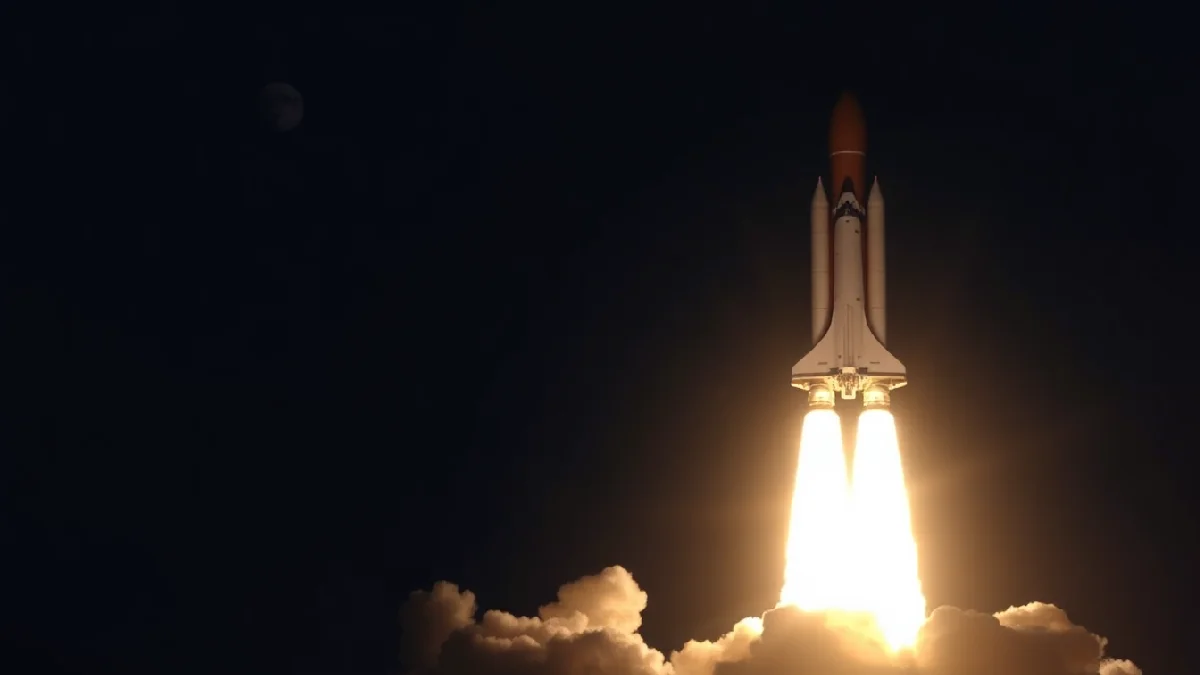
The Space Launch System (SLS) soars into the Florida sky, propelling four astronauts towards a destination humanity hasn't visited since Apollo 17 in 1972. Artemis II is not a mere repetition of the past: this ten-day mission around the Moon represents the decisive test for a space program that aims for much more than a brief visit — it lays the foundations for a sustainable human presence beyond Earth's orbit.
A Crucial Test Flight for Vital Systems
The Artemis II mission primarily aims to validate the capabilities of the Orion spacecraft and its European Service Module under the extreme conditions of deep lunar space. According to official NASA documentation, the mission's priorities place crew safety at the top, followed by the demonstration of systems essential for a prolonged lunar campaign.
The European Service Module (ESM), designed and built by the European Space Agency, constitutes Orion's functional core. It provides primary propulsion, electrical power via its solar panels, thermal control, and vital resources — water and oxygen — to keep the astronauts alive. This mission represents the first complete crewed flight of this integrated system in a cislunar environment.
Technical objectives include validating the life support system with metabolic load tests, preparing meals in microgravity, waste management, and continuous monitoring of the crew module's atmosphere. Each system must demonstrate its reliability over a ten-day period, which is the time needed for future missions to the lunar surface.
Proximity Maneuvers and Emergency Procedures
Beyond a simple trajectory to the Moon and back, Artemis II incorporates proximity maneuvering operations using the Interim Cryogenic Propulsion Stage (ICPS) as a docking target. This sequence allows for testing Orion's piloting qualities, measuring the impact of thrusters on nearby structures, and collecting optical navigation data via docking cameras.
Ground teams will need to demonstrate their ability to conduct crew rescue operations, from emergency evacuation procedures on launch day to post-splashdown recovery in the ocean.
The mission also tests emergency automation and nominal in-flight abort systems. Booster separation motors have been modified to improve their operation, and each critical phase is meticulously monitored. NASA particularly emphasizes the validation of post-splashdown recovery procedures, an often underestimated but essential element for safely returning astronauts.
Here are the main technical and operational objectives of the Artemis II mission:
- Validation of Orion and ESM systems: Testing the reliability of all crucial components in a deep space environment.
- Crew safety: Ensuring the spacecraft can sustain astronaut life in extreme conditions.
- Proximity maneuvers: Evaluating Orion's ability to approach and interact with other objects.
- Emergency procedures: Testing abort, evacuation, and crew recovery systems.
- Data collection: Gathering information for future missions, particularly Artemis III.

Data Collection for Artemis III and Beyond
Every sensor, every subsystem onboard Orion generates valuable data to refine future missions. The Artemis II mission collects information on propulsion performance, navigation, long-distance communications, and thermal control. This data will directly inform preparations for Artemis III, which aims to land astronauts on the lunar south pole.
Human physiology in the deep space environment is also subject to experiments. Cosmic radiation beyond Earth's magnetic protection represents a major challenge for long-duration exploration. Instruments measure crew exposure and test countermeasures for future missions, including journeys to Mars.
The deployment of CubeSats — small scientific satellites — during the mission allows for studying radiation and communications in cislunar orbit. These nanosatellites pave the way for a relay network that will facilitate communications between Earth, the Moon, and future lunar outposts, as indicated by NASA's technical documentation.
A Different Context from the Apollo Era
The challenges of Artemis II differ profoundly from those of the Apollo program. In the 1960s, the context of competition with the Soviet Union justified massive budgets and high risk-taking. Today, budgetary constraints are stricter, international cooperation takes precedence over rivalry, and safety requirements have significantly increased.
As explained in Pour la Science's analysis, the Artemis program faces significant delays and budget overruns. These difficulties are explained by the need to adapt old technologies, coordinate multiple international partners, and adhere to current safety standards that are much stricter than fifty years ago.
This more cautious and collaborative approach nevertheless offers advantages. It promotes the sharing of costs and expertise among NASA, ESA, the Canadian Space Agency, and other partners. It also builds a sustainable framework for prolonged lunar exploration rather than a one-off race.
| Characteristic | Apollo Program (1960s-70s) | Artemis Program (2020s-) |
|---|---|---|
| Context | Cold War Rivalry (USSR vs. USA) | International Cooperation |
| Budget | Massive, priority | Stricter budgetary constraints |
| Risk-taking | High, race to the Moon | Cautious, reinforced safety requirements |
| Main Objective | One-off visit, show of force | Sustainable human presence, outpost for Mars |
| International Partners | Primarily national (USA) | Multiple (NASA, ESA, CSA, etc.) |
Towards a Sustainable Human Presence Beyond Earth's Orbit
The true success of Artemis II will not be measured solely by the successful splashdown of the spacecraft, but by the quality of the data collected and the confidence established in the systems. This mission serves as a cornerstone for a space program that aims to establish a permanent base on the Moon, exploit its resources, and use this outpost as a stepping stone to Mars.
The lunar south pole, a preferred target for upcoming missions, harbors water ice in its perpetually shadowed craters. This resource could provide water and fuel for future expeditions, significantly reducing logistical costs. But before setting foot on the lunar regolith, it must first be proven that humans can survive the journey and that systems function reliably.
Links with other space programs are also strengthening. Advances in propulsion, such as Hall propulsion technology developed by China, or exploration missions to icy moons like Europa and Enceladus, are part of a common dynamic of humanity's expansion into the solar system.
Lessons from a Renewed Approach
Artemis II embodies a different philosophy from Apollo: less frantic racing, more methodology. Each test, each technical validation contributes to a more solid edifice for decades to come. Space agencies now prioritize sustainability over speed, cooperation over competition.
This measured approach is reflected in crew training. The Artemis II astronauts are not just test pilots: they represent a generation prepared for European post-ISS spaceflights, trained for the demands of long and complex missions.
The mission also brings a strong symbolic dimension. Humanity's return to the Moon after half a century of absence reminds us that space exploration remains a collective, intergenerational project. The technologies developed today will serve tomorrow's missions, and the data collected will fuel scientific research for years.
Prospects for Human Space Exploration
With Artemis II, NASA and its international partners are taking a decisive step towards a new chapter in space exploration. The ten days of this mission will condense months of technical validation, years of preparation, and decades of learning since Apollo.
Technical challenges — thermal control in deep space, radiation management, reliability of life support systems — find concrete answers through this mission. Human challenges — the ability to live and work far from Earth, psychological resilience, international coordination — also confront operational reality.
The ultimate goal goes beyond simply visiting our natural satellite. It is about demonstrating that humanity can establish a sustainable presence beyond low Earth orbit, thus paving the way for the exploration of Mars and other destinations in the solar system. Artemis II is not an end in itself, but the beginning of a new space era founded on rigor, collaboration, and long-term vision.