Preparing for a Post-ISS European Spaceflight: The Pesquet Journey
When Thomas Pesquet joined the International Space Station (ISS) in 2021 aboard SpaceX's Crew Dragon, he became the first European to fly on this spacecraft. But this flight also marked a decisive step: the scientific experiments he conducted directly concerned future lunar missions and exploration beyond low Earth orbit. As the ISS is expected to be deorbited by 2030, how can we prepare for tomorrow's human spaceflights? What skills should be developed to join the ranks of the next generation of European astronauts?
The Selection Process: Diversity and Excellence
The selection process for European astronauts remains one of the most demanding in the world. In 2009, when Thomas Pesquet applied for the European Space Agency (ESA) competition, he was part of a group of 8,330 candidates. Only six were selected, making him the youngest in his class.
The typical profile of a modern astronaut combines several dimensions. Candidates must have an engineering degree or equivalent scientific training, accompanied by solid professional experience. Airline pilots, like Pesquet who accumulated over 2,000 flight hours, retain a distinct advantage, but engineers, doctors, and high-level scientists are also sought after.
Language proficiency is another fundamental pillar. At a minimum, candidates must be fluent in French, English, and Russian, the historical working languages of space programs. Pesquet, an accomplished polyglot, also speaks German, Spanish, and Chinese – a valuable asset in the context of increasing international cooperation.
Initial Training: The Cologne School
Once selected, astronaut candidates join the European Astronaut Centre (EAC) in Cologne, Germany. This basic training spans several years and covers an impressive spectrum of skills.
The program includes three main components:
- Spaceflight physiology: understanding the effects of microgravity on the human body, from muscle loss to fluid redistribution
- Space systems: mastering habitation modules, life support systems, space robotics, and navigation procedures
- Survival and emergencies: training for emergency landings at sea, in arctic, or desert areas
This theoretical training is accompanied by intensive practical sessions. Spacecraft simulators – Soyuz yesterday, Crew Dragon and future lunar modules today – allow for tireless repetition of takeoff, docking, and extravehicular activity (EVA) procedures. Every movement must become automatic, because in space, mistakes are costly.
Physical Training: Preparing the Body for Extremes
An astronaut's physical preparation goes far beyond simply staying in shape. It aims to condition the body for hostile environments that challenge human physiology.
Centrifuge training simulates the G-forces of takeoff and atmospheric re-entry. These demanding sessions teach how to manage acceleration while maintaining the concentration necessary for critical operations. Parabolic flights, on the other hand, reproduce short periods of microgravity, allowing astronauts to get used to everyday movements in this disorienting environment.
"You know when it's going to hurt, when it's going to be long, when it's going to be difficult," Pesquet confided before his second flight, emphasizing the importance of experience in managing physiological stress.
Strength and cardio programs are calibrated to counteract the inevitable muscle and bone loss in microgravity. On the ISS, astronauts spend two hours daily on physical exercise. For extended lunar missions, where gravity is one-sixth that of Earth, new training protocols are under development.
Scientific Preparation: Becoming a Space Researcher
Modern astronauts are not mere passengers. They are the hands and eyes of terrestrial laboratories, conducting experiments impossible to perform on the ground. During his six-month stay aboard the ISS, Pesquet conducted numerous experiments directly related to future lunar missions.
Scientific training covers several areas: space biology, materials physics, advanced life support technologies. Astronauts learn to manipulate complex equipment, collect precise data on cellular aging in microgravity, and cultivate organic tissues in miniaturized biological chips.
This scientific dimension is becoming increasingly important as humanity looks towards the Moon and Mars. Understanding how the human body reacts to ionizing radiation, how to optimize circadian rhythms in environments where the day-night cycle differs radically from Earth (the ISS experiences 16 sunrises/sunsets per day, the Moon alternates 14 days of light and darkness) becomes crucial for the safety of long-duration missions. To learn more about the challenges of Martian exploration, discover our article on the Mars Future Plan.
The Psychological Dimension: Isolation as a Challenge
While physical and technical preparation is visible, psychological resilience is perhaps the most determining factor for future missions. Six months on the ISS already represents a considerable isolation challenge. Future missions to the Moon, and even more so to Mars, will amplify this constraint.
Space agencies organize simulations of prolonged isolation in terrestrial analogue habitats. These multi-month stays in confined conditions allow for the evaluation of group dynamics, conflict management, and morale maintenance. Psychological monitoring accompanies astronauts before, during, and after spaceflights.
The ability to work in a multicultural team, manage operational stress, and maintain cohesion in adversity becomes as important as mastering technical systems. Astronauts learn meditation techniques, sleep management, and effective communication in high-tension environments.
Towards the Gateway Station and Beyond
Post-ISS missions will revolve around the Gateway station, which will orbit the Moon and serve as a base for lunar landings. This new space architecture imposes new training standards.
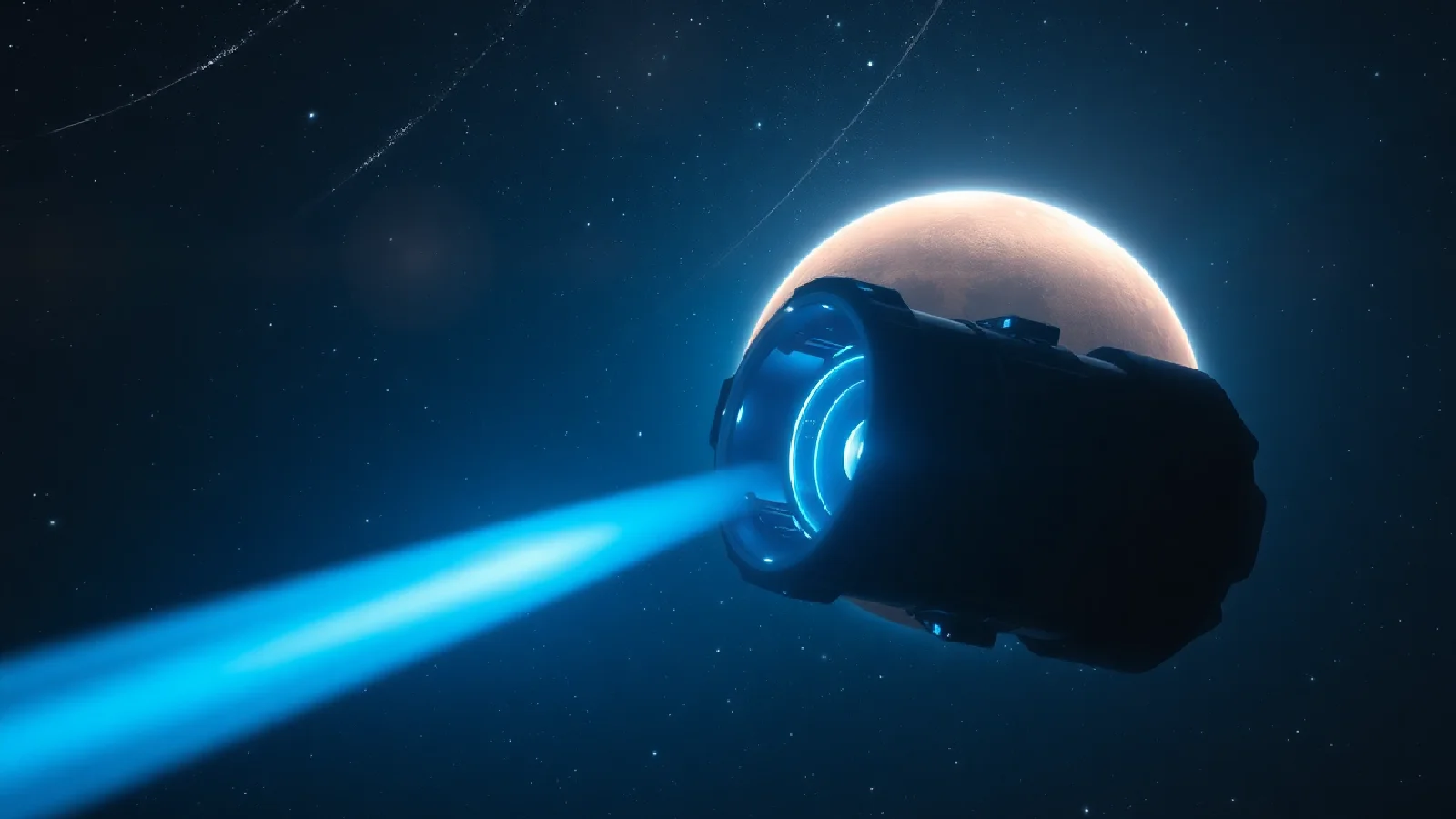
Astronauts will need to familiarize themselves with advanced propulsion systems, perhaps Hall ion propulsion which could drastically reduce transit times. They will also need to master lunar surface exploration protocols, the use of new-generation spacesuits, and in-situ resource extraction techniques.
Transitioning to private space stations that will complement or replace the ISS will also introduce new dynamics. European astronauts will need to learn to work in commercial environments where fundamental research coexists with industrial and tourism activities.
Another strategic dimension: cooperation with emerging space programs. Learning Chinese, as Pesquet did, anticipates possible future collaborations with the Tiangong space station. The ability to adapt to different spacecraft – Crew Dragon, future European or Chinese lunar vehicles – becomes a central skill.
Becoming an Astronaut in 2025-2026: New Requirements
The profile of the European astronaut continues to evolve. ESA has recently launched initiatives to diversify its astronaut corps, including candidates with disabilities ("parastronauts") and aiming for better gender parity.
Technical skills remain fundamental: a high-level scientific degree, significant professional experience, excellent physical condition. But new dimensions are emerging. Understanding the geopolitical stakes of space exploration, sensitivity to environmental issues (future missions will need to minimize their impact), and the ability to communicate with the public are becoming major assets.
The experience gained during long-duration stays on the ISS forms the essential operational base. These six-month missions allow for real-world testing of medical protocols, refining maintenance procedures, and identifying unforeseen problems that will inevitably arise during more distant missions.
Training never stops. Even experienced astronauts undergo continuous training to integrate new technologies, recent scientific discoveries, and lessons learned from each mission. This culture of lifelong learning distinguishes candidates capable of evolving in a rapidly changing space sector.
Key Skills for Tomorrow's European Astronauts
| Key Skill | Description | Preparation |
|---|---|---|
| Technical | Scientific/engineering degree, professional experience, mastery of space systems | Initial EAC training, mastery of procedures (takeoff, docking, EVA), familiarization with Gateway systems, advanced propulsion. |
| Physical | Excellent physical condition, resilience to extreme environments | Centrifuge training, parabolic flights, regular strength/cardio programs to counteract bone and muscle loss. |
| Scientific | Ability to conduct complex experiments in microgravity | Training in space biology, materials physics, life support technologies, precise data collection on microgravity effects (cellular aging, etc.). |
| Linguistic | Proficiency in at least French, English, Russian; other languages an asset | Learning and practicing the working languages of space programs, including Chinese in anticipation of future collaborations. |
| Psychological | Resilience to isolation, stress management, teamwork | Prolonged isolation simulations, psychological monitoring, meditation techniques, sleep management, effective communication in high-tension environments. |
FAQ (JSON format - translate question and answer fields only): [ { "answer": "Initial training at the European Astronaut Centre in Cologne lasts approximately two years after selection. It covers space systems, physiology, survival, and robotics. This is followed by mission-specific training (an additional 12 to 18 months) which includes spacecraft training, planned scientific experiments, and destination station systems.", "question": "How long does the full training for a European astronaut take?" }, { "answer": "Candidates must have excellent general physical condition, correctable vision to 20/20, normal blood pressure, and no medical conditions incompatible with spaceflight (cardiac, vestibular, psychiatric issues). Historically, height was limited between 153 and 190 cm for spacecraft ergonomics, but these criteria are evolving with new vehicles.", "question": "What are the physical requirements to become an astronaut?" }, { "answer": "Absolutely. While airline pilots retain an advantage due to their operational experience under stress and mastery of complex systems, ESA also recruits engineers, doctors, physicists, and biologists. Thomas Pesquet was an airline pilot, but other European astronauts come from purely scientific or medical backgrounds. The diversity of skills enriches space teams.", "question": "Can you become an astronaut without being a pilot?" }, { "answer": "Preparation includes in-depth theoretical training on types of radiation (galactic cosmic rays, solar flares) and their biological effects. Lunar missions and beyond will involve significantly higher exposure than on the ISS, which is protected by Earth's magnetic field. Astronauts learn to use personal dosimeters, take shelter in shielded areas during solar alerts, and follow medical monitoring protocols before, during, and after flight.", "question": "How do astronauts prepare for space radiation?" }, { "answer": "Lunar missions add several challenges: travel time (three days versus a few hours for the ISS), radiation exposure, communication delays of a few seconds, surface operations with reduced gravity, and remoteness making emergency evacuation impossible. Training therefore incorporates more medical autonomy, geological skills for exploration, advanced system maintenance, and management of increased psychological isolation. ## Conclusion The journey to becoming a European astronaut and participating in post-ISS missions demands far more than mere technical excellence. It requires a rare combination of scientific skills, physical and psychological resilience, linguistic abilities, and cultural adaptability. Thomas Pesquet's experience illustrates this demanding trajectory: from his scientific baccalaureate in Dieppe to extravehicular activities in space, each step has forged the necessary skills for future challenges. As Europe prepares to send its astronauts to the Gateway station and the lunar surface, selection and training criteria continue to evolve. Candidates for 2025-2026 will not only need to master the fundamentals inherited from historical space programs but also embrace the new realities of multipolar, commercial space exploration focused on deep space. The road is long, fraught with obstacles and potential disappointments – out of 8,330 candidates in 2009, only six were selected. But for those who persevere, the horizon now extends far beyond Earth orbit, towards the Moon and, perhaps one day, Mars.", "question": "What is the difference between preparing for the ISS and for the Moon?" } ]