Hall Effect Ion Propulsion: The 30-Day Accelerator to Mars
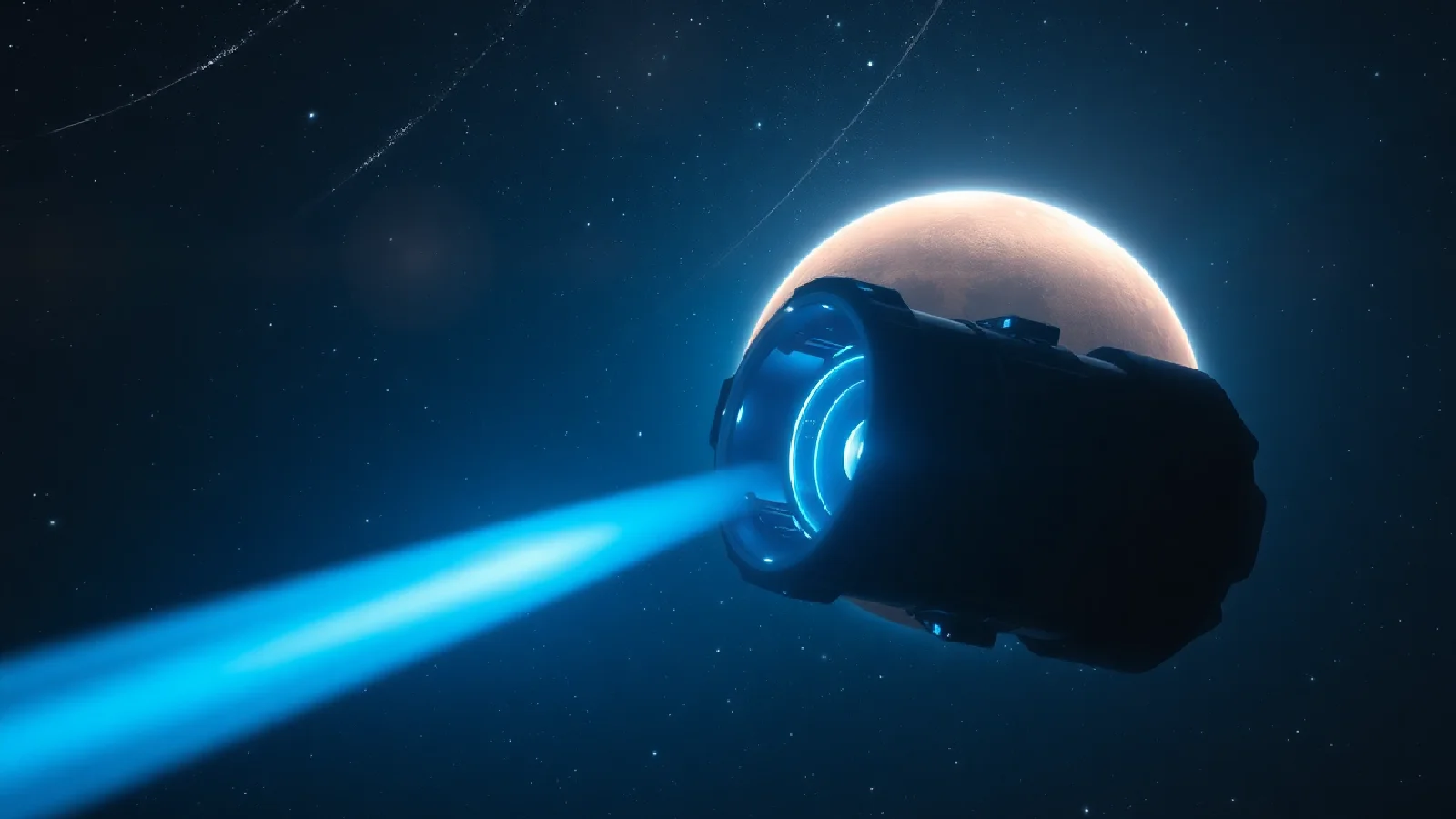
Could the journey to Mars be measured in weeks rather than months? While SpaceX refines its chemical engines for the Starship, another technological approach is making headlines: Hall effect ion propulsion. Developed by Russian engineers, these thrusters promise to revolutionize interplanetary exploration by reducing transit time to the Red Planet to approximately 30 days.
This prospect overturns current paradigms of space travel. Today, a mission to Mars requires between six and seven months with conventional technologies. The implications of such an acceleration go beyond mere time savings: reduced risk of radiation exposure, decreased resource requirements, and the opening of new possibilities for human exploration of the solar system, as detailed in this article on Mars Future Plan: NASA Revolutionizes Martian Exploration.
The Revolutionary Principle of the Hall Effect
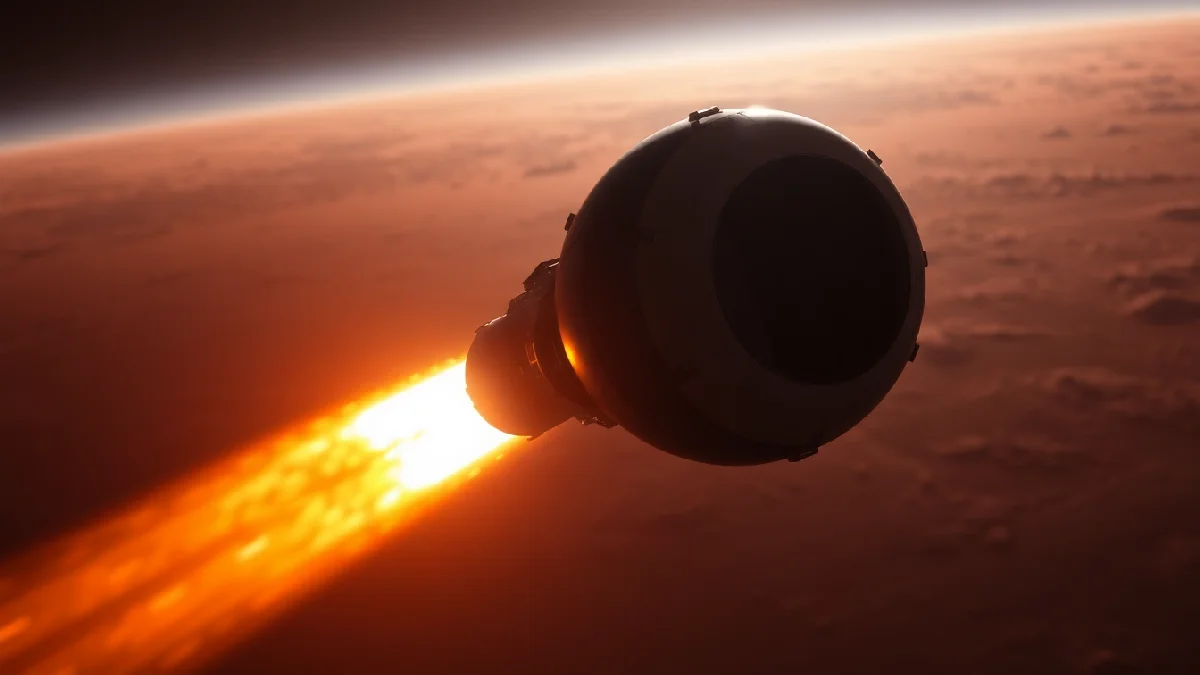
Hall effect thrusters exploit a physical phenomenon discovered in 1879 by Edwin Hall. These engines use a radial magnetic field to trap electrons, generating an electric current that efficiently ionizes the propellant, typically xenon. To learn more about their operation and advantages, consult this resource on ion propulsion.
The operation relies on three key elements:- Propellant ionization: gaseous xenon is transformed into plasma by electron bombardment
- Electrostatic acceleration: positive ions are accelerated by an intense electric field
- Magnetic trapping: the magnetic field confines electrons, creating the characteristic Hall effect
This architecture allows for exceptional exhaust velocities, on the order of 30 km/s, nearly ten times higher than traditional chemical engines. The remarkable energy efficiency of this technology opens up unprecedented prospects for long-duration space missions.
VASIM-R: The Russian Technological Feat
Russian engineers have developed the VASIM-R thruster, capable of operating at over 100 kW of power. This exceptional performance is the result of years of research and development in the field of electric space propulsion.
The mass efficiency of these thrusters reaches 90 to 99%, a remarkable efficiency compared to the 35-45% of conventional chemical engines. This optimization leads to drastically reduced propellant consumption, a decisive factor for interplanetary missions where every kilogram counts.
"Electric propulsion will take increasingly larger market shares; we are at a pivotal stage," explains Philippe Roy of CNES.
The Russian technology stands out for its ability to maintain continuous thrust over long periods, unlike chemical engines which deliver their power for a few minutes during ignition phases. This characteristic fundamentally transforms the approach to interplanetary trajectories.
| Characteristic | Chemical Engine | Hall Effect Thruster |
|---|---|---|
| Transit time to Mars | 6-7 months | Approximately 30 days |
| Exhaust velocity | ~3 km/s (according to space propulsion) | ~30 km/s |
| Mass efficiency | 35-45% | 90-99% |

SpaceX Faces the Challenge of Electric Propulsion
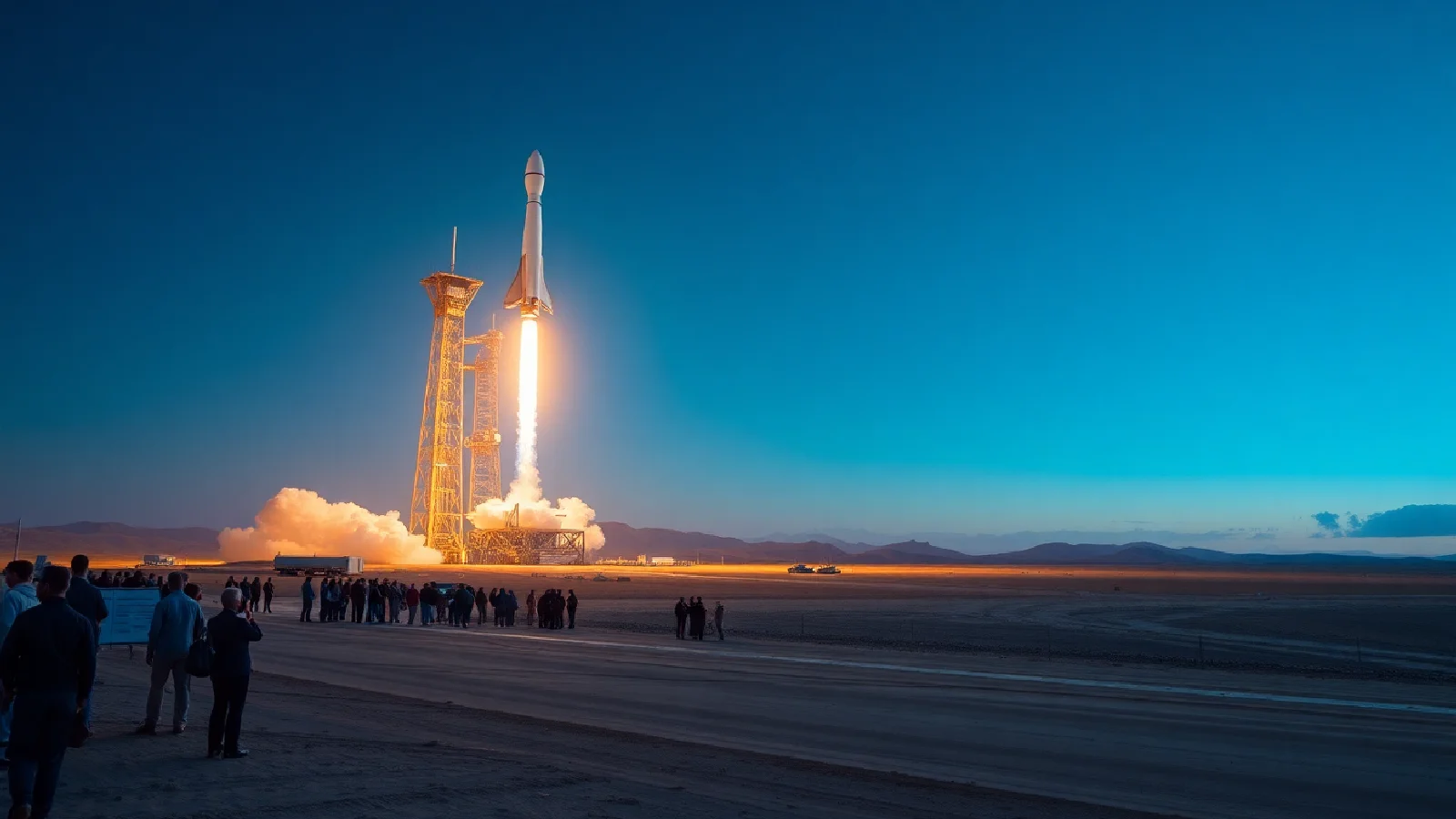
SpaceX currently relies on ultra-high-performance chemical engines for its Martian ambitions. The Starship uses Raptor engines powered by methane and liquid oxygen, optimized for rapid liftoff and massive payload capacity.
This approach offers undeniable advantages:- Very high thrust allowing gravitational escape
- Proven and reliable technologies
- Heavy lift capability
However, limitations become evident when compared to the announced performance of Hall effect thrusters. The six to seven months required to reach Mars with current technologies represent a considerable handicap for crewed missions, multiplying risks and costs.
The question arises: will SpaceX adapt its technological strategy? Elon Musk's company could integrate electric propulsion as a secondary propulsion system, combining the advantages of both approaches.
The Energy Challenge: The Achilles' Heel
The main challenge for high-power Hall effect thrusters lies in their electrical power supply. The VASIM-R requires several tens to hundreds of kilowatts, a constraint that current space architectures struggle to meet.
Two solutions are emerging to address this energy need:- New generation solar panels with optimized efficiency
- Compact space nuclear reactors under development
Current research in electric propulsion explores different approaches to overcome this limitation. The integration of nuclear power sources could be the key to success for large-scale interplanetary missions. You can also consult this article from Sorbonne University for an in-depth analysis of the subject.
This energy problem explains why ion thrusters currently primarily equip satellites and automated probes, which are less energy-intensive than crewed spacecraft.
Towards a New Era of Space Exploration
The advent of high-performance Hall effect thrusters could redefine space exploration. Beyond Mars, these technologies pave the way to the moons of Jupiter and Saturn, transforming multi-year missions into journeys of a few months.
The implications extend beyond the purely technological. Shorter trips to Mars would facilitate the establishment of permanent bases, reduce logistical costs, and make human exploration more accessible. Space exploration missions could thus experience unprecedented acceleration.
The technological competition is intensifying between different approaches. While Russia focuses on advanced electric propulsion, the United States and Europe are developing their own solutions. This emulation benefits the entire space sector, accelerating innovations and reducing costs.
Integrating these technologies into crewed missions remains a complex challenge, requiring overcoming energy constraints and ensuring crew safety on shorter but technically more demanding journeys.
The race to Mars may well be decided on the field of electric propulsion. Russian Hall effect thrusters represent a major breakthrough, but their practical implementation will depend on resolving energy challenges. SpaceX and other space actors will have to adapt their strategies in the face of this announced technological revolution, lest their Martian ambitions be surpassed by newcomers mastering these cutting-edge technologies.