Thomas Pesquet: Catalyst for European Space Exploration

When Thomas Pesquet floats in the International Space Station and photographs Earth with an artist's precision, he's not just documenting our planet. He embodies a new generation of European space explorers who are radically transforming our approach to space conquest. With nearly 400 cumulative days in orbit during his Proxima (2016-2017) and Alpha (2021-2022) missions, the French astronaut has become much more than a simple space traveler: he represents a strategic turning point for the European Space Agency (ESA) and its future ambitions.

A Scientific Space Laboratory in Action
Thomas Pesquet's scientific impact is primarily measured by the scope of his experimental contributions [cnes.fr]. During his stays, he conducted more than thirty key experiments in various fields, from cell biology to fluid physics. This research, carried out in the European Columbus laboratory, directly feeds into ESA's programs in space medicine and microgravity research.
Among the most significant protocols are the Myotones, Grip, and Grasp experiments, which document the impact of weightlessness on the human body. This data is crucial for preparing future long-duration missions to Mars. The Cell Science-04 program, in particular, allowed for the study of tardigrades – microscopic organisms capable of surviving in the vacuum of space – opening new perspectives in exobiology.
"These microgravity experiments are not just scientific curiosities; they concretely prepare humanity for the physiological challenges of deep space exploration," emphasizes ESA in its mission reports.
Technological Validation and Critical Maintenance
Beyond pure research, Pesquet's daily maintenance activities provided valuable feedback on the reliability of European systems. Regular inspection of the Columbus laboratory's hatches, management of communication networks, and maintenance of the T2 treadmill and ARED resistance device all constitute full-scale tests for European space technologies.
These technical validations directly support the development of the future European service module and the Lunar Gateway infrastructure, where France and ESA aim to play a central role. Every manipulation, every system check becomes a piece of the technological puzzle that will enable Europeans to participate in the Artemis missions.

The Ambassador Who Awakened Public Interest
Thomas Pesquet's influence extends far beyond the scientific realm. His social media posts, followed by millions of followers, have created an unprecedented emotional connection between the general public and space exploration. His spectacular photographs of Earth and the Moon, his appearances in schools and institutions, have rekindled interest in space careers.
This communication dimension proves strategic for ESA. Public engagement translates into strengthened political support, particularly in the French Senate, which advocates for accelerating European lunar projects. Pesquet's media visibility has thus helped legitimize European space investments among political decision-makers.
Towards the Moon: A Concrete Objective
Pesquet's two missions coincided with a major shift in the space paradigm. As he himself explains: "The generation of astronauts I belong to had not experienced the Apollo moon landings. For us, the Moon was not a concrete objective, but something distant. But when I returned from my second mission in 2021, the Moon had moved closer to us."
This evolution reflects ESA's clear commitment to integrating more European astronauts into the Artemis missions. The experience accumulated by Pesquet naturally makes him a prime candidate for these future lunar expeditions, representing Europe in this new space race.
Strategic Impact on ESA Programs
Thomas Pesquet's influence is also measured in ESA's strategic orientations. His feedback informs discussions on future habitable modules, life support systems, and operational protocols [annales-des-mines.org]. The physiological data collected during his 400 days of microgravity exposure constitute a valuable database for sizing future missions.
ESA reports confirm that the expertise developed during Pesquet's missions directly influences:- The development of European life support technologies
- Training protocols for future astronauts
- The design of lunar and Martian habitats
- European integration into the Artemis program
This approach is gradually transforming ESA from an agency focused on satellites and automated research into a major player in human exploration. A strategic shift that could define Europe's space future for decades to come.
The Ripple Effect on the New Generation
Perhaps Thomas Pesquet's most lasting impact concerns the inspiration he instills in young Europeans. His educational interventions, live scientific demonstrations from the ISS, and constant media presence create a measurable "ripple effect" in enrollments in European space programs.
This human dimension of space exploration contrasts with the automated approach currently dominating observation missions, recalling the importance of the human factor in space conquest. European technical universities report a notable increase in applications in aerospace fields since 2017, demonstrating the concrete impact of the "Pesquet phenomenon" on the attractiveness of the space sector.
Challenges and Future Prospects
Despite these successes, European space faces major challenges. American and Chinese competition is intensifying, while European budgets remain fragmented among different member countries. Pesquet's influence, however positive, cannot alone bridge the European technological gap in certain crucial areas.
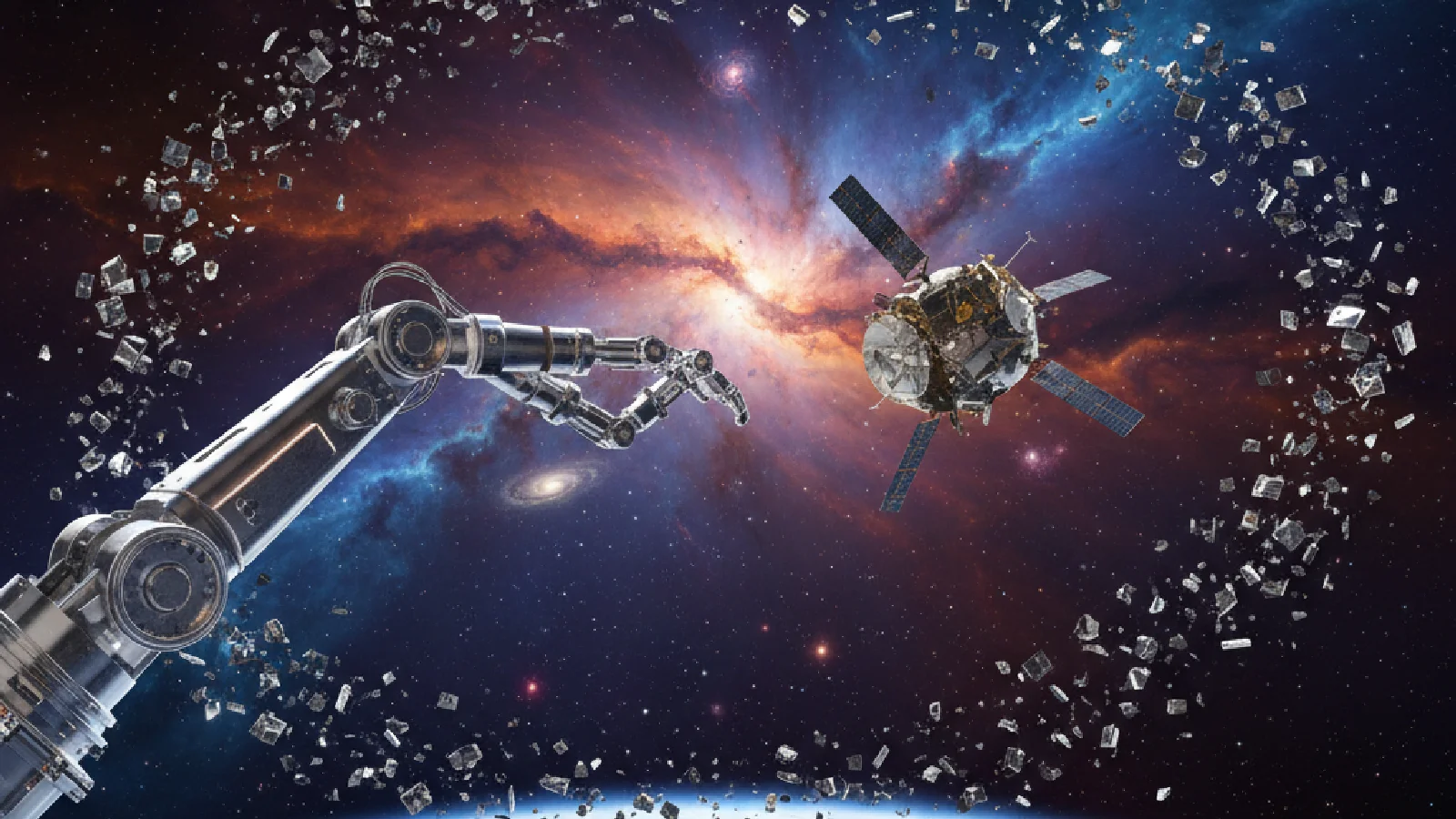
Future challenges notably include the issue of space debris, which threatens the safety of future human missions. Pesquet's operational experience then becomes valuable for developing adapted safety protocols.
ESA must also manage the transition between the current generation of astronauts, of whom Pesquet is the emblem, and the new profiles required for lunar and Martian missions. This handover requires capitalizing on acquired experience while adapting to new technological challenges.
ESA's leading role in human space exploration will be crucial for humanity's next step, particularly for missions to Mars, as discussed in this article on Martian exploration.
Thomas Pesquet's legacy for European space exploration is thus unfolding across several dimensions: scientific, technological, diplomatic, and inspirational. His 400 days in orbit have not only advanced our knowledge of space but have also repositioned Europe as an indispensable player in the next era of human exploration. This multifaceted influence makes him a true catalyst for European space ambition, whose effects will be felt far beyond his own missions.
Summary of Thomas Pesquet's Impact
| Dimension of Impact | Key Contribution | Result for ESA |
|---|---|---|
| Scientific | +30 experiments | Advances in microgravity |
| Technological | ISS Maintenance | Validation of European systems |
| Communication | Millions of followers | Public and political support |
| Strategic | Artemis preparation | Integration into lunar missions |