Commercial ISS: Launchpad for Private Space Stations
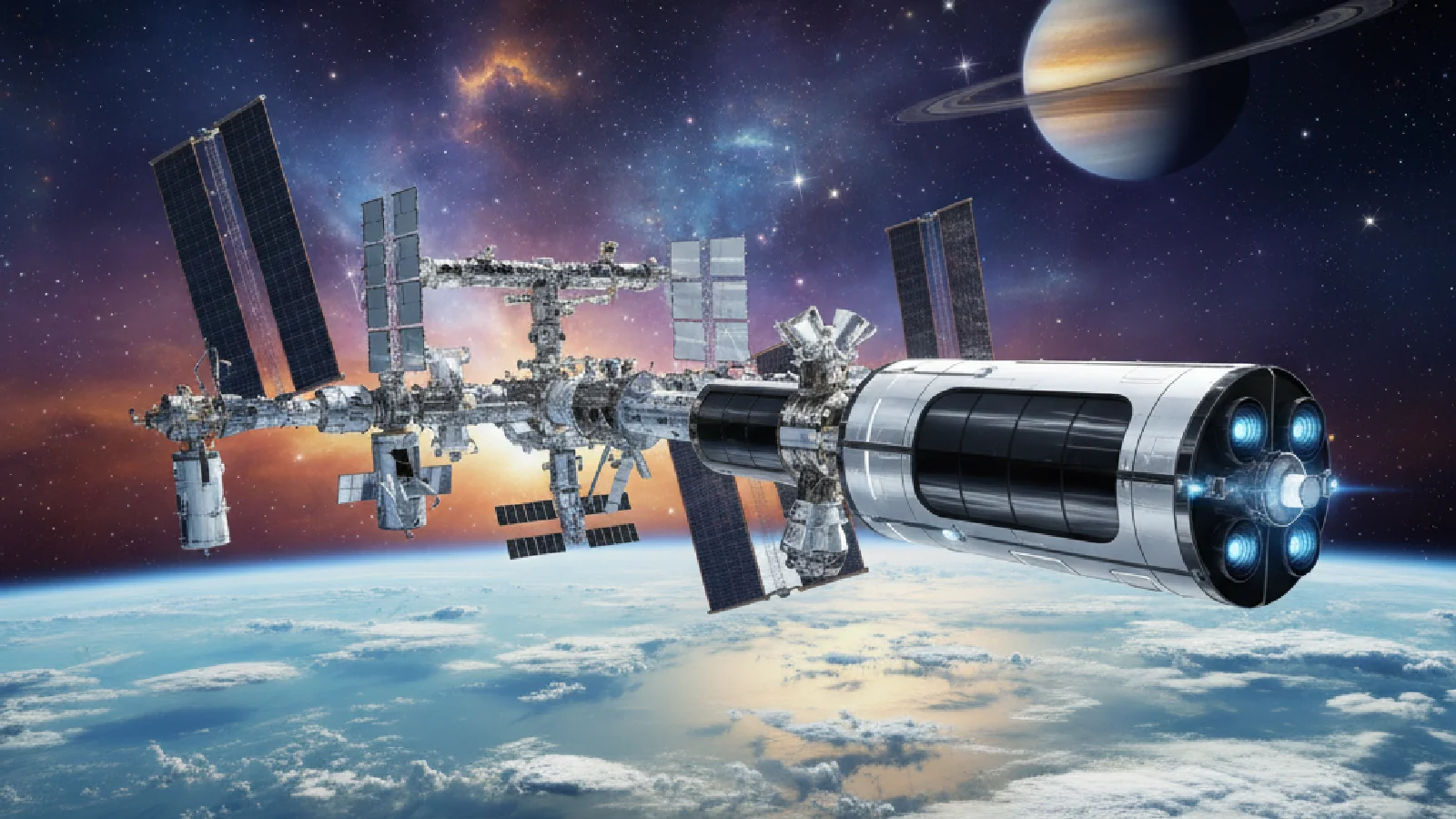
For over twenty years, the International Space Station (ISS) has embodied global scientific cooperation. But behind the portholes and microgravity experiments, a silent transformation is underway: the ISS has become a market laboratory where private companies test the logistics, safety protocols, and profitability of non-governmental activities. This progressive commercialization foreshadows a new era: that of private space stations dedicated to orbital tourism and industrial research.
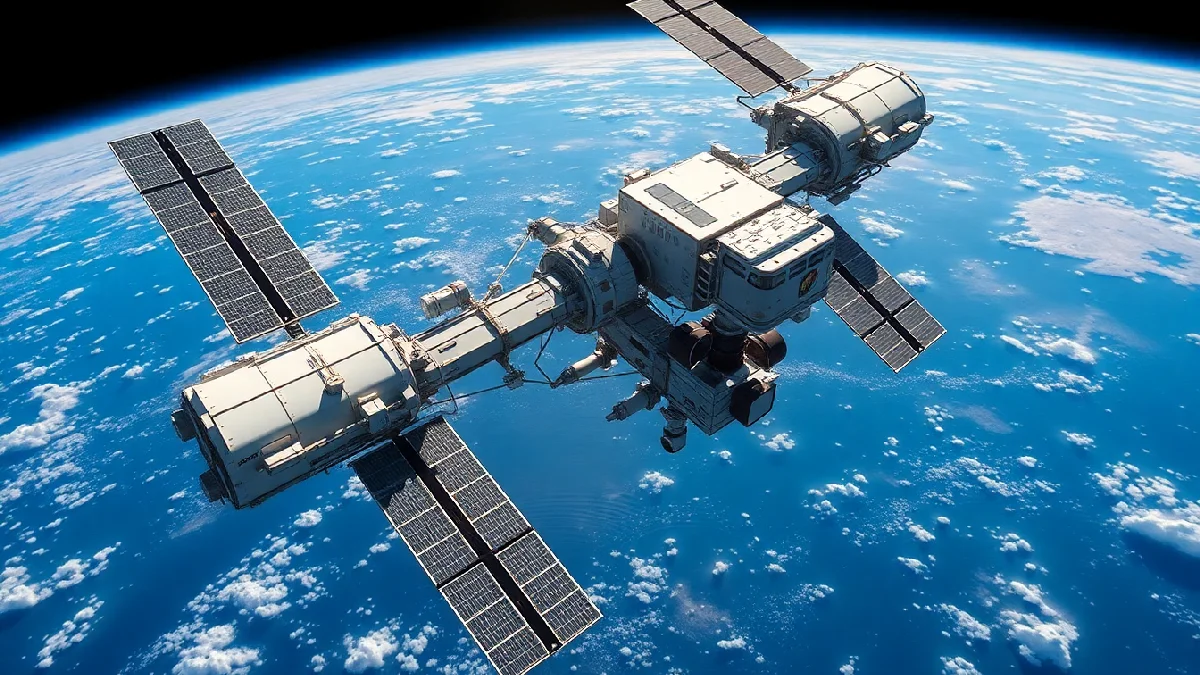
The planned de-orbiting of the ISS around 2030-2031 creates a void that the private sector is preparing to fill. Between ambitious projects, government contracts, and successful initial tourist missions, low Earth orbit is opening up to an unprecedented space economy. How has the ISS prepared for this shift? Which private players are taking over? And above all, is orbital space tourism truly within reach?
From Public ISS to Orbital Market: A Strategic Transition
The commercial exploitation of the ISS is not a recent development. As early as the 2000s, NASA began outsourcing certain logistical services. But it was truly with the arrival of SpaceX and its reusable Dragon capsules that the paradigm shifted. Resupply, once exclusively handled by national space agencies, is now entrusted to private companies like SpaceX, Boeing, and Northrop Grumman.
This progressive delegation allowed NASA to test a crucial economic model: one where the government agency becomes a client rather than an exclusive operator. A change in stance that paves the way for the development programs of autonomous commercial stations.
As early as 2021, NASA awarded contracts under the Commercial Low-Earth Orbit Destinations (CLD) program. Objective: to encourage the development of private orbital platforms capable of replacing the ISS when it is retired from service. Three main projects have been selected:
- Axiom Station: developed by Axiom Space, it will first attach to the ISS before becoming autonomous by 2025-2026.
- Orbital Reef: led by Blue Origin and Sierra Space, this station aims to host tourists, researchers, and industrialists.
- Concepts for inflatable and modular modules to maximize habitable space while reducing launch costs.
These initiatives mark a turning point: low orbit will soon no longer be the exclusive domain of states, but an economic space where research, industrial production, and tourism coexist.
“NASA will not replace the International Space Station. It plans to use private and commercial stations of which it would be one of the clients.”
— Futura Sciences
Private Space Station Projects
| Project | Developers | Main Objective | Status / Timeline |
|---|---|---|---|
| Axiom Station | Axiom Space | Attachment to ISS then autonomy | By 2025-2026 |
| Orbital Reef | Blue Origin, Sierra Space | Platform for tourists, researchers, industrialists | In development |
| Inflatable Modules | Various players | Maximize habitable space, reduce costs | Concepts under study/development |
The Pioneers of Orbital Tourism: A Market Taking Hold
Orbital space tourism is no longer fiction. Dennis Tito was the first space tourist to stay on the ISS in 2001, paving the way for a series of private flights. Since then, several missions have demonstrated the economic viability of this emerging market.
In 2021, Axiom Space organized the first all-private mission to the ISS, named Axiom-1. Four passengers, including paying civilians, stayed on the station for several days, conducting scientific experiments and enjoying microgravity. This mission proved that orbital tourism was not only possible but also compatible with ongoing scientific activities.
Other players are also positioning themselves in this niche. Blue Origin, with its suborbital New Shepard spacecraft, has already transported several tourists to the edge of space. But it is the orbital segment that represents the real economic stake: stays of several days, or even weeks, in dedicated habitats, far from the operational constraints of the current ISS.
The demand exists. Private missions are multiplying, and operators anticipate a significant increase in tourist flights by the end of the decade. This movement creates an urgent need for dedicated accommodation capacities, capable of hosting several people simultaneously in relative comfort.
Relevant link: Space Tourism and the Space Economy offers an in-depth analysis of the economic dynamics at play.
Axiom Station and Orbital Reef: The Future Orbital Hotels
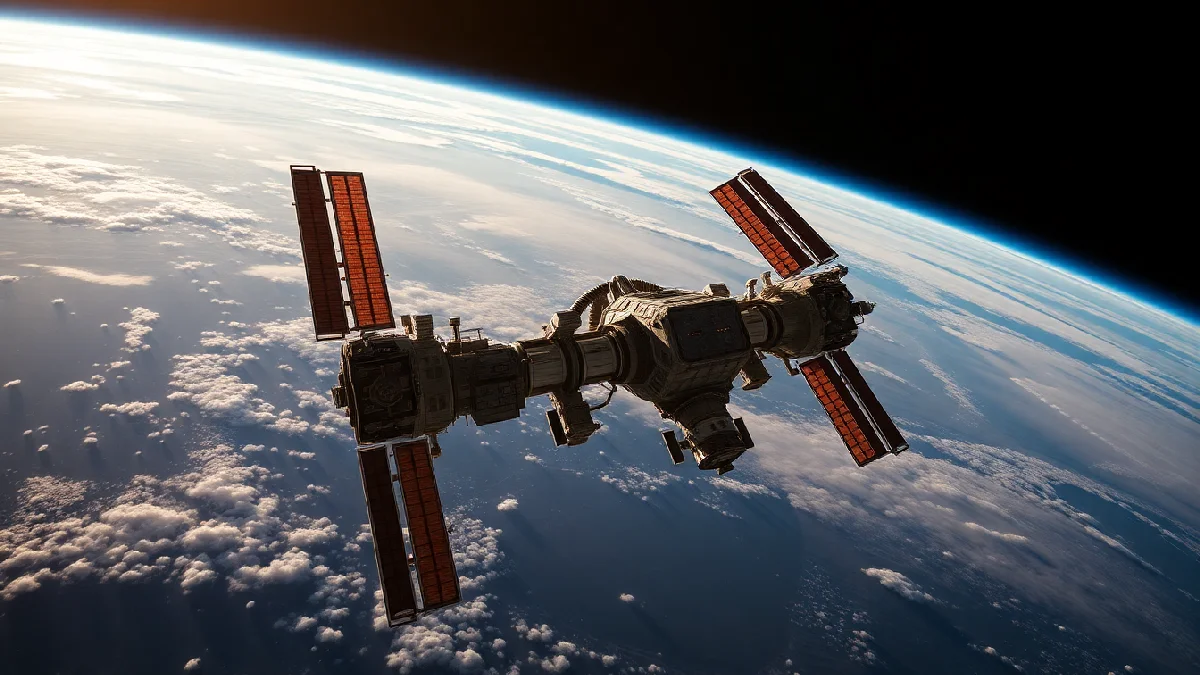
Among the most advanced projects, Axiom Station stands out for its modular approach. The first segment, planned to attach to the ISS before its retirement, will allow for a smooth transition. Once detached, the station will operate autonomously, hosting researchers, industrialists, and tourists in pressurized modules offering a habitable volume greater than that of the current ISS.
The economic model relies on revenue diversification: rental of research space, tourist flights, industrial production in microgravity (pharmaceuticals, advanced materials), and logistical services for other orbital missions. This versatility is essential to ensure long-term profitability.
For its part, Orbital Reef positions itself as a “space business park.” Blue Origin and Sierra Space promise a modular habitat, capable of accommodating up to ten people simultaneously. The project includes partnerships with Boeing and other industrial players to maximize space utilization and diversify funding sources.
These private stations benefit from the experience accumulated by the ISS: life support system management, safety protocols, in-orbit maintenance, waste management, and water and air recycling. All this expertise, developed over decades, is now being transferred to the private sector.
To learn more: Private space stations to replace the ISS details ongoing projects and planned deadlines.
Technological and Regulatory Challenges Post-ISS
While private projects generate enthusiasm, several challenges remain. The first is technological: building, launching, and assembling pressurized modules in orbit requires perfect mastery of critical systems. The slightest failure can compromise the safety of occupants.
The second challenge is financial. Development costs remain astronomical. Although reusable launchers have reduced expenses, building a complete space station requires investments of several billion dollars. Private companies rely on government contracts, industrial partnerships, and tourist revenues to amortize these sums.
Finally, the international regulatory framework remains unclear. The 1967 Outer Space Treaty defines the general principles of space exploration, but it was not designed to regulate commercial tourism or industrial exploitation. Complex legal questions emerge: who is responsible in the event of an accident? How to ensure the safety of civilian passengers? What standards apply to commercial activities in orbit?
The United States has adopted a pragmatic approach by encouraging self-regulation of the sector, while maintaining a minimal oversight framework via the Federal Aviation Administration (FAA). Other countries, such as China and Russia, are developing their own national stations, creating an increasingly fragmented orbital environment.
“The prospect of the planned de-orbiting of the ISS around 2030-2031 creates a time slot where the demand for orbital tourist flights will require dedicated habitats.”
International coordination will be crucial to avoid collisions, manage space debris, and ensure the safety of all actors present in low Earth orbit.
A Space Ecosystem in Full Transformation
Beyond tourism, private stations are part of a broader space ecosystem. They will serve as logistical relays for missions to the Moon and Mars, research platforms for experiments impossible to conduct on Earth, and industrial production sites in microgravity.
Several industrial sectors are already interested in these possibilities. Pharmaceuticals are exploring protein crystallization in microgravity, which could produce more effective drugs. The advanced materials industry is testing the manufacturing of components in microgravity, offering properties impossible to obtain on the ground. Even entertainment is positioning itself: projects for filming movies in orbit have been announced.
This diversification of activities transforms low orbit into a true economic market, where science, industry, tourism, and logistics coexist. Private stations become the hubs of this new space economy, interconnecting different actors and services.
Space transport is evolving in parallel. SpaceX's reusable capsules, Boeing's future spacecraft, and commercial shuttle projects are progressively reducing the costs of access to orbit. This price reduction is essential to make space tourism accessible to a wider clientele, beyond pioneering billionaires.
Useful link: Hall Ion Thruster: The Accelerator to Mars in 30 Days explores the technological innovations that will support future space missions.
Towards a Democratization of Orbital Tourism?
Will the 2030 horizon mark the beginning of a true democratization of space tourism? The signals are encouraging, but caution remains. Current prices, exceeding several tens of millions of dollars per seat, still limit access to an economic elite.
However, the history of technologies shows that costs decrease with industrialization and increased production rates. The first commercial air flights were reserved for the wealthy; a century later, billions of passengers travel every year. Space could follow a similar trajectory, albeit on a different timescale.
Private stations will play a key role in this dynamic. By pooling infrastructure, optimizing crew rotations, and diversifying revenue sources, they could gradually lower entry barriers. Stays of a few days in orbit, including training, transport, and accommodation, could become accessible to affluent but non-billionaire clients by the end of the decade.
The economic model also relies on reducing launch costs. Reusable launchers have already reduced some costs tenfold. The next generations of rockets, such as SpaceX's Starship, promise an even more drastic reduction, paving the way for more frequent and less expensive flights.
Complementary link: Commercial Space Tourism: The Era of Suborbital Flights analyzes the first steps of space tourism and its evolution prospects.
Conclusion: The ISS, Catalyst for a New Space Era
The increasing commercial exploitation of the ISS is not just an economic anecdote. It represents a historic turning point in our relationship with space. For two decades, the station has been a symbol of international cooperation and scientific prowess. Today, it becomes the technological and economic springboard that makes possible the emergence of a mature private space sector.
The private stations that will take over from the ISS after 2030 will not be mere copies. They will integrate the lessons of the past while innovating to meet the needs of a diversified space economy: research, industry, logistics, and, of course, tourism. This latter sector, still in its infancy, could become one of the economic drivers of low Earth orbit in the decades to come.
The gamble is ambitious. Technological, financial, and regulatory risks are real. But the initial signals are positive. Government contracts, private investments, and the multiplication of commercial missions paint a future where Earth orbit becomes an accessible, dynamic, and perhaps one day, democratized economic space.
The ISS will have been much more than a scientific laboratory: it will have been the incubator of a new space economy, paving the way for generations of private stations and finally mature orbital tourism. A legacy worthy of twenty years of continuous presence in space.
To delve deeper: The International Space Station will be destroyed in 2030 revisits the reasons and consequences of this historic decision.
FAQ (JSON format - translate question and answer fields only):