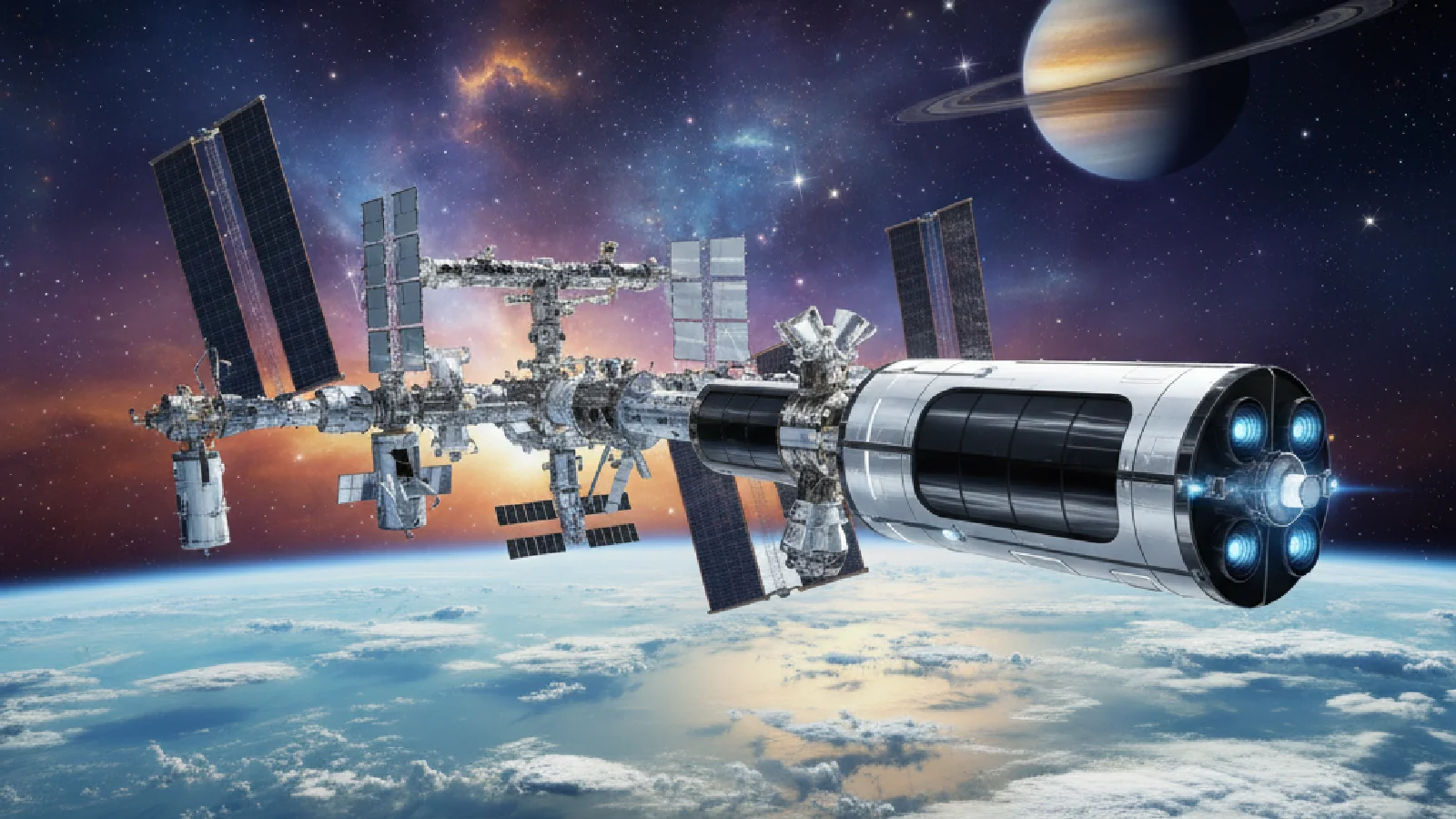
Hall Thruster Propulsion: China Aims for Jupiter and Beyond Mars
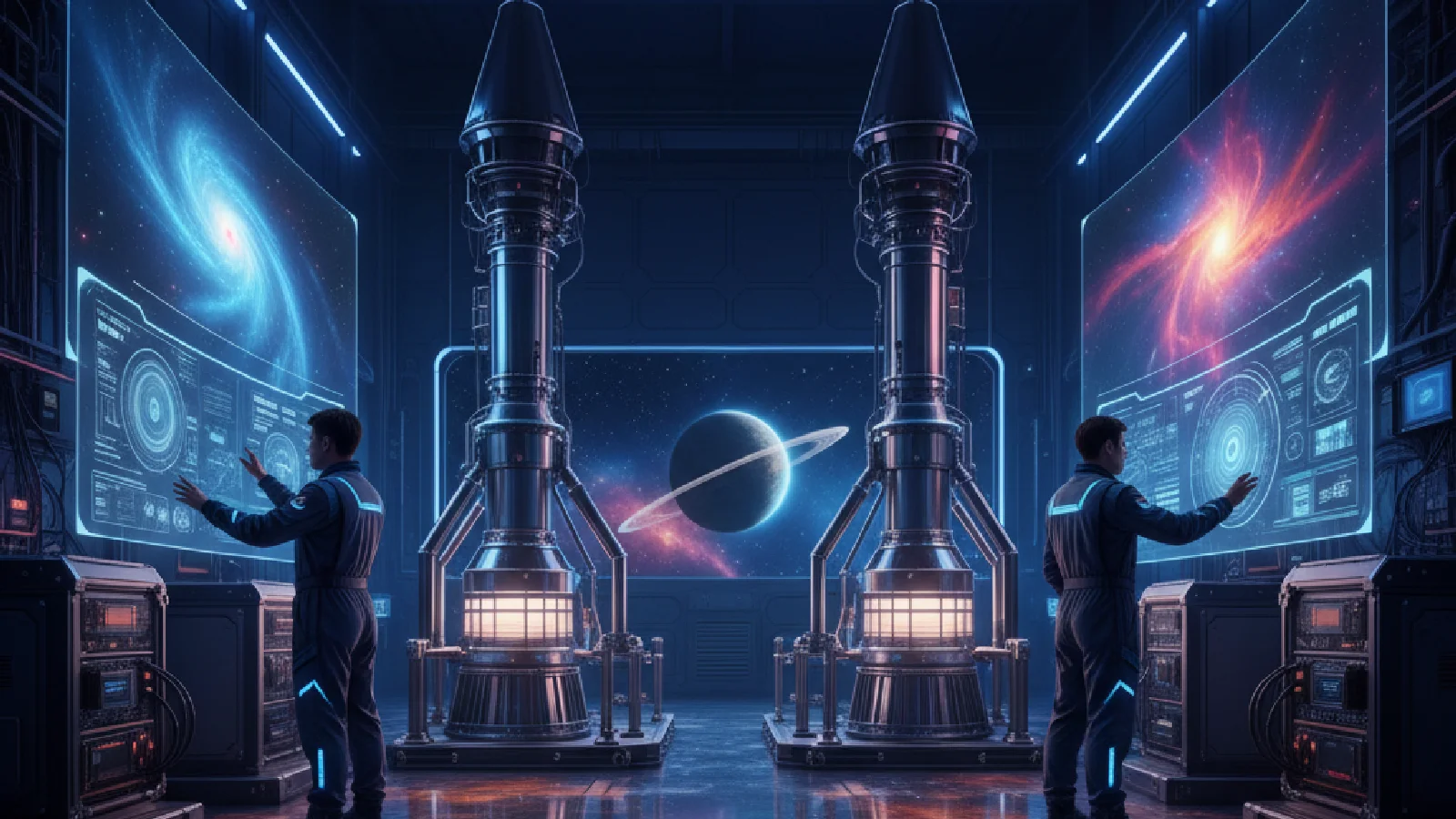
Since the 2010s, China has accelerated its space exploration program. After landing a rover on Mars with Tianwen-1 and returning lunar samples via Chang'e-5, the Asian giant is now setting its sights on the outer reaches of the solar system. Jupiter, its icy moons, asteroids: all objectives that require technology capable of propelling probes millions of kilometers while saving fuel mass. This is where Hall effect propulsion comes in, an electrical system already proven on geostationary satellites, but which China is now adapting for distant exploration missions.
A Technology That Transforms Electricity into Speed
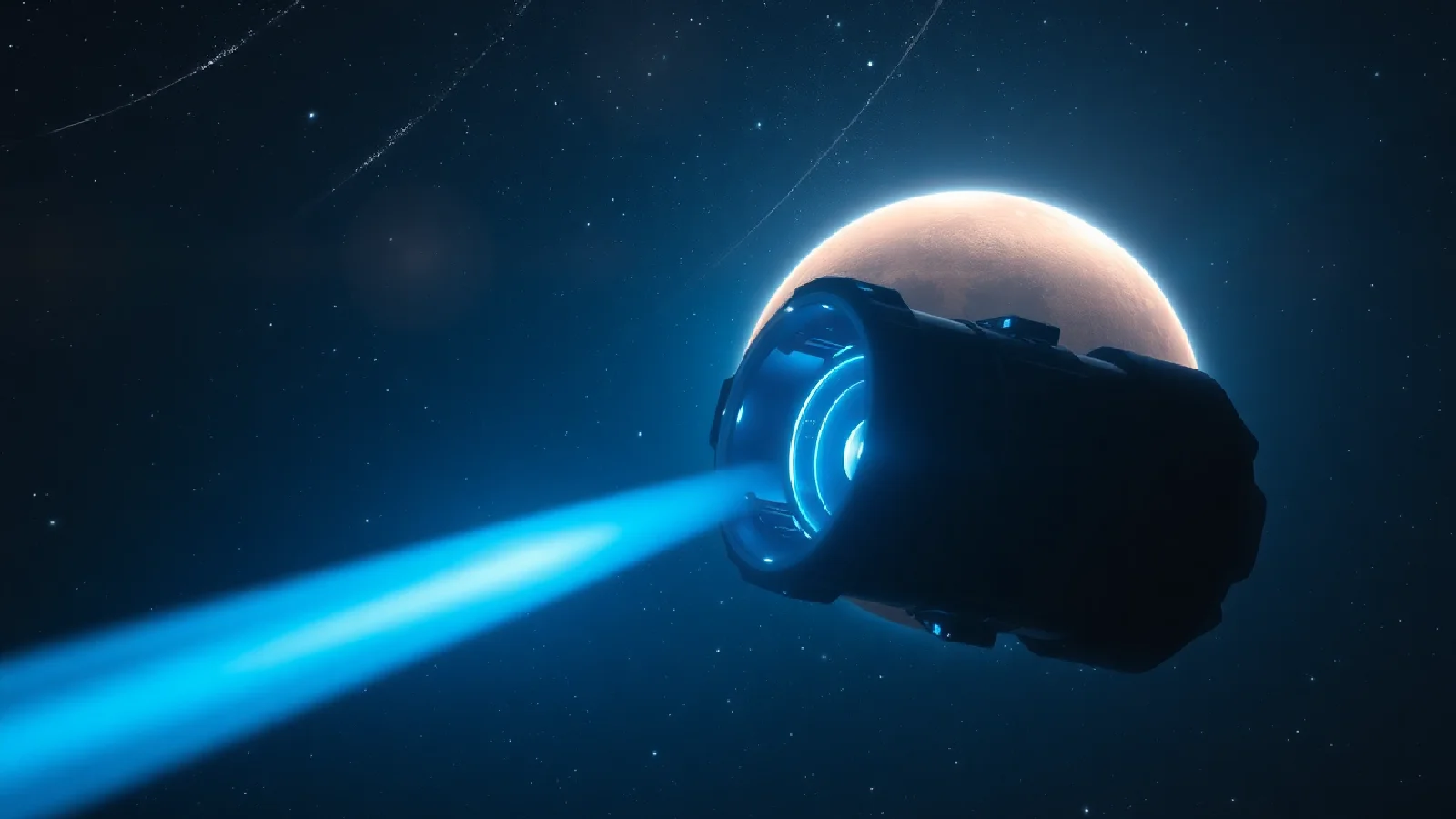
Hall effect propulsion is based on an elegant physical principle: a magnetic field traps electrons which, by swirling, ionize a propellant gas — typically xenon. These ions are then accelerated by an electric field to speeds of 10 to 20 kilometers per second, several tens of times faster than traditional chemical combustion. The result? A specific impulse of several thousand seconds, compared to a few hundred for conventional engines.
This efficiency translates into drastic fuel savings for long interplanetary maneuvers. Where a chemical engine would require several tons of propellant, a Hall thruster can accomplish the same task with a few tens of kilograms of xenon. The downside? A modest thrust of a few tens to a few hundreds of newtons, which requires prolonged firing times — sometimes several weeks — to significantly alter a trajectory.
“Plasma propulsion significantly reduces the fuel mass required for long interplanetary maneuvers.”
A Maturation Program Since the Late 2010s
China is not a pioneer in this field: Hall thrusters were developed in the Soviet Union in the 1970s, then adopted by Europeans and Americans to maintain satellites in geostationary orbit. But since the late 2010s, institutes of the CAS (Chinese Academy of Sciences) and the Chinese Academy of Space Technology have launched an ambitious program to adapt this technology for distant scientific missions.
These efforts have led to an expanded range of thrusters, from 0.5 kW to over 5 kW, suitable for different mission profiles. In parallel, miniaturized versions of 50 to 100 watts have been developed to equip CubeSats, these standardized small satellites that are proliferating in low Earth orbit. Simpler and more robust than gridded thrusters, Hall engines offer a decisive advantage: their ability to operate for long durations without maintenance.
To learn more about the evolution of electric propulsion in space, consult this report from the Academy of Sciences on large satellite constellations, which addresses the challenges of plasma propulsion.
Tianwen-4: Heading for Jupiter by 2035
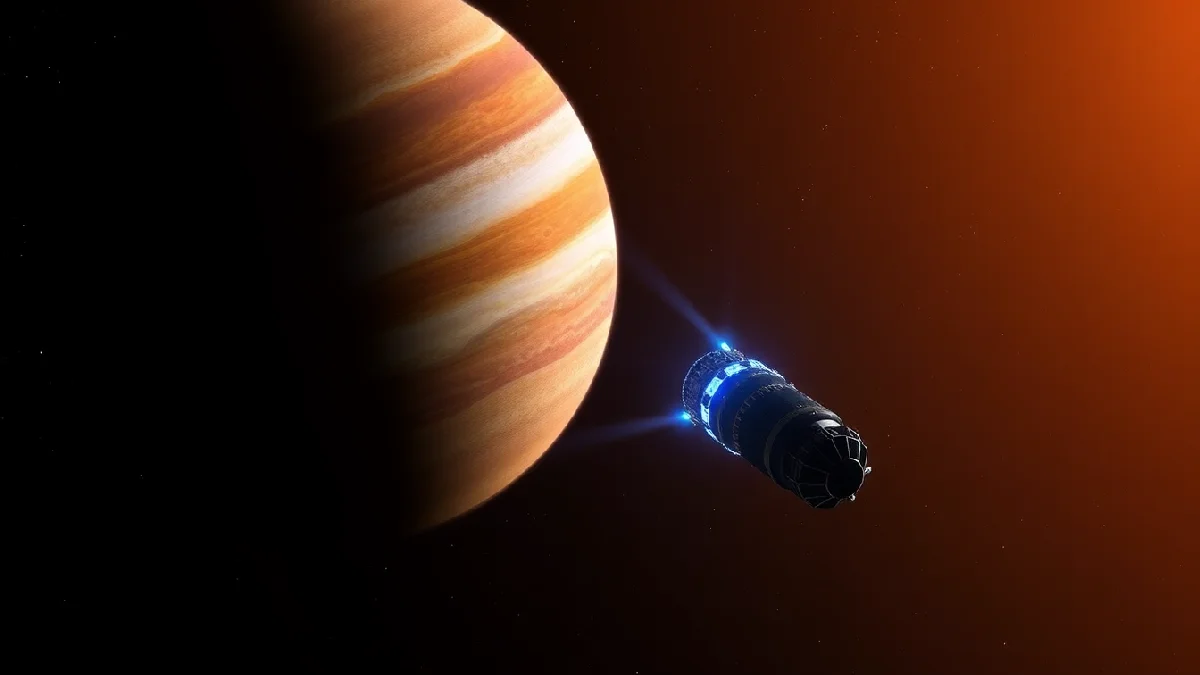
The most emblematic project of this ramp-up is Tianwen-4, a mission dedicated to the exploration of Jupiter and its moons, scheduled for launch around 2035. This ambitious probe will carry a series of 2 to 3 kilowatt Hall thrusters, responsible for trajectory corrections and orbital insertion around the gas giant.
| Planned Mission | Main Objectives | Key Technology |
|---|---|---|
| Tianwen-4 | Exploration of Jupiter and its moons | Hall Thrusters (2-3 kW) |
| Tianwen-5 | Martian sample return | Hall Thrusters (1 kW) |
| Future missions | Asteroids, Saturn, outer solar system | Hall Propulsion |
The challenge is significant: Jupiter is over 600 million kilometers from Earth, and reaching its orbit requires complex maneuvers, particularly to slow down enough to be captured by Jovian gravity. With a chemical engine, the required propellant mass would be prohibitive. Electric propulsion reduces this constraint while extending the mission's lifespan once in orbit.
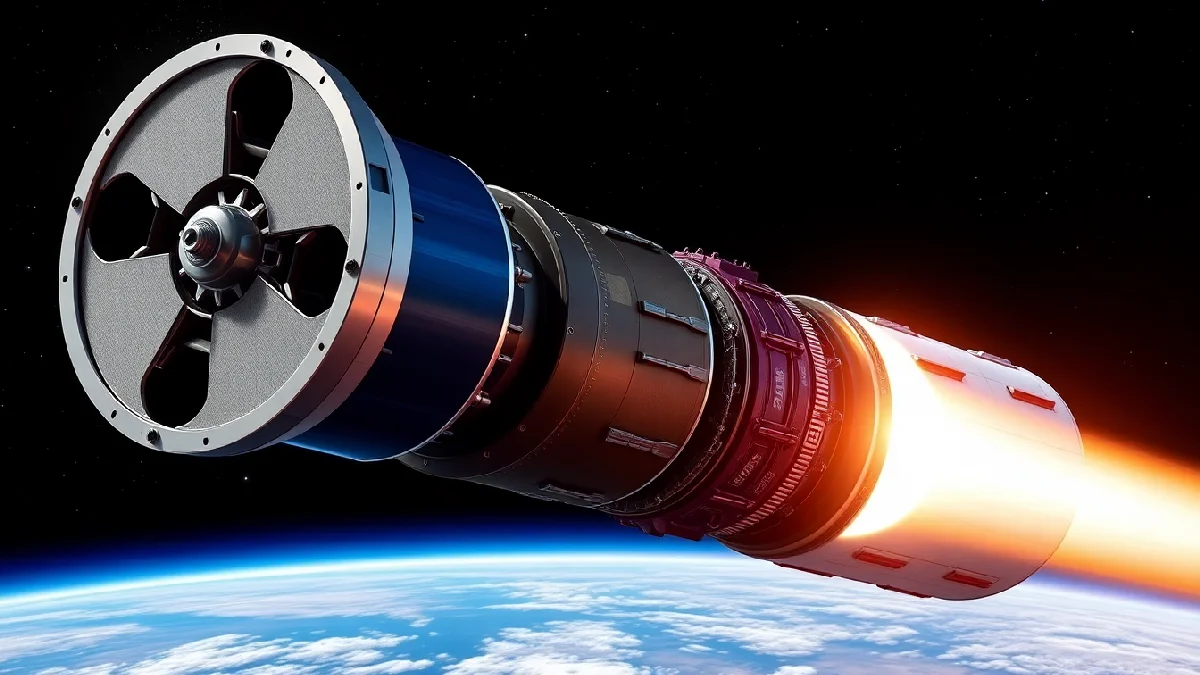
This hybrid architecture — combining a chemical launcher to leave Earth orbit and Hall propulsion for the cruise phase and orbital insertion — has become a standard for ambitious missions. It paves the way for even more distant explorations, towards icy moons like Europa or Ganymede, where the presence of subsurface oceans sparks the curiosity of exobiologists.
To better understand the history and challenges of space exploration, this encyclopedic resource offers a comprehensive overview of past and future missions, including the challenges of Mars missions.
Tianwen-5: Mars Sample Return
Before Jupiter, China is preparing an equally strategic intermediate step: Tianwen-5, a Mars sample return mission scheduled for the second half of the 2020s. Unlike Tianwen-1, which deployed a rover on the surface of Mars, Tianwen-5 will have to make a round trip, collecting rocks on site and then bringing them back to Earth.
This mission will integrate a hybrid system where the long cruise phases will be handled by a 1-kilowatt Hall thruster. This configuration extends the mission duration while maintaining the deceleration capability required for orbital capture and return to Earth. Electric propulsion thus serves a dual function: saving fuel and freeing up useful mass for scientific instruments and the return module.
The technical challenge remains significant: maintaining a functional Hall thruster for several months of interplanetary travel, in an environment subject to solar radiation and extreme thermal variations. But tests conducted on geostationary telecommunication satellites have demonstrated the reliability of these engines over several years.
From Geostationary Satellites to Distant Probes
One of the major assets of Hall propulsion lies in its operational history: for over two decades, these engines have equipped commercial and military satellites in geostationary orbit, where they ensure station-keeping and orbit correction. This proven longevity in real conditions has convinced space agencies to take the leap towards scientific missions.
In China, telecommunication satellites have served as testbeds to validate the performance and robustness of national thrusters. New-generation versions, developed for distant exploration, directly benefit from this feedback. Miniaturization, energy optimization, and thermal management have been refined over successive launches, reducing risks for scientific missions.
Asteroids, Saturn, and Beyond: The Future of Chinese Exploration
Beyond Jupiter, Hall propulsion opens up unprecedented prospects. Missions to main-belt asteroids, Saturn's icy moons, or even the outer reaches of the solar system become feasible with reasonable mass budgets. Electric propulsion allows for multiple flybys or orbital insertions without having to carry tons of fuel.
In this context, Hall thrusters are becoming the technological cornerstone of China's long-term exploration strategy. Scientific missions, once limited by mass constraints, can now consider more complex trajectories, extended mission durations, and multiple orbital maneuvers. China thus joins the select club of nations capable of projecting probes to the most remote regions of the solar system.
To delve deeper into the challenges of electric propulsion in crewed and robotic missions, the CNES magazine on space exploration offers detailed insights into current technologies and programs.
A Global Competition Accelerating
The rise of Hall propulsion is not limited to China. The European Space Agency, NASA, India, and Japan are investing heavily in this technology. Missions like BepiColombo to Mercury, Psyche to the metallic asteroid of the same name, and future lunar orbiters all rely on electric thrusters.
In this context, China affirms its desire to catch up with and then surpass historical leaders. Investments in fundamental research, cooperation with universities, and industrial partnerships demonstrate a coherent and long-term strategy. The successes of Tianwen-1 and Chang'e-5 have strengthened the credibility of the Chinese space program, and upcoming missions with Hall propulsion will be closely watched by the international community.
Additionally, Hall ion propulsion could also revolutionize crewed missions to Mars by drastically reducing transit times.
A Revolution for Long-Duration Missions
The adoption of Hall effect propulsion marks a breakthrough in the design of distant missions. Where chemical engines imposed narrow launch windows and rigid trajectories, electric propulsion allows for greater flexibility. Probes can continuously correct their trajectory, adapt to unforeseen events, and even consider secondary objectives during the mission.
This operational agility is particularly valuable for scientific missions, where the ability to react to real-time discoveries can make a difference. A probe equipped with Hall thrusters can, for example, adjust its orbit to fly over an area of interest identified after launch, or extend its mission well beyond the initially planned duration.
The key advantages of Hall effect propulsion for space exploration are:
- High energy efficiency: Significant reduction in required fuel mass.
- Operational longevity: Ability to operate for long durations without maintenance, validated by decades of use on satellites.
- Mission flexibility: Allows for continuous trajectory corrections and adaptation to unforeseen events.
- Extended range: Makes missions to the outer reaches of the solar system more viable.
- Mass reduction: Frees up space for scientific instruments or sample return modules on lunar missions and Martian missions.