Europa and Enceladus: Deciphering Clues of Subglacial Life
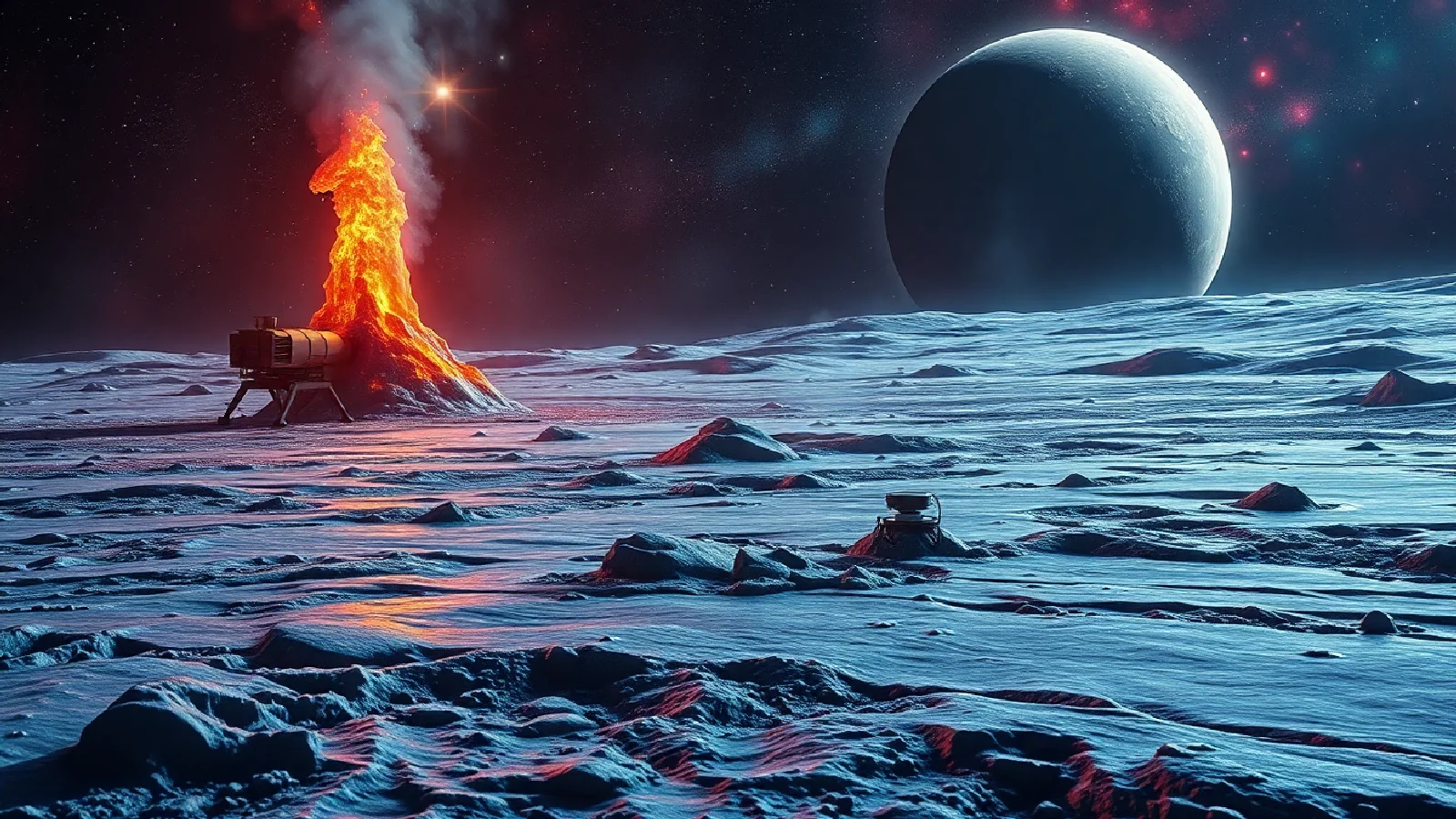
Beneath the icy surface of Europa and Enceladus, two of the solar system's most fascinating moons, lie immense oceans of liquid water. These distant worlds possess conditions that, on Earth, allowed life to emerge. Space missions launched in recent years are deploying cutting-edge technologies to decode chemical and physical clues that could reveal extraterrestrial biological activity.
Hidden Oceans Beneath Miles of Ice
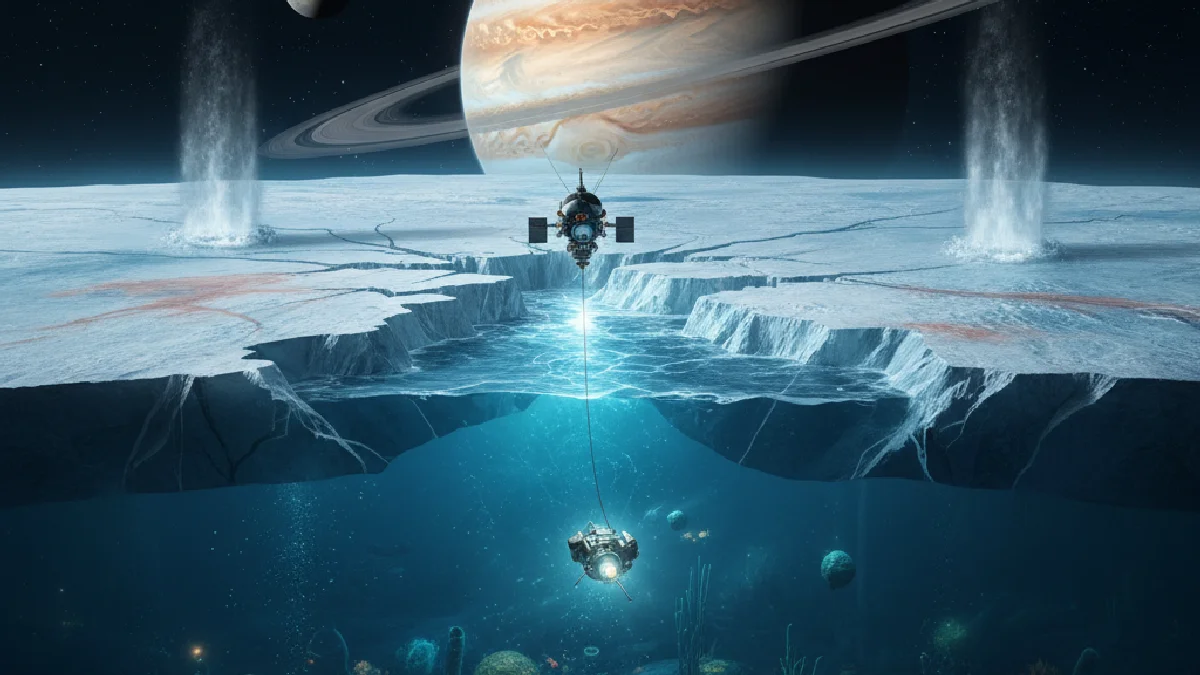
Europa, a natural satellite of Jupiter, and Enceladus, a moon of Saturn, share a similar internal architecture: a thick ice crust covering a global ocean of liquid water. On Europa, this shell is several tens of kilometers thick, while Enceladus has an ice layer of about 1.5 km at its south pole. Beneath this ice, the water remains liquid due to tidal forces exerted by their respective giant planets, which deform and heat their rocky interiors.
Data collected by the Cassini probe around Enceladus revealed spectacular geysers ejecting ice and water vapor into space. These plumes offer direct access to the subsurface ocean, allowing its composition to be analyzed without having to drill through the crust. On Europa, telescopic observations and images from the Galileo mission also suggest the existence of intermittent plumes, although their detection remains more complex.
These environments are not just reservoirs of frozen water; they possess all the fundamental ingredients for habitability.
The Four Pillars of Habitability Combined
For an environment to host life as we know it, four criteria must be met: the presence of liquid water, a chemical energy source, the availability of essential elements (carbon, hydrogen, nitrogen, oxygen, phosphorus, and sulfur, known by the acronym CHNOPS), and sufficient temporal stability to allow for potential biological evolution.
The oceans of Europa and Enceladus tick all these boxes. Liquid water is confirmed by magnetometric and gravitational measurements. Tidal forces generate mechanical energy which, combined with chemical reactions in the rocky mantle, produces molecular hydrogen (H₂), a potential fuel for microorganisms. Serpentinization, a geochemical process where water reacts with mantle minerals, releases H₂ and creates conditions favorable for prebiotic chemistry.
“Enceladus' plumes contain carbon, hydrogen, nitrogen, oxygen, phosphorus, and almost all the sulfur necessary for life.”
Mass spectrometers aboard Cassini detected complex organic molecules in ice particles ejected by Enceladus [^1], some exceeding 200 atomic mass units. On Europa, surface spectra reveal the presence of salts and organic compounds, suggesting active interactions between the ocean and the surface.

Europa Clipper and JUICE: The Technological Arsenal in Action
Two major missions are currently en route to explore these icy worlds: Europa Clipper (NASA) and JUICE (Jupiter Icy Moons Explorer, ESA). These probes carry a suite of instruments designed to probe hidden oceans without direct access.
Europa Clipper, launched in 2024, will perform about fifty close flybys of Europa starting in 2030. Its instrument suite includes:
- An ice-penetrating radar (REASON) capable of mapping crust thickness and detecting potential pockets of liquid water
- Infrared and ultraviolet spectrometers (MISE, Europa-UVS) to analyze surface chemical composition
- A magnetometer and a plasma detection instrument (PIMS) to characterize ocean salinity and depth
- High-resolution cameras to study geology and identify sites of potential activity
JUICE, launched in 2023, will focus on Ganymede but will also fly by Europa and Callisto. Among its instruments is the imaging spectrometer MAJIS, developed with significant French contribution, which will map the mineralogical and organic composition of surfaces at a regional scale. JUICE also carries a radar similar to Europa Clipper's and a magnetometer to study magnetic fields induced by internal oceans.
These remote sensing technologies (thermal imaging, radar, magnetometry) constitute a crucial first step. They will help determine where and when to launch more ambitious missions, capable of collecting samples directly from plumes or even landing on the surface. Field studies are already planned for Enceladus, with a target around 2042.
Comparison of Europa Clipper and JUICE Missions
| Characteristic | Europa Clipper (NASA) | JUICE (ESA) |
|---|---|---|
| Primary Target | Europa | Ganymede (flybys of Europa and Callisto) |
| Launch Date | 2024 | 2023 |
| Arrival Expected | From 2030 | 2031 |
| Main Objective | Characterize Europa's habitability | Study Jupiter's icy moons as habitable planetary worlds |
Tracking Biosignatures in Icy Geysers
The detection of extraterrestrial life does not rely solely on direct observation of microorganisms. Scientists are looking for biosignatures: chemical, isotopic, or structural signatures that betray biological activity. On Enceladus, active plumes offer a unique opportunity for in-flight analysis, without the need to land.
Next-generation mass spectrometers, like those envisioned for future missions, will be able to measure the isotopic ratios of carbon, nitrogen, and sulfur with unprecedented precision. On Earth, biological processes fractionate isotopes in characteristic ways: for example, living organisms prefer carbon-12 over carbon-13. A similar isotopic anomaly in the organic molecules of the plumes would be a strong clue.
Other biosignatures sought include:
- The presence of chiral organic molecules (possessing right/left asymmetry), as terrestrial life exclusively uses left-handed amino acids and right-handed sugars
- Lipid chains or fossilized membrane structures
- High concentrations of phosphates, essential for DNA and ATP, the universal energy molecule
Cassini data has already confirmed the presence of phosphates in Enceladus' ice grains [^2], thus completing the last missing element of the CHNOPS puzzle. These discoveries reinforce the hypothesis of active hydrothermal activity at the bottom of the ocean, similar to terrestrial hot springs that host thriving ecosystems.
Preparing for Future Exploration Missions
Current missions lay the groundwork for more audacious projects. Several concepts are under study, including landers capable of drilling through the ice, autonomous submersibles to explore the oceans, and plume collectors equipped with advanced biological instruments.
These craft will have to withstand extreme conditions: freezing temperatures, intense radiation (particularly around Jupiter), and communications more than an hour-light-year from Earth. Scientists are testing their prototypes in the most hostile terrestrial environments, such as the Arctic fjords of Svalbard or the subglacial lakes of Antarctica, which share analogies with the oceans of Europa and Enceladus.
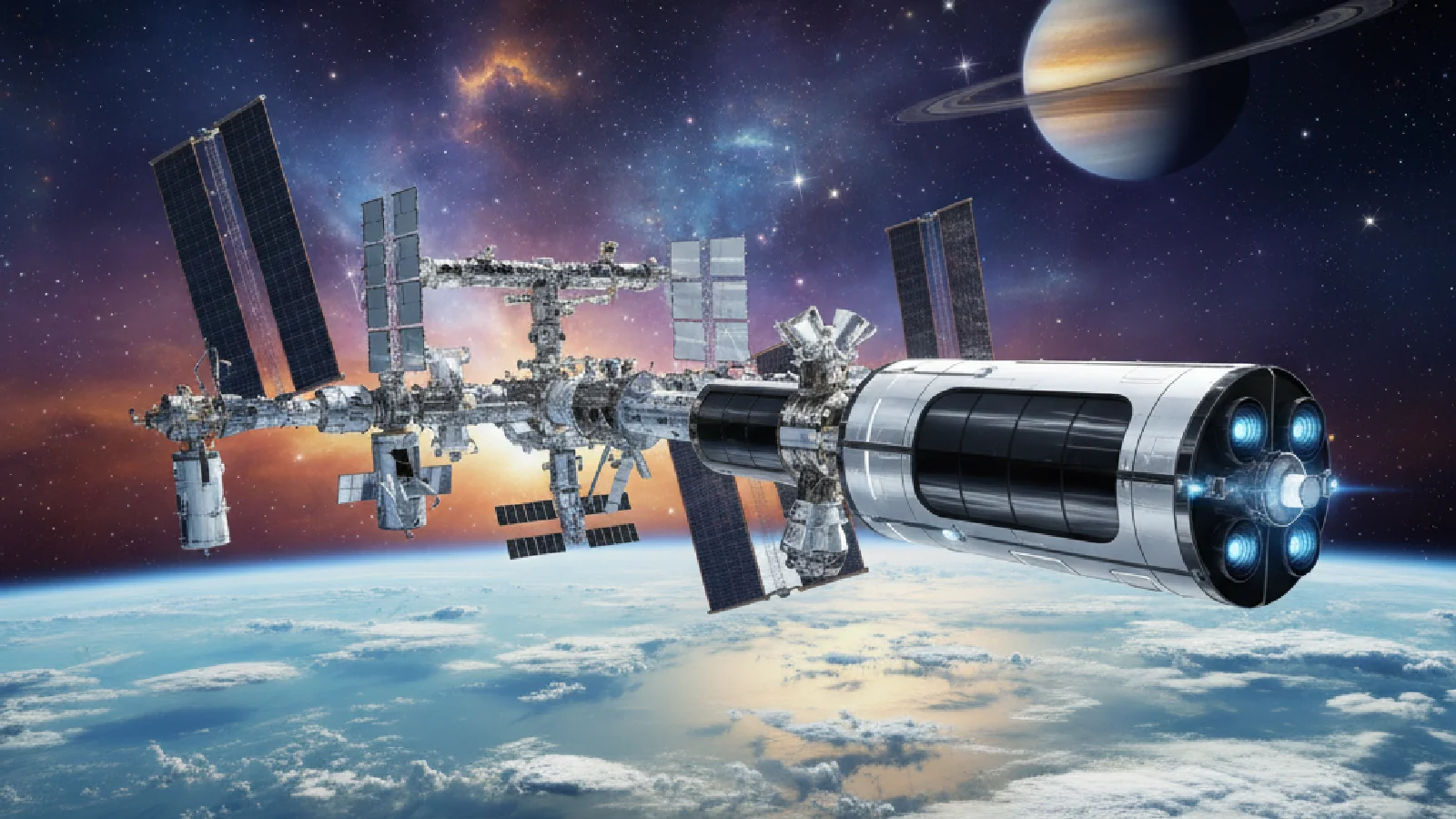
The ESA's JUICE mission represents a decisive step in this exploration, with an expected arrival in the Jovian system in 2031. In parallel, technological advancements from the European space program, such as those developed within the framework of post-ISS crewed flights, fuel innovations in probe autonomy and space robotics.
A Quest That Redefines Our Place in the Universe
The search for life on Europa and Enceladus extends far beyond planetary science. It questions the very foundations of astrobiology: is life a rare phenomenon, confined to Earth, or an emergent property of complex chemistry, likely to appear wherever conditions allow?
If biosignatures were detected in these icy oceans, it would demonstrate that life can emerge independently in the solar system, suggesting it could be ubiquitous in the universe. Conversely, their absence would provide valuable constraints on the conditions necessary for the emergence of life.
The coming years promise to be decisive. With Europa Clipper and JUICE en route, followed by increasingly sophisticated missions, scientists now have the tools to transform these philosophical questions into measurable data. The subglacial oceans of Europa and Enceladus are no longer mere geological curiosities: they represent the most promising hunting grounds for discovering a second genesis of life, far beyond our blue planet.
Frequently Asked Questions
Q: Why search for life on moons rather than Mars? A: Mars remains a priority target, but Europa and Enceladus offer a major advantage: their liquid oceans are active today, unlike Martian water which disappeared billions of years ago. Enceladus' plumes also allow for direct analysis of the ocean without drilling through the ice, which significantly simplifies the search for biosignatures.
Q: How can probes detect a hidden ocean beneath the ice? A: Several techniques are used: magnetometers detect magnetic fields induced by a conductive ocean, penetrating radars map the crust's thickness, and gravimetric measurements reveal the internal mass distribution. Combining these data confirms the ocean's presence, depth, and salinity.
Q: When could the existence of life on these moons be confirmed? A: Current missions (Europa Clipper, JUICE) are not designed to directly detect life, but to characterize habitability and identify the most promising sites. Robust confirmation would require subsequent missions with dedicated biological instruments, envisioned for the 2040s. The search for biosignatures remains a progressive process requiring multiple converging lines of evidence.
Q: What kind of life could exist in these dark oceans? A: Scientists imagine ecosystems similar to terrestrial microbial communities in oceanic hydrothermal vents, which thrive without sunlight by drawing energy from chemical reactions. These hypothetical organisms would likely exploit hydrogen and sulfur compounds released by geothermal activity, forming the base of a chemosynthetic food chain.
Q: Don't Jupiter's radiations make Europa uninhabitable? A: Europa's surface is indeed bombarded by intense radiation, making life impossible on the surface. However, the subsurface ocean is protected by several kilometers of ice, creating an effective natural shield. Hypothetical organisms would therefore live in the depths, probably near the ocean floor where hydrothermal activity provides energy and nutrients.
[^1]: An unprecedented discovery reveals that Saturn's moon Enceladus... [^2]: Prospective in planetary and universe sciences