Private Space Stations: NASA Faces Economic Challenge
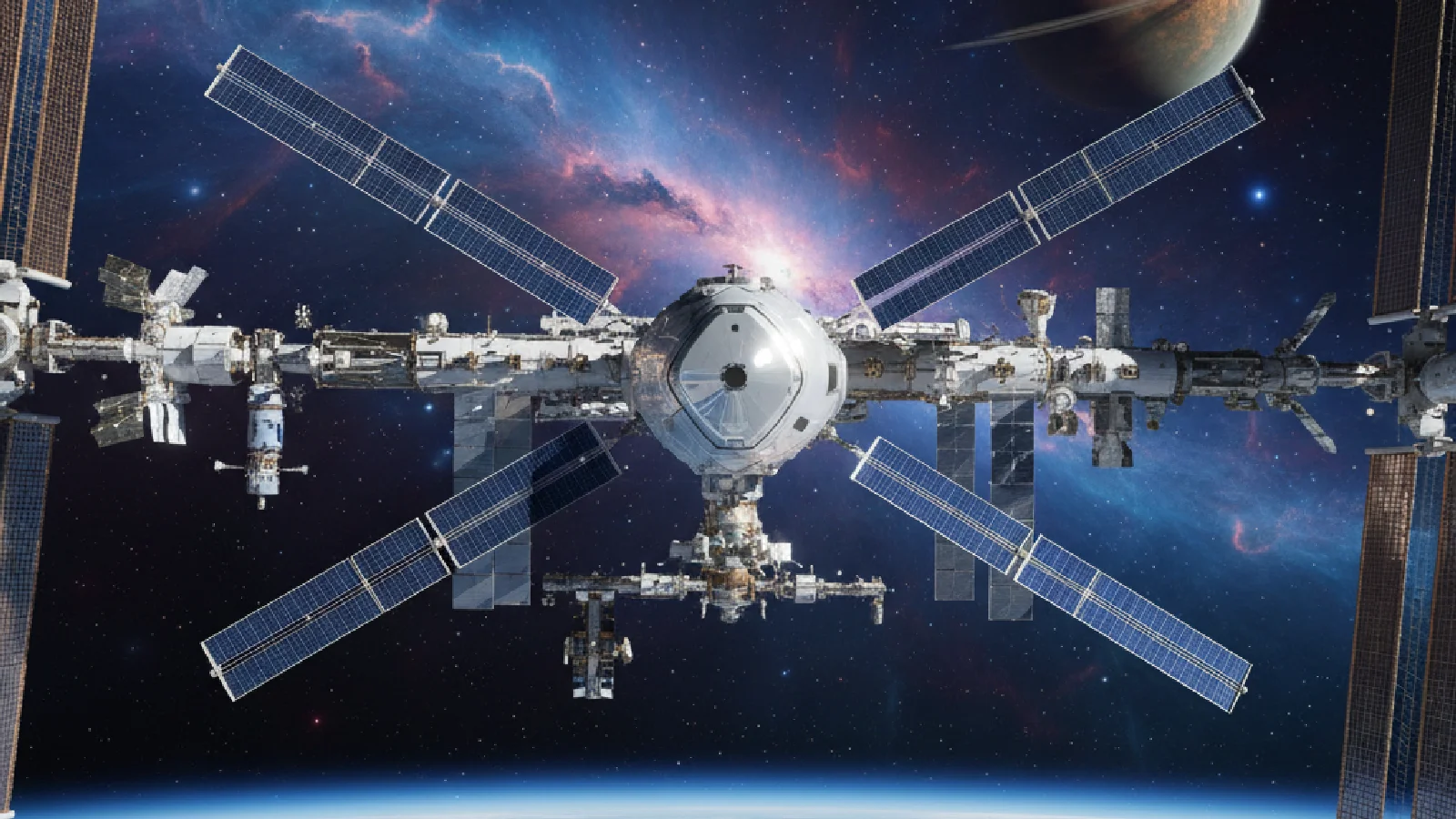
The American space agency is preparing to delegate the management of its orbital infrastructure to the private sector. A strategic shift that generates as much enthusiasm as reservations within the space industry. While NASA announces its intention to drastically reduce its spending in low Earth orbit, private players are questioning the economic viability of a model that is still largely hypothetical.
This transition marks a turning point in the history of space exploration: for the first time, the American agency wants to buy services rather than own its own infrastructure. But this gamble relies on economic and technical conditions that remain to be proven.
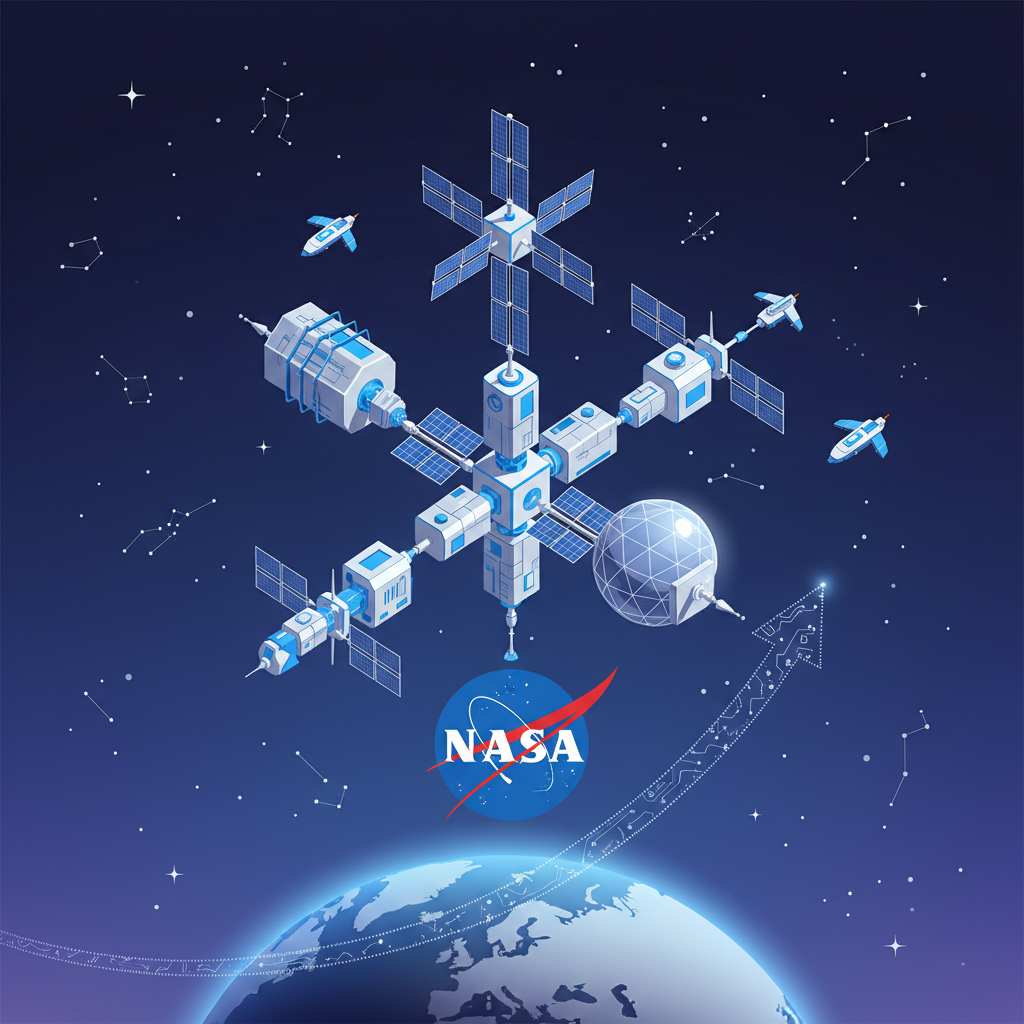
NASA Wants to Disengage from Low Earth Orbit
Facing increasing budgetary constraints, NASA is looking to redefine its priorities. The agency currently spends between 3 and 4 billion dollars annually to keep the International Space Station (ISS) operational. A colossal sum, nearly two-thirds of which is dedicated to resupply and logistics.
The stated objective is clear: free up these resources to focus on lunar and Martian programs. NASA plans to allocate between 1 and 1.5 billion dollars starting in 2026 to fund the design and launch of commercial stations. These future infrastructures should benefit from SpaceX's reusable launchers, and potentially Starship in the longer term.
The envisioned model is inspired by “Space-as-a-Service”: rather than owning a station, the agency would purchase hosting, research, and production services in orbit. A paradigm shift that would fundamentally transform the role of space agencies.
“The transition to private stations would significantly reduce operational costs while maintaining a permanent human presence in low Earth orbit.”
This strategy is part of a broader trend observed in the space sector, where private players are taking an increasing role. Several American companies are already working on concepts for commercial stations that could be operational before the end of the decade.
Economic Promises to Be Verified
NASA's plan relies on a major assumption: the drastic reduction in the cost of access to space. The agency is counting on Starship's capabilities to bring the price per kilogram to orbit down to a few hundred dollars, or even less than 200 dollars by 2030.
These projections are appealing on paper. They would indeed allow for a rethinking of the economics of orbital infrastructure. But they depend entirely on SpaceX's ability to make its giant launcher fully operational for passenger transport and heavy cargo.
The private sector remains cautious about these promises. Space companies emphasize that as long as Starship has not demonstrated its reliability on regular crewed missions, costs will remain difficult to predict. Recent space history shows that timelines are often delayed and budgets exceeded.
| Key NASA Challenge | Description |
|---|---|
| Cost Reduction | From $3-4 billion/year to $1-1.5 billion/year |
| Mission Refocus | Post-ISS lunar and Martian programs |
| Economic Model | "Space-as-a-Service" focused on purchasing services |
| Starship Confidence | Essential for unit cost reduction |
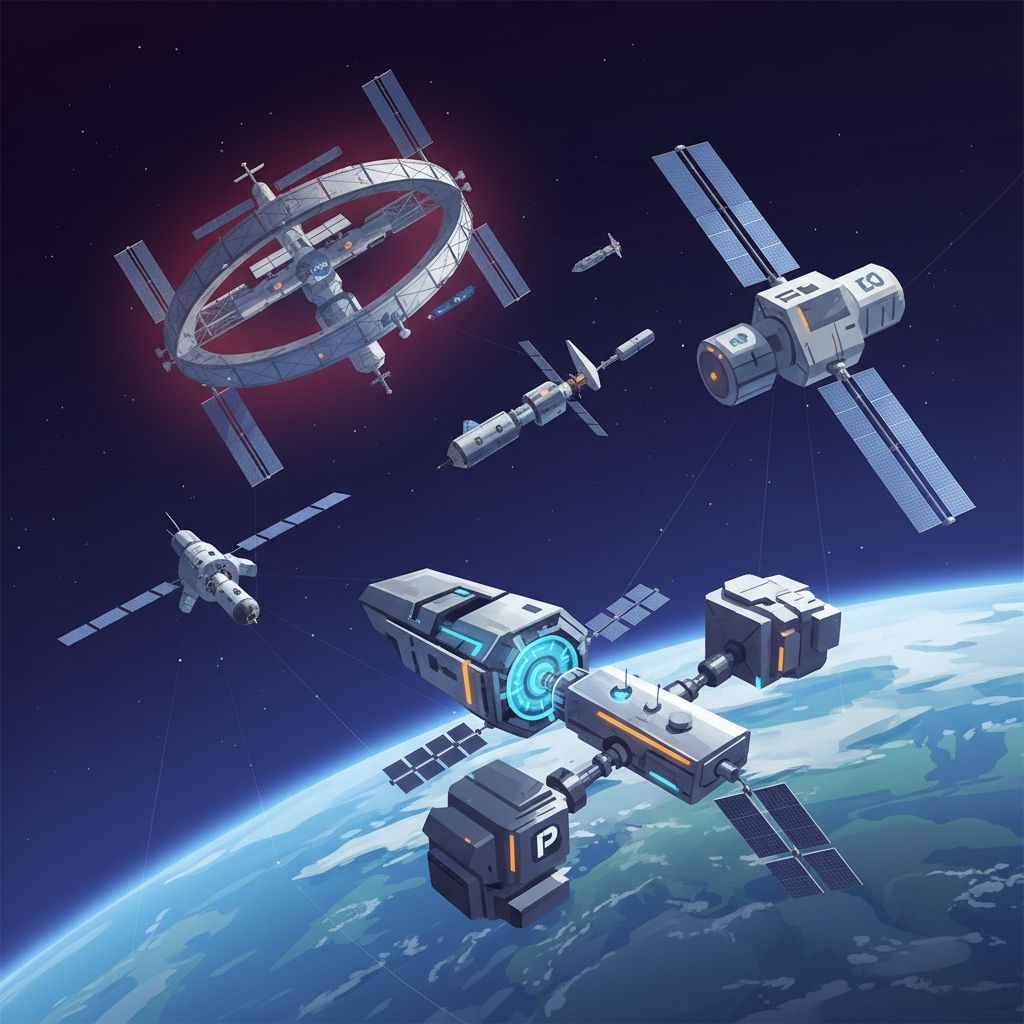
Skepticism from the Space Industry
Beyond technical considerations, it is the economic viability of the model that raises questions. Industry players welcome the market opening but are concerned about the lack of guarantees on long-term government contracts.
Main Industry Concerns
- Contractual Uncertainties: Without a firm commitment from NASA on the duration and volume of services purchased, companies struggle to justify the massive investments required. Developing an orbital station represents several billion dollars in research and development expenses.
- Demand Fragmentation: Several American companies are working on competing projects. This proliferation of initiatives could dilute demand and slow down returns on investment. Too intense competition could weaken the entire sector even before the first stations become operational.
- Regulatory Challenges: The commercialization of crewed infrastructure in orbit raises safety and legal liability issues that are still largely unresolved. Who will be responsible in the event of an accident? What safety standards should apply? These grey areas worry industrialists and their insurers.
Companies in the French and European New Space sector are observing this dynamic closely, aware that strategies developed across the Atlantic could redefine the entire commercial space sector.
Economic Models Still to Be Built
The central question remains: who will pay for the use of these private stations beyond government contracts? Promoters suggest several avenues: space tourism, pharmaceutical research, microgravity materials production, Earth observation.
But these markets remain largely theoretical. Space tourism, for example, currently concerns only a handful of billionaires willing to spend tens of millions of dollars for a few days in orbit. It's difficult to see this as a sustainable economic model in the short term.
Industrial production in orbit is generating interest in certain sectors such as pharmaceuticals or advanced materials. Some promising experiments have been conducted aboard the ISS. But scaling up to commercial levels still requires proving that the added value justifies the colossal costs of access to space.
Traditional space agencies, including the French CNES, continue to rely on orbital stations as tools for fundamental research and international cooperation, a model significantly different from the American commercial approach.
The Post-ISS Transition: A Tight Schedule
Time is running out. The ISS, in service since 1998, is showing signs of aging. NASA plans to extend its operation until 2030, or even 2032, but not beyond. Commercial stations will therefore need to be ready to take over by the end of the decade.
This timeline seems optimistic given the usual delays in space. Several American companies have already announced module launches by 2026, but these initial infrastructures will be modest in size. The construction of fully operational stations capable of hosting permanent crews will require several more years.
China, for its part, has already put its Tiangong station into orbit, operational since 2022 and likely to be expanded. This lead could reshuffle the cards of human presence in low Earth orbit, especially for countries that would not have access to future private American stations.
Europe is at a strategic crossroads. As a major participant in the ISS, it will have to choose between investing in partnerships with American private stations, developing its own capabilities, or collaborating with other space powers. This decision will have implications for several decades.
Between Technological Innovation and Economic Realism
NASA's gamble on private space stations reflects a fundamental trend: the increasing professionalization and commercialization of the space sector. The performance of reusable launchers has already revolutionized access to space. Commercial stations could be the next step in this transformation.
But the transition will not be automatic. It requires a convergence of factors: technological maturity of heavy launchers, emergence of viable commercial markets, an adapted regulatory framework, and above all, long-term financial commitment from public and private actors.
The industry's skepticism is not a rejection of innovation, but a demand for guarantees. Space companies cannot bet their survival on promises of cost reduction that have not yet been demonstrated on a large scale. They need contractual visibility and public support to take the plunge.
This tension between NASA's ambition and the private sector's caution illustrates a broader challenge: how to transform an activity historically driven by public budgets into an autonomous commercial market? The answer to this question will determine the future of human presence in low Earth orbit for decades to come.
The coming years will be decisive. If the first private modules prove their reliability and if launch costs continue to fall as predicted, the economic model could indeed materialize. Otherwise, NASA might be forced to extend the ISS beyond 2030, for lack of a credible alternative.
Prospects for the Space Ecosystem
Beyond the simple question of orbital stations, this transition questions the very organization of space exploration. The historical model, based on national programs funded by taxpayers, is gradually giving way to a hybrid ecosystem combining public and private actors.
This evolution offers opportunities, particularly for democratizing access to space and stimulating innovation. But it also carries risks: concentration of space power among a few private companies, loss of sovereignty for states, inequalities in access to orbital infrastructure.
Initiatives like walking robots for Mars exploration or satellite constellation projects show that private space can generate major innovations. But they also highlight the need for an adapted governance framework.
The success of the transition to private stations will depend as much on technology as on the ability of public and private actors to build a balanced collaborative model. A challenge that goes far beyond mere technical or financial considerations.
FAQ (JSON format - translate question and answer fields only):