Walking Robots on Mars: A New Era for Exploration
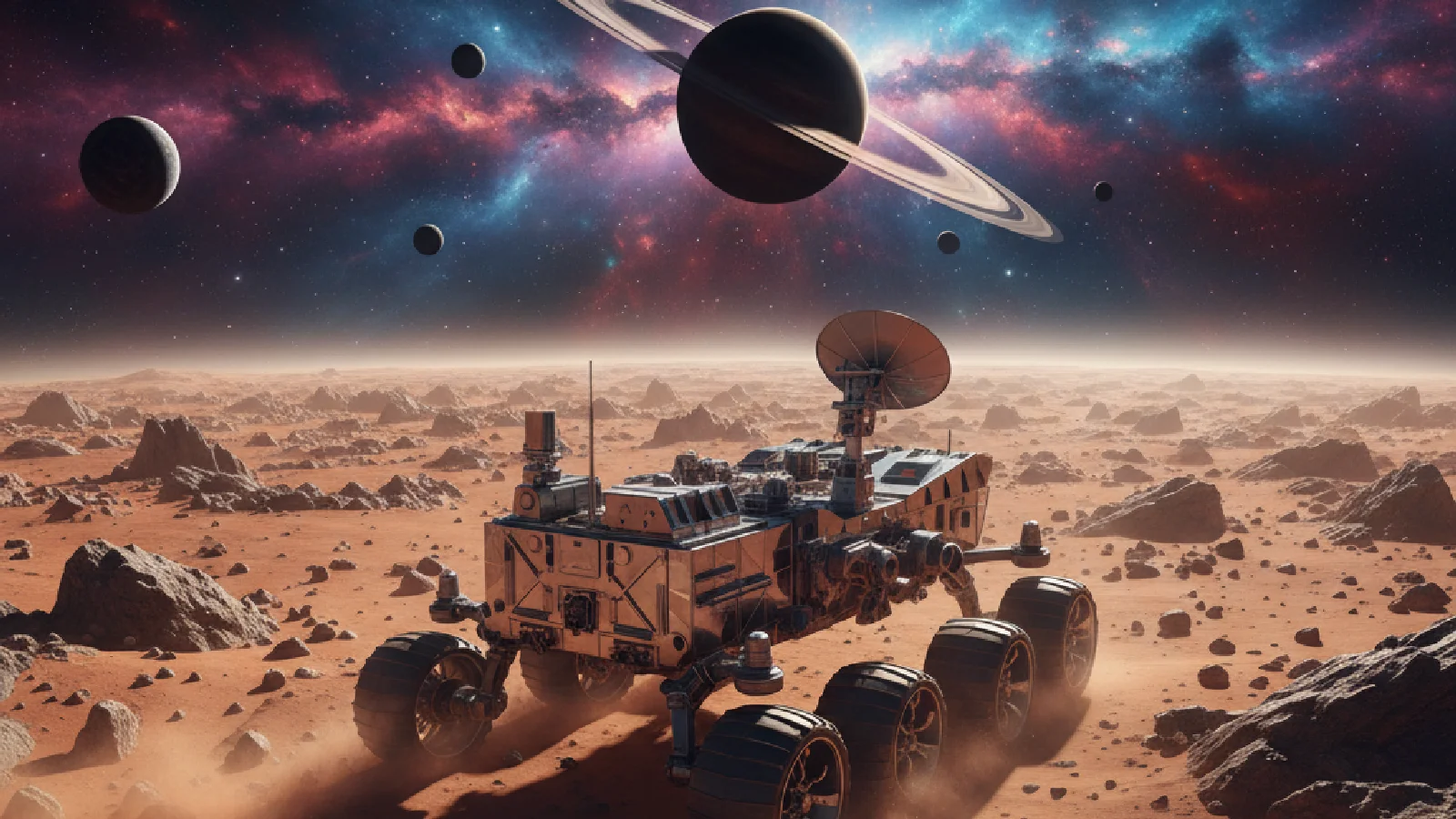
Since Sojourner's arrival in 1997, Martian rovers have traversed tens of kilometers on the Red Planet, analyzing rocks and soil in search of clues about its past. But these wheeled vehicles, however sophisticated, remain constrained by their limitations: slopes too steep, impassable crevices, terrain too rugged. A new generation of machines could soon change the game.
Semi-autonomous walking robots, inspired by terrestrial platforms like Spot or ANYmal, are currently being studied by NASA and the European Space Agency (ESA) to push the boundaries of Martian exploration. Equipped with articulated legs and embedded artificial intelligence algorithms, these machines promise to reach previously inaccessible areas – and perhaps discover biosignatures or unsuspected mineral deposits there.
High-Performing but Limited Wheeled Rovers
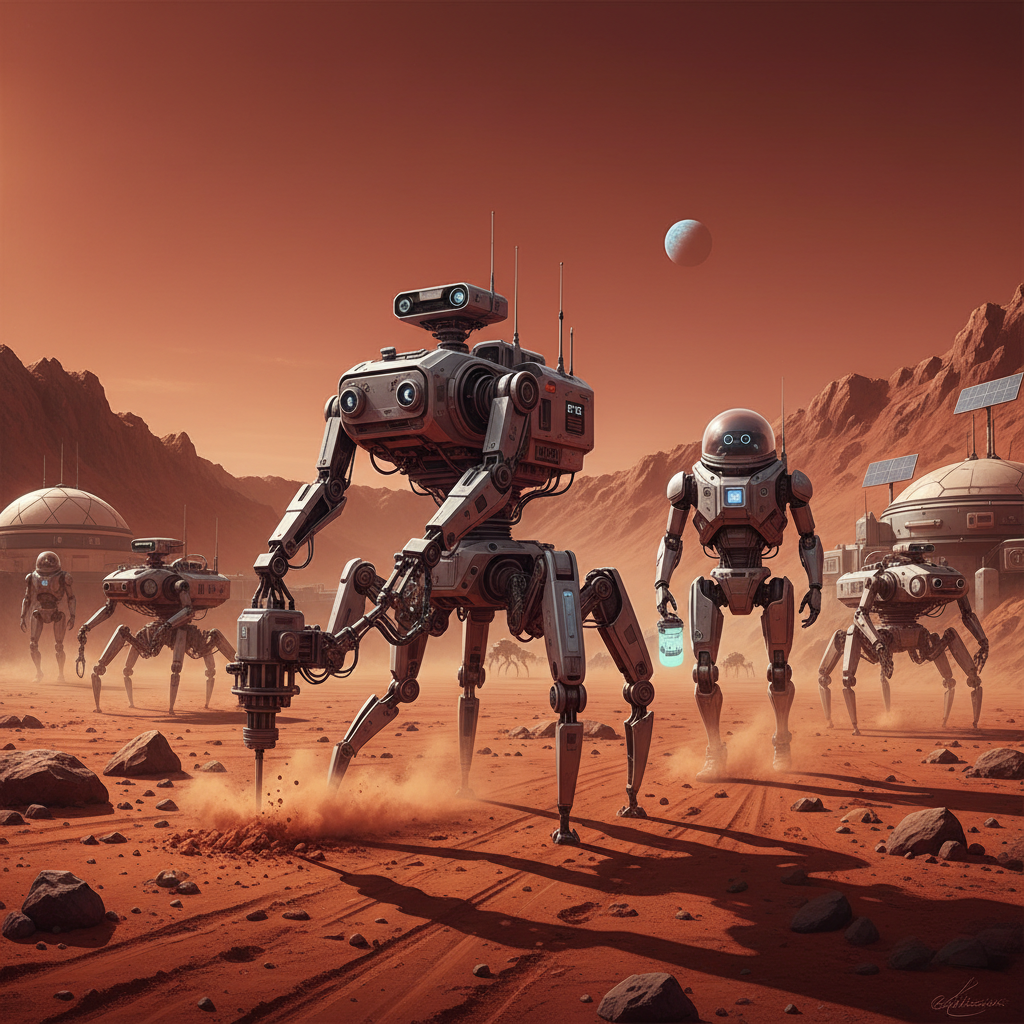
The Curiosity and Perseverance rovers, currently active on Mars, represent the pinnacle of planetary robotic technology. Capable of traveling several kilometers, equipped with onboard laboratories and articulated arms, they have revealed a phenomenal amount of data on Martian geology and ancient conditions favorable to life.
However, their mobility remains constrained. Wheels, designed to roll on relatively flat surfaces, prevent access to slopes greater than 30 degrees. Rocky or boulder-strewn terrains require meticulous detours, planned from Earth with several minutes of communication delay. As a result, vast geologically promising areas – crater walls, deep crevices, permanently shadowed zones – remain out of reach.
This navigation autonomy is essentially limited to basic obstacle detection: the rover can identify a rock or a depression in front of it, but it cannot reactively plan a complex route through a rock field or climb a steep slope without human supervision.
Articulated Legs and Embedded Intelligence
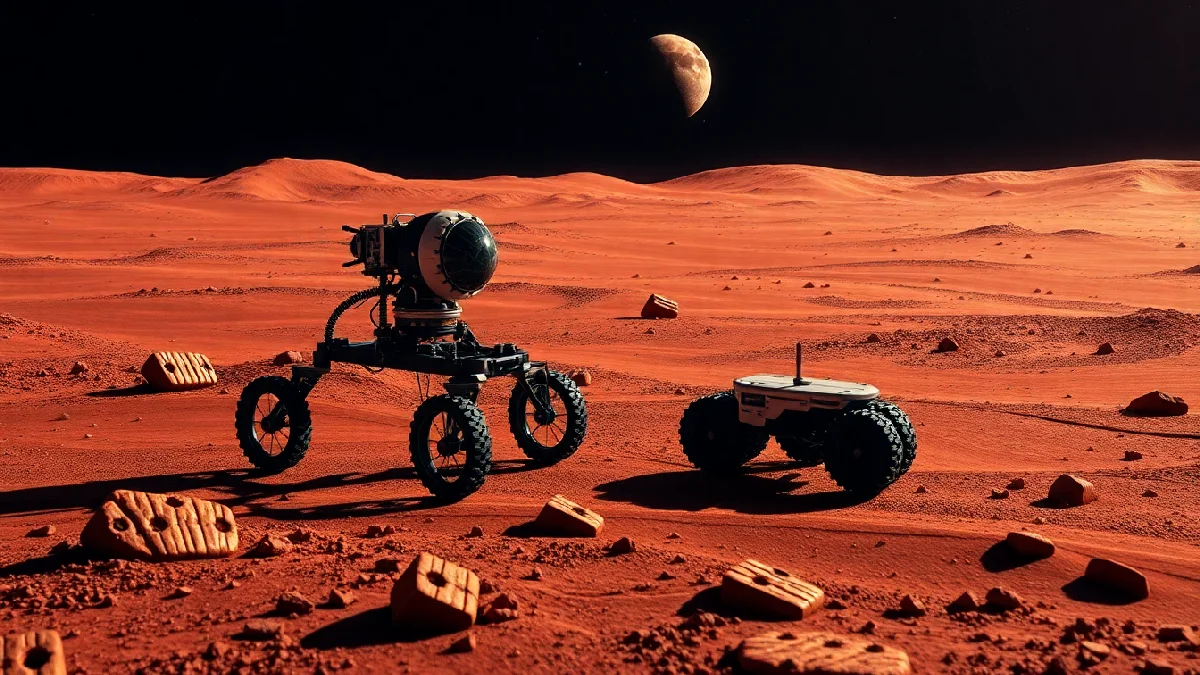
The new walking robots explore a radically different paradigm. Instead of wheels, articulated legs allow them to overcome obstacles several tens of centimeters high, climb slopes exceeding 45 degrees, and maintain balance on irregular surfaces that any wheeled rover would have to avoid.
Semi-autonomous walkers combine hybrid mobility and real-time trajectory planning, offering unprecedented resilience to Martian geological hazards.
But the decisive advantage lies in the embedded artificial intelligence algorithms. Unlike rovers, whose every command is developed after image analysis by ground teams, walkers integrate local decision-making capabilities: real-time 3D mapping, assessment of footholds, autonomous selection of scientific targets. This autonomy drastically reduces the cycle time between observation and action, accelerating the pace of exploration.
ESA and NASA, as part of their technology development programs, are investing in space research to test these architectures on Earth and in simulated environments. Luxembourg's National Action Plan 2020-2024 for Space Science and Technology also emphasizes the importance of technological innovation to strengthen the competitiveness of future missions.
Access to Inaccessible Terrain
The true promise of walkers lies in their ability to explore environments forbidden to rovers. Steep-walled craters, for example, are exceptional geological windows, exposing stratigraphic layers inaccessible on the surface. Similarly, crevices and caves – potentially protected from UV radiation and likely to harbor ice deposits or traces of past life – finally become explorable.
Permanently shadowed areas, where the temperature remains more stable, could also contain valuable water ice deposits for future human missions. Walkers, thanks to their hybrid mobility, will be able to directly place sensors there or collect samples with more flexible manipulators than the robotic arms of rovers.
This ability to reach promising rock formations transforms prospecting: instead of being limited to areas accessible by rolling, scientists will be able to target geological sites based solely on their scientific interest, significantly increasing the chances of discovering mineral deposits or biosignatures.
Key Advantages of Accessing Inaccessible Terrain:
- Unique geological windows: Study of inaccessible stratigraphic layers.
- Biosignature protection: Exploration of caves and crevices protected from radiation.
- Water ice resources: Identification of deposits in shadowed areas.
- Precise scientific targeting: Not limited to areas accessible by rolling.
Mineral Prospecting and Search for Life
Martian exploration pursues two complementary objectives: understanding the planet's history and preparing for human arrival. On both fronts, walkers offer a decisive advantage.
For the search for life, the ability to access protected environments – caves, sub-surfaces – profoundly changes the game. Current rovers are limited to exposed surfaces, where solar radiation and chemical oxidation have likely erased all organic traces. Walkers, on the other hand, will be able to explore niches where ancient organic molecules could have been preserved.
In terms of mineral prospecting, the interest is equally strategic. Mars potentially contains deposits of rare metals, minerals of geological interest, and, above all, water ice essential for any human settlement. Walkers, by expanding the explored surface and accessing geologically diverse areas, will allow these resources to be mapped with unprecedented precision.
As the prospective guide Children of Space emphasizes, the colonization of the solar system relies on the ability to exploit local resources – and that begins with knowing where they are.
Technological and Operational Challenges
Despite their promises, semi-autonomous walkers pose considerable challenges. The energy consumption of articulated legs, significantly higher than that of wheels, imposes constraints on autonomy and requires larger solar panels or more powerful batteries.
Mechanical resistance is also critical: the joints, subjected to repeated stresses in a dusty and cold environment, will have to withstand extreme temperature cycles (from -130 °C at night to +20 °C during the day). Engineers are working on composite materials and space lubricants capable of operating in these conditions.
Finally, embedded artificial intelligence must achieve an absolute level of reliability: a poor assessment of a foothold can lead to a fall and end the mission. Algorithms are therefore trained on thousands of simulations and prototypes tested in real conditions – terrestrial deserts, volcanic terrains, polar environments.
Complementarity Rather Than Substitution
Rovers and walkers are not opposed: they complement each other. Wheeled rovers will likely remain the reference vehicles for long distances on flat terrain, carrying heavy laboratories and complex instruments such as spectrometers or drills.
Walkers, on the other hand, will become the scouts for difficult areas: site reconnaissance, targeted sampling, deployment of sensors in rugged terrain. One can imagine hybrid missions, where a rover serves as a mobile base while one or more walkers go on reconnaissance on the walls of a crater or at the bottom of a crevice.
This logic of a robotic ecosystem foreshadows future exploration missions, which will undoubtedly combine several types of vehicles – drones, rovers, walkers – coordinated by central artificial intelligence or by operators in orbit. This approach is already being considered for certain Artemis lunar missions, which will serve as a test bed before Mars.
A Revolution Underway for Exploration
Semi-autonomous walking robots represent a major technological breakthrough for Martian exploration. By combining legged mobility, embedded intelligence, and the ability to operate in extreme environments, they push the physical boundaries of our robotic presence on the Red Planet.
Their deployment, expected in the next decade, could transform our understanding of Mars: access to unprecedented geological formations, precise resource mapping, exploration of potentially habitable niches. Beyond pure science, these machines also prepare the ground – literally – for future human missions, by identifying the most promising and safest sites.
Space exploration is thus undergoing an evolution comparable to that of telecommunications, where the complementarity of infrastructures – as shown by the rise of Starlink facing regulations – redefines global strategies. On Mars, the rovers-walkers-drones combination outlines a future where exploration will become faster, more exhaustive, and more resilient.
Comparison of Robotic Mobility Capabilities on Mars
| Characteristic | Wheeled Rovers | Semi-Autonomous Walking Robots |
|---|---|---|
| Maximum Slope | ~30 degrees | >45 degrees |
| Obstacle Clearance | Limited to basic obstacles | Several tens of centimeters |
| Navigation Autonomy | Basic obstacle detection, human supervision | 3D mapping, local decision, integrated AI |
| Access to Difficult Areas | Limited (crater walls, crevices) | Excellent (caves, sub-surfaces) |
The next challenge? Moving from laboratory prototypes to the first operational units on the Martian surface. A decisive step to find out if these walkers will live up to their promises – and perhaps finally reveal the buried secrets of the Red Planet.