2026: Space Probes Search for Life in Europa and Enceladus Oceans
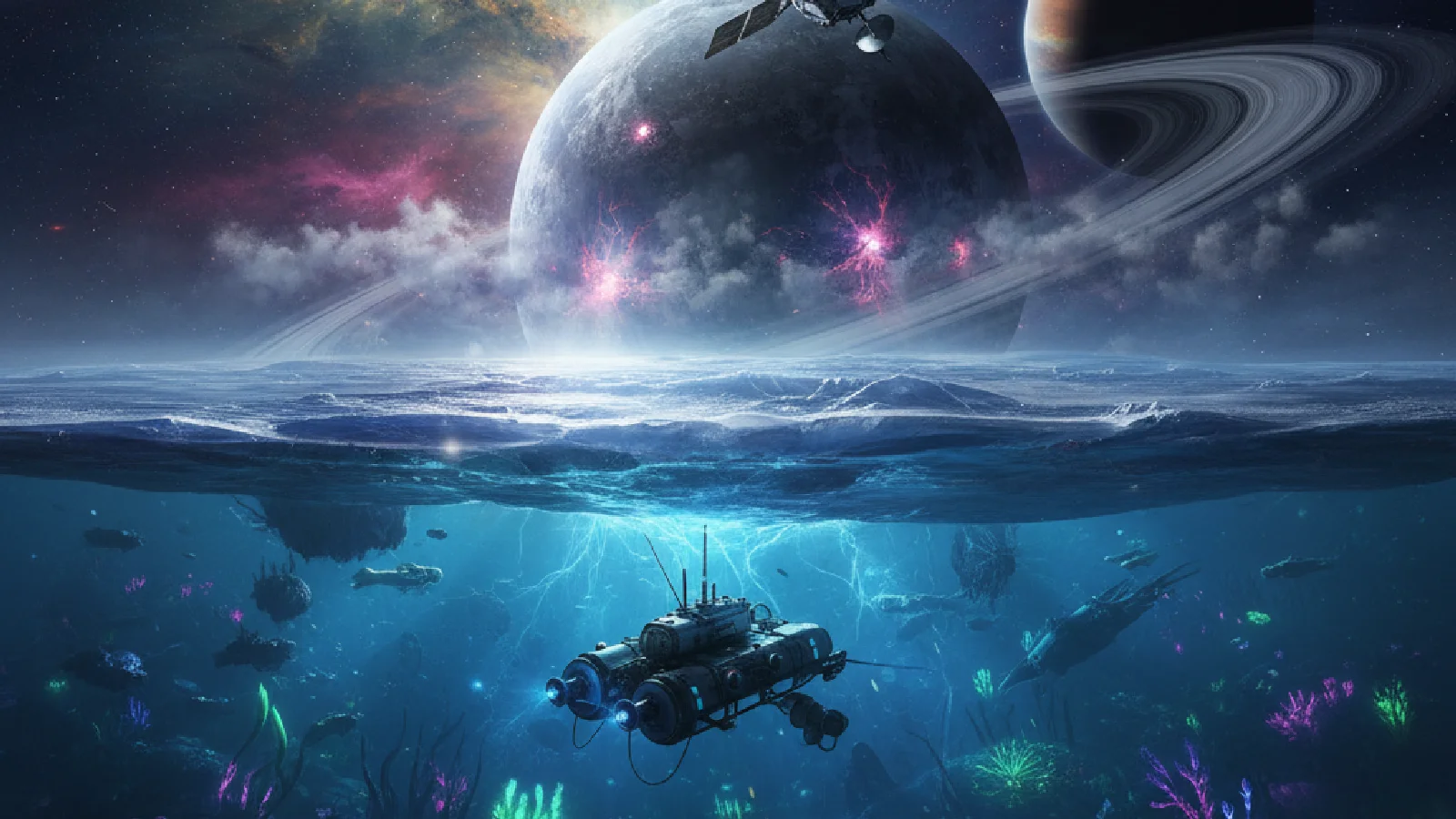
Beneath the icy crusts of Europa and Enceladus, secrets of extraterrestrial life may lie hidden. In 2026, two revolutionary space missions are set to unravel these age-old mysteries, equipped with technologies capable of probing the depths of the solar system's most inaccessible oceans.
Europa Clipper: America's Technological Vanguard
The Europa Clipper probe, launched in October 2024, will perform its Earth gravity assist maneuver in December 2026 to gain the necessary speed for its journey to Jupiter. This NASA mission represents a major technological leap in our quest to understand extraterrestrial oceans.
According to NASA data, the probe carries the REASON (Radar for Europa Assessment and Sounding: Ocean to Near-surface) radar, capable of mapping the thickness and internal structure of Europa's ice shell with unparalleled precision. This ice-penetrating radar can identify pockets of liquid water several kilometers beneath the surface.
Europa Clipper's scientific arsenal also includes:- A laser altimeter to measure tidal deformations
- Visible-infrared and ultraviolet spectrometers to analyze chemical composition
- The MASPEX mass spectrometer to detect biomarkers in ejected particles
"Europa has been a top scientific target since data from the Galileo probe revealed the probable existence of an ocean beneath its icy surface" - NASA
JUICE: Europe's Contribution to Jovian Exploration
In parallel, the European mission JUICE (JUpiter ICy moons Explorer) continues its journey towards the Jovian system. Expected to arrive in 2029, it will perform several flybys of Europa starting in 2026, complementing Europa Clipper's observations.
The European probe is equipped with the RIME (Radar for Icy Moons Exploration) radar, designed to analyze the subsurface structure of Jupiter's moons. Its deep-sounding capabilities will allow it to map the interfaces between ice and liquid water, potentially revealing the complex architecture of these hidden oceans.
| Mission | Space Agency | Primary Objective | Key Radar Instrument |
|---|---|---|---|
| Europa Clipper | NASA | Study of Europa | REASON |
| JUICE | ESA | Study of Jupiter's icy moons | RIME |
Biosignature Detection Technologies
The search for extraterrestrial life relies on identifying specific biological signatures. High-resolution spectrometers aboard both missions can detect:
- Amino acids and complex organic molecules
- Isotopes indicative of metabolic activities
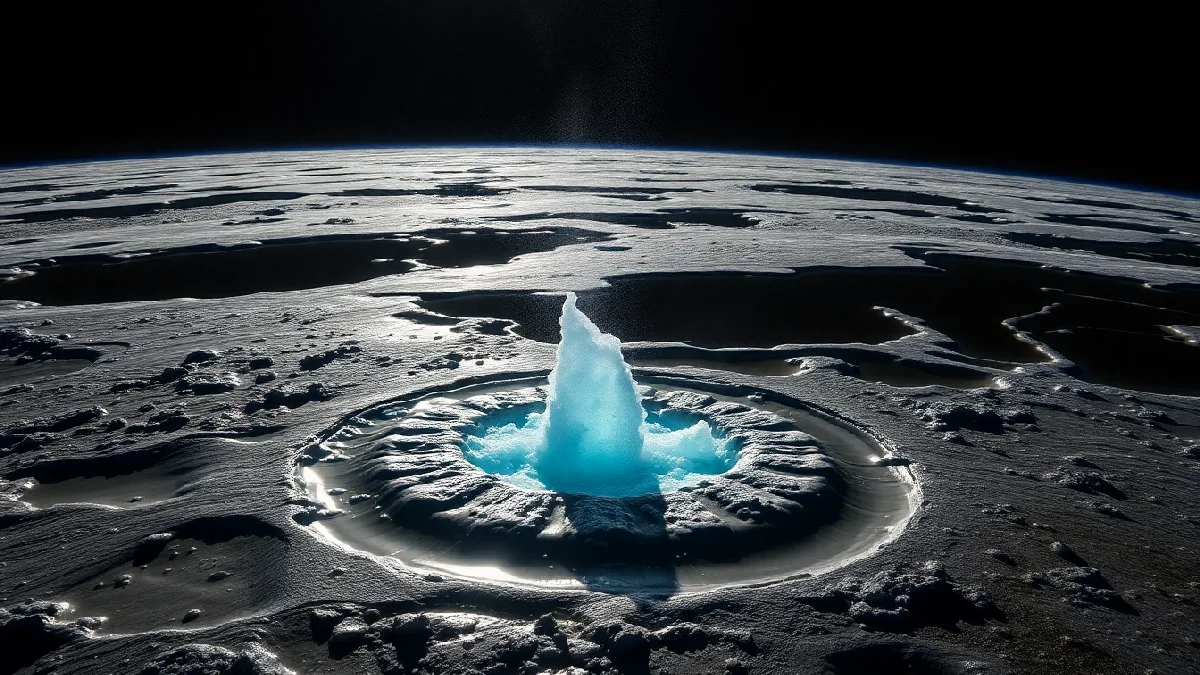
- Gases ejected by Enceladus' geysers and potential plumes from Europa
The SUDA and MAJIS mass spectrometers complement this analytical arsenal by enabling real-time analysis of particles intercepted during flybys. This multi-instrument approach maximizes the chances of detecting biological traces, even infinitesimal ones.
As this study on the search for extraterrestrial life explains, scientists are preparing these missions by testing their techniques in the most extreme terrestrial environments, particularly in the Norwegian Arctic.
Enceladus: Revealing Geysers
Enceladus offers a unique advantage in this quest: its geysers directly eject water from its subsurface ocean into space. This feature allows probes to analyze the oceanic composition without drilling through the icy crust.
Recent observations have revealed the presence of complex organic molecules in these water jets, strengthening the hypothesis of an environment conducive to life. The 2026 missions will deepen these discoveries with more sensitive instruments and extended observation coverage. Europa's ocean might be too calm to harbor life, unlike Enceladus where internal activity seems more intense.
The European Space Agency is already preparing an Enceladus Life-Finder mission for the next decade, which would combine a lander capable of penetrating the ice mantle with a miniaturized chromatography-mass laboratory. This direct approach would allow for sampling oceanic water and searching for definitive biochemical signatures. A moon near Earth may hide ideal conditions for life.
Technical Challenges and Innovations
The extreme conditions around Jupiter and Saturn impose considerable technical constraints. Jupiter's intense radiation can damage electronic equipment, requiring sophisticated shielding and hardened circuits.
Communication with Earth also represents a major challenge. Radio signals take several hours to travel the distance, requiring advanced autonomous decision-making capabilities for the probes. Onboard artificial intelligence algorithms enable preliminary data analysis and automatic prioritization of observations.
Magnetic field and electrical conductivity studies complete the scientific picture. These measurements confirm the presence of salty oceans beneath the icy crusts, validating theoretical models developed since the Voyager missions.
This multi-disciplinary approach, combining radar, spectrometry, and particle analysis, represents the culmination of decades of space technology development.
Future Prospects
2026 marks a turning point in our understanding of extraterrestrial oceans. Data collected by Europa Clipper and JUICE will guide future exploration missions, potentially towards landers or even robotic submarines capable of directly exploring these hidden oceans.
These advancements are part of a broader dynamic of searching for life in the universe, comparable to recent discoveries on biosignatures versus technosignatures. Technologies developed for these lunar missions could also prove valuable for the exploration of potentially habitable exoplanets.
The scientific implications extend far beyond astrobiology. Understanding geological and chemical processes in these extreme environments enriches our knowledge of fundamental planetary mechanisms, comparable to recent advances in the study of massive black hole mergers.
2026 could mark the beginning of a new era in our understanding of life in the universe. After centuries of speculation, humanity finally possesses the technological tools to concretely probe the most promising corners of our solar system. The oceans of Europa and Enceladus, long inaccessible, are about to reveal their most intimate secrets.