Starship in 2025: Review of 5 Launches and Future Prospects
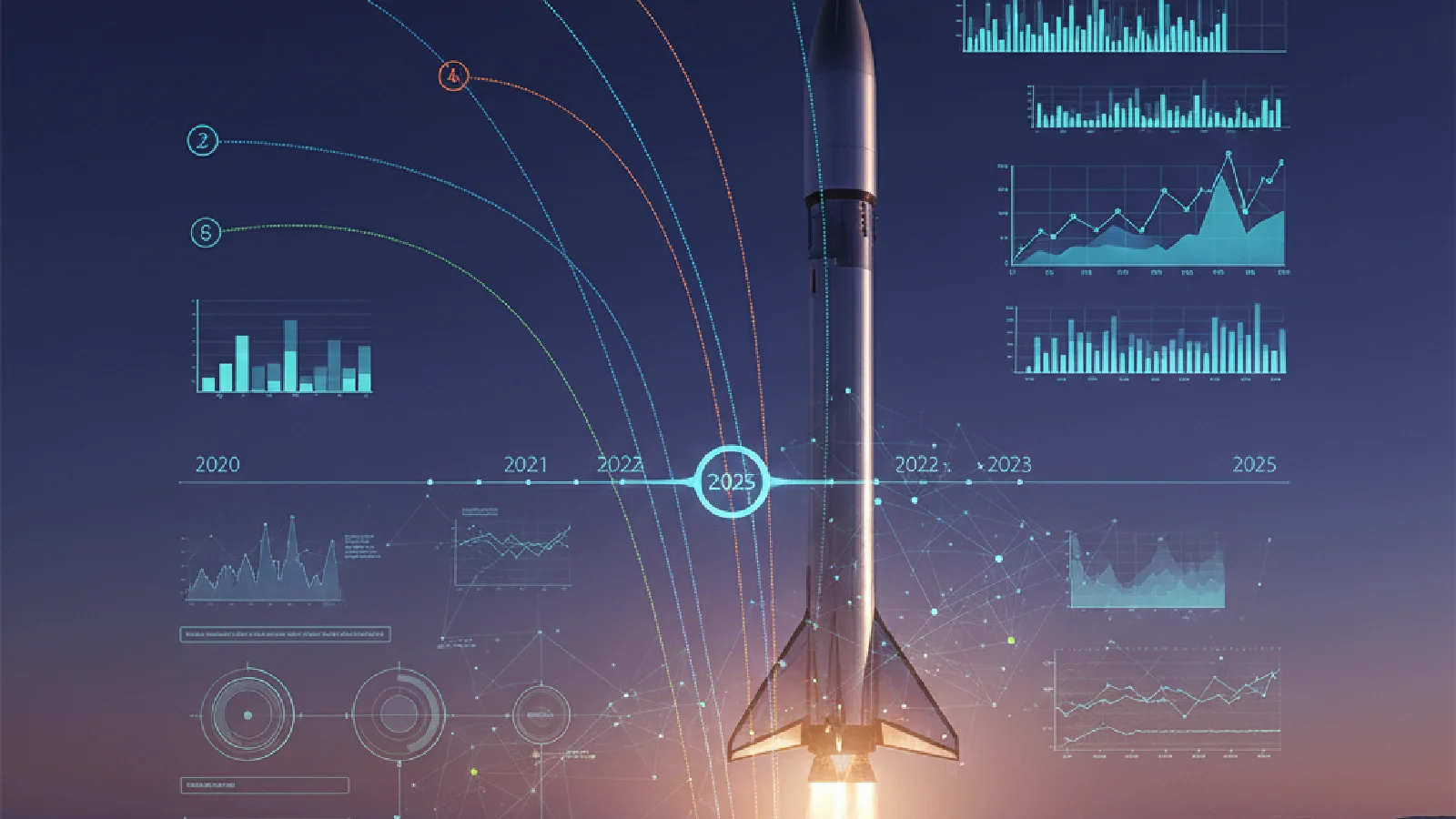
The year 2025 will be etched in the history of the Starship program as a year of striking contrasts. After chaotic beginnings marked by three consecutive explosions, SpaceX managed to transform its failures into valuable lessons, culminating in two successful flights that restored confidence in this revolutionary rocket. This tumultuous journey perfectly illustrates Elon Musk's philosophy: “fail fast to learn faster.”
The five tests of 2025 not only pushed the technical limits of the most ambitious system ever conceived but also redefined the expectations of the space sector. From the catastrophic Mission 7 in February to the triumphant Mission 11 in October, each flight provided crucial insights for the future of space exploration and interplanetary transport.
The First Three Failures: Painful but Necessary Lessons
Missions 7, 8, and 9: A Trilogy of Explosions
The first months of 2025 were particularly challenging for SpaceX. Mission 7, launched in February, ended in a spectacular explosion after only 3 minutes of flight. Post-incident analyses revealed critical failures in the Raptor engine throttling system, which was unable to manage the thrust variations required for complex maneuvers.
Mission 8, in April, fared little better, with a flight duration of 5 minutes before the total loss of the vehicle. This time, it was the thermal protection system that showed its limits, with several tiles detaching during the ascent phase, compromising the structural integrity of the spacecraft.
The third consecutive failure, during Mission 9 in June, particularly made an impression. Although the flight lasted 12 minutes – a relative record – the final explosion highlighted persistent problems with thermal tile bonding and coordination between propulsion systems.
"These failures taught us more in six months than years of simulations before. Every explosion was a goldmine of information." - Internal SpaceX statement
Major Technical Revisions
Following these setbacks, SpaceX launched an intensive revision program addressing three critical aspects:
- Throttling system: complete redesign of the Raptor engine control software
- Thermal protection: new tile attachment process with reinforced adhesives
- System redundancy: increased sensors and safety circuits
These modifications required a three-month pause in the testing program, a courageous decision that would later prove worthwhile.
The Turning Point: Mission 10 and the First Success
A One-Hour Flight That Changes Everything
On September 15, 2025, Mission 10 marked a historic turning point for the Starship program. For the first time, the complete system successfully achieved a sustained one-hour flight, demonstrating the viability of the full reusability concept.
The most remarkable technical feat was the controlled landing of the Super Heavy booster back on the Starbase launch pad. This maneuver, compared by some experts to “landing a 70-meter skyscraper on a coin,” definitively validated SpaceX's revolutionary approach to recovery.
The orbital spacecraft, meanwhile, made a soft descent into the Indian Ocean after completing its orbital mission. Telemetry data confirmed the proper functioning of all critical systems, marking the end of an eight-month losing streak.
Impact on Investor Confidence
This success had immediate repercussions on financial markets. SpaceX stock (not publicly traded but valued on the secondary market) jumped 23% in the hours following the announcement. More significantly, several institutional clients who had suspended their contracts announced their return, notably the ESA for satellite deployment missions.
Space logistics enters a new era, transforming the prospects of commercial space transport and paving the way for an accessible space economy.
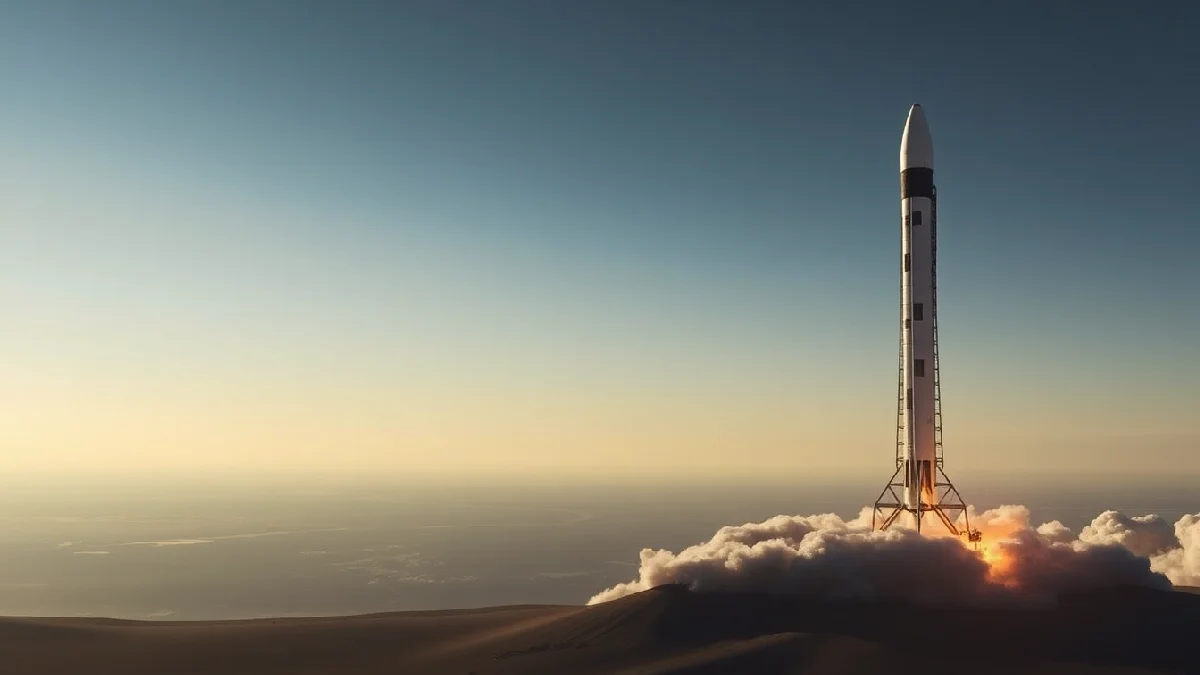
Mission 11: The Resounding Confirmation
October 13, 2025: A Near-Perfect Flight
Mission 11, launched on October 13 from Starbase, Texas, exceeded all expectations. Not only did it replicate Mission 10's performance, but it went further by demonstrating concrete operational capabilities.
The one-hour orbital flight included several historic firsts:
- Successful in-orbit relight: validation of interplanetary maneuvering capability
- Payload deployment: 10 tons of test satellites placed in orbit
- Propulsive landing of both stages: full demonstration of reusability
Remarkable Technical Performance
Mission 11 data revealed exceptional performance that exceeded initial specifications. The thermal protection system functioned perfectly, with only 0.3% of tiles requiring replacement post-flight. This reliability paves the way for rapid turnaround, a crucial objective for the system's economic viability.
The landing precision reached remarkable levels: the Super Heavy booster landed less than 2 meters from the target point, while the orbital spacecraft respected its splashdown window with an error margin of less than 500 meters.
Impact on the Global Space Industry
Revolutionizing the Cost of Access to Space
The successes of late 2025 radically transformed the economics of space transport. With a projected cost per kilogram of less than $100 (compared to $2700 currently), Starship redefined the possibilities of space access for businesses and institutions.
This tariff revolution had immediate consequences for competition. Traditional launchers like Ariane 6 or Atlas V saw their order books shrink, forced to revise their economic models in the face of this technological disruption.
Reactions from European Competitors
European space, already weakened, felt the blow. According to the Institut Montaigne, Europe now accounts for only 5% of the annual global launched mass, a dizzying drop that is accelerating in the face of Starship's performance.
This situation pushed European decision-makers to rethink their space strategy, with emergency investments announced to maintain autonomous access to space. France, in particular, accelerated the development of its reusable launcher program. For more information on future explorations, consult our article on space conquest.
Operational Outlook for 2026-2027
Ambitious Roadmap
Building on these successes, SpaceX unveiled an aggressive roadmap for the coming years. Operational cargo missions are scheduled for 2026, with an initial target of 12 commercial flights. This gradual ramp-up aims to validate the system's reliability before crewed missions.
| Planned Mission | Year | Primary Objective |
|---|---|---|
| Cargo Missions | 2026 | 12 commercial flights |
| Crewed Mission | 2027 | Flight demonstration |
The crewed demonstration, initially planned for 2025, was postponed to 2027 as a precautionary measure. This decision, praised by space safety experts, demonstrated a more mature approach by SpaceX regarding human spaceflight.
Industrial Cadence Objectives
The ultimate ambition remains spectacular: 20 to 30 annual launches once the system is fully operational. This cadence, unthinkable a few years ago, becomes credible thanks to the system's near-total reusability and reduced turnaround times.
However, these objectives remain conditional on obtaining environmental authorizations from the FAA. The new Cape Canaveral facilities, recently approved, should facilitate this ramp-up by increasing the number of available launch sites.
Geopolitical Impacts
These advancements repositioned the United States as the undisputed dominant space power. Starship's massive transport capability opened up unprecedented prospects for lunar and Martian exploration, strengthening the American strategic advantage in the new space race.
This technological dominance worried other space powers, particularly China, which accelerated the development of its own reusable heavy-lift launcher. The Sino-American lunar race took on a new dimension with these developments.
Persistent Technical and Regulatory Challenges
Environmental Constraints
Despite technical successes, SpaceX faced increasing environmental challenges. Repeated launches from Starbase raised concerns about the impact on local ecosystems, particularly protected nesting areas.
The FAA gradually tightened its requirements, imposing more in-depth impact studies and reinforced mitigation measures. These constraints could limit the launch cadence from Texas, justifying the expansion to Florida.
Orbital Safety Issues
Increased space traffic also raised orbital safety questions. With dozens of Starship flights planned annually, coordinating space traffic became crucial to avoid collisions and manage debris.
These concerns pushed for strengthened international regulation, with ongoing discussions at the UN to adapt space law to new technological realities.
Conclusion
The year 2025 undeniably marked a historic turning point for the Starship program and the space industry as a whole. From the three devastating explosions in the first half of the year to the two resounding successes in the autumn, SpaceX demonstrated its unique ability to transform failure into accelerated learning.
These results definitively validated the revolutionary concept of a fully reusable large-scale rocket, ushering in a new era of space exploration. The impact on space access costs promises to democratize space missions and accelerate the nascent space economy.
However, many challenges remain. Scaling up to the industrial objectives of 2026-2027 will require overcoming persistent regulatory, environmental, and technical constraints. The success of this transition will determine whether Starship can truly revolutionize our relationship with space or if Elon Musk's ambitions will remain partially in the realm of technological dreams.
The year 2026 will be crucial: it will tell if the promises of 2025 can materialize into a sustainable industrial space revolution.