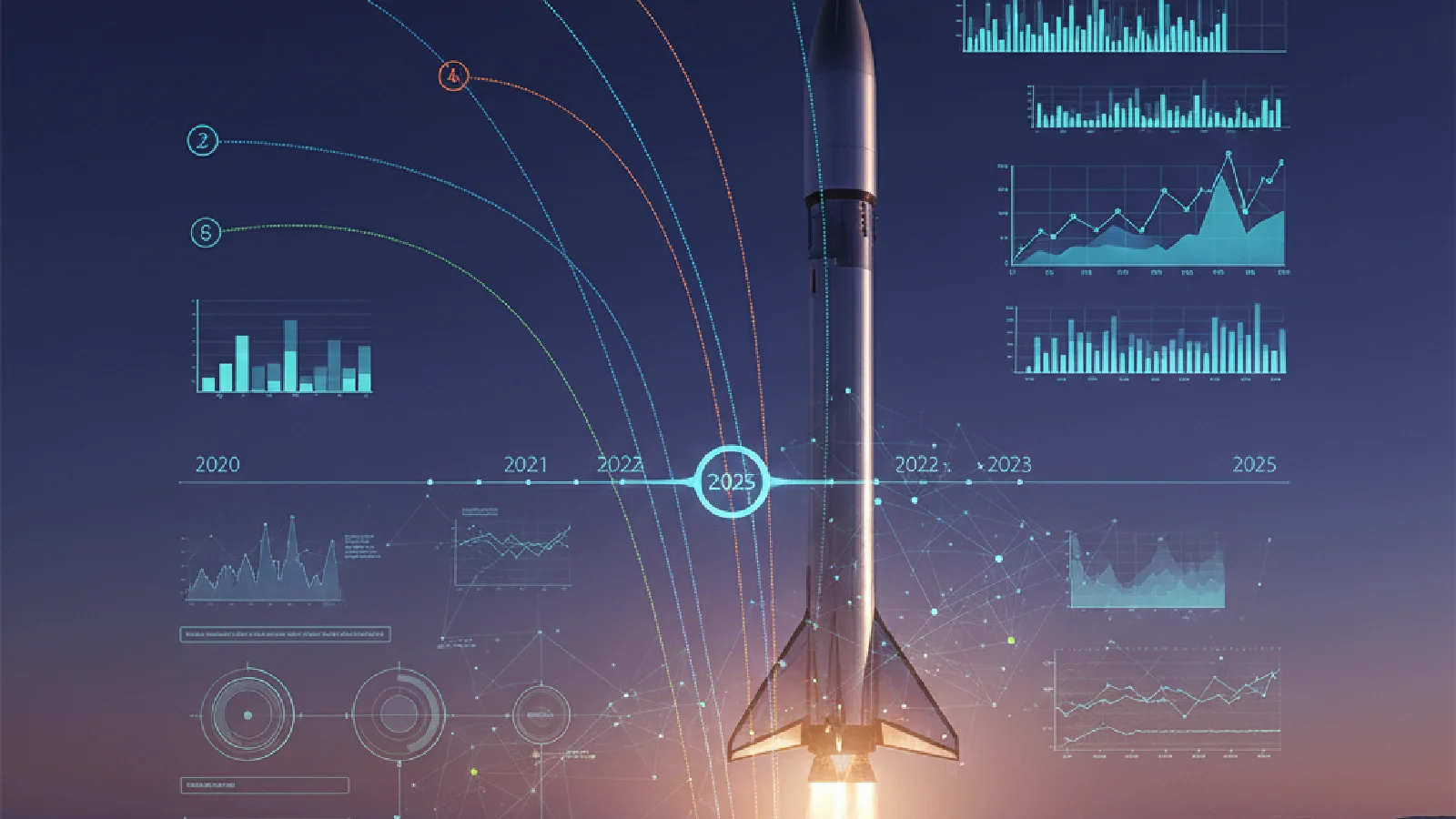
China and the Lunar Race: Decisive Advances in 2025
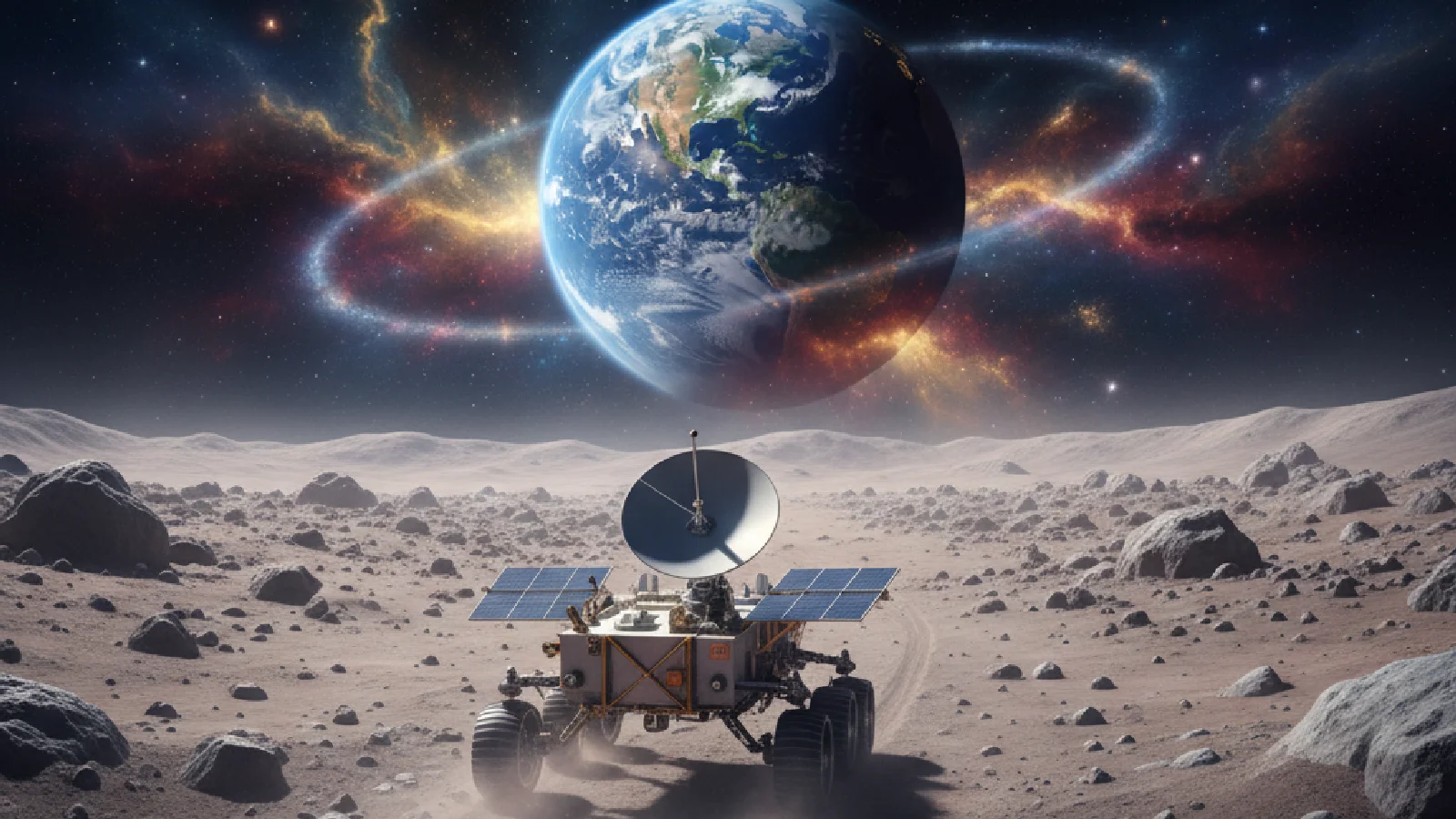
The year 2025 will be remembered as a turning point in global lunar exploration. While the United States prepares its return to the Moon with Artemis III in 2026, China has multiplied its demonstrations of technological prowess, redefining the balance of the contemporary space race.
On June 14, 2025, Beijing achieved a decisive step with the successful static fire test of the first stage of the Long March 10 rocket, the launcher intended to transport Chinese astronauts to the Moon by 2030. This technical success, combined with the achievements of the robotic Chang'e 6 and Chang'e 7 missions, positions China as a direct competitor to American ambitions for 2026.

China's Technological Feats in 2025
The Long March 10 Launcher: A Step Towards Lunar Autonomy
The static fire test of Long March 10 constitutes a crucial validation for China's lunar ambitions. This super-heavy rocket, capable of carrying up to 27 tons to trans-lunar orbit, represents the Chinese equivalent of the American SLS system. China takes another step towards the Moon with this major technical demonstration.
The success of this test not only validates Chinese propulsion technologies but also their ability to develop new-generation space systems in parallel with Western programs. This technological independence is becoming a major geopolitical issue in the context of increased space competition.
Chang'e 6 and 7: Mastering Robotic Exploration
The Chang'e 6 and Chang'e 7 missions have demonstrated the increasing sophistication of China's lunar exploration capabilities. Chang'e 6 successfully achieved the first sample return from the far side of the Moon, an unprecedented technical feat that places China at the forefront of robotic exploration.
Chang'e 7, for its part, conducted a detailed reconnaissance campaign of the lunar south pole, a strategic region for establishing permanent bases. This mission particularly tested in-situ resource utilization (ISRU) technologies, crucial for the development of a sustainable lunar presence.
Geopolitical Impact on the 2026 Race
Redefining Space Balances
China's successes in 2025 radically transform the dynamics of space competition for 2026. While Artemis III was perceived as a triumphant American return to the Moon, it now becomes a race against time in the face of Chinese progress.
"China demonstrates that it can technologically compete with the United States in all areas of lunar exploration, from robotics to human spaceflight."
This new situation is pushing Washington to re-evaluate its timelines and intensify its investments in ISRU and lunar logistical support. The US administration has thus announced additional budgets to accelerate the development of lunar survival technologies.
The ILRS Program: A Geopolitical Alternative
In 2025, China formalized strengthened cooperation with Russia and other international partners within the framework of the ILRS (International Lunar Research Station) program. This initiative offers an alternative to the Artemis Accords, creating two distinct poles in international lunar exploration.
This bipolarization of lunar exploration reflects terrestrial geopolitical tensions and offers emerging space nations the possibility to choose their side. The exploitation of space resources thus becomes an issue of national sovereignty as much as international cooperation, a topic also covered in a comprehensive report on space conquest.

Technological and Economic Stakes
Mastering ISRU: Key to Sustainable Presence
In-situ resource utilization represents the major technological challenge for establishing a permanent lunar presence. China's 2025 tests with Chang'e 7 validated technologies for extracting water and oxygen from lunar regolith, essential skills for reducing dependence on Earth-based supplies.
This mastery of ISRU confers a considerable strategic advantage in the race to establish permanent lunar bases. Nations capable of producing their resources on-site have a decisive economic and logistical advantage for 2026 and beyond.
Implications for the Global Space Economy
Chinese advances are also transforming the global space economy. China's ability to conduct complex lunar missions autonomously challenges the Western monopoly on advanced space technologies.
This competition stimulates innovation but also fragments international space markets. International partners must now choose between American and Chinese technological ecosystems, creating new challenges for global space cooperation.
Key points of China's lunar advances in 2025:- Successful test of the first stage of the Long March 10 rocket
- Sample return from the far side of the Moon by Chang'e 6
- Detailed reconnaissance of the lunar south pole with Chang'e 7
- Validation of in-situ resource utilization (ISRU) technologies
- Strengthening of the International Lunar Research Station (ILRS) program
Outlook for 2026 and Beyond
Accelerating Timelines
2026 is shaping up to be a pivotal moment in the history of space exploration. China's successes in 2025 are accelerating the timelines of all major space actors, creating a dynamic of intense technological competition.
The American Artemis III mission planned for 2026 thus takes place in a context of direct competition with Chinese ambitions, transforming what was designed as a demonstration of leadership into a true space race.
New Challenges for International Cooperation
Chinese progress opens new prospects for cooperation but also creates new diplomatic challenges. The bipolarization of lunar exploration between the Artemis and ILRS programs could fragment the international space community.
However, certain areas such as black hole research or the observation of space infrastructure like the Tiangong station continue to benefit from international scientific cooperation, suggesting that competition can coexist with collaboration.
Comparative Table: Major Lunar Programs
| Program | Main Actor | Status in 2025 | Primary Objective |
|---|---|---|---|
| Artemis | United States (NASA) | Advanced | Human return to the Moon (2026) |
| Long March 10 | China (CNSA) | Ignition Test | Transport of Taikonauts to the Moon (2030) |
| Chang'e 6/7 | China (CNSA) | Robotic Successes | Exploration, sample return, ISRU |
| ILRS | China, Russia | Cooperation | Permanent lunar base |
Conclusion
2025 undeniably marks a turning point in the modern lunar race. China's technological successes with Long March 10 and the Chang'e missions transform a competition that seemed assured for the United States into a truly open race. This new dynamic stimulates global space innovation but also complicates the geopolitical stakes of lunar exploration.
For 2026, this intense competition promises major technological advances and could well redefine the balance of power in cislunar space. The Moon thus becomes the new theater of Sino-American technological rivalry, with lasting implications for humanity's future in space.