Practical Guide to Observing the Chinese Tiangong Space Station
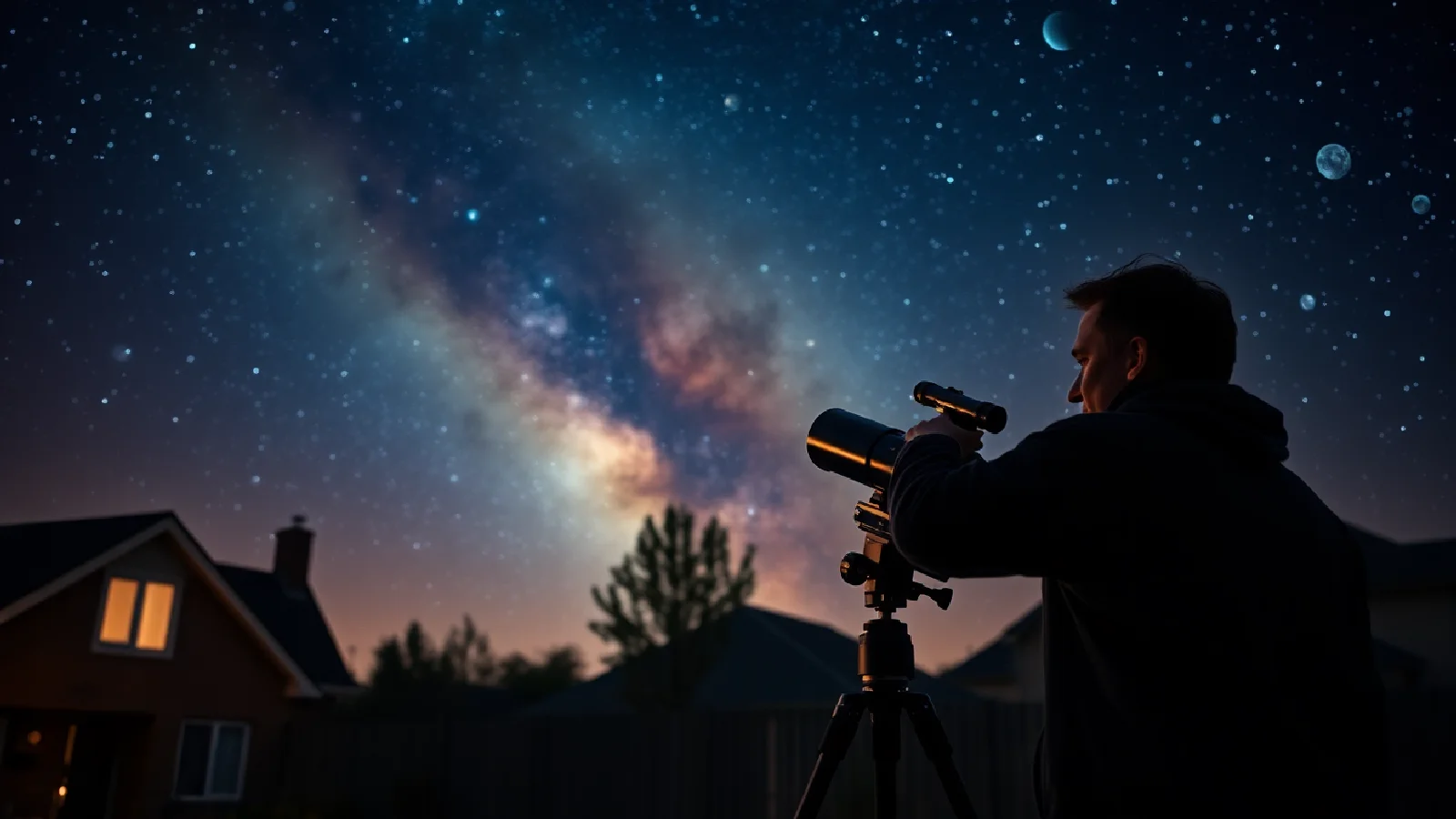
The Chinese Tiangong space station represents one of the most fascinating technological marvels of our time. Visible from Earth with the naked eye, this engineering feat offers astronomy enthusiasts a unique opportunity to directly observe space exploration in action. Contrary to popular belief, you don't need an expensive telescope to admire this technological gem as it crosses our celestial vault.
Observing Tiangong from our planet simply requires knowing the right techniques, using appropriate tools, and choosing the optimal moment. This modular station, smaller than the International Space Station but just as impressive, follows a predictable trajectory that allows observers worldwide to plan their viewing sessions.
Preparing for Your Tiangong Observation
Determining Your Geographical Position
The first crucial step is to determine your exact position on Earth. Precise GPS coordinates (latitude and longitude) form the basis of any satellite trajectory calculation. Most modern smartphones display this information in their location settings, but you can also use dedicated online services.
This geographical precision allows tracking applications to accurately calculate visibility windows from your specific location. A difference of a few kilometers can significantly alter the station's appearance times and observation angles.
Choosing the Right Observation Time
The most spectacular passes generally occur within two hours after sunset or before sunrise. During these slots, the local sky is dark enough for optimal observation, while Tiangong remains illuminated by the sun's rays.
"The Tiangong space station reaches its maximum luminous magnitude between -3 and -5, making it as bright as the most visible planets in our night sky."
Passes with an elevation greater than 30° above the horizon offer the best viewing conditions. The higher the elevation angle, the less the Earth's atmosphere interferes with the station's visibility.
Essential Applications and Tools
Recommended Mobile Applications
Stellarium Mobile is among the most comprehensive applications for observing artificial satellites. As Stellarium Labs highlights, this application integrates a visibility function specifically designed to track Tiangong's exact trajectory in the night sky.
Other applications also deserve your attention:
- ISS Detector: Despite its name focusing on the International Space Station, this app includes Tiangong tracking.
- Heavens-Above: Web and mobile platform offering precise pass predictions.
- Satellite Tracker: Specialized application for tracking multiple satellites.
Specialized Websites
The website In-The-Sky.org is a valuable resource for planning your observations. It offers detailed maps of satellite trajectories and personalized alerts based on your geographical location.
These platforms automatically calculate Tiangong's orbital elements and generate daily updated predictions, taking into account natural slight orbital modifications.
Optimal Observation Techniques
Ideal Environmental Conditions
Observing artificial satellites requires specific conditions to maximize visibility. Choose an observation site away from urban light pollution sources. Rural areas or national parks generally offer the best visibility conditions.
Weather plays a decisive role in the success of your observation. A clear sky, without clouds or haze, is an absolute prerequisite. Check the weather forecast several hours before your observation outing.
Observation Equipment
Although Tiangong is visible to the naked eye, some equipment can enhance your observation experience:
- 10x50 Binoculars: Allow you to discern the approximate shape of the station during high-elevation passes.
- Compass: Essential for orienting yourself according to the directional indications of the applications.
- Red light: Preserves your night vision while consulting maps and applications.
Unlike deep-sky object observations, satellite observation does not require a telescope. Tiangong's speed (approximately 27,000 km/h) makes telescopic tracking extremely difficult for amateur observers.
Interpreting Pass Data
Understanding Orbital Parameters
Tracking applications provide several crucial pieces of information for each pass:
- Rise time: The moment Tiangong becomes visible on the horizon.
- Appearance direction: The cardinal point where the station initially appears.
- Maximum elevation: The highest angle reached during the pass.
- Set time: The moment Tiangong disappears below the horizon.
- Magnitude: The apparent brightness of the station.
This data allows you to precisely plan your observation and point your gaze in the right direction at the optimal moment.
Identifying Tiangong in the Sky
Tiangong appears as a luminous point moving regularly from west to east. Unlike fixed stars, artificial satellites exhibit continuous and predictable motion. The Chinese station is distinguished from airplanes by the absence of blinking lights and its rectilinear trajectory.
Tiangong's luminous magnitude varies depending on several factors: observation angle, distance from the station, and orientation of its solar panels. During the most favorable passes, it can rival Jupiter or Venus in brightness.
| Orbital Parameter | Detailed Description |
|---|---|
| Rise time | The instant Tiangong becomes visible above the horizon. |
| Appearance direction | Azimuth where the station first appears. |
| Maximum elevation | The highest angle reached above the horizon (in degrees). |
| Set time | The instant Tiangong disappears below the horizon or into Earth's shadow. |
| Magnitude | Apparent brightness of the station (the lower the number, the brighter it is). |
Photographing the Space Station
Recommended Shooting Settings
Photographing moving satellites is a stimulating technical challenge. Use a DSLR or mirrorless camera with the following settings:
- ISO: 800 to 1600 depending on light conditions.
- Aperture: f/2.8 to f/4 to maximize light collection.
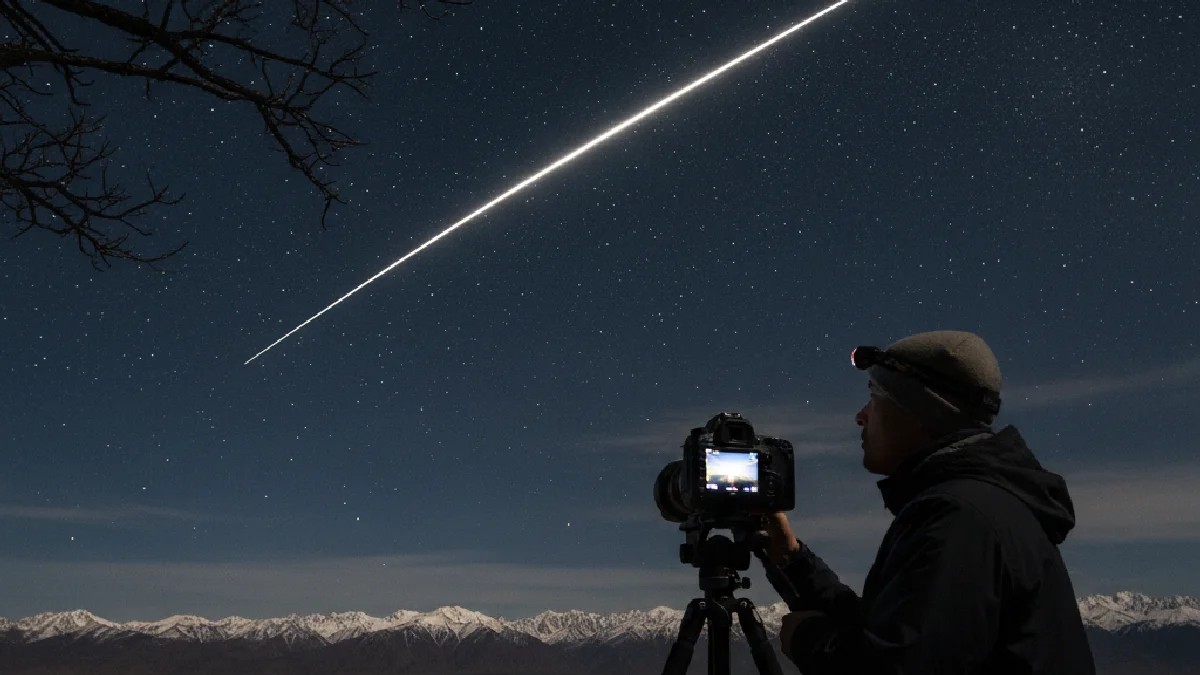
- Shutter speed: 15 to 30 seconds to create a luminous trail.
- Focus: Manual setting to infinity.
A stable tripod is essential to avoid blur during long exposures.
Composition Techniques
Integrate terrestrial elements into your composition to create a striking contrast between space technology and natural landscapes. Silhouettes of trees, historic buildings, or mountain reliefs add an artistic dimension to your shots.
The trail photography technique allows you to capture Tiangong's complete trajectory as a luminous streak crossing the star field. This approach requires triggering the exposure a few seconds before the station's anticipated appearance.
Maximizing Your Observation Chances
Notification Systems
Configure push alerts from your tracking applications to receive automatic notifications of visible passes. Most of these tools allow you to set minimum magnitude and elevation thresholds according to your observation preferences.
As experts from Space.com suggest, certain times of the year offer exceptional opportunities to simultaneously observe Tiangong and the International Space Station in a single pass.
Long-Term Planning
Tiangong's orbital elements constantly evolve under the influence of atmospheric drag and trajectory corrections. Regularly consult updated predictions rather than relying on old calculations.
Maintenance periods and spacecraft dockings can temporarily alter the station's apparent brightness. These events, though rare, offer particularly spectacular observation opportunities for informed observers.
This accessible space exploration from our backyard reminds us that humanity's cosmic adventure is literally unfolding above our heads. Observing Tiangong connects each viewer to this extraordinary technological epic, as perfectly illustrated by the expertise developed by experienced observers who have been tracking these objects for years.
Common Troubleshooting
Visibility Issues
If Tiangong does not appear at the scheduled time, several factors may explain its absence. Automatic orbital corrections performed by the station's systems can slightly modify its trajectory between the generation of predictions and the observed pass.
Light pollution is often the main obstacle to observing less bright satellites. Move to a darker observation site or wait for a pass with a more favorable magnitude.
Confusion with Other Objects
Space debris and other satellites can sometimes be confused with Tiangong. Always check the predicted time and direction in your reference application. Commercial airplanes are distinguished by their blinking lights and lower altitude.
Exploring space observation techniques is part of a broader approach to understanding our cosmic environment, joining the challenges of Martian exploration developed in our analysis of the Mars Future Plan and the technological challenges of asteroid mining.
Conclusion
Observing the Tiangong space station offers an accessible window into contemporary space exploration. This activity, requiring only free mobile applications and favorable observation conditions, directly connects terrestrial observers to Chinese technological advancements in orbit.
The techniques presented in this guide allow everyone to plan and successfully observe this engineering marvel. From simple visual identification to advanced photography, each level of observation reveals fascinating aspects of this permanent human presence 400 kilometers above our heads.
The continuous evolution of the Chinese space program promises new modules and missions to Tiangong in the coming years, offering terrestrial observers renewed spectacles and enriched observation opportunities. This space adventure, observable from our backyards, perfectly illustrates how modern technology democratizes access to the wonders of space.