Starship: The Complete Guide to Flight Tests and Future Goals
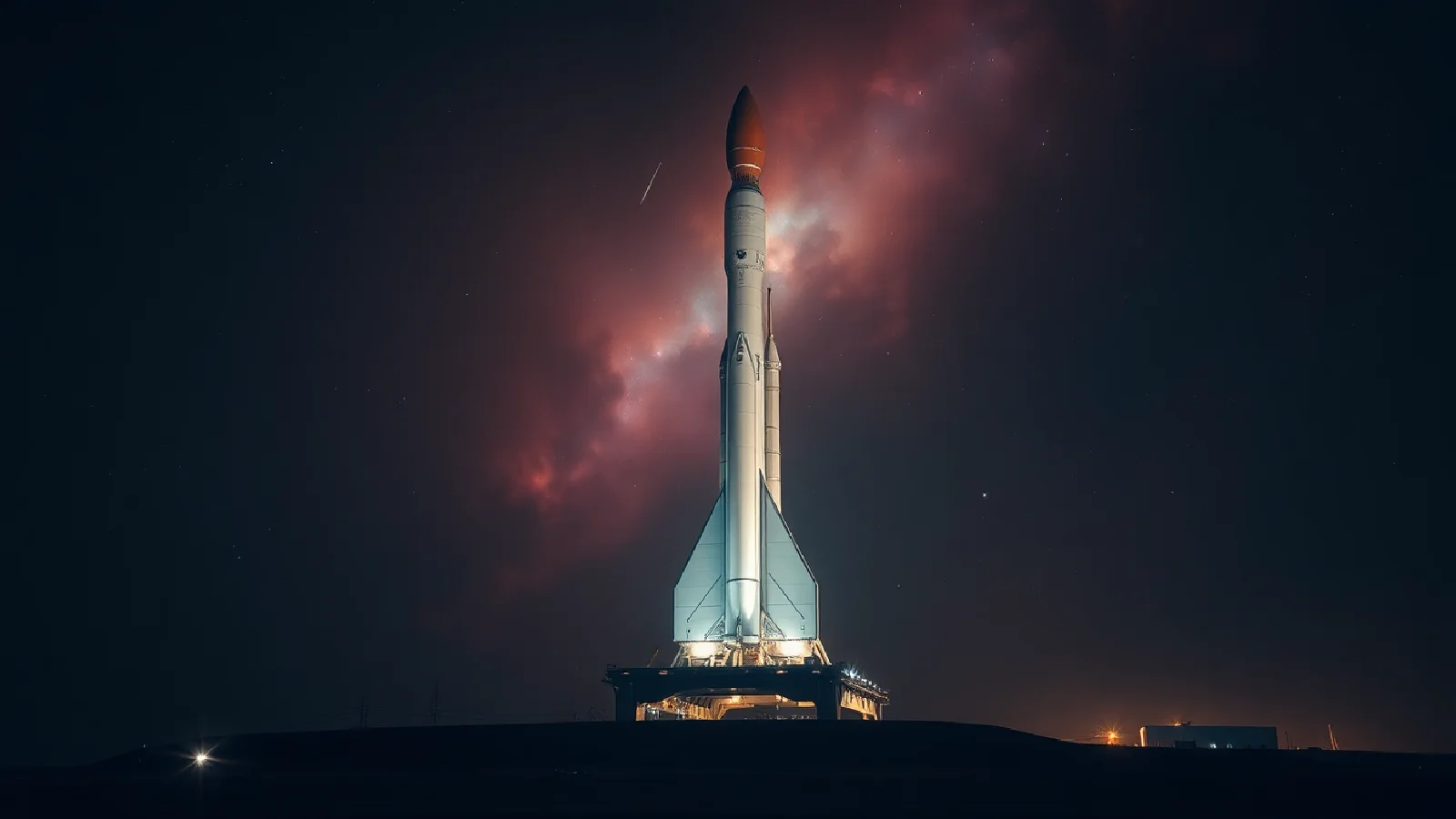
SpaceX's Starship launcher currently represents the most ambitious space program of the decade. Fully reusable, propelled by methane and liquid oxygen, this 50-meter orbital stage coupled with the 70-meter Super Heavy booster aims to revolutionize access to space. From the first prototypes to recent orbital flights, each test marks a critical step towards NASA's Artemis missions and future crewed flights to Mars.
Between spectacular explosions and successful landings, Starship's flight tests have followed a progressive learning process. Understanding this technical timeline helps grasp the colossal stakes involved: mastering orbital refueling, complete launcher recovery, thermal resistance during atmospheric re-entry, and validation of the lunar landing system. This article deciphers the entire series of tests, their technical objectives, and the next deadlines for the Moon and Mars.

Terrestrial Prototypes: Ground Validation and First Hops
Before aiming for orbit, SpaceX developed a series of prototypes to validate basic technologies. SN5 and SN6 prototypes performed 150-meter hops in 2020 to test the thrust stability of a single Raptor engine and attitude control systems. These short tests confirmed the ability of the 3mm stainless steel tank to withstand the cryogenic stresses of liquid methane at -161°C.
The next step was decisive: reaching an altitude of 10 to 12 kilometers to evaluate complex flight dynamics. Prototypes SN8, SN9, and SN10 successively attempted this maneuver, known as the "belly flop," where the vehicle pitches horizontally during descent then reorients vertically before landing. The first three attempts resulted in explosions upon ground contact, revealing the difficulties of re-igniting Raptor engines in flight and managing cryogenic flows in partially emptied tanks.
Prototype SN15 finally achieved the first soft landing in May 2021, thanks to substantial improvements in thermal insulation and combustion chamber cooling. This success validated the technical feasibility of the vertical-horizontal-vertical flight profile that will be used for lunar and Martian landings.
| Prototype | Main Objective | Key Result |
|---|---|---|
| SN5 & SN6 | 150m Hops | Raptor engine thrust confirmed |
| SN8, SN9 & SN10 | 10-12km Hops | "Belly flop" tests, explosions |
| SN15 | 10-12km Hops | First successful landing |
Orbital Flights: From Explosion to Controlled Recovery
Starting in 2023, SpaceX launched a new phase with the first integrated orbital flights, assembling the complete Starship on the Super Heavy booster with 33 Raptor engines. The first test flight in April 2023 ended in an explosion a few minutes after liftoff, but provided measurements of acoustic and thermal vibration intensity during launch.
Subsequent flights progressively increased in complexity. The 2024 and 2025 tests introduced several major technical milestones:
- Raptor engine re-ignition in orbit to validate orbital maneuvering and deorbiting capabilities
- Atmospheric re-entry flight with a controlled splashdown in the Indian Ocean, testing the shield's thermal protection
- Super Heavy booster recovery by the launch tower's "chopsticks" mechanical arms, demonstrating the feasibility of rapid reusability
These steps resolved fundamental technical challenges: mastering large-scale cryogenic methane-oxygen, the metallic body's resistance during re-entry, real-time guidance algorithms, and the landing precision required for in-flight capture. According to official SpaceX information, each orbital flight accumulates critical data to refine systems before crewed missions.
The Raptor V3 System: The Program's Technological Heart
The static fire test of the 33 Raptor V3 engines is a pivotal step. As reported by Amphisciences, these new thrusters generate superior thrust with a simplified architecture, drastically reducing the overall mass of the Super Heavy stage.
The Raptor engine uses a full-flow staged combustion cycle, providing unparalleled efficiency for a methane engine. This technology requires perfect synchronization of all 33 units during liftoff, where the slightest failure can cause a chain reaction. Ground tests validate not only raw power but also thermal management, turbopump resistance, and the reliability of the pyrotechnic ignition system.
The V3 version incorporates structural modifications that improve vibrational stability and reduce acoustic stress on payloads. These developments are essential for the Artemis program, where Starship will serve as a lunar lander transporting astronauts from lunar orbit to the surface.
Orbital Refueling: Key to Distant Missions
One of the most complex challenges remains in-orbit propellant transfer. To reach the Moon or Mars, a Starship cannot carry enough fuel from Earth. SpaceX's strategy relies on low Earth orbit (LEO) refueling missions, where multiple Starship tankers will fill the mission spacecraft's tanks.
The current scenario anticipates a dozen tanker flights, each transferring approximately 100 tons of liquid methane and oxygen. This operation requires hermetic connection technologies in zero gravity, management of cryogenic fluids without gravity, and stabilization of both vehicles during transfer. Upcoming test flights will include demonstrations of these capabilities, essential for NASA's Human Landing System (HLS).
This HLS system will be positioned in lunar orbit before the Artemis IV mission, creating a permanent transit station at the Lagrange point. Astronauts will use the Orion capsule to rendezvous with Starship in lunar orbit, then descend to the surface for multi-day missions near the lunar South Pole.
Artemis and the Moon: A Tight Schedule
The Artemis program aims to return humans to the Moon for the first time since 1972. Starship plays a central role as the lunar lander selected by NASA. The Artemis III mission, which will mark the return to the lunar surface, is currently planned for around 2027-2028, after full validation of Starship's capabilities.
Remaining steps include certification of restart capability, thermal protection for lunar re-entries at 11 km/s, and high-frequency reusable recovery. SpaceX must also demonstrate the reliability of life support systems for multi-week missions in the lunar environment.
Beyond Artemis III, NASA envisions a series of annual missions aimed at establishing a permanent station at the lunar South Pole. This base will serve as a testbed for survival technologies in hostile environments, foreshadowing future Martian missions. To learn more about the orbital challenges associated with space constellations, see our article on Kessler Syndrome and Starlink.
Mars on the Horizon: First Cargo Flights and Crewed Missions
In parallel with lunar missions, SpaceX is preparing the first flights to Mars. The inaugural cargo flight could occur as early as the mid-2020s, taking advantage of a favorable launch window when Earth and Mars are in opposition. This first automated flight will deliver essential equipment: power generators, oxygen production units, and scientific instruments.
Crewed missions to Mars remain planned for the second half of the 2030s, according to official SpaceX statements. This timeline reflects the magnitude of technical challenges: radiation protection during the six-month journey, local propellant production on Mars (via Sabatier reaction using atmospheric CO₂), and autonomous life support systems for stays of several years.
Starship must also demonstrate its ability to land on Mars with a payload of several tens of tons, in an atmosphere 100 times less dense than Earth's. Atmospheric re-entry tests on Earth partially simulate these conditions, but final validation can only be done on site.
The complementarity between chemical propulsion and advanced technologies will be essential for interplanetary missions. Discover innovations in Hall effect ion propulsion for long-duration missions.
Next Technical Steps and 2026-2028 Schedule
The Starship program is now entering an accelerated validation phase. Orbital flights will follow one another at a sustained pace to qualify all systems before crewed missions. Several technical milestones remain to be achieved:
- Orbital refueling tests: full demonstration of propellant transfer between two Starships in low Earth orbit, with precise measurement of transferred quantities and validation of automatic docking procedures.
- Long-duration flights: maintaining Starship in orbit for several weeks to test thermal, electrical, and life support systems in the real space environment, without the simplifications of short tests.
- NASA certification: formal validation of safety procedures for astronaut transport, including emergency evacuation systems, critical redundancies, and communication protocols with ground control.
Production rates at Starbase in Texas are also intensifying. SpaceX is now assembling several prototypes in parallel, allowing for rapid rotation between test flights. This rapid iteration strategy, characteristic of the company, significantly accelerates learning compared to traditional space programs.
"Every flight, whether successful or failed, brings us closer to complete mastery of the system. The goal is not immediate perfection, but continuous improvement until operational reliability." — SpaceX engineering philosophy
Regulatory and Environmental Challenges
Beyond technical prowess, the Starship program faces increasing regulatory constraints. The Federal Aviation Administration (FAA) evaluates each test flight request, examining risks to public safety and the environment. Spectacular explosions have raised concerns about debris falling on inhabited or maritime areas.
The environmental impact of the Starbase site also sparks debate. Nature conservation organizations are concerned about the effects on the fragile coastal ecosystems of South Texas, particularly during the nesting periods of protected species. SpaceX has had to adapt its launch schedule to respect these biological constraints.
Emissions from frequent launches pose another question. Although methane produces less soot than traditional kerosene, the multiplication of high-frequency flights could have cumulative effects on the upper atmosphere. These concerns will need to be addressed to ensure the social acceptability of mass space transport.
The Space Ecosystem Around Starship
Starship's success extends beyond SpaceX and structures a new industrial ecosystem. NASA relies on this launcher for its Artemis program, but also for scientific missions to the moons of Jupiter or Saturn. The US Space Force is studying the use of Starship for rapid deployment of military payloads into orbit.
Private companies are preparing commercial payloads: giant space telescopes impossible to launch with current rockets, orbital factories benefiting from microgravity, or tourist platforms in lunar orbit. Starship's 100 to 150-ton payload capacity opens up unprecedented possibilities, comparable to the qualitative leap that container ships represented for maritime transport.
This dynamic is gradually transforming space into a full-fledged economic domain, going beyond the scope of occasional scientific missions. Geopolitical stakes follow this evolution, with renewed competition between the United States, China, and Europe for control of future space infrastructure.
To understand the astrophysical stakes driving these explorations, our article on the birth of magnetars sheds light on the extreme stellar phenomena studied from space.