AWS Graviton and Meta: Accelerating the ARM Era in Data Centers
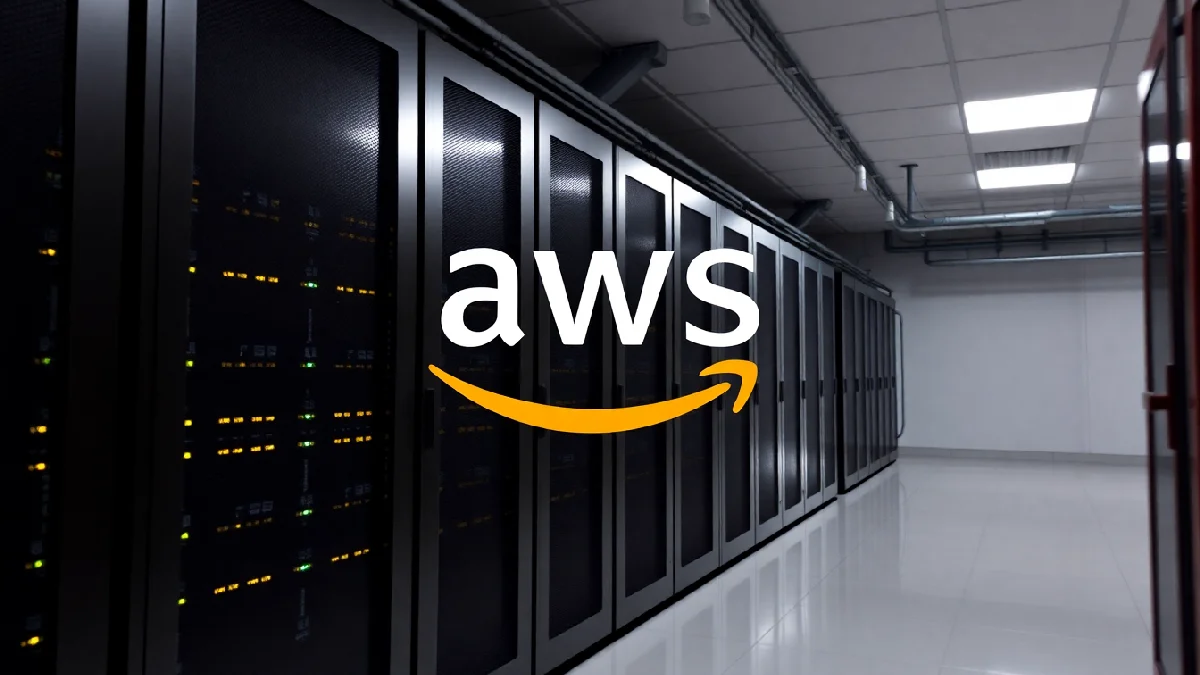
Meta officially announced in April 2026 a multi-year agreement with Amazon Web Services (AWS) to deploy several hundred thousand Graviton 5 processors across its 32 data centers spanning three continents. This announcement is much more than a simple infrastructure contract: it symbolizes the gradual shift of the server industry towards the ARM architecture, at the expense of traditional x86 processors from Intel and AMD.
The social media giant thus joins the select circle of hyperscalers that are betting on ARM chips for their artificial intelligence workloads, confirming a fundamental trend that is expected to redefine the global data center landscape in the coming years. To learn more about technological advancements, you can read our article on solid-state batteries.
A Strategic Agreement Redefining Market Balance
According to information reported by CNBC, the agreement between Meta and AWS represents a multi-billion dollar investment and commits Meta to consuming tens of millions of Graviton compute cores over the next three years. This volume — several hundred thousand processors — makes Meta one of the largest Graviton customers in the world.
This decision is part of Meta's broader diversification strategy, which seeks to optimize its infrastructure costs while preparing the ground for agentic AI workloads. Autonomous agent systems, capable of executing complex tasks and making real-time decisions, require significant computing power but also maximum energy efficiency — two criteria in which Graviton excels.
"Expanding to include Amazon's custom silicon supports our broader goal of diversifying compute to meet the demands of the AI systems we're building." — Meta

Graviton's Technological Advantages for AI
AWS's Graviton 5 processors are based on the ARM v9 architecture and have been specifically designed to meet the needs of modern artificial intelligence applications. Their design allows for a significantly higher price-performance ratio than traditional x86 solutions, while drastically reducing power consumption.
According to Amazon, Graviton 5 offers approximately 60% energy savings compared to traditional processors for equivalent workloads. This energy efficiency is a decisive asset in a context where data centers represent a growing share of global electricity consumption and where operational energy costs heavily impact hyperscalers' bottom lines.
Graviton processors are particularly well-suited for the inference phases of AI models, post-training, and the application logic that orchestrates conversational agents, recommendation systems, and large-scale data processing pipelines. This versatility explains why Meta is focusing its initial deployment on these use cases, before gradually expanding the scope of use.
A Setback for Intel and AMD
The AWS-Meta partnership is a major blow to the historical leaders of the server processor market. Intel and AMD, who have dominated the x86 segment for decades, are seeing their position weakened by the rise of the ARM ecosystem in data centers.
This dynamic is not new: Google develops its own custom ARM chips, Microsoft has announced massive investments in its Cobalt processors, and now Meta is relying on AWS to benefit from Graviton expertise. The convergence of these initiatives around ARM creates a leverage effect that accelerates the adoption of this architecture across the industry.
Traditional server manufacturers must now adapt their offerings and supply chains to integrate more ARM solutions, or risk losing market share to more agile players. Mid-sized cloud service providers, meanwhile, are closely watching this transition and beginning to integrate ARM options into their catalogs.
The Emergence of a New Standardization
One of the main obstacles to the massive adoption of ARM in data centers has long been the fragmentation of the software ecosystem. Unlike x86, which benefited from almost universal compatibility, ARM required specific adaptations for many professional applications.
But this barrier is gradually eroding. Major cloud platforms have invested heavily in optimizing their environments for ARM processors. Development frameworks, operating systems, and management tools have adapted. Today, a significant portion of workloads can migrate to ARM without requiring major rewriting.
The signal sent by Meta — a company that operates one of the most complex digital infrastructures in the world — is therefore particularly powerful: if Meta can switch to ARM at this scale, it means the technology is mature and ready for widespread adoption.
Concrete Benefits for Businesses
Organizations considering a transition to ARM in their data centers can expect several tangible benefits:
- Reduced energy costs: up to 60% savings on electricity consumption for equivalent performance.
- Improved price-performance ratio: lower cost per compute unit than traditional x86 solutions.
- Optimized density: more compute cores per rack, reducing the physical footprint of infrastructures.
Implications for the Cloud Ecosystem
The AWS-Meta partnership is not limited to a simple commercial contract: it outlines the future of cloud infrastructure. By choosing to rely on Graviton rather than developing its own ARM chips internally (as Google and Microsoft have done), Meta validates the "silicon-as-a-service" model offered by AWS.
This choice reflects a strategic evolution: rather than investing billions in the design and manufacture of proprietary semiconductors, Meta prefers to lease optimized computing capacity from a specialized partner. This approach allows it to maintain flexibility and focus on its core business — applications and services for end-users.
For AWS, it is a resounding validation of its custom silicon strategy. Since the launch of the first-generation Graviton, Amazon has gradually refined its offering, attracting a growing number of customers. With over 90,000 Graviton users, AWS demonstrates that the ARM architecture is no longer a niche alternative, but a mainstream option.
Comparison of Hyperscaler AI Chip Strategies
| Hyperscaler | AI Chip Strategy | Key Advantages |
|---|---|---|
| AWS | Graviton (ARM) | Cost-performance, energy efficiency |
| Proprietary ARM, TPU | AI optimization, complete control | |
| Microsoft | Cobalt (ARM) | Massive investments, Azure integration |
| Meta | Graviton Lease | Flexibility, business focus |
The Dynamics of Cloud Competition
This announcement comes in a context of strong competition among cloud giants. Meta had already signed a six-year contract with Google Cloud in 2025, worth over $10 billion. The new partnership with AWS does not replace this relationship but complements it, illustrating the multi-cloud strategy adopted by many large enterprises.
Hyperscalers are vying for innovation to attract AI workloads, a rapidly growing sector. Microsoft with Azure, Google with its TPUs and Axion chips, and now AWS with its Graviton, all offer optimized architectures that aim to provide the best performance-cost-energy efficiency ratio.
This competition benefits customers, who can choose from a growing range of solutions tailored to their specific needs. It also stimulates technological innovation, with each player seeking to differentiate themselves through hardware or software advancements.
The Challenges of ARM Transition
Despite ARM's undeniable advantages, the transition is not without its challenges. Companies must manage the coexistence of multiple architectures within their infrastructures, which can complicate application management and deployment. IT teams need to develop expertise in ARM specifics and adapt their development and operations processes.
Some legacy applications, particularly in the financial or industrial sectors, remain deeply rooted in the x86 universe and would require significant investment to migrate. Furthermore, the ecosystem of diagnostic, security, and monitoring tools must continue to evolve to offer the same rich functionality on ARM as on x86.
Nevertheless, the economic and environmental benefits of transitioning to ARM are encouraging more and more players to take the plunge. Market leaders, like Meta, play a catalytic role by demonstrating the viability of this approach at scale.
Outlook: Towards Progressive ARM Dominance
The AWS-Meta partnership around Graviton foreshadows a lasting transformation of the data center server market. While ARM's absolute dominance is not yet achieved — x86 maintains strong positions in many segments — the trend is clearly towards a growing share of the ARM architecture in new installations.
Industry analysts anticipate that by the end of the decade, ARM could represent a significant portion of the installed base in hyperscale data centers, particularly for AI and large-scale data processing workloads. This evolution could also spread to enterprise data centers and private cloud infrastructures, as the software ecosystem stabilizes and feedback accumulates.
For traditional players in the processor market, the challenge now is to adapt their strategy. Intel and AMD can no longer ignore the ARM wave and must either strengthen their own offerings or consider partnerships or acquisitions to remain competitive. The battle for the future of the data center has only just begun, and its results will determine the technological landscape of the 2030s.
Conclusion
The agreement between Meta and AWS marks a symbolic and strategic turning point in the adoption of ARM chips for data centers. By committing to deploy tens of millions of Graviton cores, Meta validates the technological and economic maturity of this architecture, while sending a powerful signal to the entire industry.
This transition, driven by hyperscalers and fueled by growing needs for energy efficiency and AI performance, is reshaping the balance of the semiconductor market. While Intel and AMD remain major players, their historical dominance in the x86 segment is now challenged by a new generation of ARM processors, which are more energy-efficient and better suited to modern workloads.
For businesses and IT managers, this evolution offers new optimization opportunities but also requires rethinking architectures and the skills needed to fully leverage the possibilities offered by ARM. The silent revolution of data centers is underway, and it is now largely being written with the ARM architecture.